Left Atrial Appendage Occlusion is Associated With Lower Risk of Cerebrovascular Events Than Anticoagulation in Atrial Fibrillation Patients With Cirrhosis — An Interview With Garima Wadhwani, MBBS
Key Summary
- LAAO offers a potential alternative to OAC in AF patients with cirrhosis, particularly those at high bleeding risk, with reduced MACE and stroke at 1 year.
- While results show lower rates of MACE and cerebrovascular events with LAAO, there was also a higher rate of ICU admissions; this likely reflects periprocedural monitoring and comorbidities rather than excess long-term risk.
- Patient selection is critical; prospective trials using MELD/Child-Pugh scores are needed before routine or first-line adoption.

RUHS College of Medical Sciences
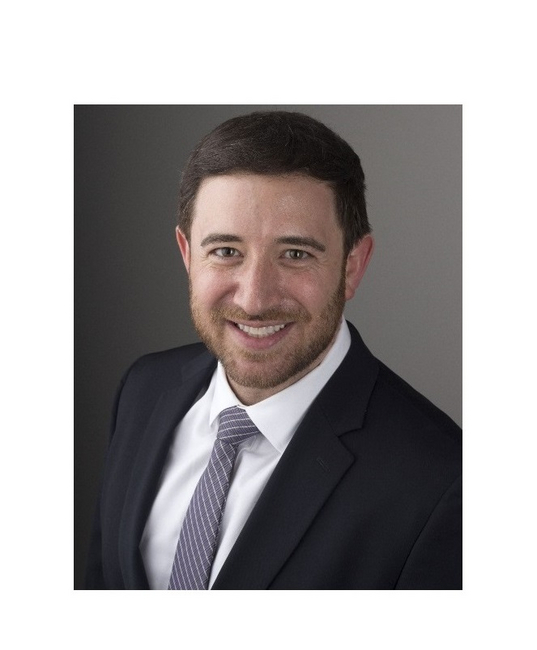
In this interview from CRT 2026, Dr Garima Wadhwani discusses her Top Abstract evaluating left atrial appendage occlusion as a safer alternative to oral anticoagulation for select atrial fibrillation patients with cirrhosis.
Dr Wadhwani would like to express her sincere gratitude to Dr. Udit Choubey for his mentorship and constant guidance—this work would not have been possible without his support.
Transcript:
Hi, my name is Garima Wadhwani. I’m from India, and my topic is “Left Atrial Appendage Occlusion Is Associated With Lower Risk Of Cerebrovascular Events Than Anticoagulation In Atrial Fibrillation Patients With Cirrhosis.”
Based on your findings, are there specific cirrhotic patients that are better candidates than others for left atrial appendage occlusion (LAAO) rather than oral anticoagulation (OAC), and how should interventionalists approach risk stratification in this group?
LAAO can be applied to AF patients with cirrhosis, and the main reason we did this study is because, as we all know, due to AF there is increased risk of thromboembolism, and due to cirrhosis there is increased risk of bleeding. LAAO can provide us a safer middle path according to our study. But considering the cirrhosis patients’ severity, we need to stratify them according to severity scores like MELD (Model for End-Stage Liver Disease) or Child-Pugh. In order to do that, we need to do prospective study trials, which were not part of our study; we did a retrospective analysis—our TriNetX database did not allow us to do the cirrhosis severity scoring. But yes, it's for future study and it's a good question that we need to indulge so we can extrapolate our results. Also, can this be applied to cirrhosis severity scores like high cirrhosis severity or a high-bleeding-risk patient? It’s a question for future research.
Your analysis shows lower rates of MACE and cerebrovascular events with LAAO, but a higher risk of ICU admissions in this group. How should clinicians interpret that signal? Do you think it reflects procedural factors, patient selection, or bias within the data set?
That's a valid concern. ICU admission rates were higher, but it's most likely due to periprocedural monitoring and early implant care rather than long-term complications. It's just like a short-term drama rather than long-term complications. Selection bias is a valid concern; because it was a retrospective study, we could not into take account randomized trials. If we do a randomized trial in the future, we'll be better able to answer this question. I believe it's a periprocedural thing. If we are considering more ICU utilization, we can also think in the manner that if a patient is coming with hepatic encephalopathy or cardiac rupture, left ventricular dysfunction, because of these, maybe the patient is in the ICU because of all these reasons due to other comorbidities, not just because we are doing LAAO.
Given that data on AF management in these patients is limited, do you think your results support earlier consideration of occlusion in this patient population, and what additional evidence would interventional cardiologists need before changing practice or guideline recommendations?
That's a very important question. I would not say that we need to make it a first-line therapy in all cirrhosis patients because all cirrhosis patients are different and their bleeding risk is different—they have an inherent bleeding risk due to cirrhosis, obviously; but yes, cirrhosis severity scoring like again MELD and Child-Pugh is needed to answer this question, can we apply this to all cirrhosis patients?
Again, this is a question for prospective research in which randomized trials are needed so we can categorize the cirrhosis patients and we can see that if high cirrhotic patients need LAAO first can we do this initially? Or maybe in mild cirrhotic patients also we can choose this option? But yes, in a high-risk bleeding population where a candidate is not able to take the oral anticoagulant, is poorly adherent, or the patient doesn't want to take the anticoagulation, in these cases, yes, we can apply the LAAO and the results are really good and, at 1 year, we have reduced MACE and stroke risk. So yes, we can apply it for a high-risk bleeding population, but the population should be carefully selected.
What do you think are the next steps?
There is a lot of scope in the study. We did a retrospective study, but if we do a prospective study and divide them by cirrhosis severity scoring plus bleeding outcomes we can have a better result and we can then formally say if can this be a first-line therapy. For now, I can recommend this as a therapy in high-risk bleeding populations. But as to suggest it as the initial therapy when the patient comes, or to be able to offer the patient their preference of LAAO vs OAC? To answer all of these questions, we need a prospective study, a good sample size. Then I think that we could make a good study in the future. Thank you so much for your time.
The transcript has been lightly edited for clarity.
© 2026 HMP Global. All Rights Reserved.
Any views and opinions expressed are those of the author(s) and/or participants and do not necessarily reflect the views, policy, or position of the Journal of Invasive Cardiology or HMP Global, their employees, and affiliates.