Image
Experts examine tumor receptor expression, use of molecular imaging, and ongoing studies exploring alpha-emitting radioligand therapies and sequencing strategies in advanced NETs.
To learn more, view the full series: NANETS Highlights: Updates in Clinical Development of Next-Generation Radioligand Therapies
Dr Jonathan Strosberg: Welcome to our conversation. We're going to talk about mechanism and rationale for alpha-PRRT, ascertaining that all tumors express high levels of somatostatin receptors. I guess the first question is ... Is that a criterion for you? Do you require that all tumors express somatostatin receptors? Will you ever treat a patient where one tumor doesn't or barely expresses?
Dr Thomas Hope: I mean, it's a great question. So, if you were to follow the criteria in the phase 3 trials that were used for PRRT, they require, in essence, all measurable disease to be above background liver. So, high is a qualitative term, and what we're saying is just above background liver. If you have a growing lesion that has uptake less than background liver, that's likely to be the disease that's going to dominate the patient's prognosis, and so you need to do something with that. We have treated patients with liver-directed therapy, SBRT, to control that side of disease, to open the door to be treated with PRRT. But in general, I would not treat someone without controlling, in essence, the DOTATATE-negative disease. I would also say those are patients where you probably should get an FDG-PET, just to make sure you're understanding their disease well before you move forward.
Dr Strosberg: So, that's a good point. How often do you get FDG-PET? Some people really recommend it quite routinely, especially for higher-grade tumors. Other people don't feel so strongly about it. Amir, maybe you can tell us about your practice.
Dr Amir Iravani: Yeah. Generally, I think for a lower-grade tumor, like G1 or Ki-67 less than 10%, it's unlikely to see the heterogeneity that we sometimes see in higher-grade tumors. So, the yield of having FDG-PET in higher grade, particularly G3 is more ... But I mean, obviously, because most of these patients have disease in the liver, it's not that difficult to see the heterogeneity with the DOTATATE PET scans. So, we could define that. And as Dr Hope mentioned, if we see differences in the expression across the disease lesions, we could do the FDG-PET. We could also target the biopsy to those sites with our FDG-avid, and that could potentially make ... If that particular lesion is not targetable by liver-directed treatment, it could decide which sequencing might be better. For instance, with a higher volume of FDG-avid disease, you may go for chemotherapy as a first-line treatment.
Dr Strosberg: Got it. Yeah. I mean, I think if you can really look very carefully at your anatomic imaging and match it with the DOTATATE PET, most cases you can figure out whether or not all tumors expressed somatostatin receptors, but certainly easy to overlay 2 PETs rather than compare a CT scan to a PET.
I want to briefly touch on lung neuroendocrine tumors. Lutetium-DOTATATE is not approved for lung NETs, but it is used quite commonly. Maybe you can talk a little bit about the data in lung NETs, Tom, and I know you've done a study.
Dr Hope: Well, in lung NETs, there's the 2 main FDA-approved therapies, right? Everolimus RADIANT-4 is a standard therapy in lung NETs, and then lutetium-DOTATATE is not studied in NETTER-1, NETTER-2, or NETTER-3. So, we don't have prospective data in lung NETs that's available to support the use, but it's on guidelines. So, people use it routinely as standard of care to treat lung NETs. And then single-agent TEM versus CAPTEM. I feel like that's an ongoing debate, in the lung NET setting, which approach you need for chemotherapy. So, we have an alliance cooperative group trial, A021901, which is randomizing lung NET patients to PRRT versus everolimus.
I think one important thing to note is ... And it's sort of unusual, but in lung NETs, there's a lot more heterogeneity of expression of somatostatin receptors. And I think that's an important thing to realize, is you really do need to understand and look in the liver particularly. You'll see, just frankly, DOTATATE-negative liver mets right next to DOTATATE-positive liver metastases. So, it's a unique aspect of lung NETs, which is different to me than what you see in small bowel or pancreatic neuroendocrine tumors.
Dr Strosberg: Exactly, yeah. We published some data on that, and we found that fewer than half of the metastatic lung NETs were actually eligible for PRRT, based on either absent somatostatin receptor expression or heterogeneous expression. That's more true for more aggressive, atypical lung NETs than typical lung NETs.
So, we have lutetium-DOTATATE. We're anticipating that lutetium-DOTATOC will probably be approved, based on the COMPETE study. The other name for lutetium-DOTATAC is lutetium-edotreotide. Those 2 names are interchangeable.
There's also the COMPOSE study that will hopefully read out in the next couple of years. Amir, maybe you can talk a little bit about COMPOSE.
Dr Iravani: Yeah. COMPOSE is a randomized phase 3 trial, which actually, I think, answers a good question about how PRRT compares to the chemotherapy agents. I think this is at the discretion of the clinicians, but the options are CAPTEM, FOLFOX, or everolimus. So, this study extended the number of the cycles to 6 cycles. The patient can get the 6 cycles. The first cycle, 1 and 2, is 6 weekly, but then subsequent cycle 8 weekly. So, this study, I think, is clinically very relevant to the clinicians. It targets the higher-grade patients with a Ki-67 of 15% to 55%, which is most appropriate for chemotherapy as well, those patients.
Dr Strosberg: So hopefully, will give us a little bit more information on sequencing in this higher-grade group.
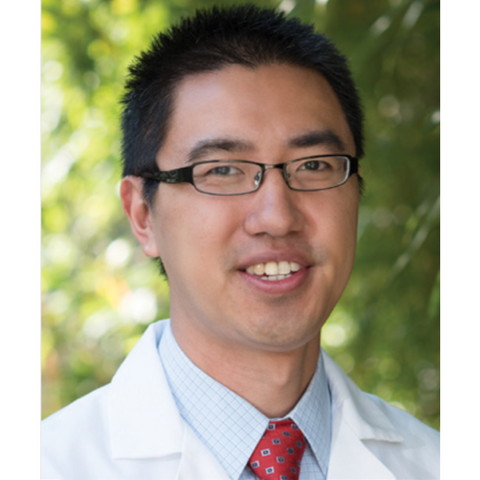
Daneng Li, MD
Dr Daneng Li is an associate professor in the Department of Medical Oncology and Therapeutics Research at City of Hope Comprehensive Cancer Center in Los Angeles, California. He is co-director of the Neuroendocrine Tumor Program and leads the liver tumor program at City of Hope. He earned a BS degree in molecular genetics from The Ohio State University in Columbus, Ohio, graduating summa cum laude. He then went on to receive his medical doctorate from Weill Cornell Medical College in New York City, before pursuing an internship and residency in internal medicine at New York-Presbyterian Hospital/Weill Cornell Medical Center. He then completed a hematology/oncology fellowship at Memorial Sloan-Kettering Cancer Center in New York City. Dr Li’s clinical and academic research focuses on the multidisciplinary approach to the treatment of patients with neuroendocrine tumors and liver tumors, including the development of novel therapeutics and the incorporation of patient assessment tools to improve patient care. He has presented his research both nationally and internationally.

Thomas Hope, MD
Dr Thomas Hope is the vice chair of Clinical Operations and Strategy in the Department of Radiology and the director of Molecular Therapy at the University of California, San Francisco (UCSF). He is chief of Nuclear Medicine at the San Francisco VA Medical Center and chair of the UCSF Cancer Center’s Molecular Imaging & Radionuclide Therapy Site Committee. Dr Hope earned his medical degree from Stanford University School of Medicine, followed by an internship at Kaiser Permanente in San Francisco. He completed a residency in Diagnostic Radiology at UCSF, followed by a clinical fellowship in Body MRI and Nuclear Medicine from Stanford Medical Center. Dr Hope’s primary research focus is on novel imaging agents and therapies, particularly for prostate cancer and neuroendocrine tumors. He has combined his interest in MR imaging with PET through the simultaneous modality PET/MRI, which helped lead the development of the clinical PET/MRI program. Additionally, Dr Hope leads the PRRT (peptide receptor radionuclide therapy) program for neuroendocrine tumors and PSMA (prostate-specific membrane antigen) radioligand therapy at UCSF.
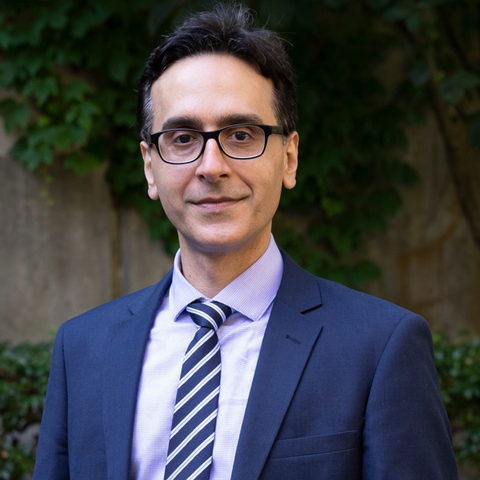
Amir Iravani, MD, FRACP
Dr Amir Iravani is an associate professor of Radiology at the University of Washington, Seattle, and the Clinical Director of Theranostics at Fred Hutchinson Cancer Center, Seattle, Washington. Dr Iravani is recognized for his leadership in molecular imaging and radiopharmaceutical therapy, including his pivotal roles in multiple radiopharmaceutical clinical trials. His research focuses on precision oncology, imaging biomarkers, and personalized radiopharmaceutical therapy. Dr Iravani also leads national initiatives in Theranostics clinical trial development.
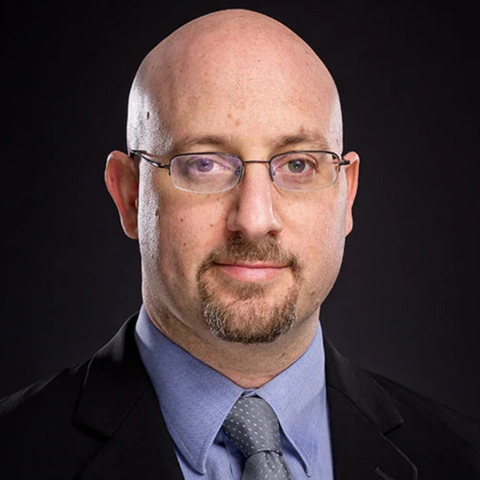
Jonathan Strosberg, MD
Dr Strosberg is a medical oncologist in the Department of Gastrointestinal Oncology, section head of the Neuroendocrine Division, and chair of the Gastrointestinal Department Research Program at Moffitt Cancer Center in Tampa, Florida. His clinical expertise includes neuroendocrine cancer, with a focus on carcinoid tumors and pancreatic endocrine (islet cell) tumors. Dr Strosberg’s collaborative research concentrates on the development of novel biomarker-driven therapeutic treatments and the identification of molecular prognostic markers linked to malignant progression of pancreatic neuroendocrine tumors. He has been recognized internationally for researching the treatment of metastatic pancreatic endocrine tumors.