Image

Experts analyze early and long-term data from ALPHAMEDIX-02 and other alpha-emitter trials, including efficacy, toxicity patterns, and key differences between actinium- and lead-based compounds.
To learn more, view the full series: NANETS Highlights: Updates in Clinical Development of Next-Generation Radioligand Therapies
Dr Jonathan Strosberg: Welcome to our conversation. We're going to talk about ALPHAMEDIX-02 long-term data review. So ,we've been talking about lutetium-based treatments. And lutetium, of course, is a beta emitter. And maybe you want to explain what a beta emitter is, and then we can talk a little bit about how that differs from alpha emitters. So, Tom, do you want to tackle?
Dr Thomas Hope: Sure. A beta emitter, lutetium, emits an electron, a beta particle, beta-negative particle. An electron in the setting of lutetium, in my mind, travels about 1 to 2 millimeters. As it's going along, it will cause DNA damage. It takes about 1 to 2000 beta particles to traverse a tumor cell to kill it. So, you need to get a lot of lutetium into the tumor in order to irradiate that tumor from within. That's what PRRT does. It drags the lutetium into the tumor for us and irradiates the tumor from within. That beta particle, the distance it travels is important because that has a lot to do with the toxicities that are associated with it, but it also has to do with how many particles it takes to cause damage. So, it distributes the dose evenly within a tissue.
An alpha particle is different. An alpha particle is a helium atom. A helium atom is 2 protons and 2 neutrons. I always say it's like a Mack truck relative to an electron. It's huge. It probably takes between 2 and 5 alpha particles to kill a tumor cell, so many fewer particles required to kill that cell, and so, it's going to be more effective at killing tumors. But also, because you're administering much lower activity, the number of alpha particles emitted is much lower than the beta particles. It's much more actually heterogeneous in its distribution, and the alpha particle only travels 50 micrometers. So, the alpha particle is traveling 2 to 3 cells in total. So, it goes through 2 cells only and kills that, so that also impacts the toxicity as well. So, it's not going to hit in the kidneys, how far it goes. It's going to be in a different distribution in terms of microscopic distribution compared to beta particles.
Dr Strosberg: Right. And a point that's made is that alpha particles are capable of inducing double-strand DNA damage, which is more difficult to repair than single-strand DNA damage that we see with beta particles. So, there's been a lot of enthusiasm for alpha emitters, and the ones that are being studied currently include lead-212 and actinium-225. Amir, maybe you can tell us a little bit about those 2 isotopes.
Dr Amir Iravani: Yeah. These isotopes are quite different in terms of their half-life, the energy they deposit, and also the number of decay that they have to produce the alpha particles. So, actinium-225 has much longer half-lives, almost 10 days. And that has 4 daughters, alpha daughters, after each decay. Compared to the lead-212, which ... Much shorter half-life, about 10 hours. And the deposit energies within that hours, and only have 2. It's an interesting isotope because in vivo generator, the first decay is actually a beta decay, and then the subsequent decay, when it's in the cells, is going to be the alpha decay.
Dr Strosberg: So, not unusually for nuclear medicine, I think, the data on actinium-225 started out with real-world data before prospective clinical data, and that came from New Delhi in India, where they were treating patients with actinium-225 DOTATATE, just as routine clinical practice. I think they were combining it with radiosensitizing capecitabine. And they were using it both in PRRT-naive and patients who had received prior lutetium-based PRRT. Interestingly, the response rates that they reported were fairly high in both groups. It was approximately 45%, although I'm not sure that they were using RESIST criteria. I think they were relying on PET scans and other methods for determining response. But nevertheless, it seemed quite active and fairly tolerable. And that led to launching the ACTION-1 clinical trial. So, Tom, maybe you can tell us a little bit about ACTION-1.
Dr Hope: So, ACTION-1 is a phase 3 randomized trial. It's really phase 1b/3. And the phase 3 component's randomized. It takes patients who are progressing after treatment with lutetium or DOTATATE or DOTATOC, and randomizes them to receive either lutetium-actinium-DOTATATE or a standard-of-care control arm, which is double-dose SSAs, everolimus, sunitinib, et cetera. And so that's the trial. It completed enrollment recently. It just closed to enrollment, so we'll find out soon whether or not actinium-DOTATATE outperforms the control arm. I think importantly, it's in small bowel and pancreatic neuroendocrine tumors, obviously, given the components of the control arm. And yeah, we'll learn a lot with that.
I think those phase 3 trials, as you intoned previously, when you're single-center retrospective data, always toxicity is lower than it actually ends up being in your phase 3, and efficacy is always higher than ends up being in your phase 3. So, you really need a phase 3 registrational trial to really tell you how it actually functions in patients across multiple sites, and it's really critical to have that. And so, I think that this trial is really important, as it's going to be the first phase 3 trial of an alpha radioligand therapy ever. So, we're going to learn a lot from that study.
Dr Strosberg: Absolutely. And the phase 1b data has been presented. It was, if I'm not mistaken, 17 patients. I think 5 of them had a partial response, which is not bad for patients who have received prior PRRT. There was some signal, though, of long-term renal insufficiency. And I think we have yet to learn about long-term toxicities of this drug, but I think it's fair to say that renal toxicity will at least be an issue that comes up.
Dr Hope: Yeah. I think that's exactly why you need a phase 3 trial, though. If you're in a post-lutetium patient population, which already has received a significant amount of renal dose, how much of the renal toxicity can be attributed to the prior exposure versus the new exposure to actinium? And it's a complicated patient population, which is why you need that control arm to really give you an understanding of what does a patient population look like who didn't receive the actinium, at least until progression because there is crossover in the ACTION-1 trial.
Dr Iravani: I guess one of the differences with the radiopharmaceutical is that some of the side effects and adverse events could be delayed. And that long-term follow-up is very important. The radiation impact on the normal tissues, including the marrow and kidneys, that's very important, particularly in the long-term follow-up.
Dr Strosberg: Right. Now there are 2 lead products. Maybe more, but 2 that I know of that are being investigated. One is lead-212-DOTAMTATE, and other is lead-212-VMT, which is, I guess, another somatostatin ligand. So, we've presented the lead-DOTAMTATE data here at NANETS as well as at ESMO last week, and we looked at 2 cohorts. One was PRRT-naive patients; the other was patients who had received prior lutetium-based PRRT.
And I would say that the responses and also the PFS outcomes have been quite exceptional. So, the response rate in the PRRT-naive population was approximately 60%. That was validated on ... Blinded independent central review was slightly lower, but more or less the same. Stable disease was the best outcome for most of the remaining patients. And the refractory patient, of course, the response rate was lower. It was about 33%.
The PFS outcome was also quite good. It was more or less 75%, 80% at 3 years for the PRRT-naive population, and similar rates at 18 months for the refractory population where there was shorter follow-up. So, the follow-up in the naive population was approximately 2 years. The follow-up on the PRRT refractory population was about 14 and a half months.
So, those were the efficacy outcomes that were quite good, but we did see some long-term toxicity as well as some short-term. The short-terms consisted mostly of fatigue, nausea, alopecia, which we actually do see with alpha emitters as opposed to beta. And then about a third of patients had abdominal pain and diarrhea. But it's really long-term toxicities that we see primarily occurring after completion of all 4 cycles of treatment that have raised some concerns.
Interestingly, with lead-DOTAMTATE, one of these side effects is dysphasia. And it's a particular type of dysphasia. It's actually a motility disorder. So, you can think of it more specifically as achalasia, which is a motility disorder of the esophagus. There's a failure of the lower esophageal sphincter to relax with swallowing. And even though, for most patients, this falls under a grade 1 or 2 toxicity, meaning that there's no need for TPN or for artificial nutrition, it doesn't go away in most patients. It's a chronic issue. And often, it requires intervention. And that can be things like Botox injection to the lower esophageal sphincter, but in several cases, patients have required minimally invasive surgery, either peroral endoscopic myotomy, POEM, or laparoscopic heller myotomy.
And we're seeing this in the long-term ... Actually, in both cohorts, we're seeing this occur in about 50% of cases. And again, it's a long-term follow-up. It's a long-term event, so those numbers might rise. This was not really an expected adverse event. Do either of you have any theories as to why it may be happening?
Dr Hope: I mean, none of us know the answer to this question, but if you think about what neuroendocrine tumor cells are ... Not tumors, but neuroendocrine cells, the sympathetic innervation to your gut. If you take out the sympathetic innervation to your GI junction, you're going to have ... In essence, a sympathetic innervation is the one that allows it to dilate, right? So, you remove that, and you're going to see achalasia. So presumably, it's on-target effect, which is pretty remarkable, frankly, to be able to kill nerve endings, in essence, in your GI tract that way. And presumably, it's also happening elsewhere in the GI tract. We're just not seeing the toxicity present itself because achalasia is obviously very obvious to a patient, but my assumption is it's on-target toxicity to sympathetic innervation of the distal esophagus.
Dr Strosberg: Got it. Yeah. I would agree with that. It's not something you can really see on the DOTATATE PETs. Obviously, we're talking about very small structures, but there is evidence that these structures do express some of the STAT receptors. And then I would say that renal toxicity is also an emerging side effect. We're seeing a lot more of it, interestingly, in the treatment-naive patient, rather than patients who have received prior lutetium. But I think the reason for that is the longer follow-up. So, once you start getting to median 2-year follow-up, you're going to see more chronic renal toxicity. I believe the reported rate in the naive cohort of grade 3, 4, renal toxicity was 17%. So, I think even longer follow-up is going to be needed to figure out what the ultimate rate of nephrotoxicity is.
The other product is lead-212-VMT, which I personally am less familiar with, but maybe you guys can discuss it a little bit.
Dr Iravani: Right. One of the differences between lead-212 and actinium is that it has to have a specific chelator for lead-212 because within the cell environment, it is more acidic. So, it has to have a special chelator to keep the radioisotope within the cell and not dissociate. And the reason is if the lead gets dissociated from the chelator, it can diffuse out of the cell and goes to kidney and marrow, which are the organs at risk. So, both these agents, they have the specific chelators to keep the lead-212 within the cage. And as it travels within the cell, then the first beta decay happens, and then it's the case with bismuth. Bismuth is an agent which has about ... Bismuth-212 has 60 minutes half-life. So, there is enough time, potentially, to diffuse out of the cell and potentially go to the kidney.
So, I think one of the other theories is, apart from the on-target effect, is whether there's a component of that lead-212 could diffuse and goes to the kidneys and causes the marrow. That's kind of a different ... It's also applicable to actinium-225 as well. Actinium-225 also decays to bismuth, a different bismuth, 213, which has a 45 half-life, but both applies to both agents.
But the VMT agent is an earlier development, currently in phase 1 dose escalation. And they're, I think, at the third dose at the moment. And the results presented at the recent conference, ESMO. And basically, at the moment, with 9 months of follow-up, it seems to be, at that dose, is causing a response rate in about third of patients, and with limited toxicity. There are some similar adverse events compared to DOTAMTATE, including fatigue and hair loss. But a longer-term follow-up is still needed, similar ... Probably to about 2 years to see whether it has the similar impact in the other organs.
Dr Strosberg: And that is one of the challenges, I would say, with PRRT. Sometimes you have to wait a long time to get a really good sense of what the risks are. Fortunately, I would say that with neither lead product, we've seen any AML or MDS, at least not in treatment-naive patients. I believe also not in treatment-refractory patients at this point, although I'm not 100% sure about that for both products, but maybe that will be less of a concern than it is with lutetium. Do you have any mechanistic reason why, maybe?
Dr Daneng Li: Yeah. I mean, I think the idea that's been proposed is that with alpha particles, by causing the double-strand break and everything, are you able to prevent these mutated myeloid cells and everything, in that sense? So, if that's the case and we don't necessarily see further MDS and AML, I would say that that definitely is something that's very encouraging for the alpha particles. And that is a potential differentiator compared to lutetium-177 because we care about both, I think, as oncologists, the day-to-day toxicities that many of our patients have to deal with, with these types of treatments, but we also really care about the serious, potentially irreversible toxicities. And I think traditionally, as a community, we might have somewhat downplayed the MDS and AML risk, and say the risk is maybe 1% or 2% in our patients with our beta emitters, but that's still a high number. And if it does happen to you, that changes the entire course of treatment journey for that patient.
Dr Strosberg: Right. Absolutely.
Daneng Li, MD
Dr Daneng Li is an associate professor in the Department of Medical Oncology and Therapeutics Research at City of Hope Comprehensive Cancer Center in Los Angeles, California. He is co-director of the Neuroendocrine Tumor Program and leads the liver tumor program at City of Hope. He earned a BS degree in molecular genetics from The Ohio State University in Columbus, Ohio, graduating summa cum laude. He then went on to receive his medical doctorate from Weill Cornell Medical College in New York City, before pursuing an internship and residency in internal medicine at New York-Presbyterian Hospital/Weill Cornell Medical Center. He then completed a hematology/oncology fellowship at Memorial Sloan-Kettering Cancer Center in New York City. Dr Li’s clinical and academic research focuses on the multidisciplinary approach to the treatment of patients with neuroendocrine tumors and liver tumors, including the development of novel therapeutics and the incorporation of patient assessment tools to improve patient care. He has presented his research both nationally and internationally.

Thomas Hope, MD
Dr Thomas Hope is the vice chair of Clinical Operations and Strategy in the Department of Radiology and the director of Molecular Therapy at the University of California, San Francisco (UCSF). He is chief of Nuclear Medicine at the San Francisco VA Medical Center and chair of the UCSF Cancer Center’s Molecular Imaging & Radionuclide Therapy Site Committee. Dr Hope earned his medical degree from Stanford University School of Medicine, followed by an internship at Kaiser Permanente in San Francisco. He completed a residency in Diagnostic Radiology at UCSF, followed by a clinical fellowship in Body MRI and Nuclear Medicine from Stanford Medical Center. Dr Hope’s primary research focus is on novel imaging agents and therapies, particularly for prostate cancer and neuroendocrine tumors. He has combined his interest in MR imaging with PET through the simultaneous modality PET/MRI, which helped lead the development of the clinical PET/MRI program. Additionally, Dr Hope leads the PRRT (peptide receptor radionuclide therapy) program for neuroendocrine tumors and PSMA (prostate-specific membrane antigen) radioligand therapy at UCSF.
Amir Iravani, MD, FRACP
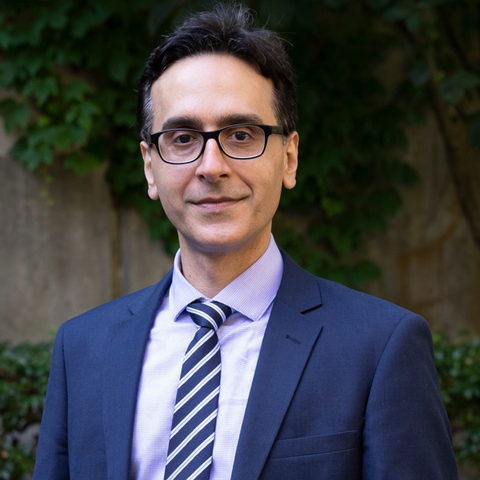
Dr Amir Iravani is an associate professor of Radiology at the University of Washington, Seattle, and the Clinical Director of Theranostics at Fred Hutchinson Cancer Center, Seattle, Washington. Dr Iravani is recognized for his leadership in molecular imaging and radiopharmaceutical therapy, including his pivotal roles in multiple radiopharmaceutical clinical trials. His research focuses on precision oncology, imaging biomarkers, and personalized radiopharmaceutical therapy. Dr Iravani also leads national initiatives in Theranostics clinical trial development.
Jonathan Strosberg, MD
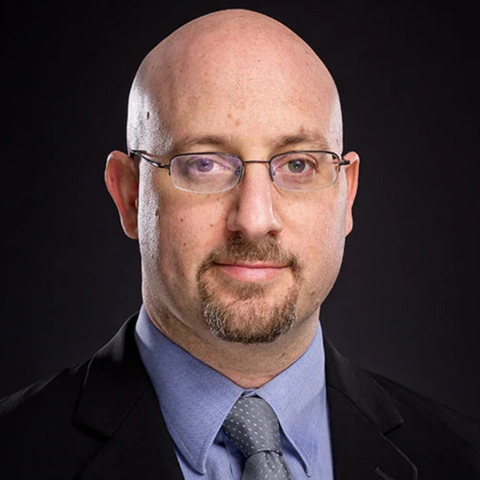
Dr Strosberg is a medical oncologist in the Department of Gastrointestinal Oncology, section head of the Neuroendocrine Division, and chair of the Gastrointestinal Department Research Program at Moffitt Cancer Center in Tampa, Florida. His clinical expertise includes neuroendocrine cancer, with a focus on carcinoid tumors and pancreatic endocrine (islet cell) tumors. Dr Strosberg’s collaborative research concentrates on the development of novel biomarker-driven therapeutic treatments and the identification of molecular prognostic markers linked to malignant progression of pancreatic neuroendocrine tumors. He has been recognized internationally for researching the treatment of metastatic pancreatic endocrine tumors.