Image
Experts reflect on evolving roles of alpha and beta emitters, novel isotopes in development, and the balance between efficacy and toxicity that will define next-generation radioligand therapy.
To learn more, view the full series: NANETS Highlights: Updates in Clinical Development of Next-Generation Radioligand Therapies
Dr Jonathan Strosberg: Welcome to our conversation. We're going to talk about future directions and key takeaways. So, looking forward, and based on the gestalt that we get from current studies, do you see alpha emitters primarily as something for patients who have received a prior beta emitter like lutetium, or do you see it replacing beta emitters?
Dr Daneng Li: I think it's really ... Definitely, I think in the more refractory setting, I think there is definitely a role because your overall risk-benefit portfolio when you're counseling the patient somewhat changes, because you have less limited treatment options from a systemic therapy perspective in a later-line setting, and therefore you're willing to accept higher risks in terms of different types of toxicities to potentially get that survival advantage in that setting.
I think in earlier lines, again, just like with NETTER-2, it raises the similar question of which patient would you do that? And I think it really comes back to the crux of ... We would probably do that for a patient that really has more aggressive disease, significant tumor burden that you're trying to elicit a very high level of response in those types of patients because you know that if you're not able to potentially chemically debulk the tumor on these types of patients that have significant tumor burden, for example, in the liver, can actually go into impending liver failure. So, I think it really then drives, again, in terms of that context of that limited patient population that has very aggressive disease, high tumor burden in an earlier-line setting.
Dr Strosberg: I'm wondering if we're ever going to see a combination alpha and beta study, maybe a few cycles of alpha and a few cycles of beta. What do you guys think about that?
Dr Amir Iravani: Yeah. It's a very interesting concept. I think we are early stage, obviously, in development of these agents, very early stage. Some people say it's very still in infancy of development, this radiopharmaceutical. But clearly, I mean, when you look at the potential efficacy and safety profile, it is possible to assume sometimes we will be using a cocktail or using it in tandem because we see different path lengths of these agents. So potentially, with the shorter path lengths, we will be able to eradicate the micrometastatic disease. With the longer path lengths, we may overcome some heterogeneity. So, all of these have advantages, and it's not inconceivable that in the future we see a combination of these agents.
Dr Strosberg: Are there any other isotopes that you see on the horizon?
Dr Thomas Hope: There are lots of other isotopes out there.
Dr Strosberg: What's your top one?
Dr Hope: They haven't really made it into the neuroendocrine tumor realm, but I think there's 2 other alpha particles out there, astatine, which is somewhat similar to lead. It's got a 7-hour half-life instead of an 11-hour half-life. A little shorter half-life. It has various positives and benefits, but think of it as similar to lead. It's produced by cyclotron, a very high-energy cyclotron. So very hard to manufacture, but the ability to do that in the US is slowly being built out.
And then the other one would be terbium, which is a beta particle emitter, sort of similar to lutetium, except it emits these low-energy Auger electrons, which are these little electrons. Well, they're not little. The same size of any electron, but low-energy electrons that travel less than maybe a cell nucleus. So, the idea is if you can get this thing near the nucleus, it'll cause some DNA damage. I don't really buy the whole Auger electron story. So, I think it'll behave much more similarly to lutetium. I would say the floor of terbium will be lutetium. Now, is there any benefit beyond lutetium? We'll find out, but those are 2 radionuclides that are being used that are alpha. One's alpha, and one's a beta plus an Auger.
And then you also think of copper-67, which is an interesting one in that it's a beta particle emitter, but its half-life is shorter. And the shorter your half-life is, the higher your dose rate is. So, if you want to give the same number of decays or electrons to a piece of tissue, if you have a 7-day half-life, you have to give less activity, and the dose rates spread out over a longer period of time. But if you have a shorter half-life, that dose rate's quicker. So, there's less time for the DNA to be repaired, et cetera. So, there might be potentially a benefit of something like copper-67.
That actually might be one of the reasons why you might see more efficacy with something like lead, which has a very short half-life, versus something like actinium. We'll find out. We've got a lot to learn about all these radiopharmaceuticals and radionuclides out there.
Dr Strosberg: So Tom, we've seen somewhat different response rates to the lead-DOTAMTATE and lead-VMT product, even though the doses ... One is weight-based, one is fixed, but they seem to be relatively similar. Maybe you can talk about that a little bit.
Dr Hope: Yeah, that's a good point. I wish we had an answer to that question, but we are seeing differences in efficacy rates between the 2 compounds. They're both lead, labeled radiopharmaceuticals. They both target the somatostatin receptor with similar targeting moieties. They have different chelators, and those chelators probably have some difference in terms of the daughters being released or something along those lines.
But the VMT compound appears to have a lower efficacy rate than we're seeing with the DOTAMTATE compound. I don't know why that is, but that's what's being presented in the trials. But on the converse of that, the toxicity is the opposite. We're seeing higher toxicity rate with DOTAMTATE. The achalasia, the hair loss, seems to be much more severe with DOTAMTATE, and also maybe the renal toxicity might be higher as well.
So, as we move forward, when you're changing the radionuclide to an alpha, it's all about the toxicity efficacy window. And you're going to move the efficacy up because you're going to cause more double-strand breaks, more efficacy, but what's happening to that toxicity side? And that's what no one focuses on upfront, right? Upfront, everyone just talks about efficacy, but as we move forward in terms of later and later-stage trials, we're going to learn more and more about the toxicity side of it. And I think that's what's going to maybe distinguish these compounds, both in terms of which one would you prefer to use, then also where we're going to use it in patients over time. Is it going to be upfront, second line, after lutetium-based PRRT. And it's that toxicity aspect of it that I think is going to be what's defining these new compounds as we move forward.
Dr Strosberg: Yep. Agreed. Thank you for joining us. I'm John Strosberg. It's been a pleasure hosting this conversation.
Dr Li: Thanks for having me. I'm Daneng Li from City of Hope.
Dr Hope: My name is Thomas Hope from UCSF. Thanks for having me, Dr Strosberg. It was a fun conversation.
Dr Iravani: It was a pleasure participating in the discussions. My name is Amir Iravani, nuclear medicine physician from the University of Washington.
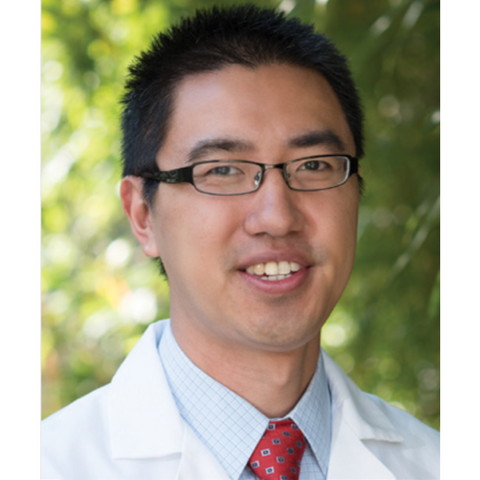
Daneng Li, MD
Dr Daneng Li is an associate professor in the Department of Medical Oncology and Therapeutics Research at City of Hope Comprehensive Cancer Center in Los Angeles, California. He is co-director of the Neuroendocrine Tumor Program and leads the liver tumor program at City of Hope. He earned a BS degree in molecular genetics from The Ohio State University in Columbus, Ohio, graduating summa cum laude. He then went on to receive his medical doctorate from Weill Cornell Medical College in New York City, before pursuing an internship and residency in internal medicine at New York-Presbyterian Hospital/Weill Cornell Medical Center. He then completed a hematology/oncology fellowship at Memorial Sloan-Kettering Cancer Center in New York City. Dr Li’s clinical and academic research focuses on the multidisciplinary approach to the treatment of patients with neuroendocrine tumors and liver tumors, including the development of novel therapeutics and the incorporation of patient assessment tools to improve patient care. He has presented his research both nationally and internationally.

Thomas Hope, MD
Dr Thomas Hope is the vice chair of Clinical Operations and Strategy in the Department of Radiology and the director of Molecular Therapy at the University of California, San Francisco (UCSF). He is chief of Nuclear Medicine at the San Francisco VA Medical Center and chair of the UCSF Cancer Center’s Molecular Imaging & Radionuclide Therapy Site Committee. Dr Hope earned his medical degree from Stanford University School of Medicine, followed by an internship at Kaiser Permanente in San Francisco. He completed a residency in Diagnostic Radiology at UCSF, followed by a clinical fellowship in Body MRI and Nuclear Medicine from Stanford Medical Center. Dr Hope’s primary research focus is on novel imaging agents and therapies, particularly for prostate cancer and neuroendocrine tumors. He has combined his interest in MR imaging with PET through the simultaneous modality PET/MRI, which helped lead the development of the clinical PET/MRI program. Additionally, Dr Hope leads the PRRT (peptide receptor radionuclide therapy) program for neuroendocrine tumors and PSMA (prostate-specific membrane antigen) radioligand therapy at UCSF.
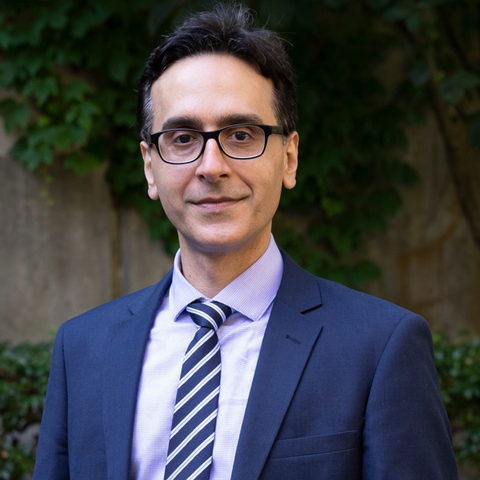
Amir Iravani, MD, FRACP
Dr Amir Iravani is an associate professor of Radiology at the University of Washington, Seattle, and the Clinical Director of Theranostics at Fred Hutchinson Cancer Center, Seattle, Washington. Dr Iravani is recognized for his leadership in molecular imaging and radiopharmaceutical therapy, including his pivotal roles in multiple radiopharmaceutical clinical trials. His research focuses on precision oncology, imaging biomarkers, and personalized radiopharmaceutical therapy. Dr Iravani also leads national initiatives in Theranostics clinical trial development.
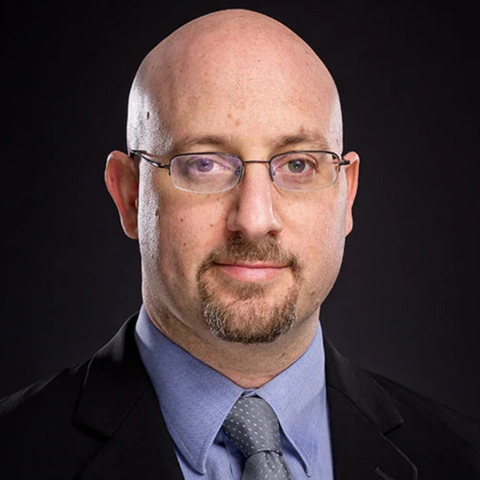
Jonathan Strosberg, MD
Dr Strosberg is a medical oncologist in the Department of Gastrointestinal Oncology, section head of the Neuroendocrine Division, and chair of the Gastrointestinal Department Research Program at Moffitt Cancer Center in Tampa, Florida. His clinical expertise includes neuroendocrine cancer, with a focus on carcinoid tumors and pancreatic endocrine (islet cell) tumors. Dr Strosberg’s collaborative research concentrates on the development of novel biomarker-driven therapeutic treatments and the identification of molecular prognostic markers linked to malignant progression of pancreatic neuroendocrine tumors. He has been recognized internationally for researching the treatment of metastatic pancreatic endocrine tumors.