Image
Experts review the evolving treatment landscape for neuroendocrine tumors (NETs), highlighting approved systemic and liver-directed therapies and ongoing challenges in treatment sequencing.
To learn more, view the full series: NANETS Highlights: Updates in Clinical Development of Next-Generation Radioligand Therapies
Dr Jonathan Strosberg: Hi. Welcome to our discussion, “An Update in Clinical Development of Next-Generation Radioligand Therapies.” I'm Jonathan Strosberg. I'm an oncologist at the Moffitt Cancer Center in Tampa. And I'm joined today by Dr Daneng Li, and perhaps you can introduce yourself.
Dr Daneng Li: Sure. Daneng Li. I'm a GI medical oncologist and lead our neuroendocrine tumor program at City of Hope in Los Angeles, California.
Dr Strosberg: And Dr Thomas Hope.
Dr Thomas Hope: My name's Tom Hope. I am a nuclear medicine physician and radiologist at the University of California, San Francisco
Dr Amir Iravani: My name is Amir Iravani. I'm a nuclear medicine physician at the University of Washington and Fred Hutchinson Cancer Center.
Dr Strosberg: Welcome to our conversation. We're going to talk about NET treatment landscape and unmet needs. So, we're going to talk a little bit about the treatment landscape. And as you all know, there's 1 radioligand that's approved in the field. It's lutetium-DOTATATE, based on the NETTER-1 study. It was approved for somatostatin receptor positive gastroenteropancreatic NETs after at least 1 prior line of somatostatin analog therapy.
We also have the NETTER-2 data, where lutetium-DOTATATE is used in the first line, for patients with higher grade 2 and grade 3 tumors, Ki-67, 10% to 55%. So that's the current role of PRRT. We also have other drugs that are used primarily in patients with disease progression. Daneng, maybe you want to talk a little bit about other options in this population.
Dr Li: Absolutely. So I think we've had a revolution in terms of number of FDA-approved treatments for patients with neuroendocrine tumors, but I think there's still somewhat of an unmet need because despite our advances, the number of systemic treatment options that we have for neuroendocrine tumors are still somewhat limited, usually maybe up to 3 or 4 lines of treatment, depending on if it's pancreatic neuroendocrine tumors or extra-pancreatic neuroendocrine tumors.
Dr Strosberg: So just to summarize briefly, everolimus is approved for various types of gastroenteropancreatic neuroendocrine tumors, based on the RADIANT studies. Actually, not approved for hormone-producing tumors because the RADIANT-2 study was not a positive study, but approved for non-functional, non-hormone-producing gastrointestinal lung NETs as well as pancreatic NETs. And more recently, cabozantinib, based on the CABINET study, approved for patients with progressive pancreatic NETs as well as GI and lung NETs.
So, those are some so-called targeted therapies. We also use chemotherapy quite often, capecitabine temozolomide, particularly in pancreatic NETs where the response rates are high, and that's a systemic treatment landscape.
There's also liver-directed therapy. So we do a lot of liver debulking surgery. We do different types of liver embolization, both bland chemo and radioembolization.
And it's always a little bit hard to know how to sequence therapies because in the past we've had very few studies that actually compare 2 active drugs. We compare drugs to placebo. In the case of lutetium-DOTATATE, we compare to high-dose octreotide, which is not really a standard of care. So the situation has been a lot of studies don't really tell us how to sequence therapies, but maybe you can talk a little bit about how the COMPETE study will help inform that.
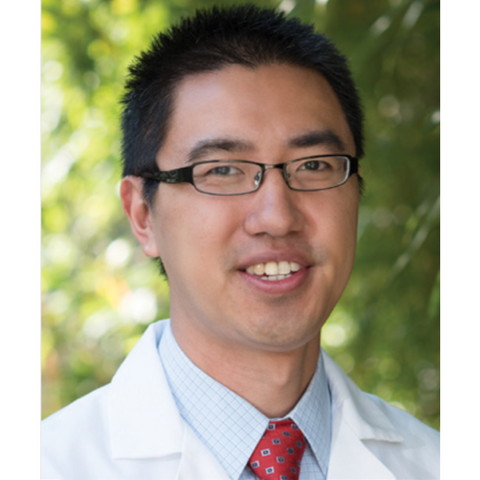
Daneng Li, MD
Dr Daneng Li is an associate professor in the Department of Medical Oncology and Therapeutics Research at City of Hope Comprehensive Cancer Center in Los Angeles, California. He is co-director of the Neuroendocrine Tumor Program and leads the liver tumor program at City of Hope. He earned a BS degree in molecular genetics from The Ohio State University in Columbus, Ohio, graduating summa cum laude. He then went on to receive his medical doctorate from Weill Cornell Medical College in New York City, before pursuing an internship and residency in internal medicine at New York-Presbyterian Hospital/Weill Cornell Medical Center. He then completed a hematology/oncology fellowship at Memorial Sloan-Kettering Cancer Center in New York City. Dr Li’s clinical and academic research focuses on the multidisciplinary approach to the treatment of patients with neuroendocrine tumors and liver tumors, including the development of novel therapeutics and the incorporation of patient assessment tools to improve patient care. He has presented his research both nationally and internationally.

Thomas Hope, MD
Dr Thomas Hope is the vice chair of Clinical Operations and Strategy in the Department of Radiology and the director of Molecular Therapy at the University of California, San Francisco (UCSF). He is chief of Nuclear Medicine at the San Francisco VA Medical Center and chair of the UCSF Cancer Center’s Molecular Imaging & Radionuclide Therapy Site Committee. Dr Hope earned his medical degree from Stanford University School of Medicine, followed by an internship at Kaiser Permanente in San Francisco. He completed a residency in Diagnostic Radiology at UCSF, followed by a clinical fellowship in Body MRI and Nuclear Medicine from Stanford Medical Center. Dr Hope’s primary research focus is on novel imaging agents and therapies, particularly for prostate cancer and neuroendocrine tumors. He has combined his interest in MR imaging with PET through the simultaneous modality PET/MRI, which helped lead the development of the clinical PET/MRI program. Additionally, Dr Hope leads the PRRT (peptide receptor radionuclide therapy) program for neuroendocrine tumors and PSMA (prostate-specific membrane antigen) radioligand therapy at UCSF.
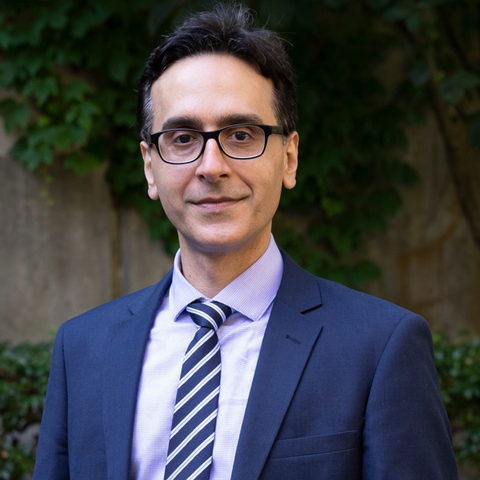
Amir Iravani, MD, FRACP
Dr Amir Iravani is an associate professor of Radiology at the University of Washington, Seattle, and the Clinical Director of Theranostics at Fred Hutchinson Cancer Center, Seattle, Washington. Dr Iravani is recognized for his leadership in molecular imaging and radiopharmaceutical therapy, including his pivotal roles in multiple radiopharmaceutical clinical trials. His research focuses on precision oncology, imaging biomarkers, and personalized radiopharmaceutical therapy. Dr Iravani also leads national initiatives in Theranostics clinical trial development.
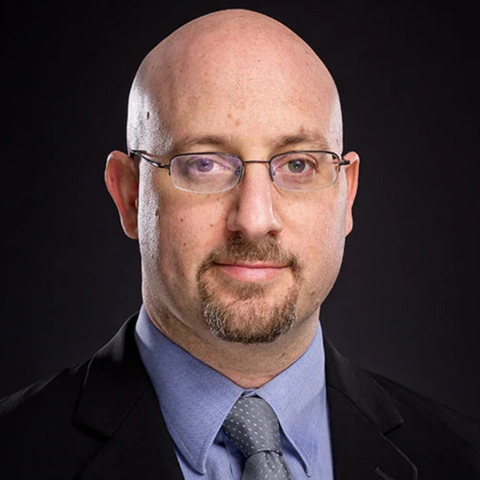
Jonathan Strosberg, MD
Dr Strosberg is a medical oncologist in the Department of Gastrointestinal Oncology, section head of the Neuroendocrine Division, and chair of the Gastrointestinal Department Research Program at Moffitt Cancer Center in Tampa, Florida. His clinical expertise includes neuroendocrine cancer, with a focus on carcinoid tumors and pancreatic endocrine (islet cell) tumors. Dr Strosberg’s collaborative research concentrates on the development of novel biomarker-driven therapeutic treatments and the identification of molecular prognostic markers linked to malignant progression of pancreatic neuroendocrine tumors. He has been recognized internationally for researching the treatment of metastatic pancreatic endocrine tumors.