Image
Experts discuss data from pivotal trials that evaluated progression-free survival outcomes, treatment sequencing, and considerations for first-line PRRT use.
To learn more, view the full series: NANETS Highlights: Updates in Clinical Development of Next-Generation Radioligand Therapies
Dr Jonathan Strosberg: Welcome to our conversation. We're going to discuss somatostatin receptor-targeted radiopharmaceuticals. So Tom, do you want to talk a little bit about COMPETE and what its relevance is to you?
Dr Thomas Hope: Yeah. The COMPETE study was a randomized phase 3 study that randomized patients between lutetium-DOTATOC and everolimus. It was a positive study with positive rPFS endpoint. And it hasn't been formally published yet, but the abstract was presented here and at other conferences. So it brings another radioligand to market. So lutetium-DOTATOC in addition to lutetium-DOTATATE. In my mind they're, in essence, equivalent. I don't see any significant difference between the 2, although you do have to give credit to the COMPETE trial to actually have a control arm with a real active comparator, of everolimus versus double-dose SSAs.
If you go back to when we wrote guidelines on when to use lutetium-DOTATATE, the only thing we agreed upon is it should be used before everolimus back in the day. So I don't know how much it actually changes practice in the sense of ... I think we were all already using lutetium-DOTATATE prior to everolimus, except for, in our practice, maybe low-volume disease patients where you can use it as a window of opportunity. But I think it brings another agent to the market, and it gives us prospective data looking at DOTATATE and DOTATOC against everolimus.
Dr Strosberg: Right. So the trial did meet its primary endpoint, with a significant improvement in PFS. I believe it was about 22, 23 months with lutetium-DOTATOC versus about 14 months with everolimus. I should point out, in about 85% of patients, the drug was given in a second line or beyond. In other words, after disease progression. About 15% received it in the first line. But again, the study clearly met its PFS primary endpoint. And PFS really is the main endpoint that we use in neuroendocrine tumor trials. I wish we had enough patients to have really robust enough trials to show overall survival differences, but it's very difficult in this disease.
But maybe we can talk a little bit about the overall survival outcomes. Amir, do you want to summarize that?
Dr Amir Iravani: Yeah. I mean, if we look at the overall survivals across all the trials, including NETTER-1 as well, which has the most mature overall survival data, we see in the NETTER-1 group, which is G1 and G2 groups, we see a trend towards improvement in overall survival, although it did not reach statistical significance, but it seems clinically significant for patients to have 12 months of absolute improvement. That's important. It's unlikely to see that overall survival in NETTER-2, because the patient then crossed over. And for the COMPETE as well, there was ... Although this is the earliest stage, the overall survival is not mature, but we see a trend, at least for hazard ratio, towards the right direction. But we need longer follow-up to see whether that would translate.
Dr Strosberg: Yeah. I mean, the trend was very slight. There was, I'm sure, a lot of crossover either on trial or off trial. The patients who progressed in everolimus probably crossed in many cases to receive lutetium-DOTATATE, if not DOTATOC. So that definitely impacts overall survival outcomes and limits our ability to see an overall survival difference.
I was reassured, though, that there was at least a very slight trend towards overall survival benefit, because sometimes there's concern that PRRT ... Well, we know that there's a very small risk of myelodysplastic syndrome or acute leukemia. It's approximately 2%. We think in some cases cytotoxic treatments may induce some more aggressive phenotype, particularly in pancreatic NETs. So, it was reassuring to see that overall survival trend, at least for me. And it does validate, I think, using lutetium-DOTATATE a little bit earlier in the treatment landscape compared to everolimus.
But let's go back to first-line treatment and NETTER-2 and also that part of the COMPETE study that looked at first line. How strongly do you believe in first-line lutetium-based PRRT? And clearly improves progression-free survival, but as yet, we're not seeing an overall survival impact. So, do you believe in it strongly? Do you think that there's some patients where it's more appropriate versus not, who meet the NETTER-2 criteria, Ki-67 10% and above?
Dr Daneng Li: Yeah. I mean, I think that's the main question, right? Which type of patient would you actually consider PRRT in the front-line study? Like you mentioned, there's not necessarily an overall survival benefit. And if we're not able to necessarily achieve an overall survival benefit, and for most of our patients that have neuroendocrine tumors, even the higher-grade G2s, they usually are able to have access to multiple lines of therapy, meaning that there's not necessarily exhaustion or they're not able to make it a definitive line of therapy. So, they're all ultimately going to get all of these types of treatments and everything.
So, in that setting, if we feel that's the case, then it really comes down to toxicity, particularly serious related toxicities in terms of MDS or AML. So, I would say the population is really somewhat narrow. Personally, from my perspective, it's really for those patients that have really more aggressive disease, really aggressive biology. So, maybe the well-differentiated G3s that we know that, if it rapidly progresses in these types of patients, then they're not able to make it to multiple lines of therapy and we have to really give our most potent types of treatments upfront in that setting.
Dr Strosberg: Right. And I would agree with you 100%. I mean, well-differentiated G3, I would say somatostatin analogs almost never work in that setting. So, I think it's very reasonable to go straight to PRRT, assuming, of course, that the tumors express high levels of somatostatin receptors. But these higher grade 2s, some of them will do okay with a somatostatin analog. And I feel that in some cases, patients can wait before escalating treatment.
And then on the flip side, sometimes you see patients with extremely aggressive tumors, very aggressive pancreatic NETs, their performance status is declining. And those are the cases where you can't even wait to order and receive PRRT. And in those cases, we'll sometimes go straight to chemotherapy, like capecitabine temozolomide. And I don't know if the pattern of practice is any different at your institutions, or is it quite similar?
Dr Hope: I think that captures it to me. To me, the question is whether or not you're willing to wait to understand the pace of disease or not, right? That has to do both with the Ki-67, the aggressiveness under pathology, but also bulk of disease, how much disease there is. If you have low volume with the Ki-67 of 22, maybe I would be willing to see if the pace of disease actually matches the pathology, because pathology is not 100% accurate. So, I do like, if I can, to understand the pace of disease prior to doing CAPTEM or PRRT, but you have to look at each individual patient as to whether or not you're willing to do that.
And then the other aspect of that is functional patients and liver disease with LDT. A lot of times in a higher-volume patient who might be functional, you'll be prioritizing liver-directed therapy prior to any of these other treatments. And I think that's always important to keep in mind.
Dr Strosberg: Yeah, absolutely. We see a lot of patients with liver-dominant disease, and we often face the question about whether to do liver embolization versus PRRT. And liver embolizations tend to work very well as far as controlling hormonal syndromes like carcinoid syndrome and their high response rates.
And we also, at NANETs this year, saw results of the RETNET study, which was really one of the first large prospective embolization studies. Patients were randomized to receive bland embolization versus chemo embolization. As far as PFS and overall survival, there didn't seem to be much difference between them. Perhaps a little bit more side effects with bland embolization, but the long-term outcomes were good. Very decent PFS, not quite as high as what we saw with PRRT, but still.
Dr Hope: Yeah, it's interesting. The RETNET study is a great study, but it doesn't capture what now the clinical question is of bland/chemo versus radioembolization, right? Which I think is now, and has been for the past 5 years, the big unmet need to understand that question. So, it is actually an achievement to complete that trial, but now the actual clinical question has moved and is different than when that trial was originally developed.
Dr Strosberg: Right. Yeah. I mean, radioembolization, I think, most of us feel has fewer short-term side effects, but if patients require radioembolization of the entire liver at large doses, that can lead to chronic hepatic dysfunction. And so, I think with respect to different types of embolization, it's more important to figure out what embolization is right for the right situation, rather than garden-variety chemo versus radio, or bland versus radio, at least that's my perspective.
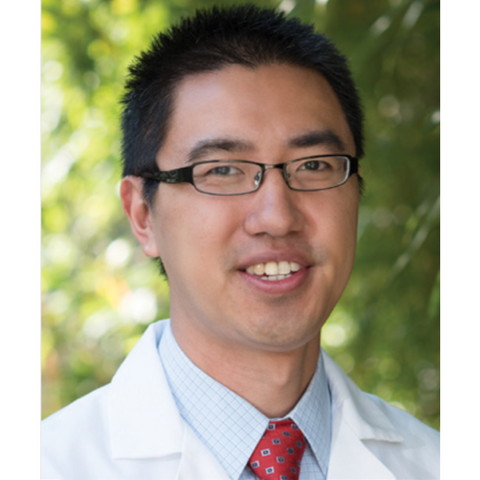
Daneng Li, MD
Dr Daneng Li is an associate professor in the Department of Medical Oncology and Therapeutics Research at City of Hope Comprehensive Cancer Center in Los Angeles, California. He is co-director of the Neuroendocrine Tumor Program and leads the liver tumor program at City of Hope. He earned a BS degree in molecular genetics from The Ohio State University in Columbus, Ohio, graduating summa cum laude. He then went on to receive his medical doctorate from Weill Cornell Medical College in New York City, before pursuing an internship and residency in internal medicine at New York-Presbyterian Hospital/Weill Cornell Medical Center. He then completed a hematology/oncology fellowship at Memorial Sloan-Kettering Cancer Center in New York City. Dr Li’s clinical and academic research focuses on the multidisciplinary approach to the treatment of patients with neuroendocrine tumors and liver tumors, including the development of novel therapeutics and the incorporation of patient assessment tools to improve patient care. He has presented his research both nationally and internationally.

Thomas Hope, MD
Dr Thomas Hope is the vice chair of Clinical Operations and Strategy in the Department of Radiology and the director of Molecular Therapy at the University of California, San Francisco (UCSF). He is chief of Nuclear Medicine at the San Francisco VA Medical Center and chair of the UCSF Cancer Center’s Molecular Imaging & Radionuclide Therapy Site Committee. Dr Hope earned his medical degree from Stanford University School of Medicine, followed by an internship at Kaiser Permanente in San Francisco. He completed a residency in Diagnostic Radiology at UCSF, followed by a clinical fellowship in Body MRI and Nuclear Medicine from Stanford Medical Center. Dr Hope’s primary research focus is on novel imaging agents and therapies, particularly for prostate cancer and neuroendocrine tumors. He has combined his interest in MR imaging with PET through the simultaneous modality PET/MRI, which helped lead the development of the clinical PET/MRI program. Additionally, Dr Hope leads the PRRT (peptide receptor radionuclide therapy) program for neuroendocrine tumors and PSMA (prostate-specific membrane antigen) radioligand therapy at UCSF.
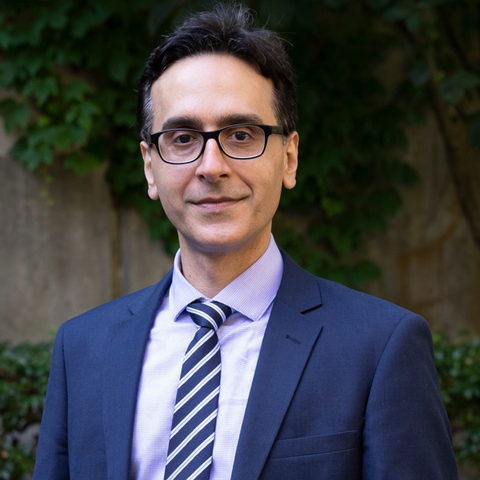
Amir Iravani, MD, FRACP
Dr Amir Iravani is an associate professor of Radiology at the University of Washington, Seattle, and the Clinical Director of Theranostics at Fred Hutchinson Cancer Center, Seattle, Washington. Dr Iravani is recognized for his leadership in molecular imaging and radiopharmaceutical therapy, including his pivotal roles in multiple radiopharmaceutical clinical trials. His research focuses on precision oncology, imaging biomarkers, and personalized radiopharmaceutical therapy. Dr Iravani also leads national initiatives in Theranostics clinical trial development.
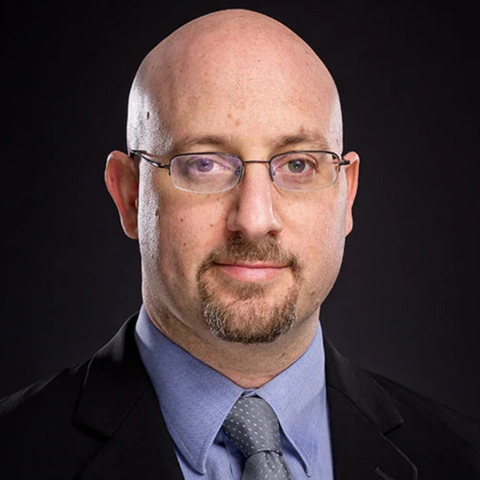
Jonathan Strosberg, MD
Dr Strosberg is a medical oncologist in the Department of Gastrointestinal Oncology, section head of the Neuroendocrine Division, and chair of the Gastrointestinal Department Research Program at Moffitt Cancer Center in Tampa, Florida. His clinical expertise includes neuroendocrine cancer, with a focus on carcinoid tumors and pancreatic endocrine (islet cell) tumors. Dr Strosberg’s collaborative research concentrates on the development of novel biomarker-driven therapeutic treatments and the identification of molecular prognostic markers linked to malignant progression of pancreatic neuroendocrine tumors. He has been recognized internationally for researching the treatment of metastatic pancreatic endocrine tumors.