Mosunetuzumab Plus Polatuzumab Vedotin Shows Improved Outcomes vs Rituximab Plus Polatuzumab Vedotin Among Patients With R/R Large B-Cell Lymphoma
Subcutaenous mosunetuzumab plus polatuzumab vedotin demonstrates improved efficacy and response rates and no excessive toxicities versus rituximab plus polatuzumab vedotin for patients with relapsed/refractory (R/R) large B-cell lymphoma (LBCL), according to phase 2 study results.
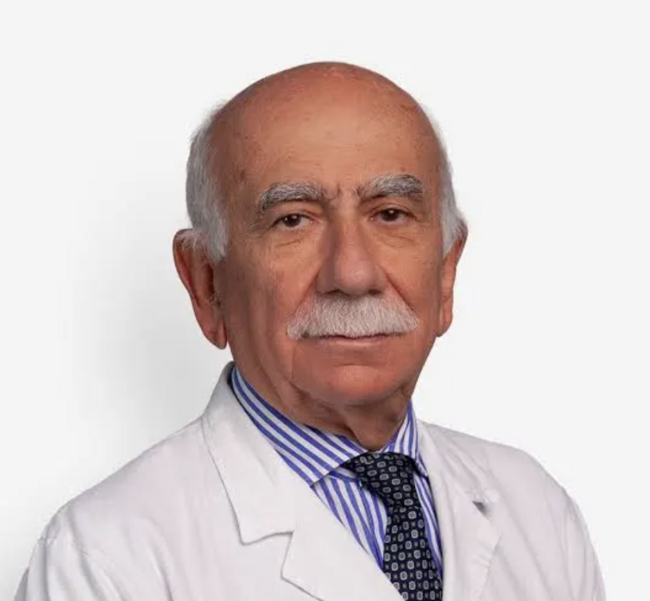
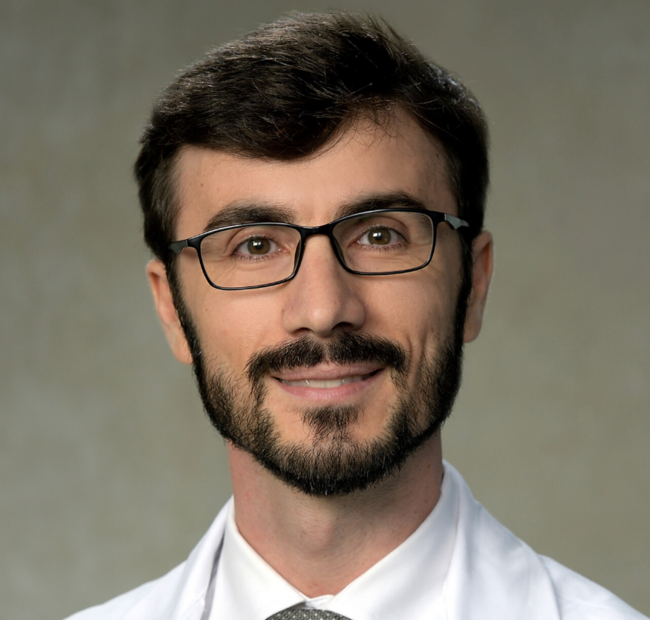
These results were presented by Adam Olszewski, MD, Legorreta Cancer Center at Brown University, Providence, Rhode Island, and colleagues at the 66th ASH Annual Meeting in San Diego, California.
“These results strongly support the continued evaluation of the M (SC)-Pola regimen being investigated in the [phase 3] SUNMO study,” the study authors added.
Transcript:
I am Adam Olszewski,. I'm an associate professor of medicine at Brown University in Providence, Rhode Island. I'm happy to talk to you about the results of this study, which was a randomized phase 2 trial of the combination of subcutaenous mosunetuzumab with polatuzumab vedotin, or Polivy, against rituximab with polatuzumab vedotin in patients with relapsed/refractory diffuse large B-cell lymphoma.
This is a space with our multiple approvals and changes in the standard of care. We currently are mostly interested in what is happening in the second-line setting where multiple CAR T-cell products have been approved for use and we now have data on the bispecifics in this setting as well. In this study, which follows up on our previously published trial of mosunetuzumab with polatuzumab vedotinas a principal treatment for patients with relapsed/refractory lymphoma. In this study, we randomized patients, a total of 80 patients against the rituximab and polatuzumab vedotin, which is a commonly used regimen.
The setting, trying to demonstrate that the change to mosunetuzumab will improve patient's outcomes and it , indeed, appears that this is a very manageable combination as well as highly effective among the 80 randomized patients for randomized to umab polatuzumab vedotin. And the results are looking very interesting and I think attractive to clinicians and the researchers, especially in the background of other studies which enrolled similar population in the same space.
The response rate, the overall response rate was 77% with 57% of patients achieving complete response to this therapy, which is time limited and it's essentially chemotherapy free, although obviously polatuzumab vedotin is an antibody drug conjugate. What's even more impressive, if you wish, with the durability of these responses, the follow-up is still fairly short, but at 1 year of follow-up, majority of these patients with PFS at one year of over 60% remain disease-free. And also these patients who achieve complete response investment, 3 of them have not relapsed with a duration of complete response, if you wish, also at 1 year exceeding 70% at this point.
We think that this is a very manageable combination. It causes low rate of cytokine release syndrome, only 10% of patients, granted this is a phase 2 trial with only 40 patients in this arm. But the CRS events were all of low grade—3 patients had grade 1 CRS and one had grade 2 CRS. The use of tocilizumab and steroids was minimal, and generally this is a dramatically lower rate of CRS, only 10% compared to other available options being CAR T-cells or other bispecifics. This is a combination that looked like a very attractive way of treating relapsed/refractory DLBCL, for patients of whom many had a median of 2 lines of prior therapy, but many of them had prior CAR T cell, about a third of patients. Most of these patients actually were refractory to CAR T-cell therapy, and yet we see excellent results, both from the point of view of safety and efficacy.
This regimen is now being studied in a large global trial. If these results pan out at the phase 3 level, that potentially could provide a very manageable option for treating these patients with lower rates of CRS, high response rates, and what's more important, durable responses. I have patients who go on now for way past 2 years after this therapy without any recurrence of their lymphoma.
There are many options again in this space, and I think both as clinicians and researchers, we'll have to decide what is appropriate for which patients and what for which settings. But this regimen can be delivered in an almost community setting, essentially with such low rates of CRS, and is very manageable for patients who have some compromise that's maybe precludes administration of cytotoxic chemotherapy or who are hesitant about proceeding to CAR T-cell therapy.
So yes, mosunetuzumab with polatuzumab vedotin appears to be very effective, very tolerable, and fairly easy to deliver in comparison to other similar regimens.
Source:
Chavez JC, Olszewski A, Bastos-Oreiro M, et al. A Randomized Phase II Study of Mosunetuzumab SC Plus Polatuzumab Vedotin Demonstrates Improved Outcomes Versus Rituximab Plus Polatuzumab Vedotin in Patients (Pts) with Relapsed or Refractory (R/R) Large B-Cell Lymphoma (LBCL). Dec 7-10, 2024; San Diego, CA. Abstract: 989