Advancing Treatment for High-Risk Multiple Myeloma Subtypes
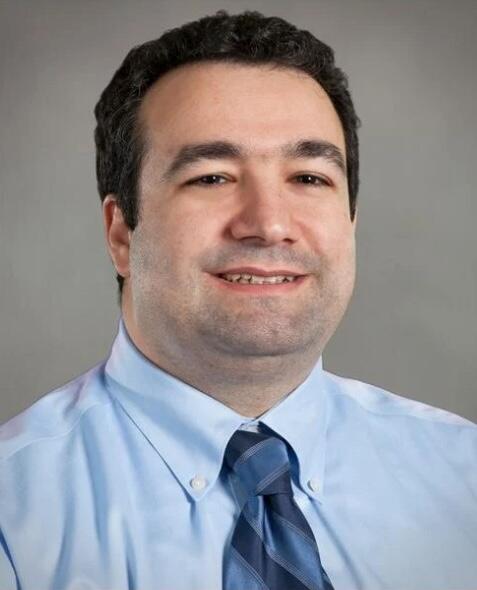
At the 2026 LL&M Winter Symposium in Amelia Island, Florida, Mateo Mejia Saldarriaga, MD, Weill Cornell Medicine, New York, New York, discusses the unmet need in high-risk multiple myeloma, including extramedullary disease, CNS involvement, and plasma cell leukemia.
Dr Saldarriaga highlights emerging immunotherapy approaches, including bispecific antibodies and CAR T-cell therapy, that are showing promising activity in these difficult-to-treat populations. These findings underscore the need for continued clinical trial development and inclusion of these high-risk subgroups.
Transcript:
My name is Mateo Mejia Saldarriaga, I am an assistant professor at Weill Cornell Medicine, I work with the Multiple Myeloma Group and the Cell Therapy Group, and I was asked to discuss the unmet need in patients with extramedullary disease [EMD], CNS involvement, and plasma cell leukemia in multiple myeloma.
I think this is an area that is very exciting, it's a group of high-risk patients that despite our improvements in the therapeutic options we have, they're still doing worse than other patients with myeloma which highlights that the job is not done. We need to develop new treatments for these patients, or new approaches, that will hopefully aggregate the adverse prognosis of these features.
ASH brought a slew of data in terms of new immunotherapy-based approaches to treat this really high-risk disease. One of the highlights is the data presented on teclistamab and talquetamab combinations in RedirecTT-1, especially in the cohort which is only EMD showed an impressive overall response rate of over 70%, which is really unparalleled with other treatments in this specific scenario. I want to highlight, it's probably one of the first trials that has specifically included an [EMD] only cohort, which highlights that this is a subgroup of patients that we're understanding that needs to be represented in prospective studies.
In terms of CNS involvement, ASH also had some interesting abstracts on the use of bispecifics, and before it has also been polished, the use of CAR T in patients with CNS involvement. These patients are often quite sick, and it's a rare presentation fortunately, so the numbers are small. But what they were able to show is that there was no evidence of increased neurotoxicity, which was one of the big concerns, and there was definitely patients that benefited from both bispecifics or CAR T. The bottom line is if you have extramedullary disease with or without CNS involvement, I think referral and consideration for either CAR T or BCMA, GP, C5D combinations is critical.
Lastly, when we talk about plasma cell leukemia, ASH also had some data on bispecific combinations in this scenario. The data, unfortunately, seems quite disappointing, bispecific seems to underperform specifically in plasma cell leukemia compared with other settings. I think these patients who often have very high-risk disease should be considered for CAR T and clinical trials.
Lastly, we're seeing all this real-world evidence highlighting that as a group we're understanding that this is a big unmet need and we need to include these patients in prospective trials.
Source:
Saldarriaga MM. Gaps in care: Extramedular, CNS disease, and plasma cell leukemia. Presented at Lymphoma, Leukemia & Myeloma Winter Symposium; January 30 - February 1, 2026. Amelia Island, Florida.