Round 3: Biomarker-Guided Decision-Making
In the third round, panelists examine how MGMT promoter methylation status informs treatment decisions, particularly in patients with unmethylated disease. The discussion focuses on how biomarker data is weighed alongside clinical factors to guide overall strategy.
To see arguments related to patient factors and treatment decision-making, see Round 1.
To see arguments related to managing suspected pseudoprogression, see Round 2.
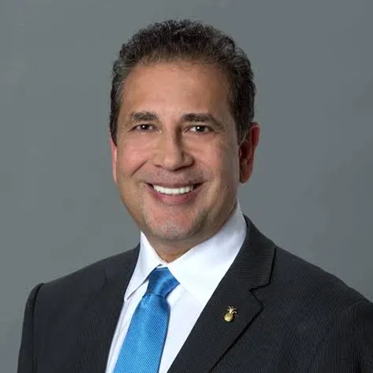
Dr Minesh Mehta: And now we're going to bring in biomarker-guided decision-making as part of the element for choosing Tumor Treating Fields now or not. So now we're making the patient a little bit older. This is a 65-year-old, 66-year-old. Again, with a newly diagnosed IDH wild-type glioblastoma, who again is favorable. They've had a gross total resection. Performance status is not as good as in our other patients; this is a PS 2 patient. The MGMT promoter is unfortunately unmethylated, so prognostically things are getting a little bit worse for this patient compared to our other prior patients. The patient has completed concurrent chemoradiotherapy. They've tolerated the therapy without interruption, that's good. They are unfortunately not completely off of their steroids. So they're continuing the dexamethasone 4 mg once a day. There's been an attempt at weaning the patient off. This has not been successful, so they are in need of continuing steroids to some extent.
The patient does have some comorbidities. There's hypertension. There's psoriasis. It's time to transition to maintenance therapy. The social history is somewhat relevant. The patient is divorced. And of course he lives alone, which again doesn't help. Again, that's another sociodemographic variable that decreases overall survival in patients. And the patient does have a daughter, but she's a bit of a distance away. It's not as if he's got ready, immediate help that he can rely on immediately. So with that, we are now going to go back to the decision point of selecting maintenance therapy.
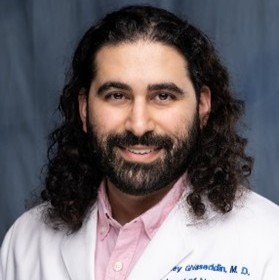
Dr Ashley Parham Ghiaseddin: We need to first consider going back to EF-14 and looking at the biomarker results. And one of the important findings from the EF-14 trial was that the survival benefit of Tumor Treating Fields appeared across multiple subgroups, including patients whose tumors had unmethylated MGMT promoter. Patients with MGMT unmethylated tumors usually respond less to temozolomide. So this subgroup is especially important when we think about what options we have for those patients where chemotherapy, specifically temozolomide, is not going to have the benefit that we would have hoped for. In the EF-14 subgroup analysis, TTFields improve the progression-free survival and overall survival in both the MGMT methylated and unmethylated groups. You can see that the relative hazard reduction was similar across groups, meaning the treatment effect did not depend strongly on MGMT status.
Now thinking about the quality of life in both populations, I think it's important to note that there's no significant difference from baseline on any of the tested quality of life scales. Mean KPS and MMSE scores did not significantly change from baseline, and there was no significant difference that was—and this was maintained between the treatment groups through month 12. Thinking about safety as well, there was no significant difference in the rate of adverse events of severity. Now, remember, this patient lives alone, daughter is far away, they are older, they're still on steroids, they have comorbidities. So one of the concerns that you may have is whether or not this patient is going to be able to perform the maintenance of the Tumor Treating Fields therapy by exchanging the arrays and being able to wear the battery pack if they want to go out and about.
And what I would say is patients actually, through home health, can actually have some help with the exchange of arrays. Device specialists who come in to support those patients can teach home health aides how to do this and be able to provide the proper skincare that patients can need so that when they're actually alone, they still have that support available to them. So I think that it's very important before we write off patients as not having enough support, trying to understand what we have available to us so that we can ensure that every patient gets a treatment that we think will be able to provide some benefit in survival and maintain quality of life. And I think it's especially important in this patient where we are already concerned about whether or not chemotherapy is going to have any benefit for that patient. And we have to think about what other options we can provide for that patient at this time. And I think emphatically it'd be Tumor Treating Fields for this patient.
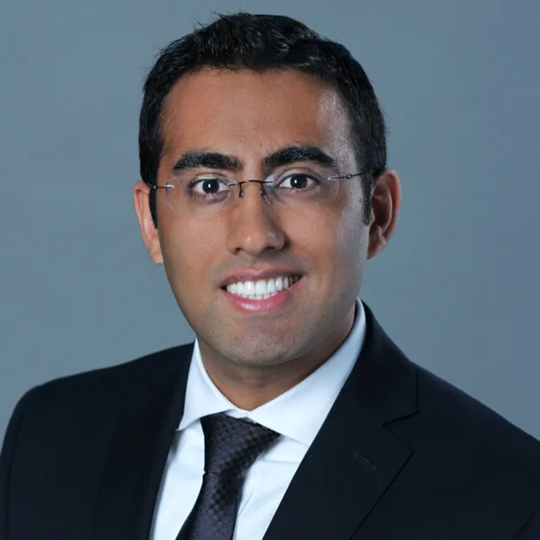
Dr Rupesh Kotecha: I think this case is an example of patient selection and, something we actually talked about at our cancer center earlier this week, about the art of medicine. The data tells us who benefits from TTFields, and this patient does not fit that profile for who's truly going to benefit from TTFields. I think the first point was actually in the first set of slides here, the quantitative benefit is actually reduced in those patients who have MGMT unmethylated glioblastoma. The survival difference, unlike the first case when I was arguing for TTFields, that was a 10-month absolute survival difference; in this case, it's a 2-month absolute survival difference. And so you have to weigh the benefit against the other costs of the therapy itself for this particular patient.
So what are the costs? Well, the costs are (A), you have to give temozolomide for this patient for it to work. And actually in a reanalysis of the CE.6 as well as the Nordic/NOA studies, actually looking at a more modern way of determining MGMT methylation status, actually patients who are unmethylated truly do not even benefit from temozolomide. And so this case is TTFields plus temozolomide. And so if that backbone doesn't even work, what is TTFields even synergizing in this case? Instead, I would offer this patient other trials, other options other than temozolomide specifically.
The next point is this patient's ECOG performance status. They're an ECOG of 2. And that compliance-survival dose-response relationship that I was showing in the first case really matters here. So the reason why we say you have to wear it for 18 hours a day is because a compliance or usage of more than 75% is what was associated with the survival improvement. Somebody who has an ECOG performance status of 2, think about what it means when you actually write that for that patient. Technically, that means that the patient is only able to care for themselves. They're not able to do work and that they are awake only more than half of the day. Is that the type of patient who can do the array changes? Is that the type of patient who can put it onto his scalp? Is that the patient who's going to have the high usage? No. In fact, actually, if you look at the inverse of the usage data, if you use it less than 50% of the day, you had no statistically significant improvement in survival. So if you are going to use it, you have to use it for that period of time to actually derive the benefit. Unfortunately, this patient has all these factors that they're not going to be able to be a high user and therefore are not going to have that survival benefit.
The social support deficit I think is really, really important. As was mentioned, home health care is one potential option to help supplement that, but this patient has significant real issues: the fact that he is alone, again, divorced, doesn't have a daughter as close to him. And so the lack of social support is actually a specific independent factor associated with a lower usage rate, and therefore, again, with lower benefit with regards to survival. If you look at the studies we talked about here today, EF-14, the TIGER study, this patient does not meet that profile. For EF-14, you had to have a KPS more than 70. This patient has an ECOG of 2, would not have actually met that criteria.
Now, one key piece is the patient's comorbidities. So in this particular case, this patient has a unique comorbidity with psoriasis. Psoriasis means that the patient's going to have scales and plaques on their skin. TTFields themselves, the only side effect associated with it is dermatitis related to the device itself, and you can make the psoriasis worse. Another issue is that the skin integrity is less in somebody who has psoriasis. We don't know the long-term safety even with high usage with the use of TTFields in such a patient. Patients with psoriasis often have to apply certain skin creams to their head. They have to use vitamin D analogs and other types of supplements. We have not tested those in patients who are receiving TTFields, and we don't know if it can cause issues with the impedance of the arrays. So we don't even know if we're going to get that therapeutic benefit. And ultimately, patients are at risk for things like infections because of their underlying issues with their skin when they have psoriasis, and then you can compound that with the use of TTFields.
© 2026 HMP Global. All Rights Reserved.
This is a non-CME activity. The views and opinions expressed by the presenter(s) do not necessarily reflect the views and opinions of the Oncology Learning Network, HMP Global, or its employees and affiliates.