Advances in Targeted and Immunotherapy for Richter Transformation
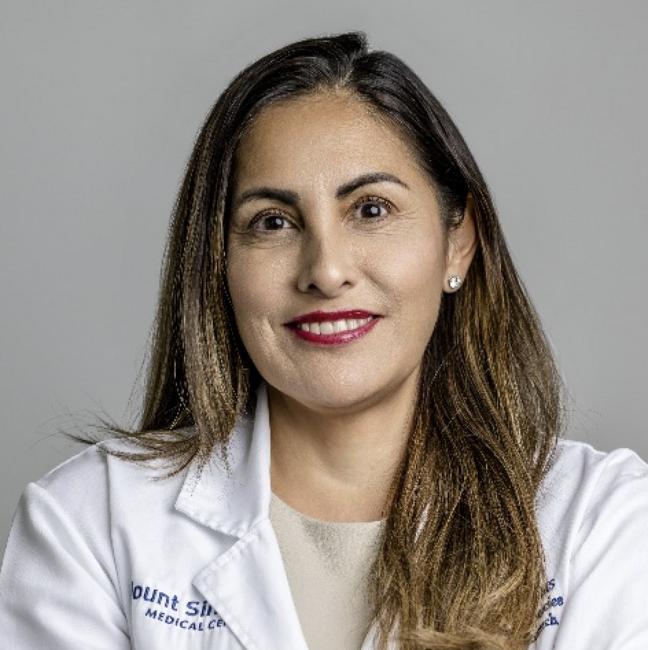
At the 2026 LL&M Winter Symposium in Amelia Island, Florida, Erin Mulvey, MD, Weill Cornell Medicine, New York, New York, discusses the evolving treatment landscape for Richter transformation, noting that chemoimmunotherapy remains the backbone of therapy but is increasingly being combined with novel agents to improve outcomes.
Transcript:
Hi, I'm Erin Mulvey, I'm an assistant professor of medicine at Weill Cornell Medicine. I spoke on what's new and exciting in Richter’s, and we do have some interesting updates that we were able to review.
Overall, chemoimmunotherapy does remain the backbone of treatment for the majority of patients however, incorporating novel agents into standard chemoimmunotherapy backbones is proving a very effective strategy. Unfortunately, that approach is often associated with pretty substantial toxicities, and so truly your fittest patients are who will benefit from that method. Durability remains an issue with response across the board in Richter's, and so allogeneic transplant does still have a role. Typically, I'm reaching for an allotransplant in my patients who are sensitive to chemoimmunotherapy however, this is a space where CAR T utilization is also something to consider.
Outside of chemoimmunotherapy, there are a number of novel agents that are active that we have data for. One combination is the combination of the PD-1 inhibitor tisalizumab used with zanubrutinib. That combination has a substantial length of follow-up time, and these data have been previously published. There are a subset of patients that can achieve quite durable responses with that combination, and importantly, it's chemotherapy-free. However, what we're seeing is that patients who tend to benefit most really do have a lower risk type of Richter’s. These patients tend to lack p53 mutations, they may have clonally unrelated transformation events, they may even have Hodgkin's so being thoughtful on who I may reach that for.
Another combination is the combination of pirtobrutinib, venetoclax, and obinutuzumab (PVO). Now, the data is a lot more limited with this combination, only a small number of patients were treated however, the safety is very good. The tolerability is excellent and responses seem to be durable at the 12-month mark.
Outside of these oral combinations, the bispecific antibodies, in particular, epcoritamab have increasing data to support their use. The response rates are promising, and the safety profile doesn't really seem to be any different than what we've seen previously reported. Again, CAR T is increasingly being used and has activity and the BTK degraders may also be agents that we'll be able to use in the future.
Source:
Mulvey E. Richter transformation - What is new? Presented at LL&M Winter Symposium; January 30-February 1, 2026. Amelia Island, FL.