Volume 24 - Issue 9 - September 2012

08/30/2012

Abstracts from the 1st Advanced International Masterclass
AIM Radial 2012
September 13-15, 2012
Québec City, Canada

Abstracts from the 1st Advanced Inter...
BA001 - Bleeding & Anticoagulation WARFARIN AND HEMOSTASIS AFTER TRANSRADIAL CARDIAC CATHETERIZATION Lippe C., Reineck E.A., Gilchrist I.C. Corresponding author: Ian C Gilchrist, MD, Penn State Hershey Medical Center, 500 University Drive,...
BA001 - Bleeding &...
08/30/2012
Journal of Invasive Cardiology
Clinical Images
08/30/2012
Dariusz Ciećwierz, MD, PhD; Milosz J. Jaguszewski, MD, PhD; Andrzej Rynkiewicz, MD, PhD
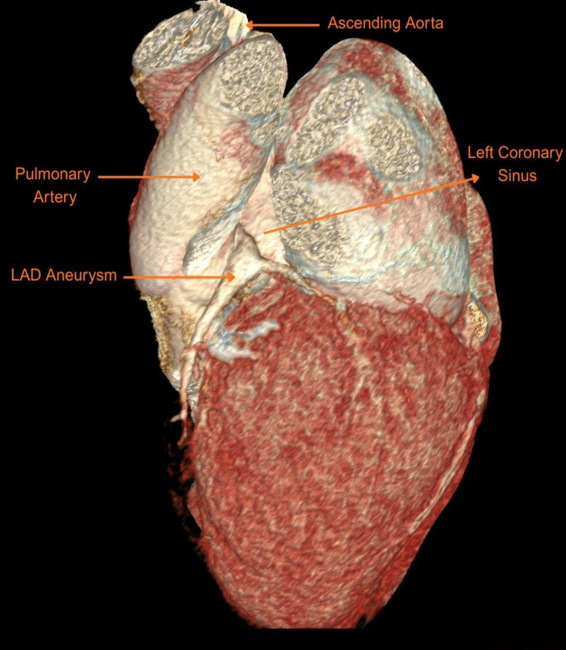
Abstract: We present an interesting case on the management of a traumatic coronary artery fistula in a 39-year-old man who was stabbed by his wife. During emergency sternotomy, left lung and right ventricle injuries were repaired. On the...
Abstract: We present an...
08/30/2012
Journal of Invasive Cardiology
Radial Access Technique
08/30/2012
Jamie Layland, MBChB, MRCP, FRACP; Ross McGeoch, MBChB, MD, MRCP; Arvind Sood, MD, MRCP
Abstract: This case illustrates a novel and innovative method of retrieving a kinked guiding catheter in transradial intervention without the need for vascular snare.J INVASIVE CARDIOL 2012;24(9):E205-E206
Abstract: This case illustrates...
08/30/2012
Journal of Invasive Cardiology
08/30/2012
Athar M. Qureshi, MD, FSCAI; Lourdes R. Prieto, MD; Richard A. Krasuski, MD
ABSTRACT: Percutaneous pulmonary valve technology has had a great impact on patients with congenital and acquired heart disease. In some patients, implantation of a percutaneous pulmonary valve may not be possible due to the morphology of the...
ABSTRACT: Percutaneous pulmonary...
08/30/2012
Journal of Invasive Cardiology
08/30/2012
Yoshio Kobayashi, MD; Yoshihide Fujimoto, MD; Yuji Matsudo, MD
ABSTRACT: Deployment of a polytetrafluoroethylene-covered stent is a useful option to seal coronary perforation. However, the high profile and low flexibility compromise its deliverability. To facilitate stent delivery, deep-vessel intubation...
ABSTRACT: Deployment of a...
08/30/2012
Journal of Invasive Cardiology
08/30/2012
Ricardo Castillo, MD; Tajinderpal Saraon, MD; Hal L. Chadow, MD
ABSTRACT: Total occlusion of the left main coronary artery predominantly presents with recurrent angina or myocardial infarction. Long-term survival and myocardial function depends on the well-developed right to left collaterals. We report a...
ABSTRACT: Total occlusion of the...
08/30/2012
Journal of Invasive Cardiology
08/30/2012
Mohanad A. Alfaqih, MD; Rosa M. Michel Ortega, MD; Eric H. Yang, MD
ABSTRACT: A 68-year-old African American female with a prior medical history of hypertension and dyslipidemia presented with sudden onset pressure-like substernal chest pain. Initial ECG showed no ST or T wave abnormalities, and troponin...
ABSTRACT: A 68-year-old African...
08/30/2012
Journal of Invasive Cardiology
08/30/2012
Miloslav Spacek, MD; Petra Zimolova, MD; Josef Veselka, MD, PhD, FESC, FSCAI
ABSTRACT: Takayasu arteritis (TA) is an inflammatory disease affecting large and medium-sized arteries and causing occlusive, aneurysmal, or stenotic lesions. It is also known that with chronic course, the disease has a tendency to recur at...
ABSTRACT: Takayasu arteritis...
08/30/2012
Journal of Invasive Cardiology
08/30/2012
Christodoulos Stefanadis, MD; Antonios Karanasos, MD; Eleftherios Tsiamis, MD
ABSTRACT: Myocardial infarction in patients with normal coronary vessels is a relatively rare entity that is observed in up to 2.8% of patients with myocardial infarction. In this case, we present a patient in whom presence of thrombus was...
ABSTRACT: Myocardial infarction...
08/30/2012
Journal of Invasive Cardiology
08/30/2012
Takaaki Komatsu, MD; Isao Yaguchi, MD; Tetsuo Yufu, MD
ABSTRACT: Selecting an appropriate guiding catheter is the most important determinant of procedural percutaneous coronary intervention success, especially with an anomalous right coronary artery with high anterior takeoff, which is rather...
ABSTRACT: Selecting an...
08/30/2012
Journal of Invasive Cardiology
08/30/2012
Jayashree Kharge, MD, DM; Ashalatha Bharatha, MD; Raghu Thagachagere Ramegowda, MD
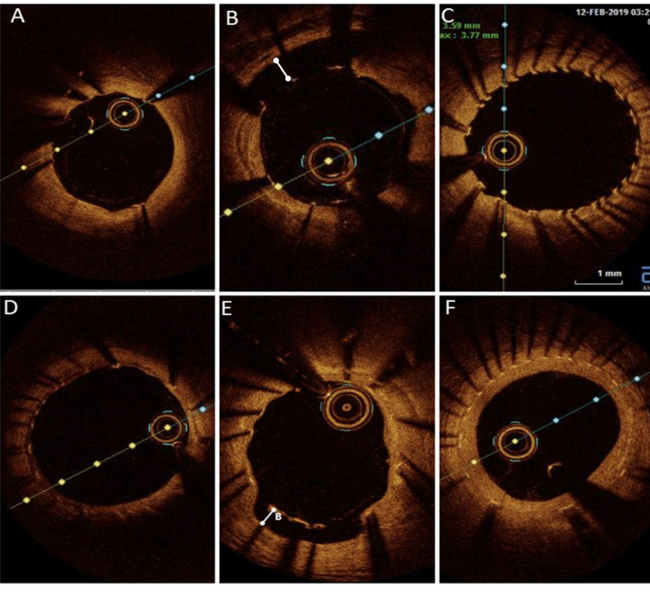
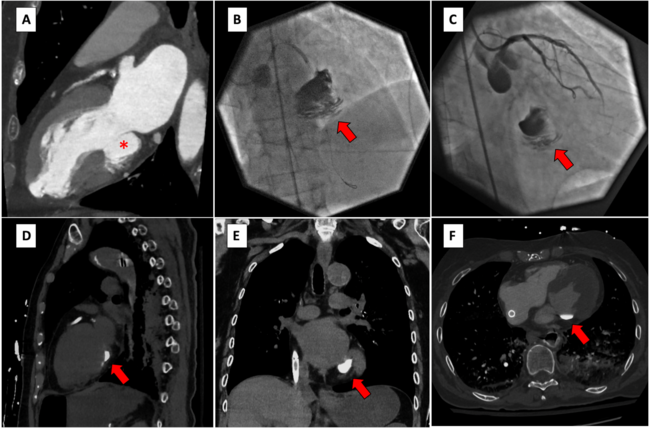
ABSTRACT: Intracoronary dehiscence of the radiopaque ring of a guiding catheter is a rare complication, which could lead to myocardial infarction, emergency surgery, or even death. We describe the percutaneous retrieval of the catheter...
ABSTRACT: Intracoronary...
08/30/2012
Journal of Invasive Cardiology
Editor's Message
08/30/2012
Richard E. Shaw, PhD, FACC
The recent 2012 Olympic competitions in London have demonstrated the critical role that collaboration plays in achieving successful outcomes. The same is true for successful clinical research. Whether it is local collaboration or work that...
The recent 2012 Olympic...
08/30/2012
Journal of Invasive Cardiology
Invasive Thoughts
08/30/2012
Emmanouil S. Brilakis, MD, PhD, FACC, FAHA, FESC, FSCAI; Vishal G. Patel, MD
I frequently visit various cardiac catheterization laboratories both in the US and abroad and watch live cases at various interventional meetings. I find such experiences invaluable for “opening the mind” to new, different, and often better...
I frequently visit various...
08/30/2012
Journal of Invasive Cardiology
Tips and Techniques
08/30/2012
Thomas W. Smith, MD; Jason H. Rogers, MD; Ehrin J. Armstrong, MD, MSc, FACC; Andrew T. Kwa, MD; Aarti Bhat, MD; Benjamin Romick, MD
Abstract: Background. Patients with complex congenital heart disease may require surgical construction of interatrial baffles to shunt blood between atria. Long-term complications of these procedures may include stenosis or leak of the...
Abstract: Background. Patients...
08/30/2012
Journal of Invasive Cardiology
Radial Access Technique
08/30/2012
Alain Waked, MD; Georges Khoueiry, MD; Tariq M. Bhat, MD
Abstract: Transradial access for cardiac catheterization is widely accepted as a safe and viable approach with markedly decreased incidence of major access-related complications compared to the transfemoral approach. Minor catheter looping or...
Abstract: Transradial access for...
08/30/2012
Journal of Invasive Cardiology
Review
08/30/2012
Daniel B. McKenzie, MRCP, BMedSci; Suneel Talwar, MD; Mehmood Zeb, MBBS, MRCP; Paul Andrew Scott, MBChB, MRCP
s hiya
s hiya
s hiya
08/30/2012
Journal of Invasive Cardiology
08/29/2012
Juan F. Oteo, MD; Luis Nombela-Franco, MD; Javier Goicolea, MD
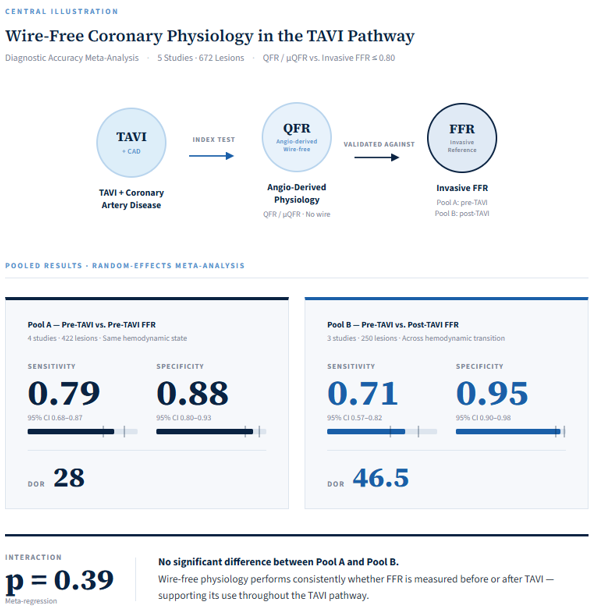
Abstract: The recent development of transcatheter aortic valve implantation (TAVI) for patients with severe aortic stenosis (AS) offers a feasible option for high-risk surgical patients. However, several complications are specifically related...
Abstract: The recent development...
08/29/2012
Journal of Invasive Cardiology
08/29/2012
Peter Wenaweser, MD; Steffen Gloekler, MD; Thomas Pilgrim, MD; Stefan Stortecky, MD; Lutz Bielefeld, MD; Ahmed A. Khattab, MD; Christoph Huber, MD; Bernhard Meier, MD, FACC, FESC; Stephan Windecker, MD
Abstract: Background. Unfavorable immediate or delayed results after transcatheter aortic valve implantation (TAVI) may be a consequence of bioprosthesis malfunctioning, malpositioning, embolization, or degeneration. Deployment of a second...
Abstract: Background....
08/29/2012
Journal of Invasive Cardiology
Original Contribution
08/29/2012
Justin M. Carter, MD; Dirk Mahnkopf, MD; Karl Werdan, MD; Roland Prondzinsky, MD; Konstantin M. Heinroth, MD; Susanne Unverzagt, PhD; Michael Buerke, MD
Abstract: Background. Transcoronary pacing for the treatment of bradycardias during percutaneous coronary intervention (PCI) is a useful technique in interventional cardiology. The standard technique is unipolar pacing with the guidewire in...
Abstract: Background....
08/29/2012
Journal of Invasive Cardiology
Original Contribution
08/29/2012
Alexandra J. Lansky, MD; Krishnankutty Sudhir, MD, PhD; Takaaki Isshiki, MD; Tadashi Kikuchi, MD, PhD; Hiroshi Nonogi, MD, PhD; Keiichi Igarashi, MD; Kenshi Fujii, MD; Kumiko Saito, MS, MPH; Hiroshi Fujita, MD; Shigeru Nakamura, MD; Shigeru Saito, MD; Kazuaki Mitsudo, MD; Masato Nakamura, MD; Takeshi Kimura, MD; Hauro Hirayama, MD, PhD; Gregg W. Stone, MD, FACC, FSCAI; Yasuhiro Honda, MD; Peter J. Fitzgerald, MD, PhD; Katsuhisa Waseda, MD, PhD
Abstract: To address safety concerns with first-generation drug-eluting stents (DESs), the everolimus-eluting stent (EES) has been developed as a second-generation DES. The study aim was to: (1) demonstrate that use of the EES in Japanese...
Abstract: To address safety...
08/29/2012
Journal of Invasive Cardiology
Original Contribution
08/29/2012
Shigenori Ito, MD; Kazuyuki Miyata, MD; Takayuki Yoshida, MD; Kosuke Nakasuka, MD; Kotaro Morimoto, MD; Masahiko Inomata, MD; Nozomu Tamai, MD; Shin Suzuki, MD; Yoshimasa Murakami, MD; Koichi Sato, MD
Abstract: Background. The appropriate dose of sodium bicarbonate to prevent contrast-induced nephropathy (CIN) has not been established. 
Abstract: Background. The...
08/29/2012
Journal of Invasive Cardiology
Original Contribution
08/29/2012
Zakhia Saliba, MD; Issam El-Rassi, MD; Dina Helou, MD; Ghassan Chehab, MD; Tony Abdel-Massih, MD; Linda Daou, MD; Viviane Fernandes Chalhoub, MD; Elie Choueiry, MD; Bernard Gerbaka, MD
Abstract: Percutaneous closure of the patent ductus is the gold standard therapy. Our aim was to analyze our failures between 2001 and 2010. Methods. All patients over 5 kg benefited from a transcatheter attempt at duct closure. Coils and...
Abstract: Percutaneous closure...
08/29/2012
Journal of Invasive Cardiology
Original Contribution
08/29/2012
Makoto Suzuki, MD; Daijirou Enomoto, MD; Takeshi Mizobuchi, MD; Yukio Kazatani, MD; Kazuo Honda, MD
Abstract: Background. We investigated an impact of the presence of chronic total coronary occlusion (CTO) in a non-infarct related coronary artery on microvascular reperfusion in patients with a first anterior ST-segment elevation myocardial...
Abstract: Background. We...
08/29/2012
Journal of Invasive Cardiology
Original Contribution
08/28/2012
Bina Ahmed, MD; Juan D. Martinez, MD; Alex Schevchuck, MD; Shozab Ahmed, MD; Mark J. Ricciardi, MD, FAHA; Ronald Schrader, PhD; Mel A. Peralta, MD; Mark W. Sheldon, MD
Abstract: Objectives. To determine the time to maximal coronary dilation following intracoronary (IC) nitroglycerin (NTG) and whether the decrease in aortic pressure (AoP) is a surrogate marker for coronary vasodilatation. Background....
Abstract: Objectives. To...
08/28/2012
Journal of Invasive Cardiology