Pembrolizumab Improves DFS Without Compromising HRQOL in High-Risk Muscle-Invasive Urothelial Carcinoma
Clinical Summary:
- Design/Population: Phase 3 AMBASSADOR trial assessing health-related quality of life in 560 patients with high-risk muscle-invasive urothelial carcinoma randomized to adjuvant pembrolizumab or observation after radical surgery.
- Key Outcomes: At 12 months, no statistically significant or clinically meaningful differences in patient-reported outcomes were observed between treatment arms across EQ-5D-5L, EORTC QLQ-C30, and BLM30 measures.
- Clinical Relevance: These findings indicate that the disease-free survival benefit of adjuvant pembrolizumab is achieved without compromising health-related quality of life, further supporting its use in the adjuvant setting.
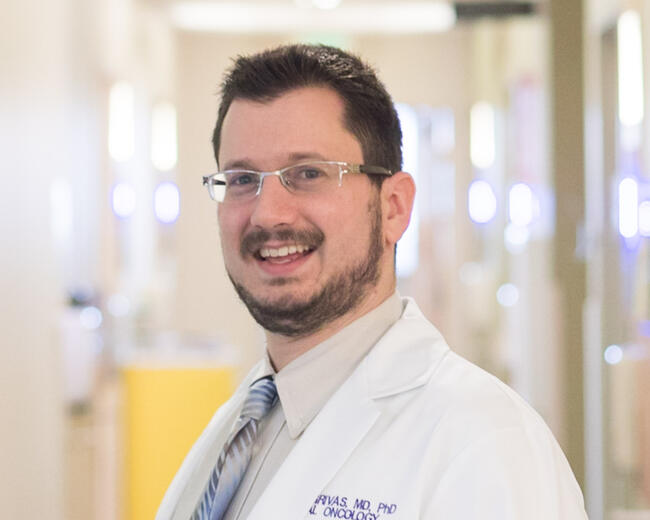
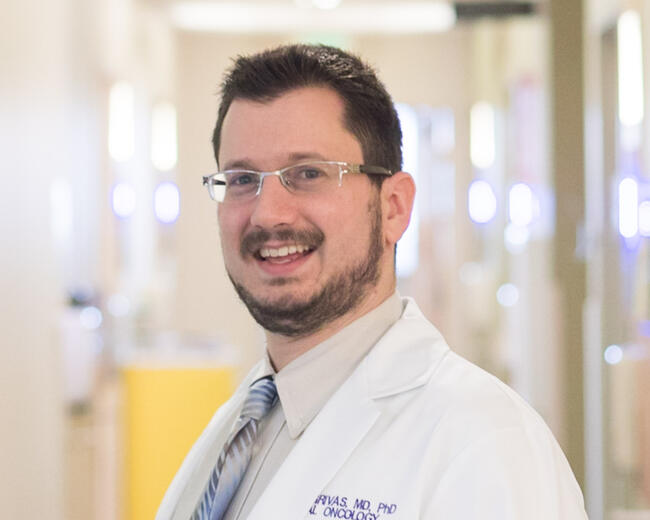
Ronald Chen, MD, University of Kansas Medical Center, Kansas City, Kansas, reviews results from the AMBASSADOR trial evaluating health-related quality of life (HRQOL) in patients with high-risk muscle-invasive urothelial carcinoma receiving adjuvant pembrolizumab after radical surgery.
While pembrolizumab previously demonstrated a significant improvement in disease-free survival compared with observation, patient-reported outcomes at 12 months showed no statistically significant or clinically meaningful differences between treatment arms across multiple HRQOL measures.
These findings, presented at the 2026 ASCO Annual Meeting in Chicago, Illinois, suggest that adjuvant pembrolizumab can improve clinical outcomes without compromising quality of life, further supporting its use in this patient population.
Transcript:
Hi, I'm Dr Ronald Chen. I'm Professor and Chair of Department of Radiation Oncology at University of Kansas Medical Center. I am talking about the quality of life results of the AMBASSADOR Randomized trial.
The AMBASSADOR trial was for a patient population with high-risk urothelial carcinoma who've had radical surgery. High-risk patients are those who've had radical surgery and if they did have neoadjuvant chemotherapy, they still had significant residual disease at the time of surgery, or if they didn't have neoadjuvant therapy, they had pathologic T3T4 or node-positive or positive margins at surgery. For these patients who have high-risk urothelial carcinoma, after surgery they still have a 60% to 70% chance of recurrence. There's an unmet need for adjuvant therapy to improve the outcomes for these patients.
The AMBASSADOR trial randomized 702 patients to adjuvant pembrolizumab for a year vs observation. The primary results of this trial were published by Apolo et al. in New England Journal of Medicine in 2025 and it showed that adjuvant pembrolizumab doubled the disease-free survival from 14 months to 29 months, so a significant improvement in patient outcomes. But what's also important is that patients don't just want to know the disease control of treatment. They also want to know the quality of life impact of adjuvant therapy.
What I'm presenting here at ASCO this year is the quality of life part of the AMBASSADOR trial. What we found in the quality of life results in this trial is that adjuvant pembrolizumab increased patient-reported fatigue, increased patient-reported dyspnea, which is shortness of breath. These patient-reported side effects also were associated with increased decline in physical function and physical function means the ability to perform activities of daily living or strenuous activities. It also impacted their ability to fulfill certain roles such as work and hobbies, but there was no impact on overall quality of life.
The overall message from this overall trial, including the disease outcome, quality of life outcome, is that for these patients with high-risk urothelial carcinoma after radical surgery, adjuvant pembrolizumab significantly improves disease control. It has some side effects like dyspnea and fatigue. There is modest impact on physical function and ability to work, but no impact on overall quality of life. This is important because physical function and ability to work and perform activities is something that with better survivorship care, supportive care, physical therapy, for example, we can actually mitigate. The adjuvant pembrolizumab should be recommended for a lot of patients because of the benefit and disease control and a quality of life impact is something that we should do something about.
Source:
Chen RC, Dueck AC, Fruth B, et al. Health-related quality of life (HRQOL) with pembrolizumab or observation for high-risk muscle-invasive urothelial carcinoma after surgery: Results from the AMBASSADOR randomized trial (Alliance A031501). Presented at the ASCO Annual Meeting. May 29 - June 2, 2026. Chicago, Illinois. Abstract 4513.