Adjuvant Avelumab Demonstrates Clinically Meaningful Activity in Merkel Cell Carcinoma
Clinical Summary:
- Design/Population: Phase 3 randomized, double-blind, placebo-controlled ADAM trial enrolling 100 patients with stage III Merkel cell carcinoma following definitive local therapy.
- Key Outcomes: Adjuvant avelumab was associated with a clinically meaningful reduction in recurrence risk, although the primary end point of relapse-free survival did not reach statistical significance.
- Clinical Relevance: These findings suggest that adjuvant avelumab may reduce recurrence risk and support individualized discussions regarding proactive versus salvage immunotherapy approaches.
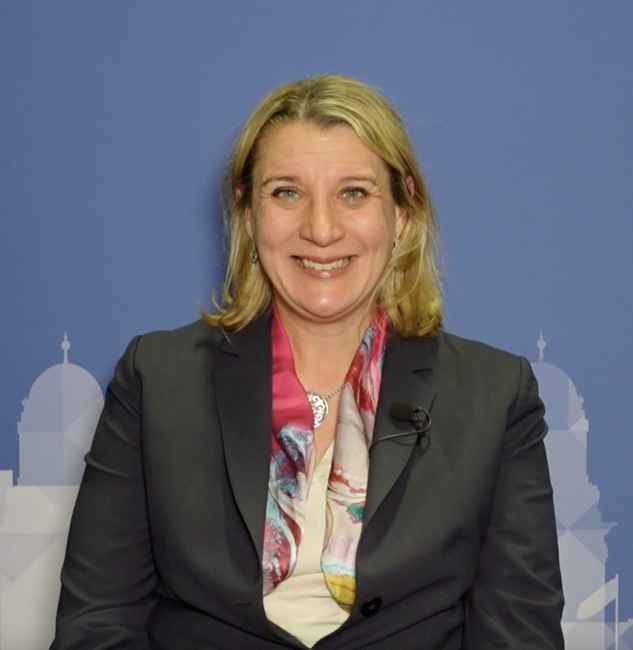
Shailender Bhatia, MD, Fred Hutchinson Cancer Center and University of Washington, Seattle, Washington, discusses results from the phase 3 ADAM trial evaluating adjuvant avelumab in patients with stage 3 merkel cell carcinoma. The study was designed to determine whether immunotherapy administered after definitive treatment could reduce recurrence risk in a population with historically high rates of relapse and disease-specific mortality.
Although the trial narrowly missed statistical significance for its primary end point, adjuvant avelumab was associated with a substantial reduction in recurrence risk compared with placebo, particularly during the first year after treatment. Disease-specific survival remained high in both groups, suggesting that both upfront and salvage immunotherapy strategies may be effective options for patients with stage 3 merkel cell carcinoma.
Dr Bhatia presented these results at the 2026 ASCO Annual Meeting in Chicago, Illinois.
Transcript:
My name is Shailender Bhatia. I'm a medical oncologist at University of Washington and Fred Hutch Cancer Center. Today I am absolutely delighted to talk about the results of our phase 3 trial named ADAM trial. ADAM stands for adjuvant avalumab and Merkel.
The ADAM trial represents an investigator-initiated phase 3 randomized controlled placebo controlled blinded trial, which was conducted across 9 major academic centers in the US. The trial population consisted of stage 3 Merkel cell carcinoma patients with lymph node metastases and stage 3 Merkel cell carcinoma can be further subdivided into stage 3a, which represents patients who presented with sentinel lymph node biopsy detected lymph nodes or with clinically detected lymph nodes, but with an unknown primary Merkel. Stage 3b represents patients with a known primary Merkel who presented with clinically detected lymph nodes. This is considered a very high risk population with a relapse rate around 40 to 60% for stage 3a and stage 3B respectively.
The disease specific mortality rate prior to the advent of immunotherapy used to be 25 to 50% in this high risk population. To this date, we don't have a clearly defined role of adjuvant therapy and the ADAM trial is attempting to shed some light on the use of adjuvant therapy in this high risk setting. In the ADAM trial, we enrolled a total of 100 patients. These patients had to have completed their definitive therapy, which could be either surgery followed by adjuvant radiation. Some patients did not get adjuvant radiation and just got surgery, or it could be definitive radiation therapy, which was the case in a handful of patients. These hundred patients after completion of their definitive therapy were randomized in a 1 to 1 ratio to either avalumab or placebo. We used a slightly different schedule of avalumab than is commonly used. It was a deintensification schema for administering avalumab.
It was administered every 15 days for the first 4 months, followed by every 30 days for the next 4 months, followed by every 4 months up to a total of 2 years. This schedule allowed us to make sure that patients on both avalumab and placebo arms got their scans done in a timely manner. The primary end point for the trial was relapse-free survival and secondary end points included distant metastasis-free survival, disease-specific survival, overall survival, as well as safety end points.
In terms of the primary end point, the relapse-free survival, we found out that avalumab was associated with a numerically reduced relapse-free survival benefit. The hazard ratio for avalumab versus placebo was 0.55. The P-value was 0.07, hence the trial did not quite meet the statistical significance. However, we feel that the reduction or the benefit seen in relapse resurvival is quite impressive and clinically very meaningful.
What was clear from the trial that the placebo arm had a very high rate of recurrence as we had anticipated more than 40% of patients in the placebo arm relapsed. In the avalumab arm, there was a striking reduction in the risk of relapse in the first year amounting to an absolute risk reduction of around 28%. At 2 years, there were a few more patients who had relapsed in avalumab and the absolute risk reduction at two years was close to 22%. We also saw some benefit in the end points for distant metastasis-free survival, although the differences were not statistically significant due to smaller numbers.
Perhaps one of the most important findings from the study is that we did not see any significant disadvantage in terms of disease-specific survival in either avalumab or placebo arms, which suggested that most patients on the placebo arm who had relapsed were likely effectively salvaged with the subsequent use of immunotherapy. Most impressively, the overall mortality, the disease-specific mortality in this trial was 8% combined for both arms, which compares quite favorably to what we have seen with the historical cohorts.
In summary, ADAM trial shows that adjuvant use of avalumab can help reduce the risk of relapse in patients with lymph node metastases who historically have a very high risk of relapse. Importantly, the disease-specific survival was high in both arms suggesting that either proactive use of immunotherapy or reactive use after the documentation of relapse are both reasonable options in this population. We hope that the results of the ADAM trial will inform the management of patients in the clinic on an individualized basis. Thank you.
Source:
Bhatia S, Gooley T, Brohl AS, et al. ADAM trial: A multicenter, randomized, double-blinded, placebo-controlled, phase 3 trial of adjuvant avelumab (anti-PD-L1 antibody) in patients with Merkel cell carcinoma and lymph node metastases. Presented at the ASCO Annual Meeting. May 29 - June 2, 2026. Chicago, Illinois. LBA9504.