Volume 23 - Issue 5 - May 2011

05/02/2011
Tejas M. Patel, MD, DM; Sanjay C. Shah, MD, DM; Samir B. Pancholy, MD, FACP, FACC, FSCAI
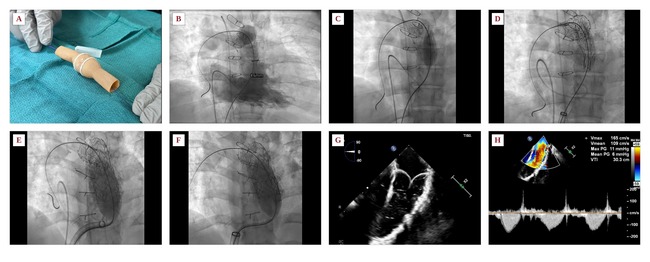
ABSTRACT: Development of a catheter knot is uncommon but still a matter of concern for a catheterizing cardiologist. There are only a few case reports of percutaneous catheter unknotting in the literature. We describe for the first time a...
ABSTRACT: Development of a...
05/02/2011
Journal of Invasive Cardiology
05/02/2011
Ioannis Iakovou, MD
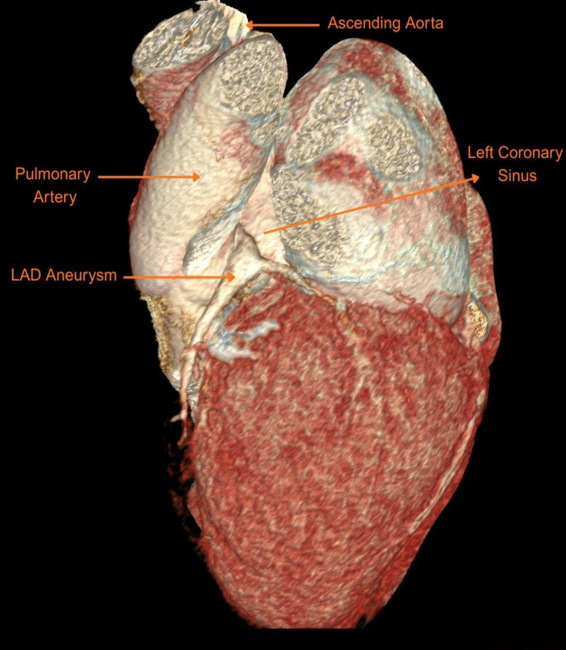
ABSTRACT: Coronary artery aneurysm (CAA) is defined as a coronary dilatation that exceeds the diameter of normal adjacent segments or the diameter of the patient’s largest coronary vessel by 1.5 times. The presence of a CAA is not always...
ABSTRACT: Coronary artery...
05/02/2011
Journal of Invasive Cardiology
05/02/2011
Takashi Matsukage, MD, PhD; Yuji Ikari, MD, PhD, FACC, FESC; Naoki Masuda, MD
ABSTRACT: A 76-year-old male was admitted to our hospital for effort angina pectoris. His coronary computed tomography and coronary angiography revealed anomalous origins of the left anterior descending artery (LAD) from the proximal right...
ABSTRACT: A 76-year-old male was...
05/02/2011
Journal of Invasive Cardiology
04/29/2011
Amit B. Sanghvi, MD; José Francisco Díaz Fernández, MD; Antonio Enrique Gómez Menchero, MD
ABSTRACT: Sidebranches of the left internal mammary artery that are not ligated at the time of coronary artery bypass surgery can cause coronary steal syndrome, resulting in angina. Several isolated case reports have demonstrated successful...
ABSTRACT: Sidebranches of the...
04/29/2011
Journal of Invasive Cardiology
04/29/2011
Jon C. George, MD, MBA; Vincent Varghese, DO
ABSTRACT: Purulent pericarditis, once a common entity associated with intrathoracic infections, such as pneumonia and empyema, has become an infrequent illness in the post-antibiotic era. Prompt recognition and therapy are vital in improving...
ABSTRACT: Purulent pericarditis,...
04/29/2011
Journal of Invasive Cardiology
04/29/2011
Cinzia Marrozzini, MD; Antonio Marzocchi, MD; Francesco Saia, MD, PhD
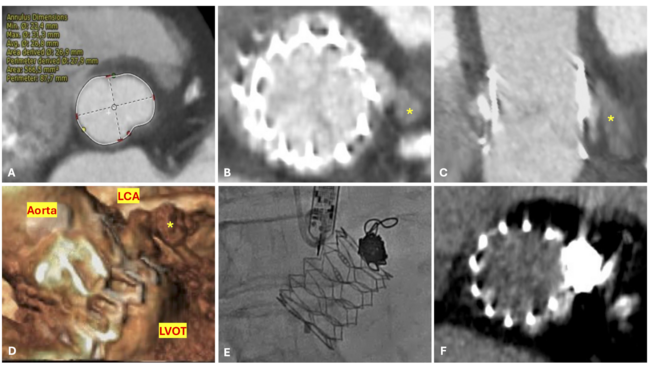
ABSTRACT: We describe the case of an 89-year-old woman who developed severe left main coronary artery stenosis shortly after transcatheter aortic valve implantation (TAVI) with the Medtronic CoreValve Revalving System. Urgent coronary...
ABSTRACT: We describe the case...
04/29/2011
Journal of Invasive Cardiology
04/29/2011
Ahmad E. Mostafa, MD; Volker Geist, MD; Mohamed Abdel-Wahab, MD
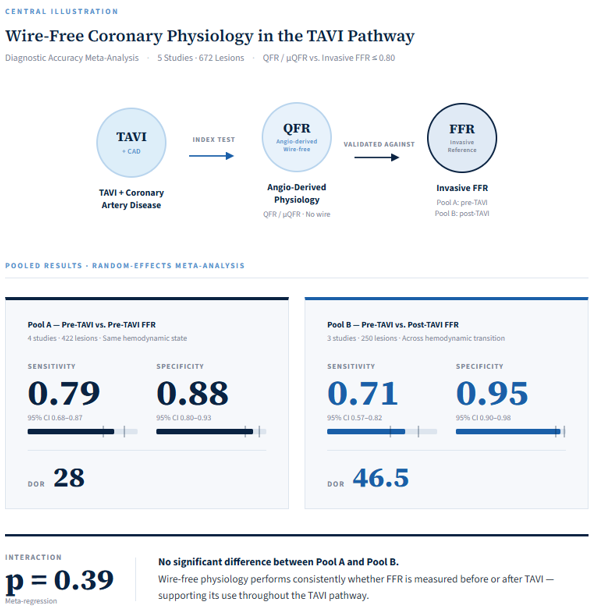
ABSTRACT: Coronary artery disease has been reported in more than 50% of patients with severe aortic stenosis above the age of 70 years. Combined surgical aortic valve replacement (SAVR) and coronary artery bypass grafting (CABG) is associated...
ABSTRACT: Coronary artery...
04/29/2011
Journal of Invasive Cardiology
04/29/2011
Paul Poommipanit, MD, FACC, FSCAI
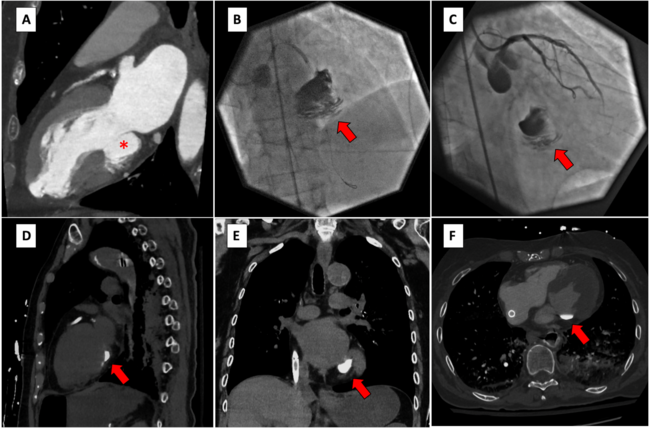
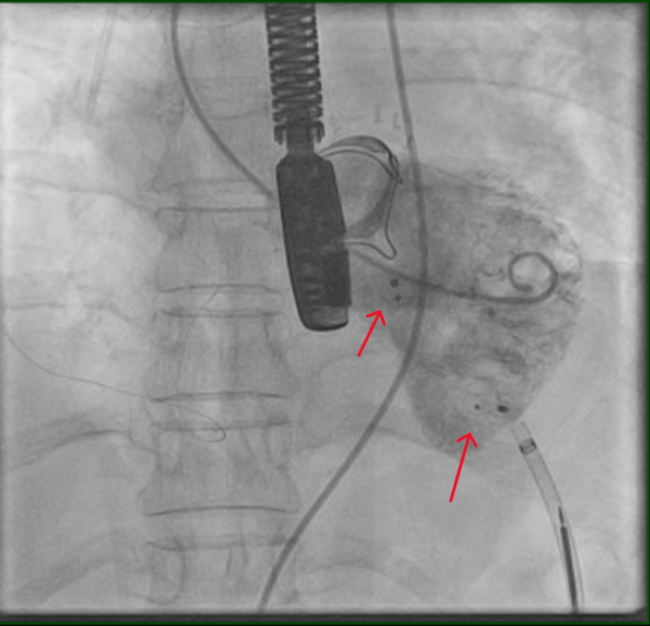
ABSTRACT: Although performing a biopsy of the right ventricular septum is a routine procedure in many cardiac catheterization laboratories, the ability to direct a bioptome to a mass within the right or left side of the heart is extremely...
ABSTRACT: Although performing a...
04/29/2011
Journal of Invasive Cardiology
04/29/2011
Jon C. George, MD, MBA; Vincent Varghese, DO; Allen Mogtader, MD
ABSTRACT: Loculated pericardial effusion, as a cause of acute hypoxia, is an unusual finding. Here, we describe the case of a patient who underwent percutaneous coronary intervention, complicated by a localized pericardial hematoma...
ABSTRACT: Loculated pericardial...
04/29/2011
Journal of Invasive Cardiology
Clinical Images
04/29/2011
Giampaolo Niccoli, MD, PhD; Giuseppe Ferrante, MD; Peter Barlis, MD, MBBS, MPH, FRACP
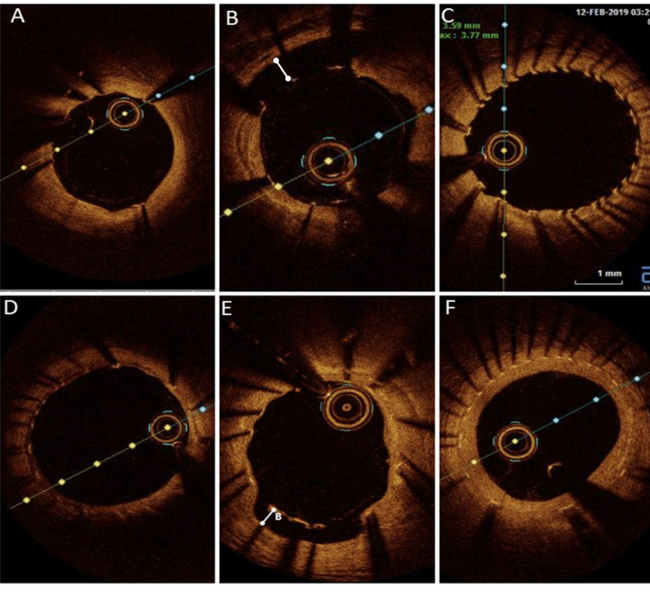
A 75-year-old, male ex-smoker with hypertension and family history of ischemic heart disease, previous anterior myocardial infarction, and angioplasty with bare-metal stent implantation to the left anterior descending artery 4 years earlier,...
A 75-year-old, male ex-smoker...
04/29/2011
Journal of Invasive Cardiology
Tips and Techniques
04/29/2011
Chi-Kin Chan, MD, MRCP, MBBS; Raymond Chi-Yan Fung, MRCP, MBBS, FHKCP
ABSTRACT: Aorto-ostial left main (LM) percutaneous coronary intervention (PCI) remains a challenge in interventional cardiology, as precise positioning of stents using conventional angiographic landmarks is difficult. Previously described...
ABSTRACT: Aorto-ostial left main...
04/29/2011
Journal of Invasive Cardiology
04/29/2011
Raja Nawaz, MD; Sorin J. Brener, MD
ABSTRACT: The left internal mammary artery (LIMA) has been the conduit of choice in coronary artery bypass grafting (CABG). Atresia of the LIMA is a common finding after CABG in patients with less than critical disease of the native vessel....
ABSTRACT: The left internal...
04/29/2011
Journal of Invasive Cardiology
Review
04/29/2011
Mohammad Reza Movahed, MD, PhD, FACP, FACC, FSCAI; Hoang Thai, MD; Mohammad Reza Habibzadeh, MD
ABSTRACT: No-reflow is a failure to restore normal coronary flow despite appropriate treatment of coronary obstruction. It is most commonly seen during interventions in saphenous vein grafts and is associated with poor outcome. The cause of...
ABSTRACT: No-reflow is a failure...
04/29/2011
Journal of Invasive Cardiology
Commentary
04/29/2011
Seshasayee Narasimhan, MD, MRCP, FRACP; Paolo P. Gabriel, BA
Vascular closure devices (VCDs) debuted in the 1990s as an alternative to the gold standard of manual compression (MC) for femoral access hemostasis. The current guidelines for closure devices dictate the importance of the puncture site,...
Vascular closure devices (VCDs)...
04/29/2011
Journal of Invasive Cardiology
04/29/2011
Sripal Bangalore, MD, MHA
ABSTRACT: Objectives. To evaluate the efficacy and safety of the nitinol clip-based closure device (Starclose®, Abbott Vascular, Santa Clara, California) in patients with femoral arterial cannulation at the common femoral artery bifurcation....
ABSTRACT: Objectives. To...
04/29/2011
Journal of Invasive Cardiology
Commentary
04/29/2011
Robert S. Dieter, MD, RVT
In this issue of the Journal of Invasive Cardiology, Drs.Vaghetti et al1 from Italy have presented their 10-year experience with thoracic endovascular aortic repair (TEVAR) for acute aortic syndromes (AAS). They describe their experience with...
In this issue of the Journal of...
04/29/2011
Journal of Invasive Cardiology
04/28/2011
Marco Vaghetti, MD
ABSTRACT: Purpose. To report the procedural and long-term follow-up data (mean, 43 ± 29 months; range, 12–90 months) of endovascular stent grafting (ESG) of acute thoracic aortic syndromes (ATAS) with a proximal landing zone extension...
ABSTRACT: Purpose. To report the...
04/28/2011
Journal of Invasive Cardiology
Commentary
04/28/2011
Peter C. Block, MD
Trying to decrease the risk of surgical or interventional cardiac procedures for patients with heart disease is a slow process. Forty to 50 years ago when valve replacement and coronary surgery were just beginning, operative risk was...
Trying to decrease the risk of...
04/28/2011
Journal of Invasive Cardiology
04/28/2011
Pablo Salinas, MD; Luis Riera, MD; Isidro Moreno-Gomez, MD; Angel Sánchez-Recalde, MD, PhD; Jose Mesa, MD; Raúl Moreno-Gómez, MD, PhD; Ignacio Plaza, MD; David Dobarro, MD; Guillermo Galeote, MD, PhD; Santiago Jimenez-Valero, MD, PhD; Luis Calvo-Orbe, MD; Jose Luis Lopez-Sendon, MD, PhD
ABSTRACT: Background. In order to improve technique and to prevent serious procedural complications during transcatheter aortic valve implantation (TAVI), it is crucial to identify the causes of death of patients undergoing this procedure....
ABSTRACT: Background. In order...
04/28/2011
Journal of Invasive Cardiology
Commentary
04/28/2011
Anubodh Varshney, BS 
The clinical importance of thrombus-driven microvascular obstruction (MVO) during acute myocardial infarction (MI) has been increasingly recognized in the last decade.1 Indeed, several studies have documented a failure to achieve Thrombolysis...
The clinical importance of...
04/28/2011
Journal of Invasive Cardiology
04/28/2011
Atsushi Kobori, MD; Takeshi Kitai, MD; Tomoko Tani, MD; Toru Kita, MD; Yutaka Furukawa, MD; Yoshimori An, MD; Shuichiro Kaji, MD; Kitae Kim, MD; Atsushi Yamamuro, MD; Makoto Kinoshita; Natsuhiko Ehara, MD
ABSTRACT: Background. The purpose of this study was to evaluate the influence of thrombus aspiration during primary percutaneous coronary intervention (PCI) on myocardial viability in patients with ST-segment elevation myocardial infarction...
ABSTRACT: Background. The...
04/28/2011
Journal of Invasive Cardiology