Volume 19 - Issue 5 - May, 2007

Case Report
08/01/2008
Islam Bolad, MD; Lawrence P. O'Meallie, MD
Coronary artery fistulae are extremely rare1 and can either be congenital or acquired secondary to cardiac intervention or surgery. They have also been reported following acute myocardial infarction.2 The majority of these fistulae arise from...
Coronary artery fistulae are...
08/01/2008
Journal of Invasive Cardiology
IAGS (International Andreas Gruentzig Society) Proceedings
08/01/2008
Jorge A. Belardi, MD, PhD; Joseph D. Babb, MD; Sigrid Nikol, MD; William W. O'Neill, MD; Robert Simari, MD; Timothy D. Henry, MD
Prof. Dr. Sigrid Nikol MD: I welcome you to this session, New Developments in Gene Therapy and Stem Cells for Angiogenesis in the Treatment of Myocardial Infarction. Initial developments of regenerative therapies were mainly angiogenesis...
Prof. Dr. Sigrid Nikol MD: I...
08/01/2008
Journal of Invasive Cardiology
IAGS (International Andreas Gruentzig Society) Proceedings
08/01/2008
Robert Simari, MD
Robert Simari, MD: I appreciate this opportunity to present some general insights into the fields of gene and cell therapy, both from a perspective as an experimental biologist, as a clinician as well as from a regulatory perspective to see...
Robert Simari, MD: I appreciate...
08/01/2008
Journal of Invasive Cardiology
Case Report
08/01/2008
Surender Malhotra, MBBS; Rakesh N. Patel, MBBS, MD; Mahendra Mandawat, MBBS, MD
Congenitally corrected transposition of the great vessels (CCTGA) is a rare congenital heart defect (CHD) and constitutes less than 1% of all congenital heart disease. The two fundamental anatomic abnormalities in CCTGA consist of...
Congenitally corrected...
08/01/2008
Journal of Invasive Cardiology
Case Report
08/01/2008
Ferdinand Leya, MD; Ravi K. Ramana, DO; David J. Wilber, MD
Case Study. A 56-year-old male with severe nonischemic cardiomyopathy and recurrent ventricular tachycardia (VT) presented to our cardiology clinic with complaints of intermittent palpitations and several implantable cardioverter...
Case Study. A 56-year-old male...
08/01/2008
Journal of Invasive Cardiology
Case Report
08/01/2008
Kevin P. Theleman, MD; Charles M. Gottlich, MD; Jeffrey M. Schussler, MD
Case Report. A 65-year-old male with no known history of coronary disease presented with dyspnea on exertion and electrocardiographic (ECG) changes suggesting an old inferior infarct. Stress testing suggested ischemia based on ECG criteria....
Case Report. A 65-year-old male...
08/01/2008
Journal of Invasive Cardiology
Editorial Message
08/01/2008
Richard E. Shaw, PhD, FACC
Dear Readers,The May 2007 issue of the Journal of Invasive Cardiology includes original research articles, commentaries, a review article, clinical images, online case reports, and a continuation of discussions from the Biennial Andreas...
Dear Readers,The May 2007 issue...
08/01/2008
Journal of Invasive Cardiology
Case Report
08/01/2008
Felipe Fernandez-Vazquez, MD, PhD; Fernando Alfonso, MD, PhD, FESC; Diego Martín, MD
Treatment of patients with hypertrophic obstructive cardiomyopathy (HOCM) and refractory symptoms remains a challenge.1 Surgical septal myectomy remains the classical approach for these patients.2 This therapy is associated with good initial...
Treatment of patients with...
08/01/2008
Journal of Invasive Cardiology
Case Report
08/01/2008
Kenneth G. Warner, MD; Carey D. Kimmelstiel, MD, FACC, FACP, MSCAI; Brian C. Downey, MD
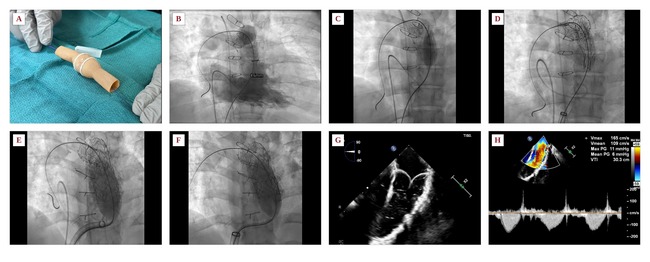
Despite extensive advances in cardiology over the past 50 years, the definitive treatment for aortic stenosis remains unchanged. Aortic valve replacement, while employing enhanced prostheses, continues as an imperfect therapy with inherent...
Despite extensive advances in...
08/01/2008
Journal of Invasive Cardiology
Case Report
08/01/2008
Elad I. Levy, MD; L. Nelson Hopkins, MD; Robert D. Ecker, MD
Only two therapies for acute stroke intervention have been approved by the U.S. Food and Drug Administration: intravenous tissue plasminogen activator (tPA) and the Merci retriever (Concentric Medical, Mountainview, California). Many patients...
Only two therapies for acute...
08/01/2008
Journal of Invasive Cardiology
Case Report
08/01/2008
Qi-Ling Cao, MD; Ziyad M. Hijazi, MD, MPH; Rami Kharouf, MD
Coronary artery fistula (CAF) is a rare congenital cardiac anomaly in which a communication is present between a coronary artery and either a cardiac chamber or another vascular structure. It accounts for 0.2–0.45% of all congenital cardiac...
Coronary artery fistula (CAF) is...
08/01/2008
Journal of Invasive Cardiology
Case Report
08/01/2008
Amgad N. Makaryus, MD; Loukas S. Boutis, MD, FACC, FSCAI; Bruce Goldner, MD; Chong H. Park, MD
Biventricular pacing (BVP) for the treatment of congestive heart failure is now one of the forefront therapies for heart failure patients who continue to have symptoms despite maximal medical therapy. Recent advances in lead technology and...
Biventricular pacing (BVP) for...
08/01/2008
Journal of Invasive Cardiology
Clinical Images
08/01/2008
Ravi K. Sureddi, MD; Rajesh Sachdeva, MD; Kunal Sarkar, MD
Case Presentation. A 58-year-old male presented with substernal chest pain that started while mowing his lawn. The chest pain radiated to the left shoulder and was not relieved with sublingual nitroglycerin. He had controlled hypertension and...
Case Presentation. A 58-year-old...
08/01/2008
Journal of Invasive Cardiology
08/01/2008
Edo Kaluski, MD; Alberto Hendler, MD; Izhak Zyssman, MD; Yosef Gurevich, MD; Alex Blatt, MD; Zvi Vered, MD; Ricardo Krakover, MD; Vladimir Danicek, MD
Significant left main coronary stenosis occurs in 5–7% of patients undergoing coronary angiography.1,2 Patients with “unprotected” left main coronary artery (ULMCA) disease treated medically have an estimated 3-year mortality rate of ...
Significant left main coronary...
08/01/2008
Journal of Invasive Cardiology
08/01/2008
Stephen Balter, PhD; Tereza Pucelikova, MD; Gregg W. Stone, MD, FACC, FSCAI; Liz Kaufman, PhD; Martin B. Leon, MD; Martin Fahy, MSc; Alexandra J. Lansky, MD; George D. Dangas, MD, PhD; Roxana Mehran, MD; Jeffrey W. Moses, MD; Eugenia Nikolsky, MD, PhD
Advances in interventional cardiology are reflected in the increased complexity of percutaneous coronary interventions (PCI). This leads to an increasing use of fluoroscopic guidance in these procedures with a concomitant increase in concern...
Advances in interventional...
08/01/2008
Journal of Invasive Cardiology
08/01/2008
Lawrence A. Garcia, MD, FACC, FAHA; Troy A. Bunting, MD
Endovascular treatment has become the predominant method of revascularization for arterial obstructive disease for both coronary and peripheral vascular disease. As such, radiation exposure and fluoroscopy times during percutaneous coronary...
Endovascular treatment has...
08/01/2008
Journal of Invasive Cardiology
08/01/2008
Mark A. de Belder, MA, MD, FRCP; Babu Kunadian, MBBS, MRCP; Andrew R. Thornley, MB, MRCP; Kunadian Vijayalakshmi, MBBS, MRCP; Joel Dunning, MRCS, PhD; Douglas F. Muir, MB, MRCP; Robert A. Wright, MD, FRCP; James A. Hall, MA, MD, FRCP; Andrew G.C. Sutton, MA, MD, MRCP
Cardiogenic shock is the leading cause of death in patients with acute myocardial infarction (AMI) who reach the hospital alive.1,2 The reported incidence of cardiogenic shock in patients with AMI is 7–10%.1,3 The mortality rate in these...
Cardiogenic shock is the leading...
08/01/2008
Journal of Invasive Cardiology
08/01/2008
Robert S. Dieter, MD, RVT; Pranab Das, MD; Aravinda Nanjundappa, MD, RVT, MBA
Technological advancements have revolutionized the field of interventional cardiology by introducing newer devices and better pharmacological agents. The incidence of cardiogenic shock (CS) complicating acute myocardial infarction (AMI)...
Technological advancements have...
08/01/2008
Journal of Invasive Cardiology
08/01/2008
Deepak L. Bhatt, MD, MPH, FACC, FAHA, FESC, MSCAI; Hitinder S. Gurm, MBBS, MD, FSCAI; Vivek Rajagopal, MD; Stephen G. Ellis, MD; Michael Lincoff, MD
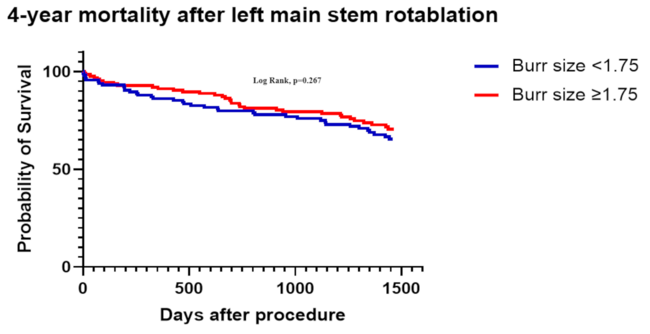
While contemporary percutaneous coronary intervention (PCI) is predominantly a stent-based strategy, other modalities are occasionally used in lieu of or in addition to stents. Rotational atherectomy uses a high-speed rotating bit to...
While contemporary percutaneous...
08/01/2008
Journal of Invasive Cardiology
08/01/2008
William W. O'Neill, MD; Charanjit S. Rihal, MD, MBA, FSCAI; Kimberly A. Skelding, MD, FACC, FAHA, FSCAI; Patricia J.M. Best, MD; Beth A. Bartholomew, MD; Ryan J. Lennon, MS
Percutaneous diagnostic and therapeutic cardiovascular procedures rely on intravascular use of iodinated radiocontrast agents for visualization in the cardiac catheterization laboratory. The use of radiocontrast agents has been associated...
Percutaneous diagnostic and...
08/01/2008
Journal of Invasive Cardiology
Review
08/01/2008
William A. Van Decker, MD; Rasih Atilla Ener, MD; Brian O'Murchu, MD; Nelson M. Wolf, MD; James A. Burke, MD, PhD; Jason Palermo, MD
HIV Disease Human immunodeficiency virus (HIV) infection results from one of two similar retroviruses (HIV-1 and HIV-2) that destroy CD4+ lymphocytes and impair cell-mediated immunity, affecting multiple organ systems, increasing the risk of...
HIV Disease Human...
08/01/2008
Journal of Invasive Cardiology