Transforming CLL Management: How MRD Could Shape Treatment Duration and Decision-Making
In this candid discussion, Joanna Rhodes, MD, MSCE, breaks down the promise and current limitations of MRD testing in chronic lymphocytic leukemia (CLL), exploring how it could one day refine treatment intensity, timing, and outcomes, and what gaps in evidence and logistics must be solved before it becomes routine practice.
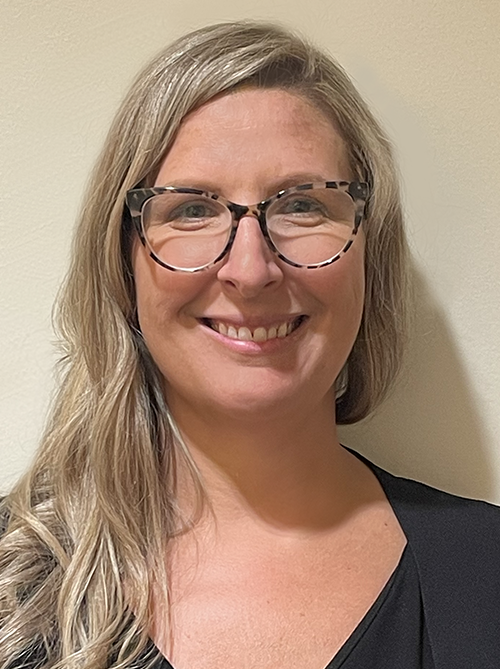
Joanna Rhodes, MD, MSCE: My name is Dr Joanna Rhodes. I am an assistant professor at Rutgers Medical School, and I am the director of our lymphoma program at Rutgers Cancer Institute and Assistant Head of Lymphoma for RWJ Barnabas. Previously, I worked at the Northwell Health Cancer Institute and the Chronic Lymphocytic Leukemia (CLL) Research and Treatment Program for approximately 5 years.
Before medical school, I was a clinical research coordinator in the bone marrow transplant department at Dana-Farber Cancer Institute. My research interests include novel therapeutics as well as toxicity management and outcomes for patients with CLL and other Hodgkin and non-Hodgkin lymphomas.
Please share a brief overview of the key research findings about the impact of minimal residual disease (MRD) measurement in the management of CLL.
 Dr Rhodes: The research within the CLL field has really been focusing on measurable residual disease (MRD). MRD is a little bit different, terminology-wise, from other types of hematologic malignancies. There is a way to use MRD testing in combination with our highly affective targeted agents, such as covalent BTK inhibitors, BCL-2 inhibitors, and monoclonal CD20 antibodies, to try and find ways to maximize efficacy while minimizing toxicity, potentially improving outcomes overall.
I think the direction that the field is heading, particularly in the frontline setting, is trying to understand if achieving undetectable MRD for patients with combination therapies will improve outcomes overall. For patients with high-risk disease, we want to know if they would benefit from this type of potentially intensified therapy to reach undetectable MRD as well as for patients who have lower-risk disease or more favorable prognostic markers. Is there a way for us to decrease the intensity of treatment based on that to minimize the amount of treatment that patients are getting with the hope of improving toxicity and long-term effects?
What are the clinical risks and potential benefits of using MRD to stop treatment early in patients who respond quickly?
Dr Rhodes: I think one of the challenges here is understanding what that means long-term from both a progression-free and overall survival standpoint. We have less data in the targeted therapies era in comparison to multiple myeloma colleagues, or our colleagues who treat acute B-cell lymphoblastic leukemia (B-ALL), where these are measures that have become part of primary endpoints, even for clinical trials, and really are considered the standard of care. Because CLL is such an indolent disease, it's going to take time for us to get that information. Even when you look at the pivotal phase 3 studies that led to the approval of targeted agents in comparison to chemoimmunotherapy, which was considered the standard at that time, we’re not yet seeing overall survival benefits. I think we will in the future, but it just takes a lot longer for us to get that data due to the time it often can take patients with CLL to progress on treatments.
We have very highly effective regimens, particularly in the relapse-refractory setting, where patients are doing much better now and are potentially living as long as age-matched controls for patients who are treated with ibrutinib. I think the challenge is how to take these very important markers and translate them clinically right now, without truly having the long-term data, because patients with CLL often will do so well.
What practical steps would be required—logistically, economically, and from a guideline perspective—for MRD to become a standard component of treatment planning in community oncology practices?
Dr Rhodes: I think that this is an important question and one that has been challenging. When we look across the board for CLL patients, most patients don't receive the guideline-recommended prognostic testing. We have had some challenges with implementing some of the more specialized testing outside of academic centers, and even if the testing is available, ensuring it's routinely done a little bit differently than what the uptake was for our solid tumor colleagues with certain types of testing that are done in breast cancer, colon cancer, and lung cancer. This highlights how challenging it will be to implement in a community setting across the board.
From a guideline perspective, one of the things that often comes up when speaking with community practitioners is that for a test to be done, there needs to be a reason to do it. We need to have very clear guidance as to who needs to be tested and not just why we're testing but is there something practical from a treatment perspective that we're going to do? I think that's going to come from expert consensus guidelines, and those talks are still ongoing, as MRD is still a hotly debated topic in CLL.
From an economic and logistical perspective, testing needs to be readily available. Clonality assessment currently is what has been utilized in academic settings, as well as 10-color flow cytometry, which is often a send-out. We often use the Mayo Clinic laboratory for that, and I think that ensuring that those are easy tests to use and that they are reimbursed is also the last component. When we're doing testing like this, patients shouldn’t be left with the burden of a very expensive test. I have not personally run into that issue, but ensuring that there is very clear guidance around reimbursement, as well as ensuring that there's guidance around billing, is super important.
From a guideline perspective, I would say that MRD is a hotly debated topic in CLL, and where we should be using it. It has now actually been included in the National Comprehensive Cancer Network (NCCN) guidelines very recently, although I would say that the messaging is a little bit vague. If I was reading the NCCN guidelines on my own as to who I should be testing and what testing is recommended, we do know that MRD is prognostic, but we don't have any information within the guidelines telling practitioners, as well as patients, because patients can read these guidelines as to what to do for a positive versus a negative MRD test. For now, there isn't a lot of guidance around how to use the test to make treatment decisions and management decisions, and I think that that will need to be clearer as more data hopefully comes out. That way, we can tell practitioners how to best utilize this testing for their patients.
What does transition from MRD undetectable to MRD positive mean in terms of time to next treatment? What does that mean in response to the next treatments? Should we start treatment earlier for patients who go from undetectable to detectable? Those are questions that are all being answered. Without those answers, it is a little bit challenging for a practitioner who sees all different kinds of malignancies to know what the next steps are. For example, in CLL or chronic myelogenous leukemia, there's very clear guidance as to what to do from a molecular perspective based on testing. There are certain milestones that the patient's blood work should be meeting to know that they're responding appropriately to their therapy. We don't have those specific guidelines currently, and once we have things that are a little bit more granular for people to use in algorithms, MRD testing will have a bigger uptick. I do worry that it may still not be something that's done routinely because CLL is a rare disease. As we make treatment more complex, how that is going to be translated into a community practice is less clear.
Looking ahead, what do you believe are the most critical research questions to be addressed before MRD can be more broadly used to guide treatment duration or retreatment decisions in CLL?
Dr Rhodes: I think the first question is, should undetectable MRD be our treatment goal for certain patients with CLL? Then I think it's important to be particularly granular in defining that patient population. For patients who are detectable at the end of treatment, should we be doing treatment intensification, and will that improve outcomes? For patients who go from undetectable MRD to detectable, when is the right time to initiate re-treatment, and should it be at MRD conversion? Should it be at the time of International Workshop on Chronic Lymphocytic Leukemia (iwCLL) criteria progression, which is currently the standard?
From a logistical perspective the question is what tests do we send? Are we sending flow cytometry? Are we sending next-generation sequencing testing? What are we testing from? Is it all peripheral blood? Is it bone marrow? Is it both? The frequency with which we're testing is also a major question to answer if we're going to make this guideline-driven. It must be very clear for this to be translated and adapted into routine clinical practice.
We also need to consider the different biological groups within CLL. We know there are patients who have higher-risk features of their disease, as well as patients who have more favorable prognostic markers. Within research, we’re trying to define those patient subgroups to better tailor treatment to their disease biology. Right now, all our patients are being studied as one group, but there are 2 biologically distinct subtypes of CLL that may require different treatment strategies.