Targeting BTK Mutations in CLL: Emerging Data on Rocbrutinib
This interview highlights early clinical findings on rocbrutinib, a dual-binding BTK inhibitor demonstrating promising activity and tolerability in heavily pretreated CLL, including in the presence of common resistance mutations.
Key Takeaways
- Rocbrutinib’s dual covalent and noncovalent mechanism enables activity against both wild-type BTK and key resistance mutations such as C481 and T474.
- The phase 1 study, presented at ASH 2025, shows encouraging responses in patients previously treated with multiple therapies, including covalent BTK inhibitors and venetoclax.
- Longer-term data and larger studies are needed to determine whether specific genomic profiles influence progression-free survival and response durability.
 Please introduce yourself by stating your name, title, and any relevant experience you’d like to share.
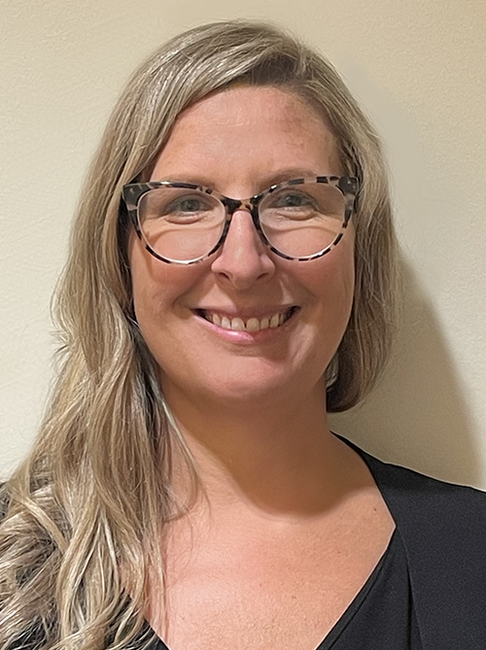
Jennifer Ann Woyach, MD: My name is Jennifer Woyach, MD, and I am the director of the division of hematology at The Ohio State University.
Can you provide a brief overview of this study?
Dr Woyach: This is a phase 1 study of the novel covalent/noncovalent Bruton tyrosine kinase (BTK) inhibitor rocbrutinib. This agent is novel in that it binds covalently to wild-type BTK—like ibrutinib, acalabrutinib, and zanubrutinib—and if BTK is mutated at C481, it can bind noncovalently like pirtobrutinib.
Based on your study population’s heavy mutation burden—such as T474 gatekeeper mutations and L528W—what insights have emerged regarding which mutations rocbrutinib appears most active against, and were any resistance patterns particularly notable?
Dr Woyach: IIn the laboratory rocbrutinib is effective in the presence of C481, T474, and L528W mutations. In the clinical trial, there are a number of patients with C481 and T474 mutations, and it appears that the drug is similarly effective in the settings of these mutations as in wild-type disease. I do not think that there are enough patients with L528W to say for sure that the drug is effective in this setting.
Your data show strong responses in patients previously treated with both BTK inhibitors and venetoclax. How do you interpret these results for this difficult-to-treat population?
Dr Woyach: These data demonstrate that rocbrutinib is effective in highly refractory chronic lymphocytic leukemia (CLL). I think these results are exciting because the drug was also very well tolerated. With both the covalent and noncovalent activity, I am hopeful that this drug will also be highly effective in earlier lines of therapy.
With a median progression-free survival of 28 months and duration of response not yet reached, did you observe any factors that predicted longer or shorter responses?
Dr Woyach: I think we are going to need larger studies to determine whether specific genomic risk groups have longer or shorter remission durations with rocbrutinib.
© 2025 HMP Global. All Rights Reserved.
Any views and opinions expressed are those of the author(s) and/or participants and do not necessarily reflect the views, policy, or position of the Journal of Clinical Pathways or HMP Global, their employees, and affiliates.