Targeted Approach to Biomarker Testing for Patients With Upper Gastrointestinal Malignancies
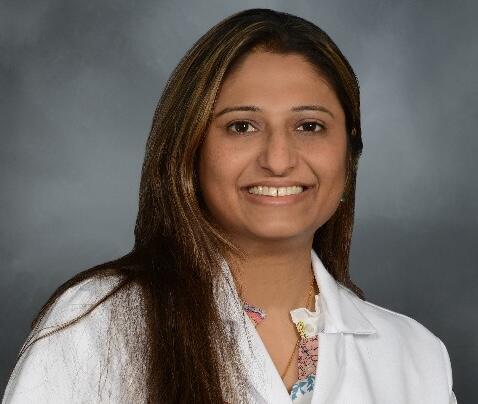
Rutika Mehta, MD, MPH, Weill Cornell Medicine, New York, New York, discusses targeted approaches to biomarker testing for patients with upper gastrointestinal malignancies.
At Great Debates in Solid Tumors in Miami, Florida, Dr Mehta argued for the use of more targeted approaches, debating Sam Klempner, MD, Massachusetts General Hospital, who argued for a broader approach to biomarker testing in this patient population.
Transcript:
Hello everyone, my name is Rutika Mehta and I'm a GI medical oncologist at Weill Cornell Medicine, New York Presbyterian Hospital in New York City, New York. Today I'll be debating against Dr Sam Klempner, my esteemed colleague, about the use of targeted approach to biomarker testing in upper GI malignancies.
My take would be to use a more targeted approach rather than a broader coverage of biomarker testing, and I feel this is especially important in today's era where there's so many biomarkers that we've been testing in upper GI malignancies ranging from MMR/MSI testing, HER2, PDL-1, CLAUDIN 18.2 and we're probably going to be seeing an emergence of a few other biomarkers in this space.
Fortunately, or unfortunately, a lot of these biomarkers are based on immunohistochemistry testing where a significant amount of tissue is being exhausted for these testing purposes. When we look at how this tissue is being acquired, it's through endoscopic biopsies where we're hoping for 6 to 8 chunks of biopsies. But in real practice, we're actually acquiring just a little bit of tissue, so how we prioritize this tissue for use of biomarker testing is very key and critical.
In my practice, I try to use liquid biopsies and complementary to tissue testing where I try to look for MSI-high or ERBB2 amplification on liquid biopsy and then kind of try to reserve my tissue for PD-L1 testing, CLAUDIN 18.2, especially in cases where I know that tissue is going to be an issue. And more so, I feel like a more logarithmic approach is preferable because a majority of our patients get treated in the community setting. Although we are academic physicians and we are kind of specialized in what we treat, the reality of the matter still remains that 75% of our cancer patients get treated in the community where the care coordination might not be the most optimal thing that we expect it to be. Thank you.
© 2025 HMP Global. All Rights Reserved.
Any views and opinions expressed are those of the author(s) and/or participants and do not necessarily reflect the views, policy, or position of Oncology Learning Network or HMP Global, their employees, and affiliates.