Adjuvant Treatment of Patients With Early-Stage Gastroesophageal Carcinomas
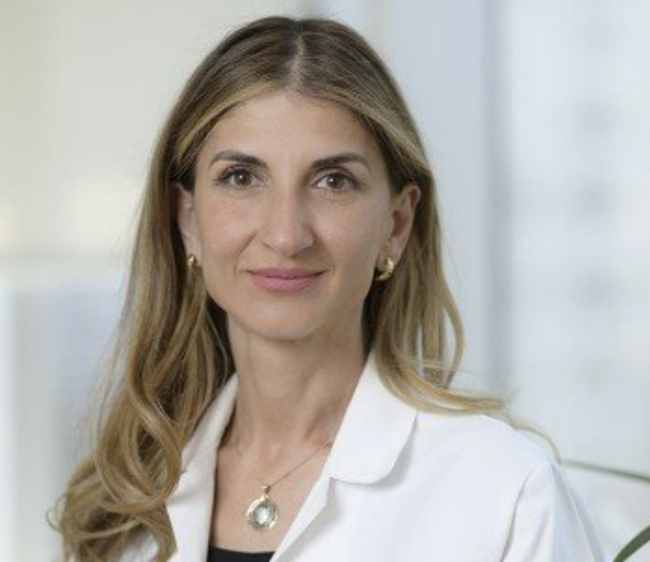
Nataliya Uboha, MD, PhD, University of Wisconsin, Madison, Wisconsin, discusses neoadjuvant and adjuvant treatment of patients with early-stage gastroesophageal adenocarcinomas.
At the Great Debates in Solid Tumors Meeting in Miami, Florida, Dr Uboha argued that the use of adjuvant therapy is critical for select patients, debating Tiago Biachi, MD, PhD, Moffitt Cancer Center, Tampa, Flordia, who argued for the use of neoadjuvant therapy.
Transcript:
I am Nataliya Uboha, I'm a medical oncologist at University of Wisconsin, Carbone Cancer Center, and I am here [at] Great Debates talking about neoadjuvant and adjuvant therapy for patients with early-stage gastroesophageal adenocarcinomas. We were debating on the role of the use of neoadjuvant versus adjuvant therapies.
We all agreed that the neoadjuvant portion is absolutely critical when you see these patients in clinic, but during my presentation, I also talked about the importance of adjuvant therapy. Adjuvant therapy is absolutely critical to improve outcomes in patients who are treated with curative-intent treatments and now we incorporated immunotherapy in the management of these patients. I think going forward, I'm hoping we can be more nuanced in the way we select adjuvant therapy and in the way we select patients who really need it, but at current time, we should be offering it to anybody who is still a candidate for further treatments.
In my clinic, when I see patients who had neoadjuvant FLOT, or durvalumab and FLOT chemotherapy, who have undergone successful R0 resection, I do consider these patients for additional FLOT chemotherapy in postoperative setting. And of course, not every patient is going to be a candidate for FLOT chemotherapy after surgery. This is tough therapy, but dose reductions are absolutely appropriate and a treating physician can make those decisions in their clinical practice.
© 2025 HMP Global. All Rights Reserved.
Any views and opinions expressed are those of the author(s) and/or participants and do not necessarily reflect the views, policy, or position of Oncology Learning Network or HMP Global, their employees, and affiliates.