The Journey of a Patient With a Desmoid Tumor
Desmoid Tumor Expert Roundtable - Part 1
Desmoid Tumor Expert Roundtable - Part 1
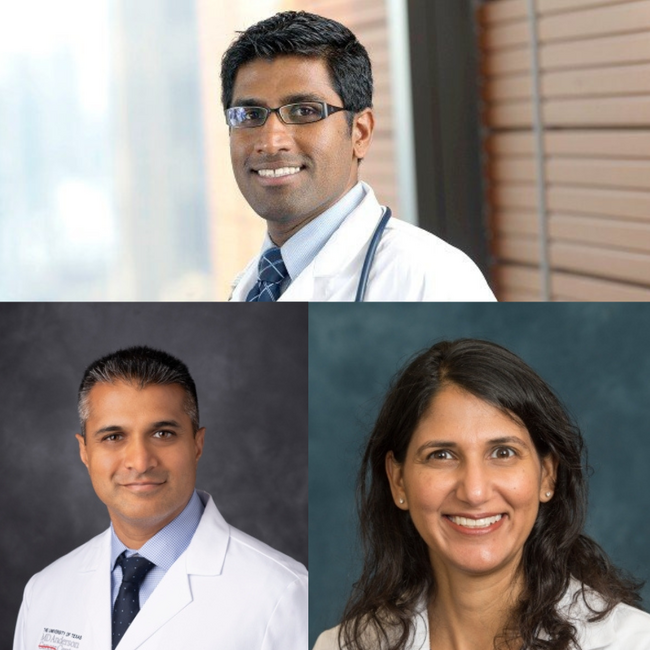
In this expert panel series, moderator Mrinal Gounder, MD, Memorial Sloan Kettering Cancer Center, New York, New York, leads participants Rashmi Chugh, MD, University of Michigan Medicine, Detroit, Michigan, and Ravin Ratan, MD, MD Anderson Cancer Center, Houston, Texas, in a discussion on desmoid tumors.
In this first video, a panel of expert clinicians define desmoid tumors and examine the patient journey following diagnosis, with a focus on diagnostic challenges, risk assessment, and key considerations that inform early management strategies.
For Part 2 of this roundtable, please click here.
Transcript:
Mrinal Gounder, MD: Hello, welcome to Oncology Learning Network. My name is Dr Mrinal Gounder. I'm a medical oncologist specializing in the treatment of patients with sarcoma and early phase clinical trials. Today I'll be moderating a discussion on desmoid tumors. I'm joined by a distinguished panel of experts in this field. Would each of you like to introduce yourself and tell us a little bit about each of your roles? We'll start with Dr. Chugh. Welcome.
Rashmi Chugh, MD: Thank you, Mrinal. My name is Rashmi Chugh. I'm a medical oncologist also specializing in sarcomas as well as desmoid tumors. I head up the Sarcoma Program at University of Michigan and the Clinical Research Program, as well as our Adolescent/Young Adult Oncology Group.
Dr Gounder: Wonderful. Thanks for joining today. And Dr Ravin Ratan.
Ravin Ratan, MD, MEd: Hi folks, really nice to be with you. My name is Ravin Ratan. I am the Deputy Chair of Sarcoma Medical Oncology at the University of Texas MD Anderson Cancer Center. My clinical practice encompasses the range of connective tissue neoplasms, including desmoid tumors among others, and I’m delighted to be chatting with you both today.
Dr Gounder: Wonderful. Welcome. Welcome everyone and thank you for joining us today. We will be discussing desmoid tumors. These are rare connective tissue tumors that do not metastasize but can cause significant morbidity in young patients.
Today, we'll have an in-depth conversation about the prevalence management and treatment of desmoid tumors. We're going to start today's discussion with a definition of desmoid tumors. We’ll start with Dr Ratan. How would you define a desmoid tumor and what are the main differences from sarcomas?
Dr Ratan: Sure, absolutely. It's a really important question, one that patients are often seeking some clarity on, and it's something that we often spend time on during an initial visit.
Many of the diseases I treat are frank malignancies: either low-grade or high-grade sarcomas. And these have some characteristics. They typically will continue to grow if not treated. Many sarcomas, though not all, have the potential to spread in the blood to other parts of the body, and as a result can be life-threatening illnesses. Desmoid tumors are a little bit different.
These are classified by the WHO as intermediate, locally aggressive neoplasms. They do not spread in the blood. They can sometimes involve larger portions of the body, perhaps an entire extremity in some cases. They can be multifocal, but the spread tends to be local. They don't travel in the blood, for example, to the lungs like a sarcoma might. And unless they happen to be in an anatomically problematic location, they're often not life-threatening. The vast majority of patients with these tumors, it will be a problem where it is and not in another part of the body that might ultimately become life-threatening.
These patients primarily are younger people. The median age is probably in the thirties. We see about a 2-to-1 female-to-male predominance, so more women than men. And the classic presentation for many of these tumors is either pain or swelling in a location in the body, typically in the extremities or the body wall. There's also a subset of tumors that are intra-abdominal and sometimes these symptoms are more vague: they may present with a bowel obstruction, they may have vague abdominal pain. They present like any other intra-abdominal mass might, though these tumors do have a significant predilection for fistulizing and so forth, and so patients can present that way as well.
With respect to risk factors, most patients with desmoid tumors don't have a predisposing known risk factor. There's a subset of about 10% to 15% of patients that have familial adenomatous polyposis (FAP), a mutation in the APC gene that predisposes to colon cancer. The typical history is a patient either with a strong family history of colon cancer or a personal history of colon pathology. And in known cases, patients often have a colectomy by the age of 18. It's those patients that subsequently very often develop both intra-abdominal and abdominal wall desmoids. And we think that that surgery may even play a role in setting off the formation of those tumors. So about 10% to 15% of patients have FAP or an APC mutation. The remaining 80% to 85% of patients are patients that typically have a somatic beta-catenin mutation, and that's typically not hereditary. That's a somatic mutation.
Dr Gounder: Excellent, thank you. That's a brilliant overview of the entire space. Dr Chugh, what about this classification of desmoid tumors as benign? What does that term technically mean and what do patients hear? Can you, as part of this, also walk us through the journey of a desmoid tumor patient through the medical system?
Dr Rashmi Chugh: Absolutely. Benign is a very loaded term for many of our desmoid tumor patients. A lot of us associate benign with being good, with being a good diagnosis, but essentially as many of you know, benign essentially means “does not have the capability to metastasize,” as was mentioned. So desmoid tumors are not able to get into the bloodstream or the lymphatic system and spread to other sites, therefore they're usually not considered life-threatening, but they certainly can be significantly life-affecting. And that's where the distinction comes in.
Even though the tumor is not malignant as such, it usually doesn't take over the body like we see with malignancies, these tumors, the way that they affect patients can be pretty impactful, just as was described earlier due to pain based on the location of the tumor. We definitely have had tumors that can be life-threatening, especially in the abdominal location: if they cause bowel obstructions and the inability to eat, and they fistulize and cause recurrent infections. At the same time, given the location of the tumor, they can take on a more benign course. It really depends.
The desmoid tumor journey is quite different for each patient, depending on the behavior of their tumor, the location of their tumor, oftentimes even based on their age, we see different patterns. To take you through a journey of a desmoid tumor, it is so variable and I can just think of a patient I was just prepping for clinic tomorrow.
This is a little bit older patient, in their 60s, developed a lump in their arm that was there for quite some time. Things that aren't changing, that are kind of on the extremity are often disregarded as nothing to be concerned about. And then in the wintertime, developing some worsening symptoms, sought medical attention, and many physicians thought a superficial lump is nothing to worry about, so it took quite some time to get evaluated. Eventually had an ultrasound, was reassured it doesn't look too concerning, but because of recurrent pain, eventually had a biopsy done and was told it was a desmoid fibromatosis and was essentially told, well, it's benign so you don't need to worry about it.And the patient continued to have pain and eventually presented to our center. And that's where we were able to educate the patient that even though these tumors are technically benign, they can at times grow, they can at times be stable and they can at times recede by themselves. We have to really take into account the individual patient journey. Her optimal care was in a center that has experience with desmoid tumors where we could rely on our multidisciplinary expertise to help decide what was the best way to help her life-affecting symptoms from her tumor in her arm.
Dr Gounder: Excellent. And it's reassuring that she's seeing you in a center of sarcoma excellence and getting a multidisciplinary evaluation as part of this, which I would say is one of the most important things in managing these rare tumors. To the audience, that was an excellent summary. Thank you, Rashmi.
Just to briefly summarize, what we've heard so far is that these are rare, intermediate sarcomas that don't metastasize. They are locally infiltrative and can cause significant amount of morbidity occasionally, and on rare occasions there is mortality associated with this. But for the most part, this impacts young people and has profound impact on their lives, not just on their physical appearance or pain and function, but also impact on their employment, on their future are plans and education and such.
In terms of risk factors, most of them are sporadic, but about 10% to 15% of desmoid tumors are associated with FAP. These patients would require some sort of a germline confirmation to make sure that if they're newly diagnosed, that there is no underlying germline APC mutations.
And as Dr. Chugh said, although they are technically termed as benign because they don't metastasize, there's nothing benign about having a desmoid tumor. This can really overtake one's life for long periods of life and have significant impact on quality of life as well as many other seen and unseen impacts.
I'll stop with that, and I'll say thank you both for sharing your insights and thank you to the audience for watching. Please join us for part 2 of this round table where we will explore when to initiate treatment for desmoid tumors.
For Part 2 of this roundtable, please click here.