The Future of Treatment for Patients With Desmoid Tumors
Desmoid Tumor Expert Roundtable - Part 4
Desmoid Tumor Expert Roundtable - Part 4
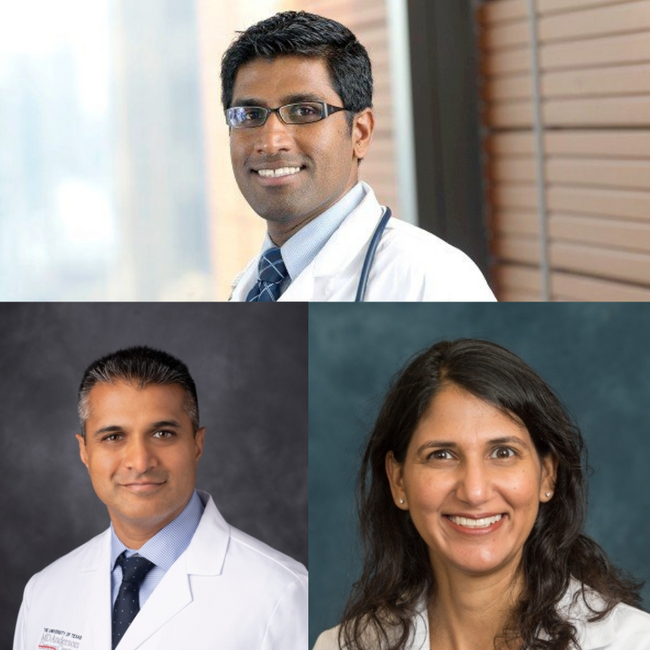
In this expert panel series, moderator Mrinal Gounder, MD, Memorial Sloan Kettering Cancer Center, New York, New York, leads participants Rashmi Chugh, MD, University of Michigan Medicine, Detroit, Michigan, and Ravin Ratan, MD, MD Anderson Cancer Center, Houston, Texas, in a discussion on desmoid tumors.
In the final video, our experts discuss potential future options for the treatment of patients with desmoid tumors including the RINGSIDE trial which evaluates gamma secretase inhibitor AL102/varegacestat, as well as beta-catenin inhibition.
To return to Part 1 of this roundtable, please click here.
Transcript:
Mrinal Gounder, MD: Welcome back to Oncology Learning Network. My name is Mrinal Gounder from Memorial Sloan Kettering Cancer Center in New York, and today I'm joined by Dr Rashmi Chugh from University of Michigan. And Dr Ravin Ratan from MD Anderson Cancer Center from Houston, Texas.
In this segment of our round table discussion on desmoid tumors, we are considering potential treatments and emerging treatments, potential emerging treatments in this disease. First, I'll start with Dr Ratan. Let's start with AL102, varegacestat, and the RINGSIDE trial. What can you tell us about the mechanism of action and what has been presented so far in conferences?
Ravin Ratan, MD, MEd: This is a drug that we've been using in our clinic and investigational basis and are cited about. This is another gamma-secretase inhibitor, so I think the mechanism of action is likely to be very similar to nirogacestat. And indeed, I think that what we see so far, there's been a phase 1/2 experience that's been reported so far, which has looked at identifying the optimal dose and then testing that in a subset of patients. And what we see is that the preliminary indications in a non-randomized fashion are that this is likely to be a drug that is inducing responses in patients with desmoid tumors on the basis of dimensional responses, in decrease in T2 on MRI, which is also associated with responses with other desmoid therapies.
I think it's far too early at this point to make any kind of comparative statements between this drug and any of the other agents that may currently be on the market. I think that the ongoing RINGSIDE phase 3 study, which ultimately has very similar inclusion criteria to the DeFi trial is being eagerly anticipated by the community. And so more to come on that.
Dr Gounder. Thank you. Dr Chugh, recently at ESMO there was a presentation of a beta-catenin inhibitor. It's still very early. Any thoughts or insights about this class of drugs in this disease and why a beta-catenin inhibitor would be appropriate in desmoid tumors?
Rashmi Chugh, MD: Absolutely. As we discussed earlier, the sporadic desmoid tumors are characterized by a mutation in beta-catenin, and instinctively we would want to inhibit that. It just seems like an obvious, excellent strategy for management of these tumors. And I guess what's most exciting about these compounds is we basically have all of these new tools that we have to figure out how to learn and use and apply to our patients. Right now, this is very early in investigation. These agents are still being studied in early phase studies, trying to evaluate doses, toxicities, and getting preliminary ideas of response.
I think this is an exciting time for desmoid tumor patients. We have a lot of different strategies we can employ, and beta-catenin inhibitors are exciting, but really too early to comment too much more about.
Dr Gounder: I agree. So thank you. So in summary, AL102 or varegacestat, another gamma-secretase inhibitor currently in a trial that is completed. We're waiting for these results eagerly. We'll see what the efficacy and the safety of this in the phase three will look like. And then this duly emerging beta-catenin inhibitor in phase 1, phase 2 clinical trials. Again, very early, but promising. This in the next several months to years, we'll hear and learn more about this.
That concludes this discussion series on desmoid tumors. Thank you both for participating and thank you to Oncology Learning Network for organizing this talk. Please check out www.ocnet.com to catch the rest of the discussion as well as other updates on cancer care. Thank you both today.
To return to Part 1 of this roundtable, please click here.
Sources:
Gounder MM, Lewis Jones R, Chugh R, et al. RINGSIDE phase 2/3 trial of AL102 for treatment of desmoid tumors (DT): Phase 2 results. J Clin Oncol. Published online: May 31, 2023. doi: 10.1200/JCO.2023.41.16_suppl.11515
Kasper B, Gounder MM, Chugh R, et al. Updated results of the RINGSIDE phase II trial and open-label extension of AL102 for treatment of desmoid tumors. Ann Oncol. 2024;35(2): S1051-S1052. doi: 10.1016/j.annonc.2024.08.1857
Chugh R, Gounder MM, Singh AS, et al. Subgroup analysis of the phase 2 part of the RINGSIDE pahse 2/3 trial of varegacestat for treatment of desmoid tumors. J Clin Oncol. Published online: May 28, 2025. doi: 10.1200/JCO.2025.43.16_suppl.11516