Subcutaneous Mosunetuzumab Demonstrates Deep, Early Responses for Treatment-Naïve Follicular Lymphoma: Phase 2 MorningSun Trial
Key Clinical Summary:
- Population and Design: Phase 2 MorningSun trial enrolled 103 treatment-naïve patients with high–tumor burden follicular lymphoma, treated with subcutaneous mosunetuzumab via ramp-up dosing (5 mg → 45 mg) across 17 cycles, with optional maintenance dosing every 8 weeks for 1 additional year.
- Efficacy: ORR 88%, CR 65%, 1-year PFS 87%, and OS 92%; MRD negativity achieved in 84% by cycle 4, confirming deep, rapid responses consistent with complete metabolic response on PET.
- Safety: Injection site reactions (≈ 67%), fatigue, and mild grade 1–2 CRS (34%) were most common; infections in 79% (mostly low-grade, few serious/fatal).
- Clinical Relevance: Subcutaneous mosunetuzumab demonstrated strong efficacy, manageable toxicity, and outpatient feasibility, supporting its use as a frontline, community-practice-friendly therapy for high-tumor burden FL.
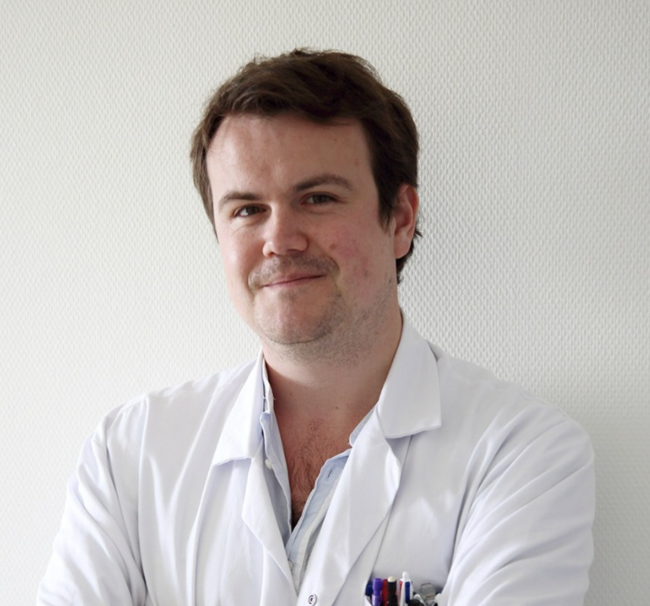
John Burke, MD, Rocky Mountain Cancer Centers, Aurora, Colorado, presented results from the phase 2 MorningSun trial, evaluating subcutaneous mosunetuzumab as first-line therapy for patients with high-tumor burden follicular lymphoma (FL) at the 2025 ASH Annual Meeting & Exposition.
The regimen was well-tolerated, with mainly mild injection site reactions, fatigue, and low-grade CRS, and was safely administered in outpatient and community settings, supporting mosunetuzumab as an effective and practical frontline option.
Dr Burke concluded, “mosunetuzumab has good activity in patients with treatment-naïve, high tumor burden follicular lymphoma, and it's reasonably safe, although there are risks to be aware of, and that it can be delivered as an outpatient without mandatory hospitalization, and it can be delivered safely in community practices.”
Transcript:
My name is John Burke from Rocky Mountain Cancer Centers and the Sarah Cannon Research Institute. I'm here to talk about the MorningSun clinical trial.
By way of background, MorningSun tested the use of the bispecific antibody mosunetuzumab in patients with follicular lymphoma. It was a larger study that tested it in many different types of lymphoma. What I reported on at this meeting was the results in the cohort of patients who had high tumor burden follicular lymphoma and had not received any prior therapy. That was the design of the trials.
In phhase 2, patients enroll—there were 103 patients, and they all received the treatment. Mosunetuzumab was administered as the standard kind of ramp up by subcutaneous route of administration. The dosing was 5mg on day 1 of cycle 1, followed by 45mg on days 8 and 15 of cycle 1, and then 45mg on day 1 of all subsequent cycles, cycle 2 through 17. Treatment was for about a year, and there was an optional maintenance extension for patients who wanted to do maintenance therapy, which was 1 dose every 8 weeks for another year after that.
We had 103 patients enrolled, 46 of them elected to receive the maintenance therapy. In terms of efficacy results, we saw that the overall response rate of mosunetuzumab was 88% and complete response rates 65%.
In terms of progression-free survival (PFS) at 1 year, it was 87% and overall survival of 92%. So good efficacy. Also, in terms of efficacy, we measured circulating tumor DNA and did sort of minimal residual disease (MRD) assessments. In the 38 patients who had testing done, all of them had achieved a complete metabolic response by their PET scan, but by cycle 4, day 1, 84% of patients who underwent testing had undetectable MRD indicating that responses were deep and occurred rapidly.
In terms of safety, we saw that the most common toxicities were injection site reactions, which happened in about 2/3 of patients, but were usually mild. We saw fatigue as the second most common, and then cytokine release syndrome (CRS) was the third most common occurring in 34% of the patients. The CRS tended to be only grades 1 and 2 was mild and usually did not require hospitalization.
The treatment, I should have said, was administered as an outpatient. There was no mandatory hospitalization for the treatment, and a lot of the participating sites were community practices. A lot of the patients were treated in community practices.
The other safety feature to note is that there were a fair number of infections. 79% of patients had some infection during the trial. Most of those were grades 1 and 2, but there were a few grade 3 or more serious or even a couple of fatal infections, so that is a toxicity to be aware of.
Those were the findings. In summary, we concluded that mosunetuzumab has good activity in patients with treatment-naïve, high tumor burden follicular lymphoma, and it's reasonably safe, although there are risks to be aware of, and that it can be delivered as an outpatient without mandatory hospitalization, and it can be delivered safely in community practices.
Source:
Burke J, Sharman J, Anz B, et al. Fixed-duration subcutaneous (SC) mosunetuzumab, with maintenance therapy, in patients (pts) with previously untreated high-tumor burden follicular lymphoma (HTB FL): Longer follow-up and exploratory circulating tumor (ct)DNA analysis of the Phase II MorningSun study. Dec 6-9, 2025; Orlando, FL. Abstract: 228