Five-Year Data Show Durable Remissions With Tisagenlecleucel for R/R Follicular Lymphoma: ELARA Trial
Key Clinical Summary:
- Population and Design: Global, multicenter Novartis-supported CAR T-cell trial evaluated patients with relapsed/refractory follicular lymphoma (FL) after ≥ 2 prior unsuccessful therapies, building on earlier single-center data from the University of Pennsylvania.
- Efficacy: At 5-year follow-up, ~70% achieved complete remission (CR), with over half of these patients remaining in durable remission, outcomes consistent with 10-year single-center data, suggesting potential curative benefit for this historically poor-prognosis subset.
- Clinical Relevance: Findings confirm long-term disease control and survival durability with CAR T-cell therapy in R/R FL, establishing it as a transformative option and supporting optimism that most patients—including high-risk cases—can achieve near-normal life expectancy with CAR-T and emerging therapies such as bispecific antibodies and molecular degraders.
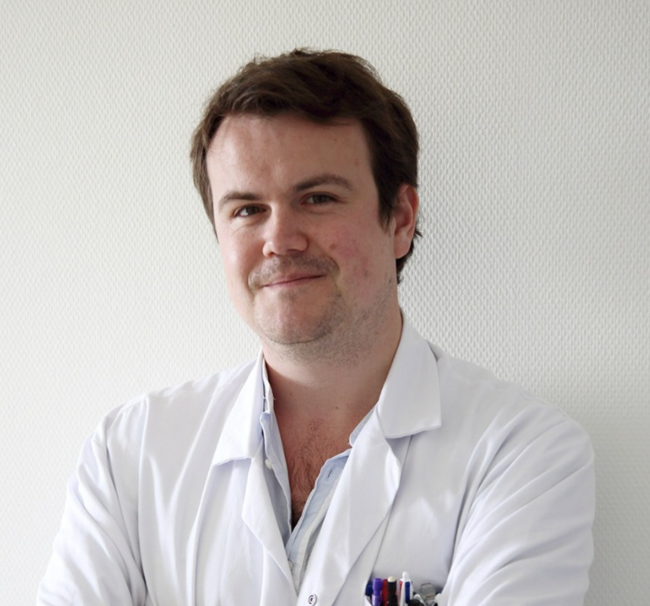
Stephen Schuster, MD, University of Pennsylvania Perelman School of Medicine, Philadelphia, Pennsylvania, presented 5-year follow-up data from the phase 2 ELARA study evaluating tisagenlecleucel for patients with relapsed/refractory (R/R) follicular lymphoma (FL) who have had 2 or more prior therapies at the 2025 ASH Annual Meeting & Exposition.
The study showed more than half of patients remaining in remission at 5 years, Dr. Schuster emphasized that long-term CAR T-cell efficacy and emerging therapies such as bispecific antibodies and molecular degraders are transforming outcomes for R/R FL.
Transcript:
I'm Steve Schuster and I'm a hematologist oncologist [who] practices at the University of Pennsylvania and Philadelphia. I do clinical and some basic research related to treatment of lymphomas. Much of the clinical research revolves around follicular and large cell B-cell lymphomas. I had the opportunity at this year's ASH meeting, where I am now in Orlando, to present our 5-year follow-up study from a trial we ran supported by Novartis of their CAR T-cell cellular therapy for patients with follicular lymphoma that had at least 2 prior therapies that were not successful.
In general, follicular lymphoma is a disease that's rather slow moving and rather responsive to lots of treatments and we have very good treatments, but it's about 20% of patients that really needed something different. They would have a 5-year survival rate of 50/50. You wouldn't really know who those patients were until after the fact, that is after they progressed with their disease following an acceptable treatment.
This new technology, now I'm not even going to say it's new because we did the original trial. We started in 2013 and published in 2017 in the New England Journal. Now we've done a multitude of other, but this was a large global multicenter study. It's not just Philadelphia and University of Pennsylvania and Steve Schuster. It's all 4 continents and, I forget, 20-some-odd centers participated. Patients from all over the world that had failed the general sequence of therapies that are satisfactory for most patients.
I would say it's a home run actually, for those patients that get a complete remission, and that's about 70% of patients that are treated with this. At 5 years, more than half of them, the median are still in remission. Many oncologists consider 5 years to be a good marker for cure. I have 10-year data in follicular, and it looks exactly like this 5-year data. I know that our single center study, which was Philadelphia, has been recapitulated in the global setting and this is probably truth.
The prognosis is very good for patients that in the past had this diagnosis with the poor prognostic factors for treatment outcome. Some patients don't even need treatment with this disease; It's just a subset. But now I think for more than half of those patients, I think it's licked. We've licked it and there are other treatments on the horizon.
For the few patients that don't get a complete remission with this, about 70% get a complete remission, about 30% or so. We have bispecific antibodies and very exciting small molecules that actually modulate the proteins in cells, degraders. All this is being presented at this meeting.
I've talked about what I spoke about, but what the degraders, I've been going to those meetings and I'm running some trials with them and the bispecific antibodies I'm running trials with, but I'm going to meetings to look at the next gen bispecific antibodies. All that I could say is I think most patients now with this diagnosis, the majority, even the so- called poor prognosis ones, which did exactly fine with this therapy I presented today.
With what I see on the horizon, I'm going to say that I think patients with this diagnosis, whether you're in the favorable group or unfavorable group, are going to have a normal lifespan.
So, look both ways when you cross the street, have happy holidays from Orlando. It's a very exciting meeting and I'm glad it's always in December. It's like one of my annual presents.
Source:
Schuster S, Thieblemont C, Dickinson M, et al. Clinical outcomes of tisagenlecleucel in patients with relapsed/refractory follicular lymphoma (r/r FL): Phase 2 ELARA 5-year update. Dec 6-9, 2025; Orlando, FL. Abstract: 468