What’s New in DFUs
© 2025 HMP Global. All Rights Reserved.
Any views and opinions expressed are those of the author(s) and/or participants and do not necessarily reflect the views, policy, or position of Podiatry Today or HMP Global, their employees, and affiliates.
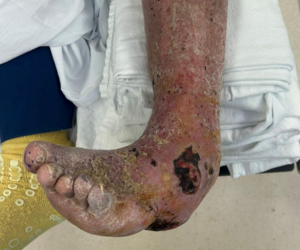
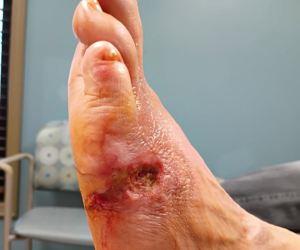
Diabetic foot ulcers (DFUs) remain among the most complex and costly complications of diabetes, representing not just localized wounds but indicators of systemic disease. DFUs are not isolated problems of the foot but rather manifestations of deeper physiological, environmental, and behavioral factors. For podiatrists, recognizing these underlying mechanisms and incorporating them into holistic care is essential for improving outcomes, preventing recurrence, and preserving limb function.
Diabetic foot ulcers (DFUs) are “the final chapter in a long story,” Cassandre Voltaire, DO, ABWMS, emphasized in her presentation at the Symposium on Advanced Wound Care (SAWC) Fall. A wound is not just a problem; it’s a messenger—and she stressed that it’s physicians’ job to listen. Dr. Voltaire noted the factors leading to DFUs start not in the foot, but elsewhere within the patient’s body.
The visible wound isn’t the whole story, noted Dr. Voltaire. As she said, ulcers are late signals of earlier failures.1 Reacting to a problem too late can limit treatment options, and she stressed it is not enough to treat the surface of a DFU. Every ulcer is a message, Dr. Voltaire said, noting that one should pause to ask why the ulcer formed and why healing has stalled.
A foot ulcer precedes 85% of diabetes-related amputations and Dr. Voltaire noted in patients with a DFU, the risk of recurrence is 40% in one year and 65% in five years.1 Dr. Voltaire also cited data that housing instability is linked to delayed DFU healing and that higher HbA1c and blood pressure were found in patients with unstable housing.2
Dr. Voltaire acknowledged a “fear of compression,” noting physicians learn to avoid compression in DFUs, but this may be too strict, in her experience. Edema slows healing as oxygen cannot reach tissue, but she noted that debriding without addressing swelling is “like digging in mud.” She recalled a patient whose DFU healing had stalled for weeks. After adding light compression with offloading, she noted the DFU began to heal.
Full compression is permissible for a patient with an ankle brachial index (ABI) of 0.8 or more, Dr. Voltaire advised. Patients with an ABI of 0.5 to 0.8 can receive moderate compression and she advised close monitoring. For those with an ABI less than 0.5, she said one should avoid compression and refer for revascularization. Dr. Voltaire also advised always correlating compression with pedal pulses (strength, symmetry) ; skin temperature and color ; edema pattern (pitting vs non-pitting, unilateral vs bilateral), and healing trajectory.
The Deeper Causes of Diabetic Foot Ulcers
Peripheral neuropathy is a foundational cause of DFUs.1,2 Patients lose protective sensation, allowing repetitive trauma and pressure points to go unnoticed. Without pain feedback, minor injuries escalate into chronic ulcers. Dr. Voltaire highlighted that neuropathy does more than dull sensation—it alters foot biomechanics, leading to abnormal pressure distribution, callus formation, and tissue breakdown.
Peripheral arterial disease (PAD) is a major contributor to DFUs.1,2 Poor arterial inflow limits oxygen and nutrient delivery, impairing wound healing. Even small ulcers can become non-healing in the presence of vascular insufficiency. Dr. Voltaire underscored that ulcers don’t simply start from “bad blood” but from inadequate perfusion and compromised tissue microcirculation, making vascular evaluation an essential step in management.
Diabetes disrupts collagen production, impairs leukocyte function, and weakens host defense against infection. Hyperglycemia fosters a pro-inflammatory environment while impairing immune response, allowing bacterial colonization and biofilm formation.3 Thus, DFUs are not just structural wounds—they reflect systemic immune and metabolic compromise.
Dr. Voltaire emphasized that ulcers arise in the context of patients’ lives. Housing insecurity, food access, and transportation issues all compound the risk of DFUs. As she notes, even the best wound care fails if socioeconomic and behavioral determinants go ignored. She shared a story of a patient with a DFU whose wound was not healing despite the fact that he went to every appointment and was adherent with treatment. She found out he was sleeping in his car, with no space for wound care.
Dr. Voltaire stressed that housing, food access and mobility are not social issues, but treatment factors.
A Closer Look at Innovative Technologies for DFUs
When considering technological intervention in diabetic foot ulcers, Dr. Voltaire cautioned that technology is only as good as the physician’s judgment. She noted that tools don’t heal—clinical thinking does, and that smart tech can amplify good decisions or hide bad decisions.
Dr. Voltaire outlined several innovative technologies for DFUs:
Fluorescence imaging. This allows clinicians to visualize bacterial burden in real time.
Artificial intelligence (AI) risk tools. With AI, she noted one may be able to predict healing outcomes and flag high-risk ulcers.
Wearable sensors. Insoles and socks are available with pressure alerts to guide offloading.
Biological boosters. Dr. Voltaire noted these include amniotic tissue and extracellular matrix scaffolds for regenerative healing.
Remote monitoring. This can consist of weekly wound check-ins via imaging and Dr. Voltaire said remote monitoring can reduce emergency room visits.
Dr. Voltaire stressed that one should consider streamlining workflow by using wound cameras that integrate with electronic medical records. As she noted, technology does not replace thinking so one should train in the use of tech first, then scale up the usage. She advised piloting new tools with one or two patients before adopting those tools systemwide.
Dr. Voltaire also emphasized the importance of healing as a “team sport,” saying a weekly team huddle will improve clinician decisions.
References
1. Bus SA, Sacco ICN, Monteiro-Soares M, et al. Guidelines on the prevention of foot ulcers in persons with diabetes (IWGDF 2023 update). Diabetes Metab Res Rev. 2024;40(3):e3651. doi:10.1002/dmrr.3651
2. International Working Group on the Diabetic Foot. IWGDF Guidelines. Available at https://iwgdfguidelines.org/guidelines-2023/ . Published 2023. Accessed March 11, 2025.
3. Lane KL, Abusamaan MS, Voss BF, et al. Glycemic control and diabetic foot ulcer outcomes: A systematic review and meta-analysis of observational studies. J Diabetes Complications. 2020;34(10):107638. doi:10.1016/j.jdiacomp.2020.107638