Recent AMA Webinar Provides Additional Details on the WISeR Model
© 2025 HMP Global. All Rights Reserved.
Any views and opinions expressed are those of the author(s) and/or participants and do not necessarily reflect the views, policy, or position of Podiatry Today or HMP Global, their employees, and affiliates.
An October 22, 2025 webinar hosted by the American Medical Association (AMA) and the Centers for Medicare and Medicaid Innovation (CMMI) conveyed that the Wasteful and Inappropriate Service Reduction (WISeR) model will launch as planned on January 1, 2026, even in the context of the current government shutdown. Six states, within a total of four Medicare Administrative Contractors (MACs) will participate in this model, including Arizona (JF), New Jersey (JL), Ohio (J15), Oklahoma (JH), Texas (JH), and Washington (JF).1,2
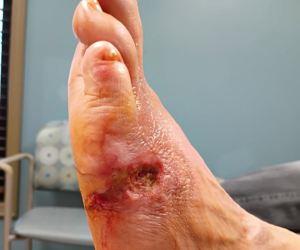
In an effort to mitigate waste, fraud, and abuse in the fee-for-service Medicare program, WISeR introduces prior authorization requirements for select outpatient categories of service. Specific to wound care providers, in Performance Year 1 (2026), Skin and Tissue Substitutes are among the service categories included in this program.1-3
Contractors will use artificial intelligence (AI) and machine learning tools to assess requests based on safety standards and existing Medicare coverage policies. However, details are still not clear on exactly which companies will be operating these tools and how exactly this component will roll out. Upon denials, however, a human clinician will become involved.1,2
CMMI Deputy Administrator Abe Sutton noted that WISeR participation will technically be voluntary, but providers in affected regions will face an added step in claims processing by having to either submit prior authorization requests before treatment or undergo post-service/pre-payment review.
Sometime in 2026, providers may see implementation of a “gold card” feature, allowing for exemption for physicians who have consistently met Medicare coverage criteria.1-3 Although participation is technically voluntary, those in the selected regions that do not participate will face additional steps in claims processing via prepayment review.1,2
A Provider and Supplier Operational Guide was issued by CMS on October 10, 2025, to assist impacted entities in preparing for implementation.4 Look for more information on the WISeR model and its impact on wound care clinicians as insights continue to develop.
Reference
1. ASRA Pain Medicine. CMS provides more details on WISeR prior authorization model. Published October 24, 2025. Accessed November 4, 2025. Available at: https://asra.com/news-publications/asra-updates/blog-landing/asra-updates/2025/10/24/cms-provides-more-details-on-wiser-prior-authorization-model.
2. Society of Interventional Radiology. The government shutdown will not delay WISeR. Published October 24, 2025. Accessed November 4, 2025. Available at: https://www.sirweb.org/publications/news/the-government-shutdown-will-not-delay-wiser/.
3. Early B. AI Medicare prior authorizations loom as providers fret. Modern Healthcare. Published October 31, 2025. Accessed November 4, 2025. Available at: https://www.modernhealthcare.com/politics-regulation/mh-wiser-model-medicare-prior-authorization-providers/#:~:text=An%20artificial%20intelligence%2Dpowered%20initiative,six%20states%20on%20Jan.%201.
4. Centers for Medicare and Medicaid Services. Wasteful and Inappropriate Service Reduction (WISeR) Model. Provider and Supplier Operational Guide. Updated October 10, 2025. Accessed November 4, 2025. Available at: https://www.cms.gov/files/document/wiser-provider-supplier-guide.pdf.