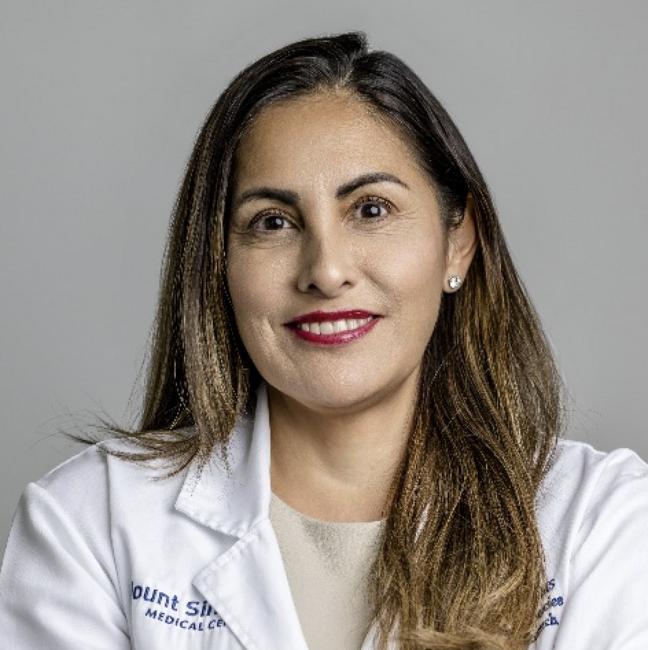
Genetic Risk Factors May Help Predict Richter Transformation in Chronic Lymphocytic Leukemia
Key Clinical Summary:
- Population and Focus: At the 2025 LL&M Congress (New York, NY), Matthew Davids, MD, Dana-Farber Cancer Institute, reviewed the epidemiology, genetic risk factors, and emerging therapies for Richter transformation (RT), a rare but aggressive complication occurring in ~3–4% of patients with chronic lymphocytic leukemia (CLL).
- Risk Factors and Pathogenesis: Genetic predictors of RT include TP53 aberrations, unmutated IgHV (especially VH4-39), and NOTCH1 mutations, along with complex karyotypes and major structural chromosomal abnormalities; antecedent RT clones may exist years before clinical onset, suggesting potential for early detection in the future.
- Therapeutic Approaches: Promising strategies include venetoclax plus chemoimmunotherapy for fit patients and glofitamab (CD20×CD3 bispecific antibody)—a non-chemotherapy option—for broader, older, or comorbid populations. Dr. Davids emphasized the importance of enrolling patients in clinical trials at academic centers to optimize access to investigational RT therapies.
Matthew Davids, MD, MMSc, Dana-Farber Cancer Institute, Boston, Massachusetts, discussed Richter transformation in chronic lymphocytic leukemia (CLL) and reviewed genetic risk factors such as TP53 aberrations, unmutated IgHV, and NOTCH1 mutations, as well as emerging data on antecedent Richter clones and complex karyotypes that may predict disease onset at the 2025 Lymphoma, Leukemia & Myeloma (LL&M) Congress in New York, New York.
He also presented promising investigational strategies, including venetoclax-based chemoimmunotherapy and bispecific antibody therapy with glofitamab, and emphasized the importance of referring patients to clinical trials for optimal management.
Dr Davids concluded, “Although Richter's is a very challenging diagnosis for patients with CLL, I am personally optimistic based on the number of different studies ongoing right now and the interest in research in this field that the outcomes will improve over the next few years.”
Transcript:
I'm Dr. Matthew Davids, Director of Clinical Research in the Division of Lymphoma at Dana-Farber Cancer Institute, and an associate professor of medicine at Harvard Medical School in Boston. I'm here at the 2025 LL&M meeting in New York City and we just finished a great session focused on Richter transformation.
My talk was kind of an overview of Richter's, and this is really a terrible complication of CLL where patients can develop an aggressive lymphoma that is very challenging to treat. In my talk, I kind of reviewed some of the epidemiology. We see this relatively rarely in patients with CLL. About 3 to 4% of patients across the CLL spectrum will develop Richter's syndrome. Because of the sort of more aggressive nature of this disease, it is very challenging to treat, and the prognosis is typically quite poor with traditional therapies. One of the things that my focus was on my lecture was actually figuring out are there specific risk factors that we can identify upfront that predispose patients with CLL to Richter's?
There are a number of different genetic factors associated with the CLL that can predict risk. These include TP53 aberration, as well as unmutated IgHV, particularly in the context of the VH4-39 rearrangement, as well as mutations in genes such as NOTCH1, which highly increase the risk of developing Richters. We also reviewed some data suggesting that antecedent Richter's clones can be present even as long as a couple of decades before the eventual development of the disease.
So far, this finding has not been clinically actionable, but we do hope that eventually if we can detect these Richter's clones very early, that we could intervene earlier and perhaps have more effective therapeutic options. Some of the other more recent datasets we reviewed focused on complex karyotype, looking at various different genetic abnormalities, the number of karyotypic abnormalities, as well as the presence of major structural changes based on these abnormalities can also predict the time to development of Richter's, as well as inform the survival of patients who do develop Richters.
I didn't give a comprehensive overview of Richter's treatment in my talk that was done in a later lecture, but I did highlight a couple of areas that we've been working on at Dana-Farber focused on chemo immunotherapy-based combination with venetoclax, which I think has shown significant promise, particularly for our younger patients who are fitter and able to tolerate chemoimmunotherapy.
I also presented some early data with glofitamab, a CD20-CD3 bispecific antibody, which would be a non-chemotherapy based approach to treat Richter’s and may allow us to extend the benefit of that therapy to a broad population of CLL patients, including those who are older with comorbidities. I highlighted an ongoing study we have with glofitamab either as monotherapy or with various combination partners.
Although Richter's is a very challenging diagnosis for patients with CLL, I am personally optimistic based on the number of different studies ongoing right now and the interest in research in this field that the outcomes will improve over the next few years, but really a critical message for everyone out there is that if you have patients with Richters, it's really best to treat them in the context of a clinical trial. The sooner you can refer them in for evaluation in an academic center that has clinical trials, the better we can get them in for these trials to explore all these therapeutic options that are in development.
Source:
Davids M. Risk Factors for the Development of Richter Transformation. Presented at Lymphoma, Leukemia & Myeloma Congress; October 14-17, 2025. New York, NY.