Daratumumab Plus Teclistamab Demonstrates Favorable Safety and Efficacy for Smoldering Multiple Myeloma: REVIVE Study
Key Clinical Summary:
- Design/Population: The phase 2 REVIVE study evaluated daratumumab plus teclistamab in patients with high-risk smoldering multiple myeloma, reporting interim results from the first 25 patients. Treatment consisted of weekly dosing in cycle 1, followed by monthly dosing for a fixed duration of 24 cycles, with long-term post-treatment marrow surveillance planned.
- Key Outcomes: The combination was well-tolerated, with no cytokine release syndrome or ICANS, aided by prophylactic tocilizumab prior to first teclistamab dosing. 100% MRD negativity at 10⁻⁶ sensitivity was achieved in treated patients to date. Expected hypogammaglobulinemia occurred universally and was managed with monthly IVIG and standard antimicrobial prophylaxis.
- Clinical Relevance: These early data suggest that dual CD38 and BCMA targeting in high-risk smoldering myeloma can induce deep, MRD-negative responses with a favorable safety profile using a finite-duration regimen, supporting further investigation of early intensive immune therapy with potential for long-term disease control.
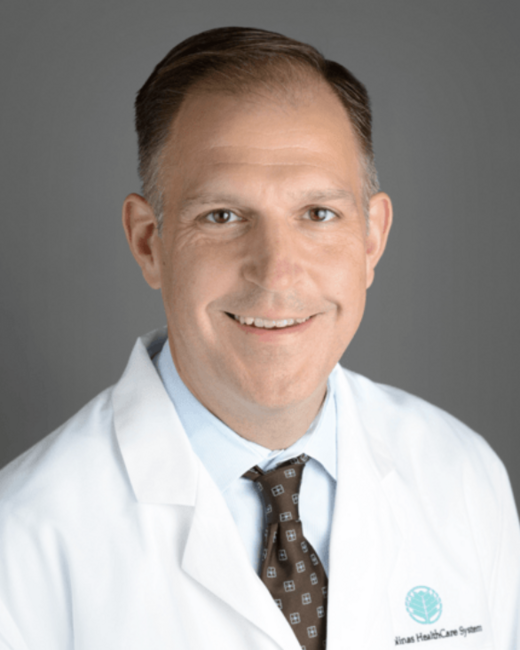
Ola Landgren, MD, PhD, Sylvester Comprehensive Cancer Center, Miami, Florida, presented early phase 2 results from the REVIVE study, evaluating daratumumab plus teclistamab among patients with high-risk smoldering multiple myeloma (SMM) at the 2025 American Society of Hematology (ASH) Annual Meeting & Exposition in Orlando, Florida.
Among the first 25 patients, the combination was safely administered with no cytokine release syndrome (CRS) or immune effector cell-associated neurotoxicity syndrome (ICANS) observed and achieved 100% MRD negativity at 10⁻⁶, supported by prophylactic tocilizumab and IVIG management for hypogammaglobulinemia.
Dr Landgren concluded, “My prediction is that if you treat earlier, that you probably will see that could be even some patients could be cured from the disease, but the future will tell.”
Transcript:
I'm Ola Langren. I'm professor of medicine and I'm chief of the myeloma program at the University of Miami in Miami, Florida. I'm here at ASH 2025 in Orlando, Florida. I was asked to talk about our presentation focusing on the REVIVE study.
The REVIVE study is focusing on patients with smoldering myeloma, high-risk smoldering myeloma patients. Recently the FDA approved the very first drug for the treatment indication of high-risk smoldering myeloma. The FDA approved daratumumab, single drug, and that's now approved here in the United States, and it's also approved in Europe and elsewhere. What we did in our study was that we used the combination of daratumumab with teclistamab. This is a phase 2 study, so it's a smaller study. It will eventually have up to 50 patients. At this current presentation, we report on the first 25 patients.
What we show is that you can safely give the combination of the 2 drugs. We have done a dosing schedule with once a week for the first cycle and thereafter is just once a month with these 2 drugs.
We show that in the first patient we have treated that we can achieve 100% minimal residual disease negativity, 10-6. There is no detectable disease with any of the tools that we have. We have premedicated all the patients before the very first dosing of teclistamab with a single dose of tocilizumab. None of the patients have had cytokine release syndrome, or CRS. There is also no ICANS seen in this study.
We see that all the patients will eventually develop hypogammaglobulinemia, low IgG levels, and that's consistent with what has been seen with the bispecific antibodies in the different spectra of both newly diagnosed and relapsed multiple myeloma. We see the same in smoldering myeloma patients, but we can give the patient intravenous immunoglobulin or IVIG. We give that once a month. We also use the standard prophylactic measures with antibiotics and antivirals.
Overall, we find this very safe and highly efficacious. The study design, as I mentioned, is to give the combination of the 2 drugs once a week for the first cycle and thereafter once a month. The total duration of the study is 24 cycles. Thereafter, we stop the therapy.
I would also lastly say that we will follow patients with bone marrow biopsy after the study. We'll do it once a year, and the plan is to do it after 5 years. The question is, what happened 5 years later after you complete this very efficacious therapy? Will there be patient where there is no detectable disease? My assumption is that it's probably going to be yes to that, but we will see.
Lastly, also here at ASH, one of the late-breaking abstracts uses the same combination, the daratumumab with teclistamab in patients with 1 to 3 prior lines of therapy. We see unprecedented results also with long-term follow-up with this combination in patient with 1 to 3 prior lines of therapy. They show hazard ratio of 0.17, very high rates of MRD negativity, and several years out patients sustain their MRD negativity. Based on that, my prediction is that if you treat earlier, that you probably will see that could be even some patients could be cured from the disease, but the future will tell. Very exciting.
Source:
Landgren O, Diamond B, Pandey A, et al. A phase 2 trial of teclistamab plus daratumumab combination therapy for high-risk smoldering multiple myeloma: First pre-planned analysis (the REVIVE Study). Dec 6-9, 2025; Orlando, FL. Abstract: 653A
Mateos MV, Bahlis N, Perrot A, et al. Phase 3 randomized study of teclistamab plus daratumumab versus investigator’s choice of daratumumab and dexamethasone with either pomalidomide or Bortezo. Dec 6-9, 2025; Orlando, FL. Abstract: 654
US Food and Drug Administration. Accessed November 6, 2025. https://www.fda.gov/drugs/resources-information-approved-drugs/fda-approves-daratumumab-and-hyaluronidase-fihj-high-risk-smoldering-multiple-myeloma