This clinical summary was reviewed by Rebecca Kapur, Managing Editor, Cath Lab Digest
TAVR Program Spotlight
Achieving Efficiency in TAVR
A Conversation with Samir Germanwala, DO, FACC, FSCAI
A Conversation with Samir Germanwala, DO, FACC, FSCAI
November 2025
© 2025 HMP Global. All Rights Reserved.
Any views and opinions expressed are those of the author(s) and/or participants and do not necessarily reflect the views, policy, or position of Cath Lab Digest or HMP Global, their employees, and affiliates.
Samir Germanwala DO, FACC, FSCAI
Medical Director of Cardiac Catheterization Laboratory; Director of Structural Heart and Endovascular Therapies; Chairman of Cardiology Longview Regional Medical Center: Heart & Vascular Institute, Longview, Texas
Disclosures: Dr. Germanwala reports that he is a speaker for Edwards and Medtronic, and has conducted live courses for Medtronic.
Dr. Samir Germanwala can be contacted at
germanwala@gmail.com.
Clinical Summary
-
Design/Population: Per Cath Lab Digest, Nov 2025, this single-center observational experience at Longview Regional Medical Center (East Texas) reviewed >700 TAVR cases over ≈10 years, evolving from general anesthesia/bilateral femoral access to a streamlined, minimalist workflow using local anesthesia and single-access technique.
-
Key Outcomes: Reported mean room time fell ≈105 → 25 min, length of stay 2.2 → 1.1 days, pacemaker rate 8–9%, mortality <1%, all within or better than national benchmarks.
-
Clinical Relevance / Limits / Next Steps: Community-hospital efficiencies (custom kits, block scheduling, standardized pathways) reduced cost and turnover (≈7–8 min). Authors plan a formal cost-benefit analysis; findings reflect program experience, not a randomized trial.
Can you tell us about your facility and TAVR program?
Longview Regional Medical Center is a regional hospital in East Texas. Longview itself has about 100,000 people, but our catchment area is closer to 400,000. We are roughly two hours east of Dallas, and that distance was the main reason we launched a local TAVR program ten years ago, just a year or so after the technology received commercial approval.
Patients in this area were reluctant to travel for advanced cardiac care. Many told us they simply wouldn’t go to Dallas for a procedure, so we decided to bring it here. We already had a strong foundation, with seven cardiologists (six interventionalists and one electrophysiologist) and a large regional referral network.
We began with the CoreValve (Medtronic), performing roughly 200-300 cases, then transitioned to the Sapien (Edwards Lifesciences) balloon-expandable valve, which we found predictable and user-friendly. Its single-deployment design minimizes the need for repositioning, shortens procedure time, and contributes to procedural consistency across cases. Over time, we have completed more than 700 TAVRs, with about 70-80% using the Edwards platform. Our program now serves as a destination center for East Texas, drawing referrals from hospitals up to two hours away for TAVR, MitraClip (Abbott), and other structural heart interventions.
How do you approach pre-procedure evaluation to improve patient and team efficiency?
We try to minimize the burden on elderly patients and their families. Our goal is to consolidate all required testing (computed tomography [CT] scan, echocardiography, surgical consultation, and labs) into a single visit, so patients are not making 5 or 6 separate trips.
We also emphasize collaboration with referring cardiologists. We stay in close communication so they remain engaged in follow-up and don’t feel that they’re “losing” their patients. That approach builds trust and keeps referral lines strong.
Another cornerstone is our dedicated cath lab holding area, which is a 10-bed unit separate from same-day surgery. The nurses and technologists in that unit handle only cardiac and vascular patients, so they know exactly what is needed in terms of type-and-cross, valve trays, and documentation. That specialized consistency saves time and reduces errors.
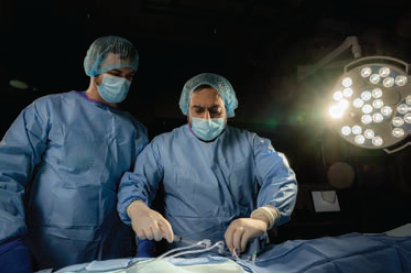
Each patient has a physical binder that includes pre-procedure labs, echocardiographic data, CT imaging, and a diagram of the planned approach. The anesthesiologist, cardiac surgeon, and the interventional cardiologist all review the same binder before the case. When the patient arrives, everyone is fully informed.
Just before the procedure, we perform a 30-second, four-person timeout that includes the surgeon, interventionalist, anesthesiologist, and valve coordinator, while the technologists and nurses listen in. Everyone hears the plan and any special considerations. It is brief but incredibly effective at keeping the team aligned.
How have you refined your procedural workflow to save time and reduce resource use?
Experience has allowed us to adopt a minimalist approach. In the early years, every TAVR patient received general anesthesia, central lines, Foley catheters, and bilateral femoral access. Now, about 90% of our cases are performed under local anesthesia with minimal sedation. Patients stay awake and recover faster. Avoiding invasive lines eliminates unnecessary steps for anesthesia and nursing, and lowers the risk of infection or urinary trauma.
We also moved from bilateral femoral access to a single-groin approach with ipsilateral radial access for angiography. One wrist, one groin — that’s it. Using the radial for post-deployment angiography allows immediate closure of the femoral site, shortens total procedure time, and markedly reduces groin complications. Patients are able to sit up within an hour and ambulate early, which has improved both comfort and workflow efficiency.
Avoiding the intensive care unit (ICU) has been another major gain. Most patients go directly to our telemetry unit post procedure. That saves significant cost and opens ICU beds for sicker patients.
How did you implement minimalist anesthesia within your institution?
We did it collaboratively through our valve clinic, which includes two cardiac surgeons, two interventional cardiologists, a valve coordinator, and a nurse practitioner, plus representation from cardiac anesthesia.
We presented our data and made the case that full general anesthesia wasn’t necessary for the majority of patients. For the small subset at higher risk, those with complex anatomy, respiratory issues, or difficult airways, we still use traditional anesthesia, but for most, minimal sedation is sufficient.
Because we approached it as a team decision, we didn’t face resistance. Everyone recognized it was better for the patient. In community hospitals like ours, where physicians are not salaried, efficiency also matters to workflow. Getting done by midday instead of late evening benefits both patients and staff.
Can you describe a typical TAVR day and what happens in the room?
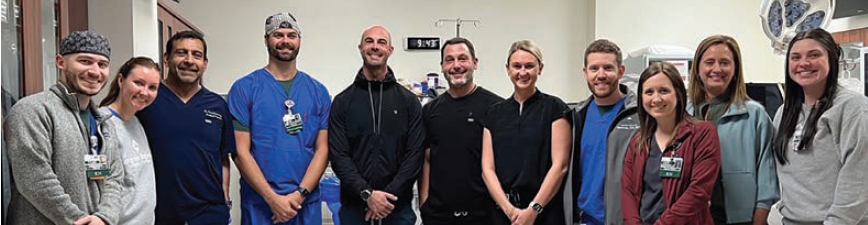
When the patient arrives, the room is already reset and sterile from the prior case. Two technologists and a nurse handle turnover: cleaning, opening the new tray, and setting up equipment. Each TAVR involves about eight people in the room: the surgeon, interventionalist, anesthesiologist or CRNA, two technologists, two nurses, and the valve representative. Sometimes we’ll have an extra person if a trainee or new hire is observing, but generally it is the same small group in every case.
Before entering the sterile field, we review the patient’s binder, confirm the plan, and perform the timeout. The patient receives local anesthesia and mild sedation. While anesthesia is monitoring from the head of the table, we prep and drape.
Meanwhile, the valve representative prepares the valve, rinsing, crimping, and loading it onto the delivery system. Having the representative handle that step frees our technologists to focus on preparing the femoral and radial fields, organizing the equipment, and managing imaging and closure setup. That division of labor keeps the room moving efficiently and saves about ten minutes per case.
The procedure itself is predictable: most cases take 20-30 minutes, with complex ones taking about 40 minutes. Once the valve is deployed and hemostasis is achieved, anesthesia begins waking the patient while we close access, dictate notes, and call the family.
What role do customized kits and medication prep play in efficiency?
After the first year, we realized we were wasting time opening dozens of separate sterile items. So we worked with our vendor to build a custom TAVR procedural kit through Medline. Now, everything — sheaths, wires, catheters, drapes, closure devices — is in one package. Opening a single kit instead of 40 items saves about 10 minutes per case.
We also prepare medications ahead of time. At the start of each TAVR day, the nurses pull a standardized set of about ten drugs, including anticoagulants, antidotes, vasodilators, fluids, and albumin, and stores it in the room. That way, when anesthesia requests something, it is immediately available. No one is running to pharmacy mid case.
These steps may seem small individually, but together they cut significant time and reduce variability.
How many cases do you typically perform in a day, and how do you schedule them?
We average five TAVRs per day, occasionally seven. Cases are booked on the hour, 7:00 am through 11:00 am, and we are usually finished by early afternoon. All procedures are performed in a single dedicated cath lab, without alternating between rooms, allowing for a consistent, streamlined workflow.
We use block scheduling, reserving the second and fourth Wednesdays of every month exclusively for TAVR. That prevents other cases from being slotted between valves and ensures the full team and equipment are available.
Predictability keeps morale high. No one is working until eight at night, and other physicians can use the room for caths or devices later in the day. It’s better for staff retention and for cost control; the hospital doesn’t have to pay overtime or run a second after-hours crew.
How have you improved turnover between cases?
Turnover averages seven to eight minutes. As soon as one case ends, the cleanup crew resets the room while anesthesia and physicians finish dictations and family updates. Because equipment, kits, and meds are standardized, the next patient can roll in almost immediately.
That efficiency comes from repetition and preparation. Everyone knows their role; nothing is improvised.
Tell us about post-procedure care and discharge planning.
After TAVR, patients spend about an hour in the post-anesthesia care unit (PACU) under anesthesia observation, then transfer to our Heart and Vascular Unit (HVU), a 24-bed telemetry floor with nurses specially trained in cardiac recovery. All rooms are private, and the environment is calm and family friendly. Physical therapy and cardiac rehab visit patients the next morning. Most patients are discharged home before 10 am the day after their procedure.
We have built a standardized post-operative pathway:
• A nurse practitioner and valve coordinator complete discharge paperwork and schedule the 10-day wound check and 30-day echocardiogram required by the Transcatheter Valve Therapy (TVT) Registry.
• Patients receive written instructions, appointment cards, and contact information before leaving.
Because the process is uniform, nothing falls through the cracks, and registry compliance remains near 100%.
Do most patients participate in cardiac rehab?
Yes, about 90 percent enroll. The few who don’t typically live far away or feel they are already back to normal activity. Many patients tell us they notice improvement almost immediately, and that the day after TAVR, they are walking several hundred feet instead of 20. That rapid recovery reinforces our minimalist approach.
What about pacemaker management — how do you handle that efficiently?
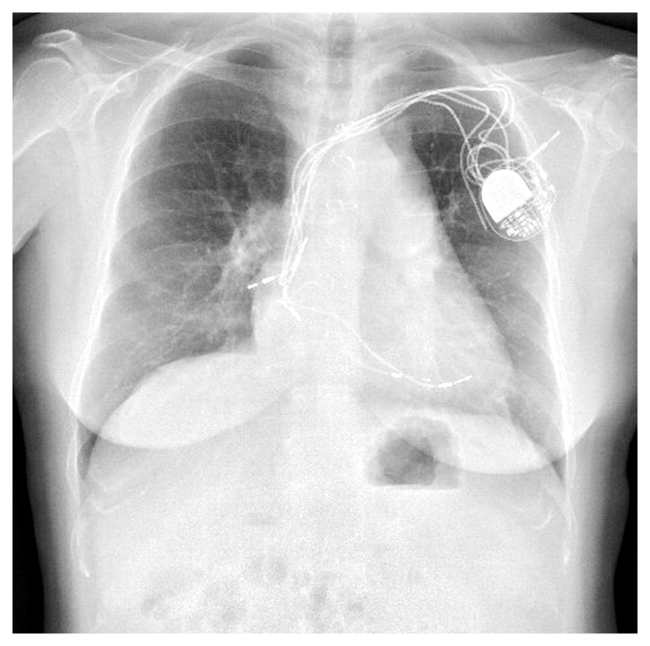
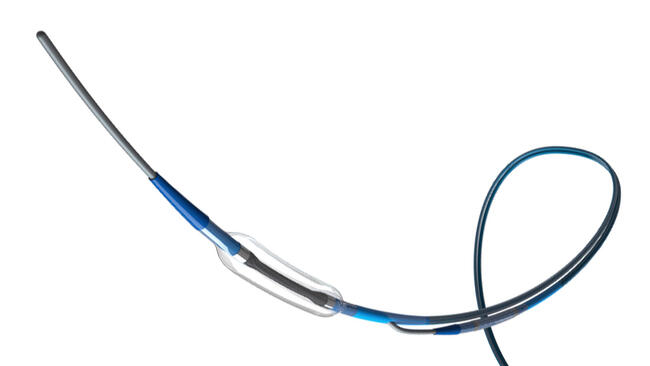
Roughly 8–10% of our TAVR patients require a pacemaker, consistent with national averages. In many hospitals, that need creates long delays because another physician must come to implant the device. At Longview, several of us implant pacemakers ourselves, including the Aveir leadless pacemaker (Abbott), which can be delivered via the femoral vein — the same access already being used during TAVR. If a patient develops high-grade atrioventricular (AV) block post deployment of the valve, we can place the pacemaker immediately, usually within about 45 minutes, instead of waiting anywhere from 90 minutes to 2 hours for another operator. That flexibility prevents bottlenecks and keeps the schedule on track.
What kind of results have you seen with these process changes?
Our metrics speak for themselves:
• Average room time has dropped from roughly 105 minutes to 25 minutes.
• Length of stay has fallen from 2.2 days to 1.1 days.
• Pacemaker rate averages 8-9%, and mortality across more than 700 cases is under 1%, all consistent with or better than national benchmarks.
All our outcomes are reported in the TVT Registry, so they are transparent and comparable across institutions.
How do you see these efficiencies scaling to larger programs?
Some aspects scale easily, such as customized kits, pre-pulled meds, minimalist anesthesia, and our patient binder system. The challenge at large academic centers is often transport and anesthesia turnover. I have friends at large programs who tell me they wait 90 minutes between cases just for transport or room readiness.
However, even incremental changes, like standardizing kits or prepping meds, can save 30-60 minutes per case. With high TAVR volumes, that translates into major throughput gains.
The key is consistency and ownership. Everyone on the team needs to understand the workflow and their role in keeping it moving.
Are there any data points or lessons you would emphasize?
Our improvements weren’t driven by a formal efficiency initiative. They evolved naturally from trying to do what is best for patients and staff. But when you look back, the economic benefits are clear. National benchmarking data estimate that operating room and hybrid lab time costs range from $36 to $100 per minute, depending on the institution and case complexity, so cutting an hour of idle time between cases can save thousands of dollars per day. At the same time, early discharge and lower ICU use reduce overall cost of care.
TAVR has become a predictable, streamlined procedure. With experience and a culture focused on teamwork, minimalism, and preparation, you can achieve remarkable gains in efficiency without compromising outcomes. My team and I are in the process of preparing a formal paper outlining our data, the advantages of each process change, and a comprehensive cost-benefit analysis.
Dr. Germanwala’s Final Thoughts for Structural Heart Teams:
• Streamline pre-op logistics: Consolidate all imaging, labs, and evaluations into one coordinated visit to minimize patient burden and eliminate scheduling gaps.
• Adopt a minimalist procedural strategy: Use local anesthesia with light sedation, a single femoral access with ipsilateral radial access for angiography, and avoid unnecessary lines or catheters. This approach shortens procedure time, reduces bleeding risk, lowers cost, and facilitates early ambulation and discharge.
• Standardize supplies and medications: Customized TAVR kits and pre-pulled meds keep the room fully stocked and eliminate last-minute delays.
• Delegate valve preparation: Have the valve representative prepare and load the valve while access and anesthesia setup occur, saving roughly ten minutes per case.
• Empower a consistent, dedicated team: Assigning the same nurses and technologists to TAVR days builds rhythm, confidence, and communication efficiency.
• Integrate pacemaker management: Train operators to implant leadless pacemakers through the same femoral venous access when post-deployment AV block occurs, potentially avoiding hours of procedural delay.
• Implement block scheduling: Reserve fixed days and sequential time slots for TAVR to prevent schedule overlap and protect team continuity.
• Maintain continuous cost awareness: Understand that hybrid lab time costs anywhere from $36-$100 per minute; efficiency saves both resources and staff fatigue.
• Establish a uniform post-op pathway: Early ambulation, next-morning discharge, and standardized 10- and 30-day follow-ups maintain safety and TVT registry compliance.
Ultimately, efficiency in TAVR isn’t about doing more cases, but is about creating a predictable, safe, and sustainable workflow that benefits patients, staff, and hospitals alike.

Subscriber
Cath Lab Digest Newsletter