From Chronic Ankle Instability to Total Ankle Arthroplasty
Chronic ankle instability (CAI) is a well-established precursor to post-traumatic ankle osteoarthritis, driven by altered joint mechanics and progressive cartilage degeneration. This article reviews the pathophysiologic link between CAI and end-stage arthritis, outlines evidence-based treatment strategies, and clarifies when total ankle arthroplasty becomes an appropriate intervention.
Key Takeaways
• Chronic ankle instability accelerates ankle arthritis.
Recurrent sprains and ligament insufficiency alter talar mechanics, increase shear and uneven loading, and raise the risk of post-traumatic ankle osteoarthritis.
• Stabilization improves function but may not halt degeneration.
Rehabilitation and surgical ligament repair restore stability and reduce symptoms, yet once cartilage loss is established, they do not reliably prevent progression to arthritis.
• Total ankle arthroplasty is effective for end-stage instability-related OA.
In patients with severe cartilage loss and fixed deformity, TAA—with concurrent instability correction—provides outcomes comparable to other post-traumatic etiologies.
What is the link between ankle instability and degenerative changes? Chronic ankle instability (CAI) results from mechanical insufficiency, structural injury to the ligaments or osseous anatomy, and functional deficits caused by altered neuromuscular control. Recurrent ankle sprains remain the most common etiology.1 Long-standing lateral ankle instability alters joint loading patterns and has a strong association with developing ankle joint degeneration. Abnormal joint mechanics, particularly increased shear and uneven cartilage loading, contribute to progressive chondral damage.2 Retrospective analyses demonstrate that individuals with CAI are twice as likely to exhibit degenerative changes compared with those experiencing acute injuries and have a five-fold increased risk of severe ankle arthritis, highlighting the importance of early stabilization.3
Approximately 80% of ankle osteoarthritis (OA) is post-traumatic in origin, commonly following lateral ankle sprains and chronic instability.4 In a large epidemiologic study of over 195,000 adults, a single ankle sprain increased the risk of developing OA by 46%, with the highest incidence in women and individuals with elevated body mass index (BMI).5 The latency from initial ligamentous injury to end-stage OA averages 34 years.6
Growing evidence links CAI to a high prevalence of intra-articular pathology. Wijnhoud and colleagues reported that 32% of patients with CAI have osteochondral lesions (OCLs).7 Risk factors for accelerated degeneration include older age, larger talar tilt angles, and varus ankle alignment.8 One will typically observe medial talar OCLs and osteophytes, strongly associated with CAI, within five years of the initial sprain and correlate with early arthritic changes.9 Outcomes worsen when OCLs are larger or occur in active patients. Those with concurrent CAI and OCL have significantly higher surgical failure rates (AOFAS < 80).10 Arthroscopic studies corroborate this, frequently revealing synovitis, cartilage defects, and loose bodies in CAI patients.11
Biomechanical research further strengthens the causal link between instability and degeneration. Isolated anterior tibiofibular ligament (ATFL) injury increases anterior translation, internal rotation, and superior translation of the talus, producing abnormal cartilage loading.12 Magnetic resonance imaging (MRI) studies show increased subchondral bone mineralization, particularly in the medial gutter, in CAI patients, preceding radiographic OA and supporting early stabilization strategies.4
Treatment of CAI
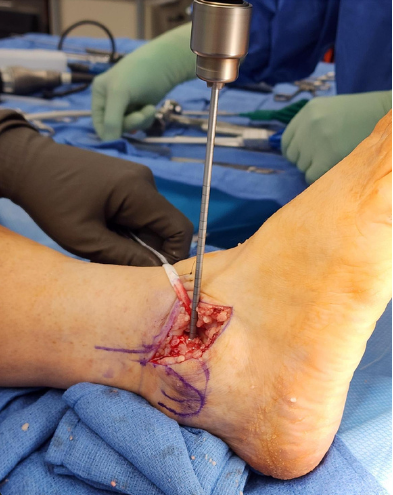
Management of CAI begins with structured physical rehabilitation, emphasizing strength, proprioception, and dynamic balance, with significant improvement in clinical outcomes and function.13 However, no studies demonstrate that rehabilitation alone prevents progression to OA. For patients who fail conservative management, surgical intervention is effective. Arthroscopy and lateral ligament stabilization procedures significantly improve function and stability.14 Nevertheless, up to 36% of patients continue to experience pain or radiographic OA progression despite successful stabilization.15,16 Modern techniques, including anatomic reconstructions and augmentation, have demonstrated improved outcomes up to five years postoperatively.17,18 The authors prefer an algorithmic approach to CAI treatment with arthroscopic ligament repair, followed by anatomic reconstruction with allograft. Targeted postoperative rehabilitation further enhances results, as a study by Park and team noted that subtalar joint axis-focused balance training significantly improves ATFL thickness, ankle strength, and dynamic stability following arthroscopic Broström repair.19 Importantly, in established arthritis, combined rehabilitation and ligament reconstruction may be insufficient to halt further degeneration.15,16
Significant gaps in the literature remain. No long-term (≥ 10-year), prospective randomized trials compare rehabilitation versus surgical stabilization for preventing OA in CAI. Moreover, clinical guidelines are lacking for patients who present with CAI and concurrent osteoarthritis, specifically regarding when stabilization alone is appropriate versus when more advanced interventions, such as ankle arthrodesis or total ankle arthroplasty (TAA), should be considered.
From CAI to TAA
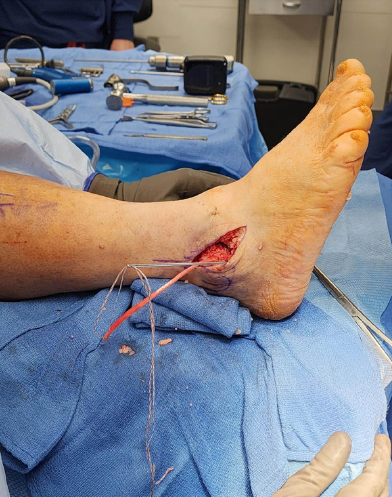
For patients who progress to end-stage degenerative ankle arthritis secondary to CAI, total ankle arthroplasty (TAA) becomes an appropriate treatment option. TAA itself is not indicated for CAI but for the resultant cartilage loss, deformity, and rigidity that occurs after years of mechanical instability.20 Candidates typically have >50% cartilage loss, fixed varus or valgus deformity, or instability not correctable by soft-tissue procedures alone. Although CAI is rarely isolated as a standalone indication in TAA literature, most instability-related cases fall under the broader category of ligamentous post-traumatic OA as a cause leading to TAA.20
Instability must be addressed during TAA, as untreated ligament insufficiency increases the risk of malalignment, edge-loading, and early implant failure.21,22 Comparative studies show that outcomes for TAA in instability-related OA are equivalent to those for post-fracture OA, with similar functional scores, complication rates, and survivorship.21,23 Recent meta-analysis demonstrates comparable short-term outcomes between non-traumatic OA and post-traumatic OA; however, prior surgical interventions may increase revision rates, underscoring the mechanical complexity of instability-related deformities.24
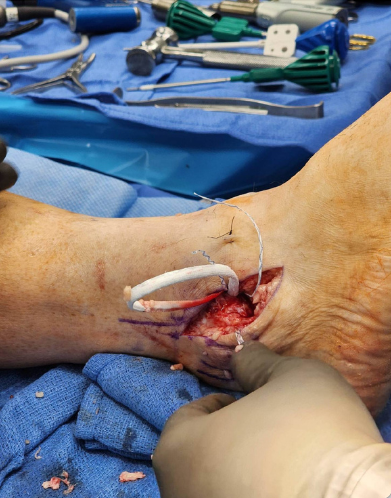
Because lateral ankle stabilization techniques vary widely, their durability during TAA remains an important consideration. A retrospective study compared Broström-Gould to anatomic lateral ankle stabilization (ATLAS) performed concurrently with TAA. The Broström-Gould group had higher rates of early revision, recurrent instability, reoperation, and complications. ATLAS produced more stable outcomes, suggesting that anatomic reconstruction may be preferable in TAA when significant instability is present.25
Concluding Thoughts
In patients with end-stage osteoarthritis and a history of CAI, TAA is a viable and reliable treatment option. However, there is no consensus on when to transition from stabilization to arthroplasty. Evidence consistently shows that once substantial cartilage deterioration occurs, conservative treatment, arthroscopy, and ligament reconstruction do not reliably prevent OA progression. Therefore, in TAA candidates with underlying instability, concomitant osseous or ligamentous procedures must be considered to optimize alignment, reduce mechanical stress, and decrease the risk of complications or revision.
Dr. McAlister is the Fellowship Director at the Phoenix Foot and Ankle Institute Fellowship in Scottsdale, AZ.
Dr. Crenshaw is a Fellow at the Phoenix Foot and Ankle Institute Fellowship in Scottsdale, AZ.
References
- Hertel J. Functional anatomy, pathomechanics, and pathophysiology of lateral ankle instability. J Athl Train. 2002;37(4):364-375.
- Herrera-Pérez M, González-Martín D, Vallejo-Márquez M, Godoy-Santos AL, Valderrabano V, Tejero S. Ankle osteoarthritis aetiology. J Clin Med. 2021;10(19):4489. doi:10.3390/jcm10194489
- Rieck B, Reiser M, Bernett P. Posttraumatische Arthrose des oberen Sprunggelenkes bei chronischer fibularer Bandinsuffizienz [Post-traumatic arthrosis of the upper ankle joint in chronic insufficiency of the fibular ligament]. Orthopade. 1986;15(6):466-471.
- Song K, Wikstrom EA. Plausible mechanisms of and techniques to assess ankle joint degeneration following lateral ankle sprains: a narrative review. Phys Sportsmed. 2019;47(3):275-283. doi:10.1080/00913847.2019.1581511
- Lee S, Song K, Lee SY. Epidemiological study of post-traumatic ankle osteoarthritis after ankle sprain in 195,393 individuals over middle age using the National Health Insurance Database: A retrospective design. J Sci Med Sport. 2022;25(2):129-133. doi:10.1016/j.jsams.2021.08.018
- Valderrabano V, Hintermann B, Horisberger M, Fung TS. Ligamentous posttraumatic ankle osteoarthritis. Am J Sports Med. 2006;34(4):612-620. doi:10.1177/0363546505281813
- Wijnhoud EJ, Rikken QGH, Dahmen J, Sierevelt IN, Stufkens SAS, Kerkhoffs GMMJ. One in three patients with chronic lateral ankle instability has a cartilage lesion. Am J Sports Med. 2023;51(7):1943-1951. doi:10.1177/03635465221084365
- Sugimoto K, Takakura Y, Okahashi K, Samoto N, Kawate K, Iwai M. Chondral injuries of the ankle with recurrent lateral instability: an arthroscopic study. J Bone Joint Surg Am. 2009;91(1):99-106. doi:10.2106/JBJS.G.00087
- Wang DY, Jiao C, Ao YF, et al. Risk factors for osteochondral lesions and osteophytes in chronic lateral ankle instability: a case series of 1169 patients. Orthop J Sports Med. 2020;8(5):2325967120922821. doi:10.1177/2325967120922821
- Lee M, Kwon JW, Choi WJ, Lee JW. Comparison of outcomes for osteochondral lesions of the talus with and without chronic lateral ankle instability. Foot Ankle Int. 2015;36(9):1050-1057. doi:10.1177/1071100715581477
- Lee J, Hamilton G, Ford L. Associated intra-articular ankle pathologies in patients with chronic lateral ankle instability: arthroscopic findings at the time of lateral ankle reconstruction. Foot Ankle Spec. 2011;4(5):284-289. doi:10.1177/1938640011416355
- Caputo AM, Lee JY, Spritzer CE, et al. In vivo kinematics of the tibiotalar joint after lateral ankle instability. Am J Sports Med. 2009;37(11):2241-2248. doi:10.1177/0363546509337578
- Luan L, Adams R, Witchalls J, Ganderton C, Han J. Does strength training for chronic ankle instability improve balance and patient-reported outcomes and by clinically detectable amounts? A systematic review and meta-analysis. Phys Ther. 2021;101(7):pzab046. doi:10.1093/ptj/pzab046
- Aicale R, Maffulli N. Chronic lateral ankle instability: topical review. Foot Ankle Int. 2020;41(12):1571-1581. doi:10.1177/1071100720962803
- Kosik KB, Song K, Gribble PA, Hoch MC, Srinath A. Joint stabilization surgery for chronic ankle instability and medial ankle osteoarthritis: a critically appraised topic. J Sport Rehabil. 2022;31(3):351-355. doi:10.1123/jsr.2021-0177
- Cho BK, Shin YD, Park HW. Outcome following a modified Broström procedure and arthroscopic debridement of medial gutter osteoarthritis combined with chronic ankle instability. Foot Ankle Int. 2018;39(12):1473-1480. doi:10.1177/1071100718793395
- Pijnenburg AC, Van Dijk CN, Bossuyt PM, Marti RK. Treatment of ruptures of the lateral ankle ligaments: a meta-analysis. J Bone Joint Surg Am. 2000;82(6):761-773. doi:10.2106/00004623-200006000-00002
- Porter M, Shadbolt B, Ye X, Stuart R. Ankle lateral ligament augmentation versus the modified Broström-Gould procedure: a 5-year randomized controlled trial. Am J Sports Med. 2019;47(3):659-666. doi:10.1177/0363546518820529
- Park JM, Han SH, Cho BC, et al. Enhancing post-surgical rehabilitation outcomes in patients with chronic ankle instability: impact of subtalar joint axis balance exercises following arthroscopic modified Broström operation. Medicina (Kaunas). 2024;60(2):328. doi:10.3390/medicina60020328
- Shaffrey I, Henry J, Demetracopoulos C. An evaluation of the total ankle replacement in the modern era: a narrative review. Ann Transl Med. 2024;12(4):71. doi:10.21037/atm-23-1569
- Lee GW, Santoso A, Lee KB. Comparison of intermediate-term outcomes of total ankle arthroplasty in primary and ligamentous post-traumatic osteoarthritis. Foot Ankle Int. 2019;40(11):1273-1281. doi:10.1177/1071100719866472
- van der Plaat LW, Haverkamp D. Patient selection for total ankle arthroplasty. Orthop Res Rev. 2017;9:63-73. Published 2017 Jul 31. doi:10.2147/ORR.S115411
- Nieuwe Weme RA, van Solinge G, N Doornberg J, Sierevelt I, Haverkamp D, Doets HC. Total ankle replacement for posttraumatic arthritis. Similar outcome in postfracture and instability arthritis: a comparison of 90 ankles. Acta Orthop. 2015;86(4):401-406. doi:10.3109/17453674.2015.1029842
- Al-Dahan T, Ndlovu S, Dhinsa B, et al. Outcomes of total ankle arthroplasty in non-traumatic arthritis versus post-traumatic arthritis: a systematic review and meta-analysis. Cureus. 2025;17(9):e91680. doi:10.7759/cureus.91680
- Rushing CJ, Mckenna BJ, Berlet GC. Lateral instability in total ankle arthroplasty: a comparison between the Brostrom-Gould and Anatomic Lateral Ankle Stabilization (ATLAS). Foot Ankle Spec. 2023;16(3):192-204. doi:10.1177/19386400211041897
© 2026 HMP Global. All Rights Reserved.
Any views and opinions expressed are those of the author(s) and/or participants and do not necessarily reflect the views, policy, or position of Podiatry Today or HMP Global, their employees, and affiliates.