Volume 26 - Issue 9 - September 2014

09/08/2014
Soundos K. Moualla, MD, FACC, FSCAI; Richard R. Heuser, MD, FACC, FACP, FESC, FSCAI; Sohail Khan, MD, FACC, FSCAI
A patient is presented with symptomatic right coronary artery (RCA) CTO who failed maximal medical therapy as well as multiple antegrade PCI attempts. Successful RCA CTO intervention was finally achieved using a novel over-the-wire balloon...
A patient is presented with...
09/08/2014
Journal of Invasive Cardiology
09/08/2014
Tsuyoshi Kaneko, MD; Jane W. Newburger, MD, MPH; Jane A. Leopold, MD
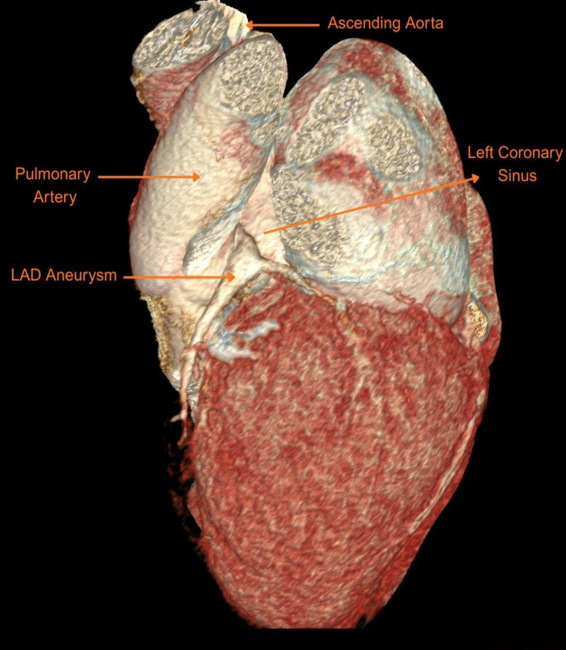
We present a case of a patient with an acute coronary syndrome who had the exceptionally rare finding of multivessel giant coronary artery aneurysms (>8 mm) involving the left main and ostial right coronary arteries with concomitant...
We present a case of a patient...
09/08/2014
Journal of Invasive Cardiology
09/08/2014
Anna P. Kotsia, MD, PhD; Dimitrios Karmpaliotis, MD, PhD; Emmanouil S. Brilakis, MD, PhD, FACC, FAHA, FESC, FSCAI
Epicardial collateral perforation is a serious complication of retrograde chronic total occlusion percutaneous coronary intervention. We describe two cases of epicardial collateral perforation that were successfully sealed with local thrombin...
Epicardial collateral...
09/08/2014
Journal of Invasive Cardiology
09/08/2014
Raúl Moreno-Gómez, MD, PhD; Guillermo Galeote, MD, PhD; Joel Hernandez, MD
A case is presented that shows rotational atherectomy can be a useful tool in a compromising situation, such as severely underexpanded implanted stents.
A case is presented that shows...
09/08/2014
Journal of Invasive Cardiology
Commentary
09/08/2014
Renu Virmani, MD, PhD; Kazuyuki Yahagi, MD; Michael Joner, MD
A thoughtful commentary on the evolution of stent technology and resulting complications, as pertaining to this month’s article by Kaliyadan, et al.
A thoughtful commentary on the...
09/08/2014
Journal of Invasive Cardiology
Original Contribution
09/08/2014
Rohan V. Menon, BS , MD; Harold Carlson, MD; Emmanouil S. Brilakis, MD, PhD, FACC, FAHA, FESC, FSCAI; Subhash Banerjee, MD, FSCAI; Santiago Garcia, MD; David E. Kandzari, MD; Khaldoon Alaswad, MD; Anna P. Kotsia, MD, PhD; Georgios Christopoulos, MD; Dimitrios Karmpaliotis, MD, PhD; J. Aaron Grantham, MD; Nicholas J. Lembo, MD; Craig A. Thompson, MD, MMSc; Vishal G. Patel, MD; Bavana V. Rangan, BDS, MPH, MD; William L. Lombardi, MD
Advancements in equipment and the flexibility to switch between multiple technical approaches in a single procedure have dramatically increased the success of CTO-PCI. This study compares contemporary procedural outcomes of hybrid CTO-PCI...
Advancements in equipment and...
09/08/2014
Journal of Invasive Cardiology
Review
09/08/2014
Mukesh Gopalakrishnan, MD; Federico Silva-Palacios, MD; Pongpeera Taytawat, MD; Rojina Pant, MD; Lloyd W. Klein, MD
This review evaluates the known mediators of local and systemic inflammation implicated in the atherothrombotic process and considers which may be valuable to the clinician now and in the future.
This review evaluates the known...
09/08/2014
Journal of Invasive Cardiology
Original Contribution
09/08/2014
Nathan Boyer, MD; Jeffrey M. Zimmet, MD, PhD; Kendrick A. Shunk, MD, PhD; Yerem Yeghiazarians, MD; Andrew J. Boyle, MBBS, PhD, MD; Thomas A. Ports, MD; Vipul Gupta, MD; Kent Feng, BS; Pavan Cheruvu, MD
Recent technological advances have led to increased use of bilateral femoral artery access and the requirement for large-bore access. Our study examines the relationship between bifurcation level of one CFA and the contralateral CFA in order...
Recent technological advances...
09/08/2014
Journal of Invasive Cardiology
Original Contribution
09/08/2014
David L. Fischman, MD; Nicholas J. Ruggiero, II, MD; Michael P. Savage, MD, CVT; Paul Walinsky, MD; Babu Jasti, MD; J. David Ogilby, MD; Antony G. Kaliyadan, MD; Henry Siu, MD
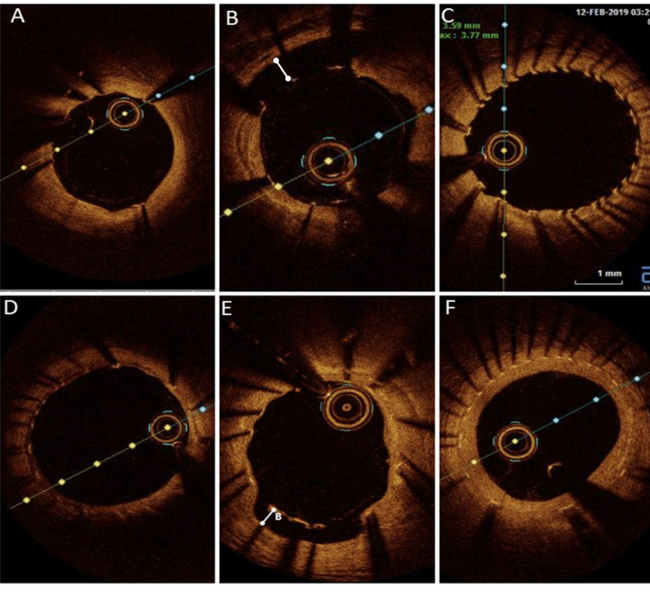
A serious long-term complication of drug-eluting stent (DES) implantation is the occurrence of very late stent thrombosis beyond 1 year after implantation. We identified a series of patients who presented with acute myocardial infarction due...
A serious long-term complication...
09/08/2014
Journal of Invasive Cardiology
Original Contribution
09/08/2014
Albert M. Kasel, MD; Anupama Shivaraju, MD; Stephan Schneider, MD; Stephan Krapf, MD; Frank Oertel, MD; Christof Burgdorf, MD; Ilka Ott, MD; Wolfgang von Scheidt, MD; Christian Sumer, MD; Adnan Kastrati, MD; Christian Thilo, MD
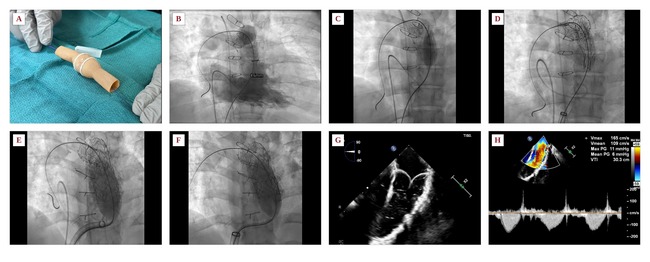
Transfemoral transcatheter aortic valve replacement (TAVR) is currently reserved for patients with severe, symptomatic aortic stenosis who are inoperable or at high surgical risk.  We provide a simplified, stepwise guide for transfemoral TAVR...
Transfemoral transcatheter...
09/08/2014
Journal of Invasive Cardiology
Original Contribution
09/08/2014
Surya Dharma, MD, PhD; Sasko Kedev, MD, PhD; Oliver Kalpak, MD; Slobodan Antov, MD; Jorgo Kostov, MD; Hristo Pejkov, MD; Igor Spiroski, MD
Our objective was to compare the short- and long-term outcomes of transradial approach (TRA) versus transfemoral approach (TFA) for primary percutaneous coronary intervention (PPCI) during a complete institutional transition from TFA to TRA...
Our objective was to compare the...
09/08/2014
Journal of Invasive Cardiology
Original Contribution
09/06/2014
Jonathan D. Marmur, MD, FACC; Sanjay Kumar, MD, BSc, MBBS, MRCP; Antony L. Innasimuthu, MD
In rare cases stents have been recalled by their manufacturers due to unanticipated problems. This study examined the extent and pattern of these stent recalls. 
In rare cases stents have been...
09/06/2014
Journal of Invasive Cardiology
Original Contribution
09/06/2014
Kyung Woo Park, MD; David Rutledge, PharmD; Moo-Hyun Kim, MD, PhD; Mitchell W. Krucoff, MD; Ehtisham Mahmud, MD; Hyo-Soo Kim, MD, PhD; Michael S. Lee, MD, DPM, FACFAS, FACC, FSCAI; James B. Hermiller, MD, FACC, MSCAI; Tae Yang, MD; George D. Dangas, MD, PhD
Xience V USA is a prospective multicenter registry evaluating outcomes in patients treated with EES. Here, we present the 12-month clinical outcomes in patients who received EES for the treatment of in-stent restenosis (ISR) and non-ISR.     
Xience V USA is a prospective...
09/06/2014
Journal of Invasive Cardiology
Original Contribution
09/06/2014
Jose Ramon Lopez-Minguez, MD, PhD; Reyes Gonzalez-Fernandez, MD, PhD; Concepcion Fernandez-Vegas, BSc; Victoria Millan-Nunez, MD; Maria Eugenia Fuentes-Canamero, MD; Juan Manuel Nogales-Asensio, MD, PhD; Javier Doncel-Vecino, MD; Maria Yuste Dominguez, MD; Laura Garcia-Serrano, MD; Damian Sanchez Quintana, MD, PhD
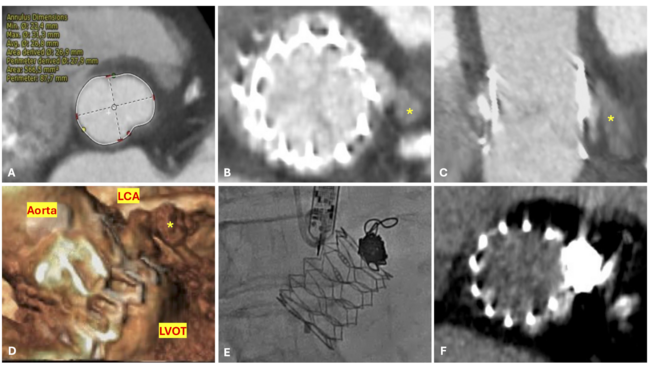
Adequate device size selection for left atrial appendage closure is crucial to ensuring adequate implantation and for avoiding the need for multiple attempts that increase the risk of complications. We evaluate different imaging techniques to...
Adequate device size selection...
09/06/2014
Journal of Invasive Cardiology
Original Contribution
09/06/2014
Fardin Mirbolouk, MD; Samira Arami, MD; Arsalan Salari, MD; Bijan Shad, MD; Ehsan Kazemnejad, PhD; Hassan Moladoust, PhD
ECG parameters can predict cardiac events in ischemia. QT-interval parameters are potentially proposed as available non-invasive markers for assessing the ventricular homogeneity and electrical instability. Our study aim was to compare the...
ECG parameters can predict...
09/06/2014
Journal of Invasive Cardiology
Original Contribution
09/06/2014
Alessandro Sciahbasi, MD, PhD; Stefano Rigattieri, MD, PhD; Sven Drefahl, PhD; Silvio Fedele, MD; Eleonora Mussino, PhD; Maria Cera, MD; Cristian Di Russo, MD; Francesco Rocco Pugliese, MD
Although transradial access (TRA) is being increasingly used in interventional cardiology, there are concerns about a possible increase in radiation exposure (RE) as compared to transfemoral access (TFA). We sought to compare RE during...
Although transradial access...
09/06/2014
Journal of Invasive Cardiology
Original Contribution
09/06/2014
Subhash Banerjee, MD, FSCAI; Tesfaldet T. Michael, MD, MPH; Michele Roesle, RN, BSN, MD; Bavana V. Rangan, BDS, MPH, MD; Emmanouil S. Brilakis, MD, PhD, FACC, FAHA, FESC, FSCAI; Lindsay Ripley, BS; Mohammed E. Alomar, MD
Our study objective was to determine the impact of music intervention on endothelial function, hemodynamics, and patient anxiety before, during, and after cardiac catheterization. 
Our study objective was to...
09/06/2014
Journal of Invasive Cardiology
Review
09/06/2014
Nicolas W. Shammas, MD, MS, FACC, FSCAI, FACP, FSVM; William Hauber, MS, RT(R), CNMT
The treatment of peripheral venous disease has become an integral part of our corporation’s mission of providing compassionate, comprehensive cardiovascular patient care. We describe our experience in establishing a vein clinic and provide...
The treatment of peripheral...
09/06/2014
Journal of Invasive Cardiology