Volume 14 - Issue 8 - August, 2002
Commentary
08/01/2008
Jeffrey Werner, MD; Howard A. Cohen, MD; Luis de la Fuente; Gian Feltrin; Alfredo E. Rodriguez, MD, PhD; Tom J. Linnemeier, MD; James P. Zidar, MD; Paul A. Overlie, MD, FACC, FACP; Fayaz Shawl, MD; Kirk N. Garratt, MD, MSc
Part ii
Continuation of discussion
Supporting Patients in Shock
Jeff Werner: I have a question for Dr. Shawl. I believe you said that you think patients should be completely revascularized during acute infarction using angioplasty and...
Part ii
Continuation of discussion
Supporting Patients in Shock
Jeff Werner: I have a question for Dr. Shawl. I believe you said that you think patients should be completely revascularized during acute infarction using angioplasty and...
Part ii
Continuation of...
08/01/2008
Journal of Invasive Cardiology
08/01/2008
Michael R. Recto, MD; Walter L. Sobczyk, MD
Transcatheter closure of patent foramen ovale (PFO) has recently gained acceptance as a form of therapy for patients with cryptogenic stroke.1–3 The standard approach involves passage of a large delivery sheath from the femoral vein into the...
Transcatheter closure of patent foramen ovale (PFO) has recently gained acceptance as a form of therapy for patients with cryptogenic stroke.1–3 The standard approach involves passage of a large delivery sheath from the femoral vein into the...
Transcatheter closure of patent...
08/01/2008
Journal of Invasive Cardiology
Practice Management and Economics
08/01/2008
Ronald N. Riner, MD, FACC
The article by Mr. Barbo is very helpful and informative for those groups contemplating methods of developing new revenue-sharing opportunities in a setting of collaborative activity or strategic alliances with parties who have common...
The article by Mr. Barbo is very helpful and informative for those groups contemplating methods of developing new revenue-sharing opportunities in a setting of collaborative activity or strategic alliances with parties who have common...
The article by Mr. Barbo is very...
08/01/2008
Journal of Invasive Cardiology
Editorial Message
08/01/2008
Richard E. Shaw, PhD, FACC
Dear Readers,
This issue of the Journal of Invasive Cardiology includes original research articles, case reports, articles from the Journal special sections "Practice Management and Economics", "Clinical Decision Making", "The...
Dear Readers,
This issue of the Journal of Invasive Cardiology includes original research articles, case reports, articles from the Journal special sections "Practice Management and Economics", "Clinical Decision Making", "The...
Dear Readers,
This issue of the...
08/01/2008
Journal of Invasive Cardiology
Practice Management and Economics
08/01/2008
Don Barbo, CPA, MBA
Owners and physician/users of cardiac catheterization labs (cath labs) may be missing out on an opportunity to increase their respective cash flows and to further enhance their business relationships with each other. The use of lease...
Owners and physician/users of cardiac catheterization labs (cath labs) may be missing out on an opportunity to increase their respective cash flows and to further enhance their business relationships with each other. The use of lease...
Owners and physician/users of...
08/01/2008
Journal of Invasive Cardiology
Case Report
08/01/2008
Antonio L. Bartorelli, MD; Daniela Trabattoni, MD; Luca Grancini, MD; Piero Montorsi, MD; Franco Fabbiocchi, MD
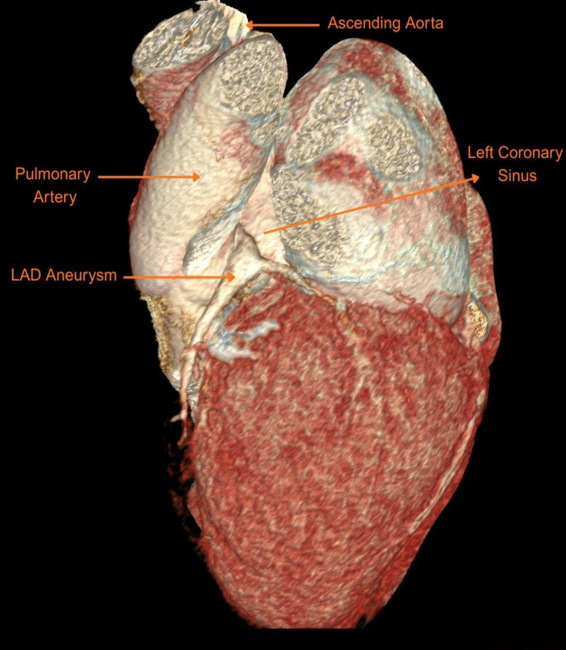
Coronary artery aneurysms (CAA) are characterized by abnormal dilatation of a localized or diffuse segment of the coronary arterial tree, up to 1.5 times the diameter of an adjacent normal segment.1 In Western populations, the incidence...
Coronary artery aneurysms (CAA) are characterized by abnormal dilatation of a localized or diffuse segment of the coronary arterial tree, up to 1.5 times the diameter of an adjacent normal segment.1 In Western populations, the incidence...
Coronary artery aneurysms (CAA)...
08/01/2008
Journal of Invasive Cardiology
Case Report
08/01/2008
Gyarsi Lal Sharma, MD, DM, DNB; Patrick Catineau, MD; Marie-Claude Morice, MD, FESC, FACC
Renal artery stenosis (RAS) can result in renovascular hypertension and nephrosclerosis and accounts for 1–2% of all cases of hypertension.1 Treatment includes medical therapy, balloon angioplasty and surgical bypass of the renal artery....
Renal artery stenosis (RAS) can result in renovascular hypertension and nephrosclerosis and accounts for 1–2% of all cases of hypertension.1 Treatment includes medical therapy, balloon angioplasty and surgical bypass of the renal artery....
Renal artery stenosis (RAS) can...
08/01/2008
Journal of Invasive Cardiology
Commentary
08/01/2008
Joseph R. Carver, MD; Michael P. Kelley, MD
Coronary aneurysms are defined as a localized dilatation that exceeds 1.5 times the diameter of the adjacent segment of artery. Aneurysms can be saccular (transverse larger than the longitudinal axis) or fusiform (longitudinal at least twice...
Coronary aneurysms are defined as a localized dilatation that exceeds 1.5 times the diameter of the adjacent segment of artery. Aneurysms can be saccular (transverse larger than the longitudinal axis) or fusiform (longitudinal at least twice...
Coronary aneurysms are defined...
08/01/2008
Journal of Invasive Cardiology
Case Report
08/01/2008
Ahmet Unal, MD; Bulent Gorenek, MD; Omer Goktekin, MD; Gulmira Kudaiberdieva, MD; Yuksel Cavusoglu, MD; Mehmet Melek, MD; Recep Aslan, MD; Bilgin Timuralp, MD
Myocardial infarction is a rare complication that can occur immediately after a blunt chest trauma. We report a 36-year-old male who experienced a fatal anterolateral myocardial infarction after a nonpenetrating chest injury sustained in a...
Myocardial infarction is a rare complication that can occur immediately after a blunt chest trauma. We report a 36-year-old male who experienced a fatal anterolateral myocardial infarction after a nonpenetrating chest injury sustained in a...
Myocardial infarction is a rare...
08/01/2008
Journal of Invasive Cardiology
Case Report
08/01/2008
Hüseyin Y. Imaz, MD; Aytül Belgi, MD; Ibrahim Demir, MD; Ibrahim Başarici, MD; Oktay Sancaktar, MD
Dislodgement and embolization of coronary stents before deployment are rare and challenging complications of intracoronary stenting. Reported incidence varies between 0.56–0.90%.1,2 Intracoronary embolization may cause arterial occlusion with...
Dislodgement and embolization of coronary stents before deployment are rare and challenging complications of intracoronary stenting. Reported incidence varies between 0.56–0.90%.1,2 Intracoronary embolization may cause arterial occlusion with...
Dislodgement and embolization of...
08/01/2008
Journal of Invasive Cardiology
Case Report
08/01/2008
Yusuf Atmaca, MD; Rabih Dandachi, MD; Dervis Oral, MD
The reported incidence of a single coronary artery (SCA) ranges from 0.2–1.6% of the population undergoing coronary angiography.1 Many of these anomalies are found incidentally. Identification of these anomalies is especially important in...
The reported incidence of a single coronary artery (SCA) ranges from 0.2–1.6% of the population undergoing coronary angiography.1 Many of these anomalies are found incidentally. Identification of these anomalies is especially important in...
The reported incidence of a...
08/01/2008
Journal of Invasive Cardiology
08/01/2008
Michael H. Sketch, Jr., MD; William C. Dixon, IV, MD; Robert H. Peter, MD
Case Description. A 57-year-old male with no known coronary artery disease presented to an outside hospital with chest pain. He subsequently ruled in for a non-ST segment elevation myocardial infarction, with a peak CPK of 406 mg/mL, CPK-MB...
Case Description. A 57-year-old male with no known coronary artery disease presented to an outside hospital with chest pain. He subsequently ruled in for a non-ST segment elevation myocardial infarction, with a peak CPK of 406 mg/mL, CPK-MB...
Case Description. A 57-year-old...
08/01/2008
Journal of Invasive Cardiology
Electrophysiology Corner
08/01/2008
Friederike von zur Muhlen, MD; David J. D'Agate, DO; Weilun Quan, PhD; Todd J. Cohen, MD, FACC, FHRS
In a patient who presents with syncope of unknown origin, a thorough history can sometimes provide clues suggesting postural neurally mediated syncope or other forms of neurally mediated syncope, such as carotid sinus syndrome or micturition...
In a patient who presents with syncope of unknown origin, a thorough history can sometimes provide clues suggesting postural neurally mediated syncope or other forms of neurally mediated syncope, such as carotid sinus syndrome or micturition...
In a patient who presents with...
08/01/2008
Journal of Invasive Cardiology
Commentary
08/01/2008
Luis de la Fuente; Howard A. Cohen, MD; Gian Feltrin; Tom J. Linnemeier, MD; Alfredo E. Rodriguez, MD, PhD; James P. Zidar, MD; Paul A. Overlie, MD, FACC, FACP; Jeffrey Werner, MD; Fayaz Shawl, MD; Kirk N. Garratt, MD, MSc
The High Mortality Among Patients in Cardiogenic Shock “LV or RV Infarcts:” What Have We Learned and Have We Made a Difference?
In this symposium, we will revisit the treatment of cardiogenic shock complicating acute myocardial infarction...
The High Mortality Among Patients in Cardiogenic Shock “LV or RV Infarcts:” What Have We Learned and Have We Made a Difference?
In this symposium, we will revisit the treatment of cardiogenic shock complicating acute myocardial infarction...
The High Mortality Among...
08/01/2008
Journal of Invasive Cardiology
08/01/2008
William Ng, MBBS; Wai-Hong Chen, MBBS; Chu-Pak Lau, MD; Yuk-Kong Lau, MBBS; Pui-Yin Lee, MBBS; Cheuk-Man Yu, MD; Edmond Ma, MD
Unfractionated heparin (UFH) has been the anticoagulant of choice for percutaneous coronary intervention (PCI) since the procedure’s inception, although few data exist regarding the optimal extent of activated partial thromboplastin time...
Unfractionated heparin (UFH) has been the anticoagulant of choice for percutaneous coronary intervention (PCI) since the procedure’s inception, although few data exist regarding the optimal extent of activated partial thromboplastin time...
Unfractionated heparin (UFH) has...
08/01/2008
Journal of Invasive Cardiology
08/01/2008
Yusuf Atmaca, MD; Dervis Oral, MD; Sadi Guleç, MD; Irem Dincer, MD; Fatih Ertas, MD
Coronary stenting is established as a common technique to improve outcomes of percutaneous transluminal coronary angioplasty (PTCA) and to reduce incidence of emergency coronary artery bypass grafting after PTCA.1 The standard coronary stent...
Coronary stenting is established as a common technique to improve outcomes of percutaneous transluminal coronary angioplasty (PTCA) and to reduce incidence of emergency coronary artery bypass grafting after PTCA.1 The standard coronary stent...
Coronary stenting is established...
08/01/2008
Journal of Invasive Cardiology
08/01/2008
Allison C. Morton, MB, MRCP; Julian Gunn, MA, MD, MRCP
The most useful attribute of stents is their ability to scaffold the artery, thereby repairing dissections and preventing arterial recoil, with beneficial effects upon the incidence of acute closure1 and restenosis.2 “Coil” stents are less...
The most useful attribute of stents is their ability to scaffold the artery, thereby repairing dissections and preventing arterial recoil, with beneficial effects upon the incidence of acute closure1 and restenosis.2 “Coil” stents are less...
The most useful attribute of...
08/01/2008
Journal of Invasive Cardiology
Feature
08/01/2008
Gerd Heusch; Raimund Erbel, MD
ABSTRACT: The diagnosis coronary artery disease is classically based on patient’s symptoms and morphology, as analyzed by angiography. The importance of risk factors for the development of coronary atherosclerosis and disturbance of coronary...
ABSTRACT: The diagnosis coronary artery disease is classically based on patient’s symptoms and morphology, as analyzed by angiography. The importance of risk factors for the development of coronary atherosclerosis and disturbance of coronary...
ABSTRACT: The diagnosis coronary...
08/01/2008
Journal of Invasive Cardiology
Feature
08/01/2008
Gerd Heusch; Raimund Erbel, MD
Continued from previous page
Acute myocardial infarction. Epicardial lesions related to acute myocardial infarctions are less than 50% in diameter in two-thirds of cases and less than 75% in diameter in more than 90% of cases,147,170,244...
Continued from previous page
Acute myocardial infarction. Epicardial lesions related to acute myocardial infarctions are less than 50% in diameter in two-thirds of cases and less than 75% in diameter in more than 90% of cases,147,170,244...
Continued from previous...
08/01/2008
Journal of Invasive Cardiology
Feature
08/01/2008
G. Sütsch, W. Kiowski, A. Bossard, T.F. Lüscher, W. Maier, *P. Vogt, F.W. Amann
G. Sütsch, W. Kiowski, A. Bossard, ...
ABSTRACT: Background. Prevention of distal embolization during percutaneous coronary revascularization may be necessary to reduce post interventional morbidity and mortality.
Methods. We employed a newly developed emboli containment and...
ABSTRACT: Background. Prevention of distal embolization during percutaneous coronary revascularization may be necessary to reduce post interventional morbidity and mortality.
Methods. We employed a newly developed emboli containment and...
ABSTRACT: Background. Prevention...
08/01/2008
Journal of Invasive Cardiology
Feature
08/01/2008
Serge Kownator, MD; Francois Luizi, MD; Bernard Foliguet, MD; Michel Henry, MD; Isabelle Henry, MD; Christos Klonaris, MD; Isabelle Masson, MD; Michele Hugel, RN; Kiril Tzvetanov, MD; Gerard Ethevenot, MD; Edmond Le Borgne, MD
ABSTRACT: Purpose. To examine the possible beneficial effect of a new cerebral protection device based on balloon occlusion of the distal internal carotid artery (ICA) and debris aspiration for patients undergoing carotid artery stenting...
ABSTRACT: Purpose. To examine the possible beneficial effect of a new cerebral protection device based on balloon occlusion of the distal internal carotid artery (ICA) and debris aspiration for patients undergoing carotid artery stenting...
ABSTRACT: Purpose. To examine...
08/01/2008
Journal of Invasive Cardiology
Feature
08/01/2008
Ulrich Gerckens, MD; Gerhard Schuler, MD; Jürgen Schofer, MD; Eberhard Grube, MD; Gregg W. Stone, MD, FACC, FSCAI; John G. Webb, MD; Horst Sievert, MD, FESC, FACC, FSCAI; Antonio Colombo, MD
ABSTRACT: Distal embolization after angioplasty in degenerated saphenous vein grafts (SVGs) results in high rates of periprocedural myonecrosis and mortality. Temporary protection of the distal microcirculation with aspiration of dislodged...
ABSTRACT: Distal embolization after angioplasty in degenerated saphenous vein grafts (SVGs) results in high rates of periprocedural myonecrosis and mortality. Temporary protection of the distal microcirculation with aspiration of dislodged...
ABSTRACT: Distal embolization...
08/01/2008
Journal of Invasive Cardiology
Feature
08/01/2008
Kalon K.L. Ho, MD, MSc; Martin B. Leon, MD; Dennis Wahr, MD; Barry S. George, MD, FACC, FSCAI; Joel Greenberg, MD; Unsal Kaya, MS; Richard E. Kuntz, MD, MSc; Jeffrey J. Popma, MD, FACC, FSCAI; Donald E. Cutlip, MD; Donald S. Baim, MD
ABSTRACT: Background. Stents provide effective treatment for stenotic saphenous venous aorto-coronary bypass grafts, but their placement carries a 20% incidence of procedure-related complications, which potentially are related to the distal...
ABSTRACT: Background. Stents provide effective treatment for stenotic saphenous venous aorto-coronary bypass grafts, but their placement carries a 20% incidence of procedure-related complications, which potentially are related to the distal...
ABSTRACT: Background. Stents...
08/01/2008
Journal of Invasive Cardiology
Feature
08/01/2008
Michel Henry, MD; Isabelle Henry, MD; Christos Klonaris, MD; Michele Hugel, RN; Kiril Tzvetanov, MD; Edmond Le Borgne, MD; Bernard Foliguet, MD
ABSTRACT: Purpose. To evaluate the feasibility and safety of renal artery angioplasty and stenting utilizing a distal protection device to reduce the risk of intraprocedural atheroembolism. Methods. Twenty-eight hypertensive patients (18 men;...
ABSTRACT: Purpose. To evaluate the feasibility and safety of renal artery angioplasty and stenting utilizing a distal protection device to reduce the risk of intraprocedural atheroembolism. Methods. Twenty-eight hypertensive patients (18 men;...
ABSTRACT: Purpose. To evaluate...
08/01/2008
Journal of Invasive Cardiology
Feature
08/01/2008
Jose Milei, MD; Oscar A. Mendiz, MD; Pedro Lylyk, MD; Hugo Londero, MD; Horst Jaeger, MD; Juan Parodi, MD; Klaus D. Mathias, MD; Claudio Schonholz, MD; Patrick L. Whitlow, MD
ABSTRACT: Background. Fear of distal embolization and stroke has aroused concern regarding carotid stenting. Devices to protect the cerebral circulation may make carotid stenting safer.
Methods. A multidisciplinary study group tested a...
ABSTRACT: Background. Fear of distal embolization and stroke has aroused concern regarding carotid stenting. Devices to protect the cerebral circulation may make carotid stenting safer.
Methods. A multidisciplinary study group tested a...
ABSTRACT: Background. Fear of...
08/01/2008
Journal of Invasive Cardiology
Feature
08/01/2008
Patrick L. Whitlow, MD; Stephen N. Oesterle, MD; Motoya Hayase, MD; John G. Webb, MD; Renu Virmani, MD, PhD; Donald S. Baim, MD; Stephen R. Ramee, MD; Paul S. Teirstein, MD, FACC
ABSTRACT: A coaxial catheter system for containment of distal embolization is described. Utilizing a novel 0.014" hypotube with a distal elastomeric occlusion balloon, the PercuSurge GuardWire functions as a guidewire while trapping distal...
ABSTRACT: A coaxial catheter system for containment of distal embolization is described. Utilizing a novel 0.014" hypotube with a distal elastomeric occlusion balloon, the PercuSurge GuardWire functions as a guidewire while trapping distal...
ABSTRACT: A coaxial catheter...
08/01/2008
Journal of Invasive Cardiology
Feature
08/01/2008
John G. Webb, MD; Ronald G. Carere, MD; Renu Virmani, MD, PhD; Donald S. Baim, MD; Paul S. Teirstein, MD, FACC; Patrick L. Whitlow, MD; Colleen McQueen, RN; Frank D. Kolodgie, PhD; Elizabeth Buller, RN; Arthur Dodek, MD; G.B. John Mancini, MD; Stephen N. Oesterle, MD
ABSTRACT: Objectives. This study was designed to evaluate the composition and quantity of particulate debris resulting from vein graft intervention. Background. Distal embolization and “no reflow” are frequent and important complications...
ABSTRACT: Objectives. This study was designed to evaluate the composition and quantity of particulate debris resulting from vein graft intervention. Background. Distal embolization and “no reflow” are frequent and important complications...
ABSTRACT: Objectives. This study...
08/01/2008
Journal of Invasive Cardiology