TAVR Insights From ACC 2026: What Matters Most for Practice Today?
An Interview With David Rizik, MD
An Interview With David Rizik, MD
In this interview with JIC, Dr David Rizik shares his insights on the most impactful transcatheter aortic valve replacement (TAVR) data coming out of the 2026 American College of Cardiology (ACC) conference, including his thoughts on the late-breaking PRO-TAVI and PROTECT H2H trials, and the importance of prioritizing long-term valve durability as the key factor guiding future practice.

Banner Health, University Medicine Cardiology
1. Looking across all the late-breaking trials, abstracts, and featured TAVR sessions at ACC.26, what do you believe will be the most clinically impactful finding presented at this year’s meeting—and why?
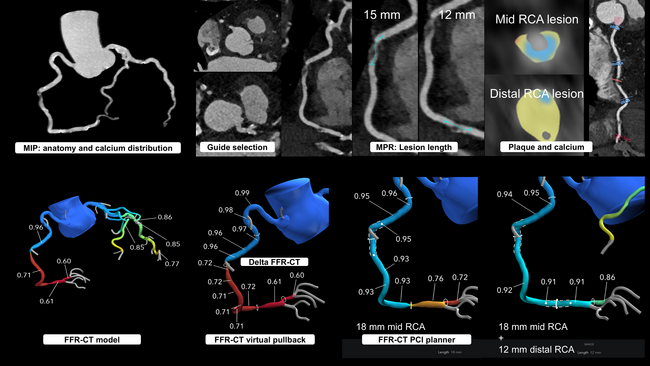
There were several impactful trials. The PRO-TAVI trial, presented as a late-breaking clinical study at ACC.26, evaluated the safety and efficacy of deferring percutaneous coronary intervention (PCI) in patients undergoing transcatheter aortic valve implantation (TAVI/TAVR) who also had coronary artery disease (CAD).
The trial found that deferring PCI (treating significant coronary lesions only after TAVR, if needed) was noninferior to performing routine PCI before TAVR in terms of major clinical outcomes. Patients who had PCI deferred did not experience higher rates of adverse events compared to those who underwent routine pre-TAVR PCI.
Should CAD be revascularized before TAVR, or can it be safely managed conservatively? The findings support a more conservative strategy, suggesting that many patients can safely undergo TAVR without prior PCI, reserving revascularization for those who remain symptomatic or develop ischemia after valve replacement. PRO-TAVI supports changing practice by encouraging a tailored approach to coronary revascularization in TAVR candidates, potentially simplifying patient care and improving outcomes by focusing only on clinically necessary interventions.
I would also mention the SURViV Trial: In this trial of patients with failed mitral bioprostheses, mitral valve-in-valve implantation resulted in a significantly lower rate of all-cause death or disabling stroke at 1 year compared with redo surgery, and was also linked to fewer early procedural complications. Both approaches led to marked improvements in symptoms and quality of life, but this study stands out as the first randomized evidence to guide treatment selection in this setting, supporting transcatheter valve-in-valve as a safe option for selected patients needing repeat mitral intervention. While these findings are promising, longer term follow-up beyond 1 year will be essential to fully understand the durability and comparative benefits of these strategies.
2. ACC.26 includes a session titled “TAVR Politics: The 2026 Debates,” and the meeting says it will tackle controversies in patient selection (<65 vs >65 years old) and 1 vs 2 operators. Where do you stand on those debates today, and do you expect either to change routine practice over the next year?
I have little direct information regarding the debates or their format. If I understand what transpired, I offer the following assessment: ACC debates always offer lively discussion, but healthy skepticism is warranted when it comes to the likelihood that debates will meaningfully change routine practice in the near future.
First, the issue of TAVR in patients under 65 is still fraught with unanswered questions. While expanding TAVR to younger patients is theoretically appealing, the reality is that we still lack robust long-term data on valve durability and reintervention rates in this group. The 6-year data from recent trials are encouraging, but for someone in their 50s or early 60s, that’s not enough—these patients may need their valve to last decades, not just a few years. Until we see clear evidence of safety, efficacy, and durability over at least a decade, most clinicians will likely remain cautious about routine TAVR in the under-65 population, especially when surgical options have established track records for long-term outcomes.
As for the debate over requiring 1 vs 2 operators during TAVR, this is as much about logistics and hospital policy as it is about patient safety. While more data and experience have made “minimalist” TAVR approaches feasible—potentially with fewer operators—there’s little reason to believe that a consensus will emerge overnight. Institutional preferences, medicolegal concerns, and credentialing requirements will continue to drive variability. Unless new evidence shows a clear patient safety or outcomes benefit for one approach over the other, it’s unlikely we’ll see a sweeping shift across practices in the next year.
In short, while these debates are important and worth having, don’t expect either to fundamentally reshape routine clinical practice immediately. The field tends to move forward on the strength of accumulated, long-term evidence rather than the heat of a single conference debate.
3. One of the TAVR late-breakers at ACC.26 is “Transcatheter Aortic Valve Implantation Without Routine Percutaneous Coronary Intervention: A Randomized Controlled Trial.” If the data support deferring routine PCI, how should Heart Teams rethink the way they manage concomitant coronary disease before TAVR?
Heart Teams should seriously reconsider the default strategy of preemptive coronary revascularization before TAVR. Instead of reflexively intervening on all significant coronary lesions prior to valve replacement, a more conservative, patient-tailored approach would be warranted, one that prioritizes deferral of PCI unless there’s clear evidence of ischemia or symptoms attributable to coronary disease.
This means Heart Teams should focus on comprehensive clinical assessment and functional testing when possible to identify which coronary lesions truly require treatment, rather than relying solely on angiographic severity. The goal would be to minimize unnecessary procedures, reduce procedural risk, contrast exposure, and potential complications associated with PCI, while still ensuring optimal long-term outcomes.
Such a shift would also encourage closer post-TAVR monitoring and a readiness to intervene on coronary disease only if clinically indicated after valve implantation. This approach aligns well with the broader trend toward minimalist, streamlined TAVR procedures that avoid unnecessary interventions and prioritize patient safety and quality of life.
Ultimately, adopting these findings into routine practice would require multidisciplinary collaboration, patient education, and possibly updates to guidelines to reflect that routine PCI before TAVR is not always necessary. It’s a move that could simplify care pathways and reduce healthcare costs without compromising outcomes.
4. ACC.26 will also feature the ProtectH2H late-breaker comparing the Emboliner and SENTINEL cerebral protection systems during TAVR. After ACC.25’s BHF PROTECT-TAVI trial found no benefit to routine SENTINEL use, what result would convince you that cerebral embolic protection still deserves a meaningful role in TAVR, and in which patients?
Honestly, I remain deeply skeptical about the broad use of cerebral embolic protection devices during TAVR, especially given the underwhelming evidence so far. The BHF PROTECT-TAVI trial at ACC.25 already dealt a heavy blow to the routine use of the SENTINEL device by showing no significant benefit in preventing stroke or improving clinical outcomes. So far, these devices seem to add cost, complexity, and procedural time without delivering clear, consistent improvements in patient safety.
To convince me that cerebral embolic protection still deserves a meaningful role, a new trial would have to demonstrate a robust, clinically significant reduction in disabling stroke or death, not just surrogate markers or minor endpoints, in a well-defined patient subgroup. But even then, I’d be wary of extrapolating those findings to the broad TAVR population. The reality is that stroke rates in contemporary TAVR are already quite low due to improved techniques and devices, and the incremental benefit of embolic protection seems marginal at best.
The enthusiasm for these protection systems often feels more like a solution in search of a problem rather than a true advance. Unless we see unequivocal, large-scale evidence of benefit in patients at the highest risk of embolic events, the default position should be to avoid routine use. Otherwise, we risk burdening patients and healthcare systems with expensive technology that offers little real-world value.
5. With TAVR continuing to expand across broader patient populations, which long-term endpoint do you believe matters most for clinicians interpreting the new ACC.26 data—and why?
When it comes to TAVR expanding into younger, healthier patients, the long-term endpoint that truly matters is durability, plain and simple. Death and stroke rates have already dropped to impressively low levels with modern TAVR, and embolic protection devices have become widely available across the country (whether they provide any benefit). So, those factors don’t hold the same weight they once did. What clinicians really need to focus on now is how long these transcatheter valves last compared to surgical aortic valve replacement (SAVR).
Durability is the game changer because it directly impacts the quality of life and future treatment options for younger patients who may live decades beyond their initial procedure. If TAVR valves can’t match or exceed the longevity of surgical valves, younger patients risk multiple reinterventions down the line, which brings additional risks and costs. So, the new ACC.26 data should be interpreted through the lens of valve performance over the long haul, how well these valves hold up 5, 10, or even 15 years post-implantation. That’s the metric that will ultimately determine whether TAVR becomes the go-to standard for a broader, lower-risk population or remains reserved for older or higher-risk patients.
In short, durability isn’t just another endpoint, it’s the cornerstone of TAVR’s future relevance in cardiology. Clinicians will be watching for robust, transparent long-term data because that’s what will guide patient selection and reshape practice guidelines in the years to come.
Durability is one of the toughest challenges to overcome in advancing TAVR technology. Achieving long-lasting valve performance isn’t just about ticking a box; it’s about fundamentally improving the materials and design to withstand the stresses of the heart over many years. Advances in leaflet technology are certainly at the forefront of this effort. For instance, newer leaflet materials that resist calcification and wear, such as novel biopolymers or treated bovine pericardium, could dramatically extend valve life by maintaining flexibility and function longer.
But durability isn’t solely dependent on leaflet innovation. Valve frame design also plays a critical role, frames that better accommodate the dynamic anatomy of the aortic root and minimize mechanical stress can reduce structural fatigue. Additionally, improvements in sealing mechanisms to prevent paravalvular leaks not only enhance immediate outcomes but may also influence long-term valve integrity by reducing abnormal flow patterns that stress the leaflets.
Beyond materials and design, procedural techniques and patient-specific factors matter too. Precise valve sizing and deployment, guided by advanced imaging, can optimize valve seating and reduce early damage. And as we learn more about patient-specific biomechanics, personalized valve choices or even tailored valve manufacturing could become a reality, further boosting durability.
Lastly, adjunctive pharmacotherapies targeting inflammation or calcification processes post-implantation might emerge as another strategy to protect valve longevity.
In short, durability will likely come from a combination of smarter materials, better engineering, refined procedural techniques, and possibly medical therapies—each piece playing a role in creating valves that stand the test of time for younger, healthier patients.
David Rizik, MD, is an interventional cardiologist at Banner Health, University Medicine Cardiology in Scottsdale, Arizona.
© 2026 HMP Global. All Rights Reserved.
Any views and opinions expressed are those of the author(s) and/or participants and do not necessarily reflect the views, policy, or position of the Journal of Invasive Cardiology or HMP Global, their employees, and affiliates.