Coronary Acute Syndrome Due to a Large Occlusive Thrombus in an Aortosaphenous Vein Graft
A 74-year-old male was admitted for acute coronary syndrome. Seven years earlier he had undergone surgery for an abdominal aortic aneurysm and a venous graft bypass to the right coronary artery. At the present admission, the electrocardiogram showed ST elevation in inferior leads and a nodal rhythm of 30 bpm. After placing a temporary pacemaker in the right ventricle, the coronary angiogram showed chronic occlusion of the anterior descending artery. The circumflex artery was normal. The distal vessel was irrigated through the homolateral vessels.
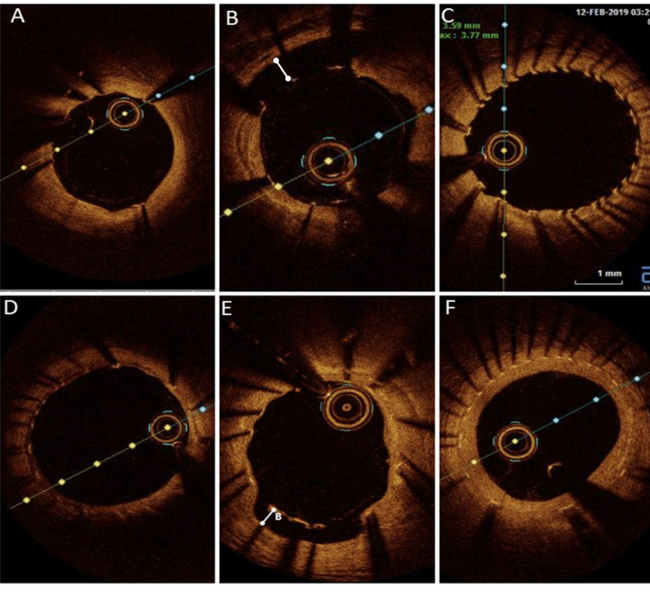
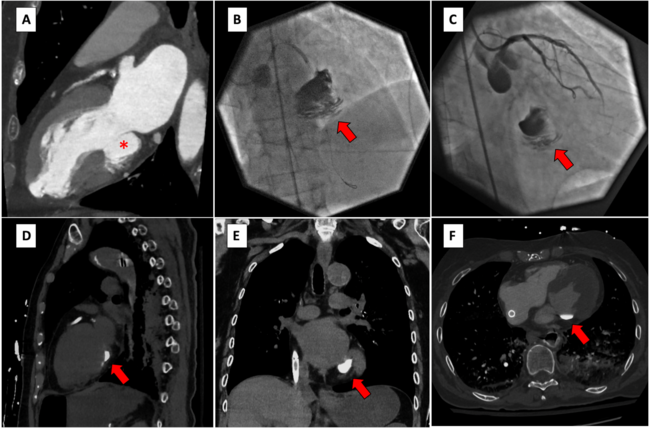
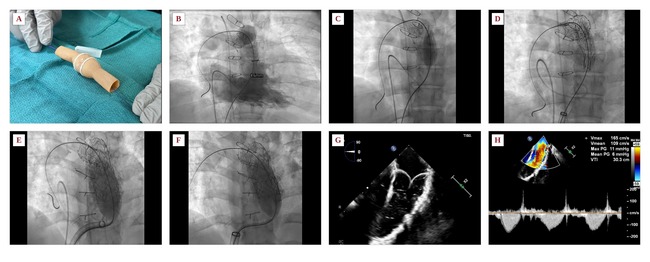
The proximal right coronary artery was occluded and the angiogram showed dilation of the venous graft (diameter: 14 mm) with a thrombus of 10 mm diameter occluding the native  distal vessel (Figure 1A). After placing a Judkins 6 angioplasty catheter guide (Cordis Corporation, Miami Lakes, Florida) in the proximal anastomosis of the graft, sodium heparin (1 mg/kg of weight) and abciximab (bolus at 0.25 mg/kg of weight) were administered through the catheter into the graft. This was followed by endovenous infusion of abciximab at doses of 0.125 µg/kg/min. A guidewire was advanced and placed up to the native coronary vessel. We attempted a thrombectomy with an aspiration catheter (Hunter, IHT Cordynamic, Lliça de Vall, Barcelona, Spain), but this became obstructed. We decided to intubate the angioplasty catheter guidewire up to the
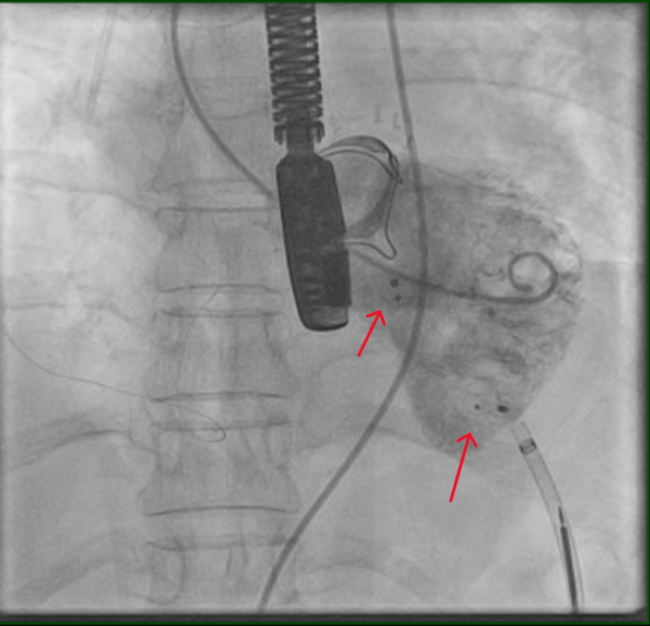
  distal anastomosis graft (Figure 1B). After three aspirations using a 50 ml syringe, the thrombus was successfully aspirated (Figures 1C and 2). The angioplasty catheter was placed in the proximal anastomosis of the graft, and the aspiration catheter was advanced again in the native distal vessel, allowing the blood to flow again in the distal vessel. The patient remained asymptomatic and the electrocardiogram returned to normal. No stent was implanted.
From the Hemodynamic Unit, Department of Cardiology and Cardiac Surgery, Institut d’Investigació Biomèdica Sant Pau (IIB Sant Pau), Barcelona. Spain. The authors report no conflicts of interest regarding the content herein. Manuscript submitted August 27, 2010 and accepted September 3, 2010. Address for correspondence: Dr. Vicens Martí, Hemodynamic Unit, Departament of Cardiology and Cardiac Surgery, Hospital de Sant Pau, Av. Antoni M. Claret, 167, 08025-Barcelona, Spain. E-mail: vmc18461b@hotmail.com