Ask the Expert
STEMI: Challenges, Opportunities, and the SINCERE Database
December 2009
Dr. Mehta recently performed his 500th short door-to-balloon time STEMI intervention in the SINCERE (Single Individual Community Experience Registry for Primary PCI) database. He shares his thoughts on the latest developments in STEMI interventions and the upcoming February 2010 LUMEN conference (www.lumenami.com).
The SINCERE database is a single operator performing STEMI at five community hospitals. Why keep a database and how do you refine it?
The database enables a scientific evaluation of methods and techniques, and it has provided a superb source for publication, teaching and education. My wonderful assistants update the database almost daily, we review it periodically and I evaluate my methods critically after every 50 procedures. At that juncture, I often review some aspects of the procedure with a few friends that I consider more experienced than me in the arena and make some minor changes to my own techniques — I would include Dr. Samin Sharma, Dr. Chet Rihal, Dr. William Hamman, Dr. Ivan Rokos and Dr. Timothy Henry in this group. Earlier on in the database, there were some aspects of critical pharmacology that needed refinement and I remember seeking out the intellect of Dr. Christopher Cannon, Dr. Michael Gibson and Dr. Deepak Bhatt — the input from several of these physicians, in addition to the guidelines, helped me in the development of the 10 commandments of STEMI interventions, principles that have now become standard “procedure” techniques for me. More recently, I have been able to expand these principles of the STEMI “procedure” to the STEMI “process.” To follow the same methodology, I now call these principles the 10 commandments of the STEMI “process”.
I believe I have been able to demonstrate that short D2B STEMI interventions can be successfully and predictably performed at community hospitals. While doing so, I may have also inadvertently created a new medical specialty, that of the STEMI interventionalist. Also, the very simple delineation of the STEMI intervention into the STEMI “procedure” and the STEMI “process” is crucial. I use this terminology routinely in all my STEMI teachings. The distinction is critical to understand as it helps create appropriate system improvements. When you break up the intervention in this manner, it is easy to understand that the real challenges exist in the process, particularly in the developing countries. Yet challenges in both the process and procedure exist aplenty in our own environment and much more can be done to streamline both.
I have recently incorporated a formal strategy for thrombus management, soon to be published in a major peer-review journal. I hope that this strategy will also assist in the compulsive management of thrombus in STEMI interventions.
What has been your progress since we last talked in August 2007?
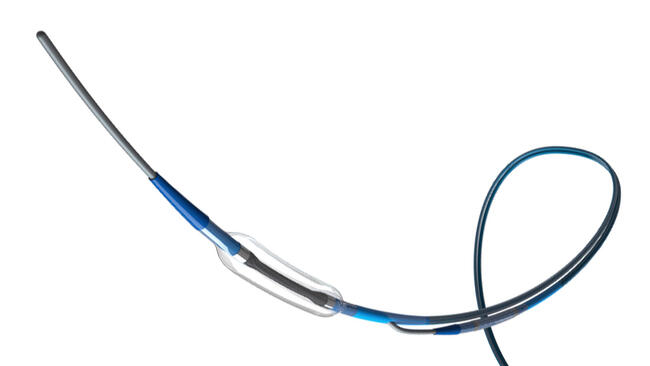
I recently performed the SINCERE database’s 500th short door-to-balloon (D2B) time STEMI intervention. For the last consecutive 100 patients, 100% were done within 90 minutes. The mean D2B time is now 76 minutes, actually increasing by 2 minutes over the last 100 patients. I believe this is because several of the procedures have been more complex. I am almost universally employing either aspiration or mechanical thrombectomy, and a few procedures have needed the left ventricular assist device, the Abiomed Impella.
D2B times are the relatively low-hanging fruit in STEMI interventions. Once operators are able to incorporate efficiencies into their systems and streamline the entire process, achieving high success rates with D2B times of As your own D2B times have decreased over the past few years, how has that been reflected in hospital STEMI processes?
There are five hospitals where this experience has been gained, with numerous positive fallout effects. First of all, we have all learned, at all these institutions, to work as a team. You cannot have a functional, effective cath lab team when the emergency department (ED) and emergency medical systems (EMS) components are not appropriate. To consistently achieve D2B times, all four components of this relay team have to function as a well-oiled machine. A drop in the baton by any member of the team will crash the entire process. It is getting the four members to act in unison that is the essence of a STEMI intervention: these four members include the patient, EMS, ED and CVL. Once you understand the critical role of all four members, you can begin to deconstruct the STEMI chaos. There are two measures of primary PCI success. One is D2B time — on which we have become extremely focused. However, another important parameter is the false alarm rate, which is a very accurate determinant of the EMS and ED capacity to correctly interpret the EKG to define the culprit lesion. At these five hospitals, not only has the D2B time gone down, but the false alarm rate has also been reduced. I strongly advocate the simultaneous measurement of both these critical elements in defining success at any institution.
We found that once early activation is in place, it becomes almost the norm that the patient, the team and the interventional cardiologist reach the cath lab in unison. Delays have been significantly reduced and achieving D2B time within 90 minutes is truly not as big a challenge as it appeared only a few years ago.
You have divided STEMI care into ‘the procedure’ and ‘the process’. What are the 10 commandments for each?
For institutions which are still struggling to make their D2B time efficient, one of the early distinctions of STEMI interventions should be to divide the process and the procedure. The 10 commandments for the STEMI procedure remain almost entirely unchanged since they were instituted as a part of the SINCERE database almost four and a half years ago (Figure 1). These 10 commandments have been followed from the very early days of the institution of the SINCERE database and have been applied over 92% of SINCERE procedures.
I have also instituted what I call the 10 commandments of the STEMI process (Figure 2). This is not a new area; the most notable work was published by the Yale investigators in The New England Journal of Medicine. Yet there are more individual nuances which come into play. When you start doing more and more STEMI interventions, several will be late at night and on weekends. To me, the biggest challenge is not the STEMI procedure, but safe driving by the cardiologist and team to the hospital! There are other pragmatic principles: teamwork, STEMI alert, transport, patient consent, staff and physician parking, and very importantly, pulling out the equipment that is likely to be used during the procedure. Finally, whenever a patient is transferred from another institution, this presents the greatest challenge and threat to achieving D2B times. Transfer from a non-STEMI institution is the biggest systems challenge. Personally, it is my greatest frustration with the process and the aspect about which I am the most disappointed. When you understand this constraint, it is easy to admire the tremendous work that is done at Mayo, Abbott Northwestern and the RACE institutions. It also explains the critical need of a system-wide network for triage and transfer of the STEMI patient. Patient transfer from another institution is the situation where the lessons from the TRANSFER AMI trial are so important. To compound the difficulties of the transfer patient are the frustrating delays in patient presentation and self-transportation. These patients will truly challenge the skills of an institution in getting a successful procedure done in less than 90 minutes.
Tell us about the classification for thrombus management in STEMI interventions.
The Mehta classification system uses the established gradation of thrombus into Grade 0-5. A STEMI intervention, by its pathophysiological definition, will have thrombus. Quantification of thrombus is a critical determinant to the success of a STEMI intervention. The thrombus grade is accurately obtained after crossing the STEMI lesion with a guide wire. If there is a low burden of thrombus, grade 0-1, direct stenting can be done. More commonly, however, the thrombus can be classified as grade 2-3. For these cases, aspiration thrombectomy appears to be adequate. Once you reach a high thrombus burden, which is grade 4-5, nothing works more effectively than the Possis AngioJet, a critical device. Any cardiovascular laboratory that performs high numbers of STEMI interventions must be equipped with the AngioJet. In addition, the cath lab staff must be well-trained in preparing the device in an expedient fashion.
I want to emphasize that the SINCERE database, after almost 5 years and 500 cases, remains absolutely without conflict of interest. I receive no financial benefit from the recommendation of any of these devices.
I would also emphasize the critical need for mechanical thrombectomy, particularly for lesions with large thrombus burden and for treating organized thrombus, especially in the late-presenting STEMI patient.
What are some recent developments in STEMI interventions?
First of all, many institutions are now able to go beyond the challenges of reaching a D2B time of less than 90 minutes and focus on getting a quality STEMI result. A quality STEMI outcome is possible by understanding the importance of thrombus and compulsively managing it. The second improvement is that the availability and number of thrombectomy devices are growing. At this stage, we are almost into the second generation of aspiration and thrombectomy devices. Another improvement is that antiplatelet agents can now be administered directly into the thrombus via a intracoronary bolus-only direct delivery. This can be done by delivering abciximab (the preferred agent) either through the guiding catheter or better still, via specialty catheters like the Clearway Catheter (Atrium, Inc.). Abciximab is given intracoronary and delivered in high concentration directly into the thrombus, where it works as a powerful dethrombotic agent. Another development, a major one, is in the management of patients presenting with cardiogenic shock. In this area, the role of the left ventricular assist devices, in particular, the Abiomed Impella, is going to be crucial. It may become the cornerstone of managing patients with pre-shock and those presenting with cardiogenic shock and acute MI. Finally, there is therapeutic hypothermia, and its expanding role in patients with out of hospital cardiac arrest and AMI. In this area, the experience of Dr. Michael Mooney and Abbott Northwestern Hospital has been a very useful source and this work will be included prominently in the LUMEN agenda. Based on the emerging data, therapeutic hypothermia may become a very important therapy for this patient cohort.
As the course director for the February LUMEN meeting, what should attendees look forward to in sessions?
LUMEN is emerging as a one-stop, comprehensive AMI meeting for the entire STEMI team. This involves, of course, the interventional cardiologist, the EMS and ED personnel, the CVL nurses and technologists, and the staff in the intensive care units.
I feel that clinical cardiologists and cardiac surgeons will also benefit from attending this single-subject meeting dedicated to such a critical aspect of heart disease. The meeting will focus on cutting-edge developments in STEMI interventions, with state-of-the-art lectures, debates, presentation of clinical trials, and most importantly, 12 STEMI workshops. LUMEN co-directors include Dr. Samin Sharma, Dr. Chet Rihal, Dr. Ivan Rokos and Barbara Unger, RN. Faculty includes numerous experts from Europe and Asia, in addition to the resplendent North American faculty. Keynote addresses will be delivered by Dr. Gregg Stone and Dr. William O’Neill; Dr. Jose Henriques from Amsterdam Medical Center will deliver the LUMEN Future Horizons Lecture on left ventricular assist devices and Dr. Alice Jacobs will review the Mission Lifeline and other educational tools available for STEMI interventions. There are two special sessions that I want to encourage attendees to attend. First, the STEMI process symposia that have global STEMI experts reviewing their STEMI systems — including experts from RACE, SOCAL, DANAMI, Abbott North Western, Ottawa, Amsterdam, Singapore and India. The second remarkable session(s) include debates on the most important procedure and process questions in STEMI interventions: DES vs. BMS; radial vs. femoral access; pre-hospital alert technology vs. advanced paramedics, and where to perform STEMI — at tertiary centers or in freestanding labs, with no onsite surgery?
Feedback from previous LUMEN meetings has noted that the workshops were very instructive. These are informal sessions conducted by world experts on critical STEMI topics. Attendees can master these vital topics and have ample opportunities to interact with faculty. Each workshop has been very carefully created to teach a critical aspect of the STEMI procedure and the process. Topics include pre-hospital alert systems, an EKG review course and a STEMI cineangiogram workshop. Additionally, there are workshops on left ventricular assist devices, management of thrombus, adjuncts to STEMI interventions, therapeutic hypothermia and simulation. LUMEN also has a creative workshop specifically geared toward teaching administrators how to help manage the entire STEMI process. We are also offering a workshop dedicated to D2B time management, so that it is scientifically precise and fiscally prudent.
There has been a call for LUMEN to present in the Asia-Pacific region.
Almost half the world’s population lives in that region, and there are young people in their early 30s and 40s who are dying from an eminently-treatable entity! I continue to assist several countries in this region in helping them design their indigenous, population-based STEMI programs. Over the last two or three years, there has been a great desire for LUMEN to be held in the Asia-Pacific region. There are several countries which have expressed great interest, specifically Thailand, China, India, Malaysia, Singapore, and Indonesia. I am finalizing plans for LUMEN Asia Pacific in August 2010 in Bangkok, Thailand.
It seems like the lack of a cohesive ambulance system in some of these countries might be a major roadblock.
The challenge in developing countries is basically to improve their emergency medical system. Globally, the process of transporting a patient urgently to the appropriate institution is far more difficult than the STEMI procedure itself. A STEMI intervention, per se, is not the hardest PCI procedure. It is the additional challenge of short D2B times and several procedures in the early morning hours, which make it difficult. In developing countries, the biggest problem is the lack of an effective ambulance system. However, several countries are putting in considerable resources to improve their ambulance systems — in India and in China, rapid strides are being made in this area — in addition to helping create STEMI systems, the improvements for trauma are providing a further incentive to incorporate EMS. Yet globally there needs to be far greater urgency in setting up systems. Tragically, so many 30- and 40-year-olds are dying from AMI.
That’s somewhat in reverse from what the U.S. has done, setting up our trauma system first.
Either way, it works to the advantage of the patient. That leads to another issue which we need to be engaging further in this country, which is to develop a very cognizant national STEMI policy. Just about anywhere in the U.S., if you get a fracture of the tibia, chances are you will reach the right level trauma hospital. However, if you have a massive acute MI, you could end up in a small community hospital where somebody moonlighting will probably be providing you care and trying to puzzle out how to get you to the appropriate institution. Some states are now changing their policies. We have known for many years that primary PCI is one of the best indications for PCI per se, but it was only with the creation of the D2B time mandates that the urgency surfaced. Finally, a tool — D2B time — was provided to us as to how we could measure our own success, as well as determine how appropriately patients were being transported to the right institutions. One of the next appropriate steps is a statewide and a nationwide policy where EMS will be legislatively directed to take patients to appropriate STEMI centers. I foresee very well-defined, standardized protocols as to how STEMI care will be provided.
You’re also working on the second edition of the Textbook of STEMI Interventions.
Developments in STEMI interventions are profound and rapid. The first volume of the textbook was dedicated to the basics of primary PCI, to early work with the SINCERE database, to the critical need of achieving D2B times, and reviewing expert sites globally. The second volume will have more in-depth review of clinical trials, the SINCERE database, a compendium of illustrative procedures, world expertise in the STEMI process and procedure, and future perspectives.
Any final thoughts?
These remarkable procedures have been immensely gratifying. Despite enormous sacrifices that this work has entailed, it has been a remarkable journey. Almost every procedure is life-saving, and the results and the relief are dramatic. Easily, STEMI is the finest indication for PCI. The hard work has been compensated for by the joy of helping these critical patients, and I consider myself to be blessed to perform so many of these procedures and to be in a position to teach and train others in this remarkable procedure. There has been one disconcerting, recent trend — I am continuously challenged by and appalled at the rate of uninsured patients who are being treated for primary PCI. In the last 100 consecutive cases of the SINCERE database, 41% of patients had no insurance. There was a very large cohort of young males presenting with a MI, a result which I attribute to the economic recession. STEMI interventionalists are not only sacrificing sleep, time with family and leading an incredibly stressful life (as are STEMI team members), but may be fast-forwarding into bankruptcy! I remain troubled about how the U.S. is going to deal with so many patients with no insurance who present with a life-threatening event.
Dr. Mehta can be contacted at mehtas@bellsouth.net
Related Content
Subscriber
Cath Lab Digest Newsletter