AIBD: Past, Present, and Future
Drs Millie Long, Miguel Regueiro, and Corey Siegel, cochairs of the Advances in IBD annual meeting, discuss the past and present of the conference and look forward to the 25th anniversary of AIBD in December 2026.
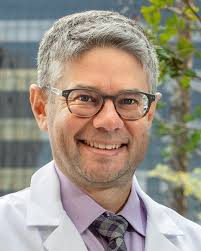
Millie Long, MD, is a professor of medicine, Division Chief, and director, Gastroenterology and Hepatology Fellowship University of North Carolina at Chapel Hill. Miguel Regueiro, MD, is professor of medicine and chair of the Digestive Disease Institute at Cleveland Clinic in Cleveland, Ohio. Corey A. Siegel, MD, MS, is the Constantine and Joyce Hampers Professor of Medicine at the Geisel School of Medicine at Dartmouth and director, Center for Digestive Health at Dartmouth-Hitchcock Medical Center in Lebanon, New Hampshire.
VIDEO HIGHLIGHTS
Advances in IBD 2025: Multidisciplinary, Case-Based Education Emphasizes Practical Decision-Making in IBD Care
- Advances in IBD (AIBD) 2025 emphasized clinically actionable, case-based sessions where expert opinion is explicitly paired with supporting data, highlighting variability in real-world decision-making across gastroenterologists and reinforcing that multiple evidence-based approaches may be appropriate in inflammatory bowel disease (IBD) care.
- AIBD 2025 demonstrated increased multidisciplinary participation—including gastroenterologists, advanced practice providers, pharmacists (>130 attendees), surgeons, pediatricians, and behavioral health specialists—supporting whole-patient IBD management and cross-disciplinary learning, with pharmacists and surgeons increasingly integrated into main sessions rather than siloed tracks.
- Educational innovations included preconference “IBD 101” training which was oversubscribed with attendees across broad experience levels; the AIBD Ambassador program for early-career clinicians; and expanded breakout sessions on topic including women’s health across fertility, pregnancy, and postpartum, alongside emerging topics such as AI in clinical practice and intestinal ultrasound, all aimed at improving immediate applicability to outpatient IBD care.
- AIBD 2026 will mark the 25th anniversary of the conference.

Transcript
Hello, we're coming to you live from Advances in IBD 2025. My name is Millie Long from University of North Carolina, and I'm one of the co-chairs of the meeting.
I'm Miguel Regueiro from Cleveland Clinic in Cleveland, Ohio.
And I'm Corey Siegel from Dartmouth Health in Lebanon, New Hampshire.
Millie Long: So we have completed two days of this fantastic program, and I just wanted to start off with asking my co-chairs what their impressions of the meeting thus far are.
Miguel Regueiro: I think AIBD 2025 so far has been the highest attended, the most engaging. The feedback that I think we're getting from our attendees as far as how interactive it is and multidisciplinary has really been a 10 out of 10.
Millie Long:
And what about you, Corey? Any kind of spectacular insights or sessions that you've really enjoyed?
Corey Siegel:
I mean, the sessions I've enjoyed the most are the ones that are just so highly clinically relevant that we're really helping our colleagues make decisions in their day-to-day practice. And all of the sessions are great. I mean, it's hard to pick out which ones are really top. I happen to love any session where they start with cases and then go into the data to support it. And I think a strength of what we do at AIBD is they're just giving opinion. I mean, we do that too, but we give opinion and back it up with data and then kind of come back to our opinion and say, "But this is what I do in practice." And then recognize that guess what? Five people on the panel might do things slightly differently because their interpretation of the data is slightly different. But we're honest about it and we're not up there kind of posturing on, "Oh, I know the data more than you. " It's, "Hey, we don't know exactly the right answers, but we have a chance to talk about it amongst ourselves and let the audience hear that. "
Miguel Regueiro:
Actually, one thing I want to tag onto, the three of us intentionally, I think last year after last day IBD realized we wanted more discussion, so more discussion in the main room, more discussion in the sessions, the small sessions, and the feedback I think each of us have had around that has been tremendous. I think the audience really craves that discussion, as you said, backed by data, but that's really what they come for.
Millie Long:
And I think one thing that's so unique about this meeting is really those case-based sessions, the breakout sessions that we do, where people can really determine what aspects of care are most important for their practice and where can they glean some pearls to bring back to that clinic the following day. Just yesterday, we all wandered through some of those breakout sessions, and I just wanted to say that I enjoyed all of them. It was so hard because I went from one-to-one and really wanted to be able to learn from everyone. But I really enjoyed, for example, the women's health breakout where newest data were presented in terms of how to manage everything from fertility questions to pregnancy to the postpartum time period. And that's something we see a lot in our practice. I know you all joined some of the breakout sessions as well.
Corey Siegel:
Yeah. What I recognized when I walked into the sessions and I said things to myself like, "I didn't realize there were that many pharmacists here or I didn't realize that many surgeons were here." And then I recognized that it wasn't all surgeons in the surgery breakout and it wasn't all pharmacists. And where I learn new things more are the things that we don't get exposed to quite as much. And I think our attendees are recognizing that too, that if they sit in something, maybe it's women's health that they say, "Oh, I'm not an expert in women's health," but they come around learning four or five new things that they hadn't really heard before or even thought about before.
Miguel Regueiro:
Yeah. And I think, again, the health care providers that attend this aren't just gastroenterologists, they're APPs, they're pediatricians, they're behavioral health care, and we can keep going down the line. Surgeons, for example. And I think that concept of taking care of the whole patient, but then also having the audience, and I learned from it. Like you said, I mean, talking to a pharmacist who has some understanding of pharmacokinetics and I'm thinking, wow, that's something I never thought about.
Corey Siegel:
Well, something to point out, Millie, if I can ask Miguel to make sure I'm right about this, that the pharmacists we used to have in a separate track, but they said, "No, no, no. We want to be in the main session to hear what everyone's talking about. " And now I think we have the highest number of pharmacists ever. Is that right?
Miguel Regueiro:
So it's interesting. So pharmacists, as you know, and there are a couple in particular that we worked from the start, they didn't really have a home conference or a home base in terms of what they were doing. And initially when we opened this up, there was a handful that came. We're up to over 130 pharmacists waiting up. Yeah, it's amazing. That's like a meeting in itself. Within a three-year period, and what I'm hearing from them this year as we look to 2026, it could easily double. So the idea of this GI pharmacist, this IBD pharmacist, and to your point, that's an example of something that just evolved very quickly at AIBD.
Millie Long:
Well, one thing that we did differently this year too is we had a number of preconference workshops on Sunday. And we started for the first time, actually co-led by one of the pharmacists, this kind of IBD 101, practical understanding of how do our medicines work? How do we use them in what scenarios? And it was oversold. I mean, so many people came. We had intended it for people new to a GI practice, but really it was across the board in terms of participants.
Corey Siegel:
When we planned it, I remember, and we'll remind our listeners, we start planning this in January, so we spent almost an entire year planning it. We didn't know if anybody would come to that. And we thought, oh, maybe the group that comes to AIBD are so sophisticated that this is not that useful, but it was standing room only. They needed to bring in more chairs, which I think recognizes that we have some of the highest end world-class IBD specialists here. And we also have people who are new to the field that need to be brought up to speed. And this allowed them to come on with an on-ramp so they can land at the AIBD meeting, not thinking about what the vocabulary is or what the different parts of the small intestine are, but ready to catch up to everybody else, which is really cool.
Miguel Regueiro:
Yeah. I think Millie, you said something important the other day, the preconference with the fellows, but now we've incorporated this concept of ambassadors. So the idea of we're getting these junior colleagues that are starting their careers, whether they're in training or within 10 years of training. And as I go around, and I think all of us look at these conferences, one of the other unique things to AIBD is having this ambassador program. So having two ambassadors in every session, answering questions, interacting, helping in terms of getting the word out, and really launching their career with the idea that maybe one day they'll be on the podium.
Millie Long:
Exactly.
Miguel Regueiro:
And you see this legacy plan from the fellows to the ambassadors to junior faculty up to the faculty. And I'll be honest, I don't know many other conferences that have that evolution from training all the way up to senior physician.
Millie Long:
No, it speaks to the future. And I think all of us are trying to be forward thinking into the future of AIBD. This is the 24th year. We're looking ahead to the 25th year next. Big one coming up, it's a big one. So we certainly want people to recognize that we're going to be celebrating a lot about IBD and really being forward thinking and thinking, what about the next 25 years? What do we need to know as this evolves? What are you most excited about for next year?
Corey Siegel:
Yeah. Coming up on our 25th anniversary in 2026, I think we need to leverage the success that we have either purposely found or stumbled upon. So the precons are going better than I had ever thought. Having people come down for a meeting that's three days long and then coming for a day or two early to get involved, like the APPs—the APPs are the future of IBD care. Absolutely. And we need to focus on how they can help us take care of our patients, not just be in the background doing the work that we don't want to do when we're in endoscopy, but really becoming experts in IBD care. And I think really dialing in on that and seeing how we can work with them. We learned that IBD 101 was wildly successful as we talked about, thinking about others who want to set up an IBD program, not just in their academic center, but in their practices.
So I think we take what we know is popular and see how we can expand it.
Miguel Regueiro:
Yeah. And I think for 2026, the success of the medical-surgical approach, we saw this really in full fledge as far as the surgeons being involved in our sessions. So in 2026, incorporating the surgeons more in the main session, the attendance from our surgeons is higher each year and was the highest this year, attracting and working with the surgeons and having the surgeons teach the nonsurgeons in the room, which are the majority of the people who attend, some of the tips and tricks of what they think about and how we should think about this. That is really unique to AIBD. And I think in 2026, we'll take that to a new level.
Another thing that we launched, and the three of us have spent a lot of time thinking about this, is the Steve Hanauer lecture, the inaugural lecture that was given this year by David Rubin, and hearing that lecture and seeing Steve more or less hand off the true baton in terms of what AIBD means.
But now having this as a lasting legacy of Steve Hanauer going forward and each year working with him also to pick who gives the lecture, but also the topic. And I think that was very special and I think we're going to look to that to 2026 and beyond.
Millie Long:
No, absolutely. And try to be innovative. This year, for the first time, we actually included AI, actually in your debate to give us kind of a unbiased or less biased assessment of some of these topics. But I think as we work in practice, I'm using more and more AI in practice. We have a AI capture system to capture notes for us. We use open evidence to look things up real time in clinic. So how can we incorporate that into this meeting to a greater degree?
Corey Siegel:
Even the question is AI actually helping us in practice and is it helping patient care?
Millie Long:
We don't know. We don't know yet. Or in novel things like endoscopy central reading or how is this tool going to evolve? And I think still trying to bring in novel aspects of our care, whether that's new novel therapeutics. Gosh, with the rate we're going, we'll probably have some new drugs next year as well, or new modalities of delivery or new comparative effectiveness. So just the idea of understanding new drugs, new diagnostics. We've incorporated intestinal ultrasound, for example, into this conference in the past and understanding how can that become more readily accessible and utilized in practice. So really I would say cutting edge, but practical. How can our attendees take home what they learn from this meeting and really improve the care of their patients locally?
Miguel Regueiro :
And one, I know we're probably coming to the end of this discussion, but one final thought I have in 2026, and I think the three of us know this, the reason AIBD is so special, the secret sauce, if I were to say the secret sauce of AIBD is the interpersonal connections. That's what people feel. And to be honest, working with you guys has been awesome. So I think that's going to continue in 2026 and beyond.
Corey Siegel:
I agree. Multiple people have talked about the community that we have built with this program. And this is where everybody celebrates all the hard work that we did. And if there's anything that we do, great. It's to kind of thank our colleagues and recognize altogether that we're in this together to take care of our patients. And what a nice way to do it.
Millie Long:
Absolutely.
Miguel Regueiro:
Looking forward to 2026.
Corey Siegel:
Yeah. 25th year. See you there.
© 2026 HMP Global. All Rights Reserved.
Any views and opinions expressed are those of the author(s) and/or participants and do not necessarily reflect the views, policy, or position of the AIBD Network or HMP Global, its employees, and affiliates.