IBD Drive Time: Raymond Cross, MD, on Ostomy Complications
In this episode of IBD Drive Time, Dr Raymond Cross switches seats and acts as the guest with Sara Horst, MD, as host, to discuss the complexities of ostomy complications.
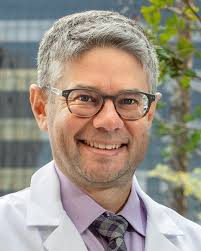
Raymond Cross, MD, is director of the IBD Center at Mercy Medical Center in Baltimore, Maryland, and professor of medicine at the University of Maryland.
Sara N. Horst, MD, MPH, FACG is a professor in the Division of Gastroenterology, Hepatology and Nutrition and associate vice chair, of Digital Health Operations at Vanderbilt University Medical Center.
CLINICAL PRACTICE SUMMARY
Ostomy Complications in Inflammatory Bowel Disease: Practical Clinical Insights From AIBD 2025
-
Common early ostomy complications in IBD care include dehydration and peristomal skin disease, particularly with ileostomies. Ileostomy output is typically liquid and >1 liter/day for consecutive days is associated with dehydration and early hospital readmission. Peristomal irritation occurs in ~50% of patients and is more common with high-output ileostomies, Crohn’s disease, higher body mass index, and diabetes, often due to poor appliance fit or lack of wound ostomy nurse engagement.
-
Peristomal skin findings should be systematically evaluated with the appliance removed, with management guided by pattern and severity. Contact dermatitis often mirrors the appliance shape, while diffuse irritation may reflect chemical injury or Candida infection, commonly treated with topical antifungals such as nystatin. Patients should avoid changing the full appliance more than once or twice weekly, and early involvement of wound ostomy nurses is critical to prevent skin breakdown.
-
Serious ostomy-related complications require multidisciplinary assessment and targeted intervention. Peristomal pyoderma gangrenosum presents as a painful ulcer with violaceous borders and is managed with topical or systemic immunosuppression, including anti-TNF agents or JAK inhibitors for extensive disease. Peristomal hernias are common and repaired primarily for pain or quality-of-life impact, recognizing high recurrence risk. Suspected obstruction mandates appliance removal and digital stoma examination to assess for strictures and guide dilation, medical therapy, or surgical revision.
TRANSCRIPT
Any views and opinions expressed are those of the authors and/or participants and do not necessarily reflect the views, policies, or positions of the AIBD Network or HMP Global, its employees and affiliates.
Hi, I'm Sara Horst, a gastroenterologist at Vanderbilt University Medical Center who specializes in the care of patients with IBD. And I'm really excited today to be hosting IBD Drive Time, which is the official podcast of the AIBD Network. And you can find the IBD Drive Time on Spotify and Apple Podcasts.
Today, it's my great honor to interview Dr. Ray Cross, who is at Mercy Medical Center in Baltimore. He recently gave a great lecture at AIBD 2025 entitled Complications of Ostomies. And I know this is really a very important topic for people who take care of patients with inflammatory bowel disease because this is something we see and our patients have. And so I'm really excited to dig in.
So thanks for coming, Ray.
Dr Cross:
Sara, thanks for guest hosting and happy holidays to you and all of our IBD Drive Time listeners.
Dr Horst:
Great. All right. I'm going to just dig right in. This was a really important topic. So I tried to go through some of the way that you went through the slides and these questions because I think every single point you hit was really important. So the first one is, can you tell us a little bit about what are the most common complications associated with ostomies and maybe a little bit about the difference between an ileostomy and perhaps a colostomy?
Dr Cross:
Yeah. So the latter part of that question, so the differences between an ileostomy and a colostomy, obviously the colostomy is going to have a bigger aperture typically and can be actually a solid stool ostomy output where ileostomies are almost always liquid. Location's going to vary with ileostomies being more in the right lower quadrant, although they could certainly be sited to the left side, and colostomies typically are going to be on the left, but again, could in theory be on the right side. And you have end stomas where you do not have a loop connected and then you have loop stomas. So you can have a loop colostomy or a loop ileostomy.
And I'm not going to use the quote I said, but with ostomies, anything can happen with ostomies. There's a number of complications. But when I'm seeing a patient for the first time in the hospital, I focus on 2 big, big problems, particularly that result in early readmissions.
The first is dehydration. And you could argue about what is normal for output, but I generally tell patients if they're consistently under a liter, they're generally going to do fine. If they have days in a row of over a liter, they're going to land back in the hospital dehydrated. And so I'll often tell them to bring a urinal or cut a two-liter soda bottle, cut the top off and measure the halfway point and dump for the first few weeks until they really learn to accommodate. So that was our most common reason for readmission when I was at University of Maryland.
And the second is peristomal irritation, which happens in probably 50% of patients at some point. And we talk about risk factors for that. It's going to be more common with high output ostomies, so ileostomies, Crohn's, body mass index, primarily because you're not going to get a good fit of the appliance.
So higher body mass index, central sort of adiposity, and then diabetes, for reasons not completely clear.
And although frequent changes of the whole setup are associated with irritation, I think the biggest predictor is failure to engage your wound ostomy care nurses. I know you'll agree with this, but these are the nicest human beings on the planet. They're super knowledgeable. We do not get a lot of training about this in residency nor in fellowship. So it's really learned through our wound ostomy nurses, and they were gracious to give me many of the slides and the pictures for the talk that I gave. So I really encourage patients, again, in the hospital or the first post-op visit, to please engage the wound ostomy care nurse. If you're struggling, you're calling the company, trying different appliances, you're going to get skin breakdown, irritation. Sometimes that can be a contact type allergy from the appliance itself.
And one tip off— if it sort of mirrors the appliance perfectly, so it's going to be a perfect circle, that's going to be more of a sign of a contact dermatitis where you're going to need to change perhaps the adhesive or the appliance. Whereas the more sort of diffuse irritation can be just a chemical irritant like a diaper rash plus/minus; some most common infections going to be a fungal infection candida.
Dr Horst:
Yeah, I thought that was really important to note that if it looks just like the appliance, you might be worried about the appliance. And then if you're worried about a fungal infection, what do you typically give for that?
Dr Cross:
So usually when patients report that they're having trouble with their skin, I'm fortunate that one of the 2 wound ostomy nurses can often come to the clinic and they're usually telling me what to prescribe, but it's usually like an antifungal like nystatin or something like that. Powder can go on it. And one of the keys is patients shouldn't be changing their whole setup more than once or twice a week. So if they're changing it more frequently, the skin's going to be more irritated. So you treat concurrent infection, which is usually fungal, and you get a better fit, you do some education, and usually patients do fine.
Dr Horst:
Yeah. And I think over the years I've been really impressed by the number of different appliances that I've seen patients be able to get. And really, it's through our ostomy and stoma teams, but there's some concave ostomy appliances and there's all these different setups that people can use if they have really sensitive skin. And I've just seen that really improve over time. So I agree with you. I can't say enough about involving that group.
Dr Cross:
Yeah, there's 4 types really. If you took the appliance off, I guess there's 4 things that you could see. So you have the typical little perfect nipple ileostomy, which looks perfect. It's maybe 1 or 2 centimeters above the abdominal wall, easy to pouch. You have the flat stomas, which we see less frequently. And then you're talking about a retracted stoma, which is incredibly hard for patients to pouch, and that's where they're using those different type concave appliances.
Dr Horst:
Then there's- Where's the convex? I don't know.
Dr Cross:
It's inverted, right?
It's going inward. And then there's the ones that look like a big nose, and that's where you're getting a prolapsing stoma, which can be cosmetically a challenge for patients. But really you want it to be a couple centimeters above the abdominal wall or flat. That's a perfect stoma.
Dr Horst:
Yeah, it's really important. And I think one thing I've learned to tell patients about is if your stoma changes, that it used to be out 2 inches and it's been having no troubles and you're doing okay. And especially if you start to see it retract, if something changes, that's a really important time for you to give us a call. I have had some patients where that's been my first sign that they might actually have some disease activity that's developing or a stricture that's trying to develop. So I let patients know that that's important to talk to us about as well.
Dr Cross:
Yeah, I don't think that's a great virtual visit. And if they are going to come in, it's important to tell them or for endoscopy, I like to take the appliance off and look at the skin. So telling them to bring a whole new setup. We just said you shouldn't change it that often, but if they actually have a complaint related, they should bring a new setup so that you and/or wound ostomy nurse can really look at the skin around it so they have something that they can put back on when they leave the office.
Dr Horst:
Yeah, super important. And you brought up really another important point about mucocutaneous separation and actually how common that can be. So could you talk about that a little bit?
Dr Cross:
Yeah, so it's basically where the stoma comes apart from the surrounding tissue, and literally it's separated from the mucocutaneous tissue. And I honestly, I don't see that that often. And maybe it's because of the skills of the colorectal surgeons that you and I get to leverage at our current and former institution in my case. And apparently it's more common with ileostomies than colostomies. And risk factors for this, again, are going to be immune suppression and diabetes, malnutrition, body mass index. You can imagine if you get tension is going to potentially increase separation. And then this often can be a technical issue where the stoma is set up under tension, and obviously then it's going to be more common in urgent or emergent procedures. And usually the wound ostomy nurses can sort of fill the defect and they have some more complex filling things they can do with alginates and so forth that can try to bridge the gap.
But I don't see it that often. Do you? Reportedly, it's about 4 to 8% or something like that. I don't think I see it that often. Certainly maybe I don't recognize it that often.
Dr Horst:
Yeah, I think I've seen it a little less than ... And hopefully I think it's probably around the skill of the surgeons too, so that's important.
All right. I'm going to dig us into a little bit of the more difficult complications that you and I deal with and our patients unfortunately deal with sometimes. I think one of the hardest ones that I see is pyoderma gangrenosum, and we see that around stomas, and sometimes it's the first time the patient's ever dealt with it. So can you talk through that a little bit? You gave a really nice presentation around
Dr Cross:
This. Well, it's the thing I dread, I think, the most. Maybe a neuro brain-gut disorder overlap is probably number 1, but then pyoderma would be number 2 because it's so difficult and I feel so ill-equipped to deal with it. So typically, these often can be the result of injury, so pathogen. And obviously if you're having trouble with the appliance and you get injury to the skin, that's going to be a perfect setup. And that's probably why peristomal pyoderma is probably as common as us seeing pyoderma in the extremities. So in fact, I might argue I see it more around the stoma than I do in the extremities. And typically it's an ulcer, which is painful. So if they're not painful, then I have a much lower index of suspicion that it's pyoderma, and they often have these sort of violacious edges around them. And again, if the wound ostomy nurse comes out of the room and says, "This is pyoderma," I don't really question it.
Certainly I'm going to look at it. You rarely need a tissue diagnosis to confirm this. Sometimes the dermatologist will swab that. I don't know what the value is when you have a liquid stool generally right next to it, but sometimes there could be concurrent infection. If these are relatively small, they can be managed topically, either injectable steroids, topical tacrolimus, sometimes the cyclin antibiotics like minocicline, tetracycline, can be used. Hans Herforth at UNC talks about fluticasone nasal spray and basically spraying that into the base of the ulcer. And I've tried that anecdotally a few times and haven't found that it's that helpful. But the idea is that there's a topical steroid, topical immune suppressant, to try to treat it. When they're more extensive, this is when you're going to do systemic therapy either with an adjunct like these antibiotics or alone. We don't like to use steroids, but steroids can be very effective for pyoderma.
You and I have probably used anti-TNFs the most. So if prior to the stoma patients weren't treated extensively with anti-TNFs, you can certainly start an anti-TNF. I've had really good results with JAK inhibitors for pyoderma, both on the extremities and around the stoma. So that's when you're starting to do the heavier duty— shouldn't say heavy duty, you're going to systemic treatments. And I've only had to use cyclosporine, I think, once or twice in my career for really refractory patients. And that was before we had JAK inhibitors.
And obviously the whole time, ideally you'd like a dermatologist involved if you can access one. To help this, you need the wound ostomy nurses for pouching so that they don't cause further injury. So this is truly going to be multidisciplinary management.
Dr Horst:
Yeah, I completely agree. I think the places that I've seen people get in trouble is when they don't use biologic therapy. They're nervous to do it because some of these wounds are really deep and they're worried about infection, but you just have to do it. If you don't, you're never going to get control if these are really significant. When I've used anti-TNF, I'm really using very high doses. I think that's a very important thing that I've learned from the dermatologists. These are places where sometimes I'm using a JAK as well. I think it's been helpful sometimes even in conjunction with the biologic. I've used anti-IL-23 a little bit as well and have had some fairly good success more on the extremities. I don't know that I've used it around for patients who've had pyoderma around the ostomies quite yet.
Dr Cross:
The anti-TNFs, I wanted to come back to dosing. Do you start people out on high dose right away or you quickly escalate the high dose if they're not responding as you'd like them to respond?
Dr Horst:
I mean, I'd like to use as high dose as I can. Sometimes I'm a little strapped by what the insurance will allow us. This is a place where I am trying to keep drug levels up. So typically using immunomodulator therapy with the anti-TNF to try to keep levels up. I usually pick infliximab just because I can push the dose higher. I have more opportunity for that.
Dr Cross:
Almost like a patient with perianal Crohn's?
Dr Horst:
Yes. Yeah, that's what I've really found the best success with anti-TNF. And the other piece that I found that was really important to learn about when one of our dermatologists talked to me about was the epithelial bridging that you'll see. If it does heal up a little bit, you'll just see these sort of little bridges of skin that'll come across a wound and you Google it or whatever. And that to me is a really important point. If I'm seeing those little bridges, that to me is pyoderma unless somebody tells me otherwise.
Dr Cross:
Okay. We learn things from each other.
Dr Horst:
Awesome. All right. We're going to go to difficult problem number 2, which is super common, and that's the peristomal hernia. So a lot of our patients will come to us. They're doing great, but are dealing with a peristomal hernia. So how do you approach this and when do you involve the surgeons?
Dr Cross:
So I think a couple points. One is it's so incredibly common that our patients have these. And when they show me, I tell them upfront that my rule of thumb is if this gets so big, and this of course assumes they're not becoming obstructed, they don't have some kind of incarceration of the bowel within it. So if they're presenting with obstructive symptoms, which certainly can happen, and we have to remember they also can have hernias on the inside as well, but assuming that they're having no issues with obstruction, I tell them the 2 reasons to fix this are going to be cosmetic. So if this hernia is so big that you just can't handle the appearance of the hernia, or despite using a support belt, some kind of binding system, you're having significant pain that affects your quality of life, then in that scenario, I think it's reasonable to fix them.
The problem is they frequently recur. And so one of the things I do now in patients with new stomas ... Now, our patients can be just as heavy as a patient that doesn't have IBD, but some patients are not heavy at the time of their surgery. And I tell them it's really important. I want them to eat and get their nutrition back, but you don't want to go the other end of the spectrum where they're now obese because obesity is a risk factor. BMI is a risk factor for these stomas. So I think in a patient that has recurrent stomas, it's interesting maybe the GLP-1s are going to play a role in being able to reduce weight and potentially prevent recurrent hernia formation. So it's really important that patients don't gain too much weight. Hernias are also going to be more common with the bigger stoma.
So loops, colostomies over ileostomies. And apparently for just every millimeter difference in that aperture, it increases the risk of a hernia by 10%. So some of these hernias can be technical in nature. So you can't gain too much weight. We want our patients to be thinner if possible with stomas.
Dr Horst:
Yeah, super important. What about the opposite problem, the stoma retraction? We talked about this a little bit. This is a hard problem. And while we were chatting, I did look up ... Is it concave or convex? It's convex. I think you were hinting towards that. So I misspoke earlier.
Dr Cross:
Think I messed it up. I think I said concave. You mentioned thinking about other issues like Crohn's. This also can be an issue with tension of the stoma, so it's put under tension, causing it to retract. If you can pouch it and patients are doing fine, you don't need to do anything with the stoma. And this is one of the problems where you can actually have a local fix. It doesn't have to be a complete revision or resiting of the appliance. Sometimes the surgeons can do a more local procedure to fix it.
Dr Horst:
Yeah, super important. All right. The last problem that you and I deal with, I think probably frequently, are the ileal strictures that may occur. I found it mostly with ileostomies, but can you talk a little bit about that and how you approach those ileal strictures for someone with an ileostomy?
Dr Cross:
So in a patient who presents with what seems to be an issue with stoma output, so partial obstruction or obstruction, first of all, think broadly. So remember that you can get strictures at the ileostomy, and that can be de novo Crohn's if they haven't had ileal disease before or a recurrence of Crohn's, but you also can have internal hernias, adhesive disease that can cause obstruction. So think broadly, and you can have a stricture, of course, more proximally. So think broadly, number 1. Number 2, when a patient comes into the endoscopy lab, again, make sure that you're just not putting the scope through their bag. So take the appliance off to look at the skin. And then typically what I do, I'm sure my fingers are much bigger than yours. I typically just put my pinky into the stoma for 2 reasons. One, to make sure there's not a stricture, and 2, to get an idea of how I want to insert the scope so that I can insert it easily, so what my angle needs to be.
And you can have a stricture actually right at the skin surface or even deeper at the fascial level. Now, sometimes our fingers aren't going to reach that deep. What's really criminal is if you have a patient admitted with obstruction and the appliance never comes off and someone doesn't digitize the stoma, that's absolutely criminal. And our colorectal surgeons would chew you out if you didn't do that. So if someone comes in with obstruction, take the appliance off, put your finger in, see if you can feel a stricture. And if it is narrow, I'm pretty comfortable gently trying to dilate it with my finger and try to open it up. Sometimes these need to be revised. And then the question is, what do you do with your therapy? So if it looks like this sort of fibrotic scar stricture, I don't necessarily change their treatment, but these are patients that may need a little revision, not usually a reciting, but typically a little revision.
But the key point is digitize the stoma. I think that's the best learning point.
Dr Horst:
It's so important. And I think for me, I've learned that I can sort of get an idea of this is like, is this actually a mucosal or is this actually down into fascia and kind of get a better idea when you've done a lot of these. So I think just getting experience with that is really important. I think I also make sure, obviously, when you're doing your ileoscopy, if you see inflammation up higher, you do probably have an opportunity to maybe do some change in therapy, and I've seen some benefit from that. If it's just right at the stoma, it can be a little trickier, and sometimes those just need revision if it's really tight.
Dr Cross:
Yeah. And the reality is if they have disease proximally that's significant, they're already a high-risk patient because they had a colectomy, right? You need to start therapy regardless. So if you happen to open that up a little bit with medical treatment, that's fine.
Dr Horst:
Yep. Perfect. Well, thank you so much, Ray. This was fantastic. I think I learned a lot and it was a really nice summary and a very important topic. So I'm really glad that this was brought up as an entire session at AIBD. And I think the keys were that I learned were you've got to get experience with this. So especially as a trainee, you need to learn and get as much ... If you have the chance to go with ostomy teams or colorectal teams, do it as much as you can. Take the bag off. We've heard it 16 times, take the bag off and really look at the skin and help understand what's going on and really find this is team-based care as much of IBD is, but making sure you have that great ostomy team involved as early as you can. Anything else?
Dr Cross:
Yeah. I mean, the other thing I would say, if you're an advanced fellow or trainee that's interested in IBD, ask your program director if you can spend some time with the wound ostomy nurses and ask them to come give grand rounds for your GI grand rounds and learn from them. We can learn. I mean, Sara and I have been doing this for a long time. A lot of our learning has been in the clinic side by side at meetings and learning from one another. So you can spend time with your wound ostomy nurses and learn from them.
Dr Horst:
It's so key. And the colorectal teams as well, the surgeons, they often have APP teams that are helping them out that are really experienced and amazing. So completely agree. Well, thank you again, Ray. This was fantastic. Thanks again for joining.