IBD Drive Time: James Lewis, MD, on Dysplasia Surveillance in IBD
Dr James Lewis from the University of Pennsylvania and host Dr Raymond Cross discuss the risk of colon cancer among patients with inflammatory bowel disease, the importance of appropriate surveillance, and special considerations for choosing how often to screen patients.
CLINICAL PRACTICE SUMMARY
IBD Dysplasia Surveillance: Risk Stratification, Interval Updates, and Endoscopic Approach
- Ulcerative colitis (≥2 colonic segments beyond proctitis) and Crohn’s disease (≥1/3 colon involvement): Initiate colonoscopic dysplasia surveillance at 8–10 years from symptom onset. Primary sclerosing cholangitis (PSC)-IBD warrants surveillance at IBD diagnosis due to higher colorectal cancer risk. Risk is driven by extent and duration of inflammation; additional risk factors include family history of colorectal cancer (earlier age confers higher risk), persistent uncontrolled inflammation, prior dysplasia, dense pseudopolyposis, colonic stricture, and possibly Crohn’s disease with prior ileal resection (hypothesized bile acid effect).
- Surveillance interval: 1–3 years for high/intermediate risk; up to 5 years for lowest-risk patients per AGA/ECCO/British guidance. High risk includes PSC, prior invisible dysplasia, dense pseudopolyps, extensive severe inflammation, or stricture. Lowest risk may extend to 5-year intervals when colonoscopy shows normal-appearing mucosa (not Mayo 1) with minimal histologic activity, particularly after consecutive normal exams.
- Technique: high-definition colonoscopy with meticulous inspection time is critical; spray chromoendoscopy may increase dysplasia detection in expert hands; virtual chromoendoscopy (e.g., narrow band imaging) is not clearly superior to high-definition white light. Visible dysplasia should be completely resected endoscopically when feasible; otherwise refer for advanced endoscopic resection or surgery. Random biopsies remain under investigation (e.g., URBI study).
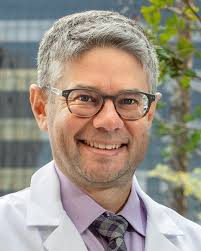
Raymond Cross, MD, is director of the IBD Center at Mercy Medical Center in Baltimore, Maryland, and professor of medicine at the University of Maryland. James D. Lewis, MD, MSCE, is professor of medicine and chief of gastroenterology at Penn Presbyterian Medical Center in Philadelphia, Pennsylvania.
TRANSCRIPT
Dr Cross:
Welcome everyone to IBD Drive Time. I'm Raymond Cross from Mercy Medical Center in Baltimore and I'm delighted to have my friend Jim Lewis from University of Pennsylvania, the first 3-time guest to IBD Drive Time. So Jim, welcome back again to IBD Drive Time.
Dr Lewis:
Hey, it is always a pleasure and I look forward maybe someday to being a 4-time guest.
Dr Cross:
Absolutely. For the listeners, IBD Drive Time is the official podcast of the AIBD network and we are on Spotify and Apple Music, so you can subscribe and get updates on our podcast. And today I thought that Jim and I would talk about dysplasia surveillance and IBD.Jim, the listeners for Drive Time vary. So we have trainees, APPs, experienced providers, we have some pharma listeners as well. So we're going to start out with the basics. So in dysplasia surveillance, which IBD patients should be screened for dysplasia and when should screening or surveillance start?
Dr Lewis:
So this builds on the general concept that people who have IBD have a higher risk of colon cancer. I want to preface by saying it's not an enormous risk, but it is bigger than what the average person would have. And I usually think about this, that their risk is proportional to essentially the amount of colon that's been involved and the amount of time with inflammation. There's probably some math equation that could explain the whole thing, but those two factors are the biggest driving factors guidelines that were established decades ago and I think still hold. To date I would say that anybody with ulcerative colitis who has more than proctitis, so you can think of they've got at least two segments of their colon involved, meaning their rectum and their left colon and maybe more; and for Crohn's disease, anybody who's got at least of the third of the colon involved. And that was meant to sort of reflect that idea of left-sided ulcerative colitis would be candidates for surveillance. And then the last criteria is that you have to, for most people, and this isn't everybody, that you would have disease for a long enough period of time that it warrants beginning surveillance. And that's typically thought to be 8 to 10 years from either the onset of symptoms or the date of diagnosis, whichever would come first.
Dr Cross:
And I'm glad you mentioned from the onset of symptoms. Now for ulcerative colitis, often the symptoms, it's not a long diagnostic delay with ulcerative colitis or as long, but some patients have had some bleeding for a couple years. In Crohn's disease, of course, there can be a longer diagnostic delay. So I think it's really important to go from the time of symptoms to start the clock. And then Jim, historically in the past for ulcerative proctitis, I consider them average risk and I would just do average risk screening. But I think our new guidelines now recommend in those patients that every 5 years we do a colonoscopy. I think my sense is that's more for correlation with biomarkers more so than increased cancer risk. But you want to comment on that at all?
Dr Lewis:
I think it also gives you an opportunity to assess whether their disease has extended. Just because somebody started with proctitis doesn't mean they continued to have proctitis. Many of these people, their disease will extend. And so if you diagnose somebody originally with proctitis and then you do a colonoscopy at 5 years, let's say, and there's pseudopolyps all over the transverse colon, you can feel fairly confident that you underestimated the extent of their disease and they're in the same boat as everybody else.
Dr Cross:
Yeah, that's a really good point. So we know patients with PSC IBD, which I personally think is a distinct form of IBD that's separate from ulcerative colitis and Crohn's and from indeterminate or IBD type, we know in those patients they have a much higher risk and we should start surveying them at the time of diagnosis. But what are the other risk factors that put patients at higher risk for dysplasia and colon cancer?
Dr Lewis:
Like anybody else, if you have a family history of colon cancer that's going to put you at higher risk, and the earlier the age of colon cancer in that family member, the more that would put you at higher risk. I mentioned earlier this idea that just prolonged periods of inflammation, that you just can't get the disease under control, those people are certainly at higher risk, as are people who've had previous dysplasia. I mean it's just like screening for average risk colon cancer. The more dysplastic polyps people have had, the higher their risk is. There's a couple other factors that are sort of interesting to think about. One is earlier age at diagnosis, and I think this is when we start thinking in relative terms more than absolute terms. So if you are 20 years old and you had ulcerative colitis or Crohn's colitis that was onset at let's say age 5, you've already had 15 years of disease, you've got an increased risk when the average 20-year-old walking around in America has got almost no risk.
But the risk of that 20-year-old is still perhaps less, the absolute risk may be less than the 55-year-old with ulcerative colitis who's had 15 years of disease. There was a paper published decades ago by Anders Ekbom, this was one of the first studies that really highlighted this issue of duration of disease and also age. There was a figure in that paper that didn't get much attention, but I always found interesting, which was if you looked at people who were diagnosed after the age of 50, their sort of increased risk of colon cancer was apparent very early after disease onset. So in my personal practice, if somebody is a late onset of IBD, meaning beyond the age of 50, I tend to start their surveillance right away as opposed to waiting for them to get to 8 to 10 years of disease.
Dr Cross:
So in the past there was, there's still some controversy I think, about pseudopolyps and for the listeners, to be clear, pseudo polyps themselves harbor no increased risk of dysplasia or cancer themselves. But there is some thought that patients who have extensive pseudopolyposis are at higher risk. And I think tying to what you were saying, Jim, about young age at onset, my sense there is that probably is a marker of disease severity and inflammation and that's probably the risk. And the other challenge with pseudopolyposis, particularly if you have extensive pseudopolyposis, is are you really able to see well between these things, can you really distinguish whether one of these, it does have some dysplastic features? So certainly there's some limitations of diagnosis in those patients. Do you tend to agree with that in general?
Dr Lewis:
Yeah, I think your description was totally on the point that it's a double challenge. They probably had severe inflammation and sometimes there's so many of them, it's hard to know if one of those is the culprit or if there's a culprit lying underneath where they are. So definitely creates a challenge. The other I would just point out, there was an interesting paper, it was like a brief report that came out this year about whether people with Crohn's disease who had an ileal resection might be at higher risk of colon cancer perhaps for a completely different pathologic reason related just to release of bile acids into the colon. That hasn't necessarily been reproduced yet, but it's interesting to think about particularly as we try and think about, well what is it about PSC? Why do these people have such a higher risk of colon cancer? And one of the hypotheses there has been linked to alterations in the bile acids in that population as well.
Dr Cross:
Yeah, it's super interesting and I wanted to think a little bit about the inverse is that there is some data—now we don't use a ton of thiopurines anymore—but there's some data, I think, I can't remember if it's from the Cesame or the Getaid cohort, showing that azathioprine actually can markedly reduce your risk of dysplasia and cancer. And there's some database type studies showing that biologics particularly anti-TNFs can decrease your risk of dysplasia. And I think my sense there is that is a surrogate of highly effective therapies that can control inflammation more so than something specific to a line of therapy.
Dr Lewis:
I think that's probably true, and the better our therapies get, the more that risk is going to continue to come down closer to that of the general population.
Dr Cross:
And so for the patients that we're surveying, Jim, how often should they be surveyed?
Dr Lewis:
This is definitely a moving target and unfortunately as often happens in the world of medicine when new guidance comes out, it gets more complicated before it gets less complicated. If you went back a decade ago or even 5 years ago in the US the guidance was pretty simple—every 1 to 3 years and use your best judgment. Now there's been an a clinical practice update document and there's been ECCO guidelines put out that are, and there's actually British society guidelines that have come out also that say in the lowest risk people, we could stretch this interval to 5 years and then you're going to be 1 to 3 years for people who are high to medium risk. Interestingly, the AGA and the ECCO had different definitions of what high end medium risk were, but conceptually you can think about this as the high risk are obviously the people with PSC, the people who have a history of invisible dysplasia that we couldn't see, that you talked about, the dense pseudopolyps, and extensive severe inflammation. And I guess I would also throw in there, think about particularly if you see someone who you think has UC and suddenly has a colonic stricture, that's a super, super high risk person. And then the medium risks are kind of the people in between. So for example, if they had visible dysplasia that you were able to remove, but it's only been a few years that are probably in that sort of intermediate risk group.
Dr Cross:
And I think it was time to update the guidelines, I felt for a fair amount of time that I was oversurveying people. But it'll be interesting to see what you do. In my practice, the only people I graduate to a 5-year interval is essentially a completely normal looking colon. If it looks normal, so not Mayo 1s, and on biopsies there's minimal active inflammation on biopsies. Those are the ones that I'm extending and if they've had 2 of those exams in a row, I extend them to 5. Everyone else, I'm still doing 3s or less. And if we're doing treat to target because of inflammation, we're doing them a little more frequently anyway unless we can't achieve that target of course. So I don't know if you think that's been a reasonable interpretation of the guidelines, but that's what I do.
Dr Lewis:
Yeah, I'm in a similar boat and I feel better about it also if it's left-sided colitis versus extensive colitis for someone to move to 5 years.
Dr Cross:
Agreed. For the listeners, for IBD dysplasia surveillance, we're not doing FIT testing and Cologuard and things like that. So clearly colonoscopy is the right way to screen these patients or survey them. But when I'm asking Jim how patients should be screened, I'm really asking about white light versus methylene blue chromoendoscopy versus narrow band. Do we know what the right approach is in our patients?
Dr Lewis:
The right approach is whatever you are best at. If you look at expert endoscopists, using spray chromoendoscopy along with a high definition scope probably is a little better at detecting dysplasia than using high definition white light alone. But I do think there is a learning curve to doing spray chromoendoscopy, and I don't think that this is going to be what everybody is doing because you have to be doing it often enough that you're actually competent and good at it. The data on virtual chromoendoscopy, which for most of us, depending on what scopes you're using, so say NBI, whatever imaging modality you have on your equipment would suggest it's probably not any better than just using high definition white light. That being said, when I do a surveillance exam in high definition white light, I'd say it's pretty unusual that at least at some point during that exam that I don't turn on narrowband image to look at something again.
Dr Lewis:
So I think I really would emphasize, yeah, if you're comfortable doing spray chromoendoscopy and you think that this is a particularly high risk person, I think that would be great for you to do it. But I don't think you should beat yourself up if you're just using high definition white light. And again, probably the most important part of all of this is that, just like any other screening colonoscopy, is that you take your time and look carefully. I mean some of the early studies of spray chromoendoscopy, one of the questions was was it really any better or was it just that people were looking under white light and they were spraying the chromo and they were cleaning and they were looking again and that this was really a product of just time inspection time. So the most important thing is to think about inspection time and there's been some guidance documents coming out. If we talk about 7 minute minimum withdrawal time for regular screening colonoscopy, there's been some guidance coming out that it should be much longer for somebody who has IBD.
Dr Cross:
Yeah, I think for the listeners, and I'm just going to try to paraphrase what Jim said is that the most important aspect of this is a high quality endoscope. So if you have 190s and 180s, if you're using Olympus, I tell my nurses that I'm not accepting a 180 scope for an IBD dysplasia surveillance. It needs to be a 190. So the highest definition, good screening endoscopist that is comfortable looking at chronic colitis patients and what dysplasia looks like, and taking your time, that is far and away the most important aspect and the margins between white light NBI spray chromo. I think it's not a huge incremental gain. I stopped using chromo during the pandemic because the pandemic required us to have it had an extra person in the room to do the spray. So I just learned NBI, and so I primarily do NBI in my prior dysplasia patients, my PSC patients if they're scheduled properly.
And then if someone is referred to me for invisible dysplasia on biopsies, I'll do an NBI In that situation, the concept being if you find visible dysplasia in that segment with an enhancement technique like that, that that's the area that was biopsied and if it is resectable, you would resect it and continue to survey as opposed to sending them to colectomy. Now, I never really found that logic to be that reassuring for me, that you just happen to biopsy that one spot that you're now seeing visible dysplasia, but at least that's the concept anyway. So that's how I use narrow band. Are you doing it on everyone, Jim or just in select cases, narrow band or chromo?
Dr Lewis:
I do. I will typically do spray chromo, for the person you just described, referred for invisible dysplasia, and I think many of my colleagues take that approach. I'll sometimes use spray chromo for PSC, not always. And as I said, it's not uncommon for me to be flipping back and forth between white light and narrow band if I'm doing a white light exam. But I think the scopes are so good today and only getting better that most of the stuff is visible on white light and the extra techniques are just to let you see the margins better.
Dr Cross:
Yeah. You mentioned the spot narrow band imaging. I think those pseudopolyp patients, particularly if you turn the narrow band on and you see a fibrin cap on top of a pseudopolyp, that's an inflammatory polyp. That's not a precancerous polyp, but sometimes the pit pattern on those is not regular and not symmetrical, and that's one that needs to be taken out. So that spot NBI or spot spray, however you're doing it, NBI is very pragmatic that you could just do it. When you and I were much younger, Jim, we had this lesion called dysplasia-associated-like mass, which basically today is visible dysplasia. Visible dysplasia could be some spreading lesion that Jim and I are not good enough to get out, but maybe some of our advanced endoscopists could get out or just a traditional, what looks like a traditional adenoma, that we take out. So how do we handle visible dysplasia, Jim?
Dr Lewis:
I think you take it out if you can, and if you can't, you refer it to somebody who can. And if they're not feeling that they can take it out, then the patient needs surgery to remove it. My advanced endoscopy colleagues give the guidance all the time, whether it's IBD or not, if you're not pretty confident that you can get it out, just leave it for me. Don't, don't create a whole bunch of scar tissue by trying to take it out unsuccessfully. So I think just the same as what screening modality should you use—the one that you're good at—we all need to know where our limits are, and if it's something you're injecting under a lesion to lift it up and get it into better position and you're still feeling like, I really can't get this in an ideal position for me to get it out, the better answer is to put some tattoos in so that your colleague can find it and send it to somebody who is better equipped to take out that large lesion. And all of us have our limitations.
Dr Cross:
Completely agree. And when you mentioned surgery in the past, expert opinion with surgery means you're getting a colectomy with potentially permanent ileostomy or maybe a J pouch if you have UC, but that's all based really on expert opinion. So that patient with visible dysplasia, assuming disease is controlled, you don't have any invisible dysplasia anywhere else. Is that person, should they have a colectomy or should they have a segmental, Jim?
Dr Lewis:
I don't think we have a definitive answer other than to say if they get a segmental resection, they're going to be in that, at least in my world, they're going to be in that high risk group for aggressive surveillance for an extended period of time before I feel better. There've been some studies that looked at Ileal rectal anastomosis and just showed particularly if the lesion that was being resected was on the distal left side of the colon, that there's a fairly high recurrence rate in the rectum if you take that approach. But we're still at a state where medicine is a bit of an art and you have to personalize this to the patients. Certainly bowel function with ileal rectal anastomosis is significantly better for many patients than with a J pouch or an end ileostomy is a whole different experience,
Dr Cross:
And I think, I'm pretty sure you're going to agree that this is an area where shared decision making is an important, this isn't a conversation after the colonoscopy, this is telehealth or in-office. You're going to go over the pros and cons, the different approaches describe what the function's like with a JPO and so forth. So I agree. I don't think we know the right answer. I think there is some emerging data that segmental patients do pretty well, but I think we don't have enough evidence for that. Now, we mentioned biopsies, but we didn't talk about random biopsies. Again, when you and I were younger, it was recommended to do four quadrant biopsies every 10 centimeters, and those are considered classic surveillance biopsies, but most people we know don't do that. So should we still be doing that, Jim?
Dr Lewis:
I don't know. As for the listeners, there are several groups including ourselves, both Ray and I are part of one of these groups trying to answer this question of whether taking these random biopsies are helpful. The concept was when our scopes were not nearly as good, it was very difficult to see these dysplastic lesions. And so the hope was by just randomly biopsying, because inflammation is a field effect that you would pick up some of this dysplasia, and force you to come up with another plan, either a chromoendoscopy exam or surgery, whatever the case would be. Whether in the era of our high definition scopes, this still offers any benefit, i's hard to know. What we can say is that there still are occasionally times when people take a random biopsy and they find dysplasia. Whether that dysplasia was destined to progress to something more serious or not, we don't know. And hopefully between the study done by the Canadians and the study that we are doing, the US version is called URBI so hopefully, between those two studies, we will put this issue to rest so that by a few years from now, we'll really know what's the best approach. Should you be taking biopsies of normal appearing mucosa or should you limit your biopsies to areas where you're really suspicious?
Dr Cross:
Yeah, I'm not going to give my bias into what I think the outcome's going to be because I think we're just going to let the study play out. But congratulations to Jim. This is an NIH funded grant that he's leading, and thankfully I'm part of it and we're going to get a definitive answer and I think we'll get more information than just that from the trial as well.
Alright, Jim, this is sort of a two-part question question but not really. So first part of this is did you always want to be a doctor? If the answer is yes, what triggered you to focus on IBD? And if the answer is no, what was your original career goal?
Dr Lewis:
I'm going to give a roundabout answer to this. I don't know that this was my original career goal, but in high school, where I went to high school, we had to take an aptitude test to try and tell us what we should do. And I remember taking this test and it came back and told me I should be an actuary. I didn't have the faintest idea of what an actuary was, but we were then required to write this two page paper about the career that was selected for us. It turns out I went to college and I was a liberal arts major, so I kind of got to pick whatever I wanted to take. I wound up taking a lot of economics courses and I didn't know why, but I just sort of liked them. So I've said to one of my sisters that if I didn't do medicine, I would've been happy being an economist or an actuary. And my sister, who I love dearly said to me, oh my God, Jim, the business world would've totally eaten you up. Thank God you became a doctor. But I think in the end, my career as a clinical investigator and having been an economist or an actuary, they're very similar. It's like the methods are the same, the concepts are the same, you're just studying different things. But I think I could have been very happy as an economist or an actuary.
Dr Cross:
Was there a specific experience that you remember that got you interested in IBD?
Dr Lewis:
There definitely was. I had finished my first year of GI fellowship and someone who I'm still friendly with to this day, Dale Bachwich, who's a gastroenterologist, now retired, had said to me one day said, we treat a lot of our IBD patients with azathioprine. Do you think that causes people to get lymphoma? I said, I have never thought about it, but that is such an interesting question. And I'd always had an interest in diseases where there were sort of complex decision making over medical therapy, and that was like the perfect example. Back in those days, azathioprine was sort of cutting edge in those days, but that was part of the risk-benefit trade off. And really I think that conversation changed my career. Literally just sitting around one day, like a 5-minute just off the cuff conversation changed my career because I was so fascinated with this concept of risk-benefit balance in long-term treatment of a chronic disease. And that's where it all started for me.
Dr Cross:
Well, Jim, speaking for myself and the IBD world, we're glad you're an IBD clinical investigator. We're glad you chose this path, and this has been great. For the listeners you've been listening to IBD Drive Time, the official podcast of the AIBD network, and hopefully Jim will be back a fourth time for a future topic. Jim, thanks again.
Dr Lewis:
My pleasure and best of luck.
© 2026 HMP Global. All Rights Reserved.
Any views and opinions expressed are those of the author(s) and/or participants and do not necessarily reflect the views, policy, or position of the AIBD Network or HMP Global, its employees, and affiliates.