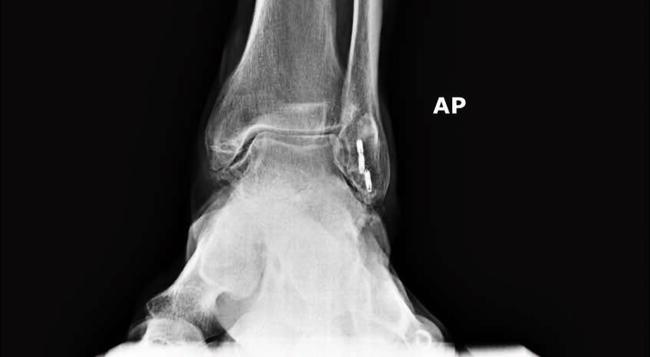
Return to Tennis After Arthroplasty: What Can We Learn About Total Ankle Replacement?
Key Takeaways
- Per the Orthopaedic Journal of Sports Medicine (2025), this narrative review found lower return-to-play (RTP) rates for tennis after total ankle arthroplasty (TAA) compared with hip, knee, and most shoulder arthroplasties.
- Reported RTP after TAA ranged from 0%–30%, with singles tennis less frequently permitted than doubles; surgeon clearance was ~40% for singles and ~85% for doubles.
- Evidence quality for TAA was Level III–IV, with small cohorts and inconsistent outcome reporting, limiting firm guidance on tennis participation after ankle replacement.
A 2025 narrative review in The Orthopaedic Journal of Sports Medicine examined tennis participation after joint arthroplasty, with notably limited and lower-quality data for total ankle arthroplasty. Reported return-to-play rates after TAA were low, underscoring ongoing uncertainty in counseling active ankle replacement patients.
Study Design and Scope
In a December 2025 narrative review in the The Orthopaedic Journal of Sports Medicine the authors evaluated tennis participation after arthroplasty of the hip, knee, ankle, and shoulder.1 Literature was identified through searches of PubMed, Google Scholar, ScienceDirect, UpToDate, and Springer. For total ankle arthroplasty (TAA), included evidence consisted primarily of Level III and IV studies, including retrospective analyses and questionnaire-based reports.1
Return to Tennis After Total Ankle Arthroplasty
Across the included studies, return-to-play rates for tennis after TAA were consistently lower than for other joint replacements. Reported RTP ranged from 0% to 30%, with some studies noting 0% return for singles tennis and limited participation in doubles play.1 In one questionnaire-based study, 82% of patients reported inability to play tennis after TAA, while only 18% played occasionally. Surgeon survey data indicated tennis clearance rates of approximately 40% for singles and 85% for doubles following TAA.1
Clinical Relevance and Limitations
The review found insufficient evidence to determine the safety or performance expectations of tennis after TAA. While no definitive increase in complication rates attributable to tennis was demonstrated, concerns regarding aseptic loosening and implant durability remain theoretical. Data were limited by small sample sizes, heterogeneous outcome definitions, lack of differentiation between singles and doubles play, and short follow-up. The authors emphasize individualized patient counseling and highlight the need for prospective, ankle-specific studies to better define activity recommendations after TAA.1
Reference
- Kaiser P, Neugebauer J, Riechelmann F, Schneider F, Ellenbecker TS, Keiler A. Arthroplasty and Tennis: A Narrative Review. Orthop J Sports Med. 2025 Dec 8;13(12):23259671251397401. doi: 10.1177/23259671251397401. PMID: 41376784; PMCID: PMC12686382.
© 2026 HMP Global. All Rights Reserved.
Any views and opinions expressed are those of the author(s) and/or participants and do not necessarily reflect the views, policy, or position of Podiatry Today or HMP Global, their employees, and affiliates.