Patient Expectations in HAV Surgery: Highlights from the ACFAS ASC
Key Takeaways
1. Cosmetic vs Functional Expectations Must Be Addressed
Surgeons focus on pain relief and deformity correction, but many patients prioritize cosmetic outcomes. If appearance, scarring, and incision size aren’t discussed directly, dissatisfaction can occur—even after a technically successful procedure.
2. Patients Expect “New” and Minimally Invasive Options
More patients are asking for the latest technology and minimally invasive bunion surgery. While techniques have evolved, core surgical principles remain the same. Clear counseling helps align expectations with reality.
3. Surgery Improves the Foot — It Doesn’t “Turn Back Time”
A perfect radiographic result doesn’t guarantee satisfaction. Patients may expect a “normal” or younger-feeling foot, but the goal is improvement—not restoration. Strong preoperative conversations determine who is truly a good surgical candidate and drive postoperative satisfaction.
Transcript
Jennifer Spector, DPM:
Welcome back to Podiatry Today Podcasts. I'm Dr. Jennifer Spector, the Associate editorial director for Podiatry Today, and as always, we bring you the latest in foot and ankle medicine and surgery from leaders in the field. Today we have Dr. Rachel Albright with us who's speaking to us about one of her sessions at the ACFAS Annual Scientific Conference, specifically patient expectations in HAV surgery. Thank you so much for being with us today, and let's get right into it. Where do you feel that surgeon expectations and patient expectations most commonly diverge, and why does that matter for outcomes?
Rachel Albright, DPM:
Yeah, I think probably one of the biggest places they diverge is the idea behind the cosmetic outcome and then the functional pain improvement outcome. I think from the surgeon standpoint, we are doing a joint deformity surgery and we're trying to decrease pain increase function, but from a patient standpoint, they might want all those things, but there is a cosmetic component associated with it, and the cosmetic component doesn't always get addressed and talked about, and if it doesn't get talked about, then you're not totally sure how much it's contributing. And I would say that's probably the most common divergence I see.
Jennifer Spector, DPM:
And also, over the past several years, have you noticed any trends or changes or patterns in patient expectations over time? Do you feel like there's more focus on certain areas now where maybe several years ago there was not?
Rachel Albright, DPM:
Yes. I have patients that really want minimally invasive procedures now, and I think that that speaks to, again, this cosmetic component that they're interested in. Now there's this option to have very small incisions, really minimal scarring, minimal edema, and I think they like that, so I have seen that and I've also seen, I've had a lot of patients come to my office as a consult for a bunion, and what they'll ask me is, “Tell me the latest technology in bunion surgery. I heard about it 10 years ago. I didn't want to do it.” Tell me what's new. They think that maybe we have something robotic or something, and I'm like, well, sadly, it's kind of the same in the sense that we're still going to cut your bone, we're still going to put hardware in there. Maybe some of the techniques we use are a little bit more advanced, but all in all, you're still going to have hardware basically no matter what you do.
Jennifer Spector, DPM:
You haven't developed a magic wand yet.
Rachel Albright, DPM:
Yeah, I know. I know. But I do get asked that a lot.
Jennifer Spector, DPM:
This may be a theme, but is there one expectation related issue specifically that you see that that often leads to potential dissatisfaction even if the surgery itself is technically successful?
Rachel Albright, DPM:
Absolutely. I think one thing that I have realized, I have changed the way I have the preoperative discussion now, and one of the biggest things that I've seen people dissatisfied with, even when their radiographs look phenomenal and they have good range of motion of the toe, is they seem to think that you might be able to turn back time for them. If I get this bunion fixed, I'm going to have a 20-year-old foot. I don't know why they think that, but they think their range of motion will be better than it was pre-op. Surely their pain will be down, which is a normal expectation, but that's definitely something I have to coach them on. So I actually tell them that I'm not going well. I do say I'm not going to turn back time for you, and I actually tell them, I might not even make your foot normal.
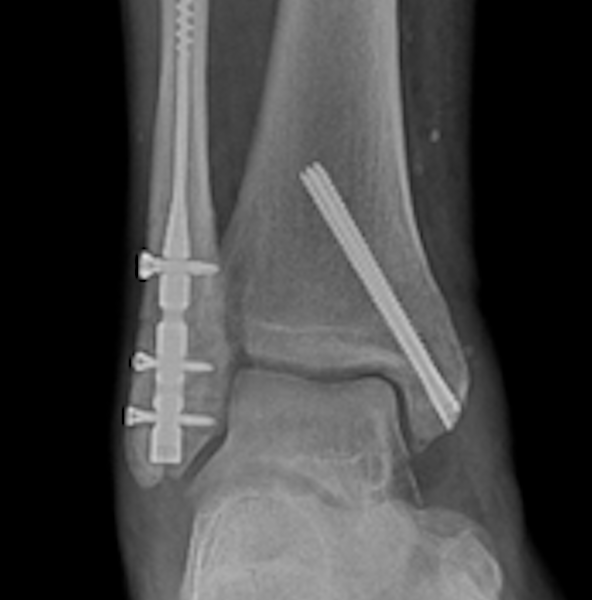
I'm just going to make it different, but different is going to be better than what you have, but if different doesn't sound good to you, this might not be the best thing for you. It's not going to be a hundred percent normal. I mean, even with a perfect surgical result, it's not always a hundred percent normal. It's just different. And what you had pre-op was so bad and deformed and dysfunctional, that different is better. I don't explain it that extreme, but I'm starting to explain a little different now. They don't seem to understand. I'll have people come in that have bunion surgery with another surgeon and it looks phenomenal. Totally straight toe, no calluses plan early, there's no transfer lesions, good range of motion, and they're telling me they're unhappy. Well, it feels kind of stiff or I feel like I can't push off as much, or it's like the most subtle things. A lot of people think it's just shaving the bump and it's not that simple.
Jennifer Spector, DPM:
No, it is not. To end out this one, is there any one concept in particular that you really hope that people attending your session take away from your talk?
Rachel Albright, DPM:
I really hope people spend more time on their preoperative evaluations and really try to ask patients what their goals are. Sadly, I don't think that's happening enough. I think that there's enough literature out there to support that. If you have a bunion deformity, you can make the case that it's surgical, and I do agree with that, but not every patient is a surgical candidate just because they have this deformity. The deformity might be surgical, but the patient might not be, if that makes sense. And when I sit down and I really get to their goals, that's when you really tease out who's a good candidate or not. And I really, people take that away from the lecture, that pre-op appointment is really important, and not everybody is a good surgical candidate, and you have to know your own limits and what you can provide. Some surgeons are going to feel very comfortable giving a cosmetic result. Other surgeons are not. You need to know where you're at and what you can provide them and be able to be on the same page with it.
Jennifer Spector, DPM:
No, absolutely. Well, thank you Dr. Albright for sharing these highlights with us today of your lecture at the ACFAS ASC, readers and listeners can go to podiatry today.com to look at more coverage from the ACFAS Annual Scientific Conference this year, and we're going to have you back for another episode to talk about another one of your sessions on four foot Failures. Dr. Albright's, a podiatrist, a foot and ankle surgeon as you know, and a researcher, so her insights here are so valuable. Thank you again to Dr. Albright and the audience for joining us today. Look for this episode and other episodes of Podiatry Today podcast on podiatry today.com. SoundCloud, Apple Podcasts, Spotify, and your favorite podcast platforms.
© 2026 HMP Global. All Rights Reserved.
Any views and opinions expressed are those of the author(s) and/or participants and do not necessarily reflect the views, policy, or position of Podiatry Today or HMP Global, their employees, and affiliates.