Insights on Historic Innovations in Running Shoes
Going back to the year 2000, what did you notice as far as prevalent features of running shoes?
Karen A. Langone, DPM, DABPM, FAAPSM shared that there was a greater focus on external devices applied to the shoe to achieve support or stabilization, such as plastic trusses that were around the heel counter and through the arch area.
“Support was a bigger issue (in the early 2000s),” she noted. “We started to see some of the nuances of cushioning coming in as well, but the main focus was on these pretty big, beefy shoes in an effort to, in theory, stop overpronation.”
Alicia Canzanese, DPM, FAAPSM, ATC was not in practice in the early 2000s, but did still have a pulse on the market as competitive track and field athlete and formerly working in sports footwear sales. She agrees with Dr. Langone’s assessment on the focus then towards heavier, straighter, board-lasted stability running shoes, noting they were very different than today’s stability shoes. She also recalls availability issues before online ordering became commonplace, especially for larger and wider foot sizes.
Fast forwarding to 2025, what type of evolution has there been?
“So, shortly after that, we started to see the barefoot and the minimalist movement come in, with the advent of Born to Run by Chris McDougall,” said Dr. Langone, a Past President of both the American Academy of Podiatric Sports Medicine and the American Association for Women Podiatrists.
She went on to explain how that movement ushered in a wave of ultra-flexible “barefoot” shoes, with significant bendability and minimal to no torsional resistance or rigidity. Injury profiles began to change, she said, with this shift towards the other end of the support spectrum.
Dr. Canzanese, also a Past President of the American Academy of Podiatric Sports Medicine, agrees. “The debate at the time was about the heavy traditional high offset shoe versus barefoot shoes. It was very polarizing, the pendulum took a full swing from one extreme to the other, and the conversation suddenly lost all nuance. All of a sudden, we were seeing people change way too rapidly (between these shoe styles), like flipping a switch, no transition, just directly from one extreme to the other. We inevitably saw many injuries due to the too rapid of a transition between two extremes. And then the data, research, and sport science started coming in and we started talking more about the pros and cons and the importance of gradual integration, and the footwear started to evolve again.”
Dr. Langone expanded on that comment, saying that research began to yield data that led to the introduction of newer materials, particularly foams becoming prevalent. She also commented that kinematics and the impact of shoe geometry on performance and efficiency became of greater focus.
“(The concept of) stack height was introduced, and heel drops began to change,” she said. “And (we saw) the geometry of shoes being used to influence foot function, rather than utilizing hard plastic processes or rigid methods of theoretically controlling, but not really being able to control, foot motion and mechanics.”
What might the future hold?
Dr. Langone thinks foams will continue to evolve and potentially allow the foot to move in a more natural movement pattern within the shoe.
“Theoretically, some of the supercritical foams are a little bit longer lasting and a little bit stronger, so we might start to say some changes in stack height,” she explained. “We’re also starting to see more collaboration where shoe companies link up with other companies on (different aspects of) design. I also think we’re going to see more and more movement in the slip-on direction, and probably in advancement of lacing techniques.”
She added that she anticipates shoes continuing to become lighter, and attention being paid to how often users will need to replace their running shoes.
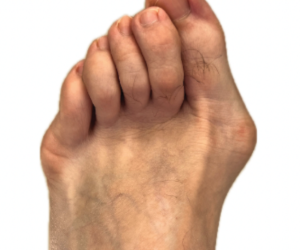
Dr. Canzanese reflected that one of the most impactful features/trends she has noticed lately is the shape of the toe box. With some companies opening the door to popularity of a rounder, wider, and foot-shaped toe box, other companies have added rounder toe boxes to their catalogs as well. She shared she has seen significant positive impact for patients with forefoot pathology due to a better anatomic fit.
“It’s helpful that contemporary fashion currently holds certain styles of athletic and orthopedic sneakers as ‘on trend,’ with many patients willing to wear them in their day-to-day,” she noted.
As far as the future, she thinks there is much to consider. “With technology such as 3D printing, high-quality digital scanning, and artificial intelligence,” she said, “I wouldn’t be surprised if the future starts including more customization.”