


South Georgia Medical Center
© 2026 HMP Global. All Rights Reserved.
Any views and opinions expressed are those of the author(s) and/or participants and do not necessarily reflect the views, policy, or position of EP Lab Digest or HMP Global, their employees, and affiliates.
EP LAB DIGEST. 2026;26(6):8-11.
Kamil Hanna, MD
Valdosta, Georgia
When was the cardiac electrophysiology (EP) program started at your institution, and by whom?
I started the EP program at South Georgia Medical Center (SGMC) in January 2022.
What drove the need to implement an EP program?
The primary driver was that to receive EP care and procedures, patients in our region were required to travel to Jacksonville, Florida; Tallahassee, Florida; or Atlanta, Georgia. I was recruited by hospital administration to establish an EP program to provide this needed care locally in Valdosta.
What is the size of your EP lab facility? Has the EP lab recently expanded in size, or will it soon?
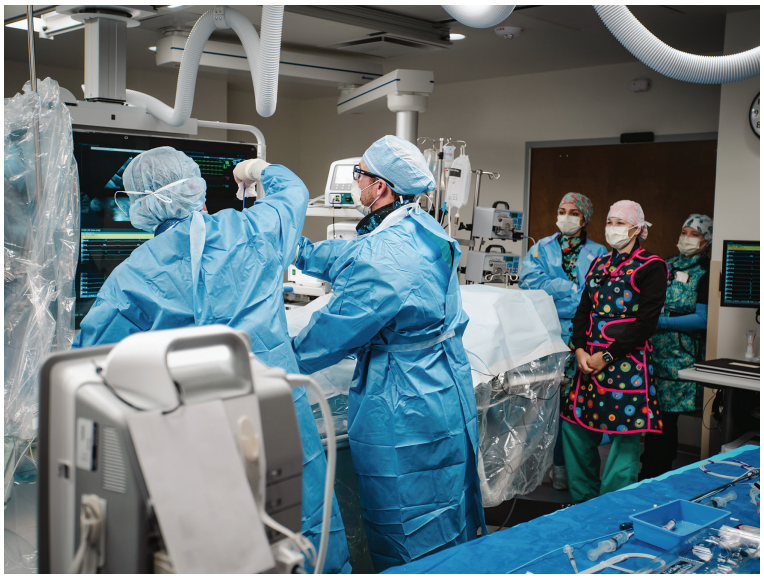
Our initial EP lab was housed in a standard cardiac catheterization laboratory equipped with an older Toshiba fluoroscopy/cine system, a new Abbott mapping system, and a new cryoablation system.
We applied for a Certificate of Need to the state of Georgia, which took 2 years to obtain approval. Following approval, we constructed a new, state-of-the-art EP laboratory. We moved into this new lab in mid-January 2025. The lab is approximately 700 square feet.
Who manages your EP laboratory, and what is the mix of credentials and experience?
I serve as the Medical Director of the EP laboratory and work closely with our lead EP nurse, Ruby Craft, RN, who has been with the program since its inception.
I am a board-certified cardiologist and completed my EP fellowship at the University of Oklahoma in 2000. I have 25 years of EP experience and previously established another EP program in 2007 before being recruited to SGMC in January 2022.
What is the number of staff members?
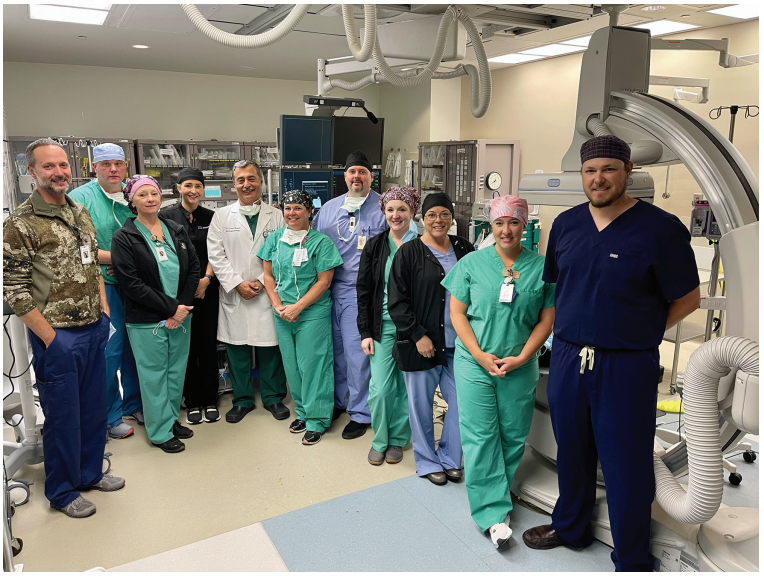
Currently, our EP team includes 4 registered nurses, 4 EP technologists, 2 certified registered nurse anesthetists, and 2 electrophysiologists.
What types of procedures are performed at your facility?
EP procedures performed at SGMC include:
- Pacemaker implantation (including biventricular [BiV]-cardiac resynchronization therapy [CRT] pacemakers and left bundle branch block pacemakers)
- Micra (Medtronic) leadless pacemaker implantation
- Implantable cardioverter-defibrillator implantation (ICDs) (including BiV-CRT ICDs and subcutaneous ICDs)
- Radiofrequency (RF) ablation for supraventricular tachycardia
- RF ablation for atrial flutter and atrioventricular node ablation
- Cryoablation (since April 2022)
- Pulsed field ablation (PFA) (since October 2024)
- Watchman (Boston Scientific) left atrial appendage closure (LAAC) (since May 2023)
- Concomitant LAAC and atrial fibrillation (AF) procedures (since January 2025)
- Laser lead extraction is planned but not yet initiated
Approximately how many procedures are performed each week?
On average, we perform approximately 8 ablations per week, 2-3 Watchman procedures, 3 pacemaker implants, and 2 to 3 AICD or BiV-CRT device implants.
What types of EP equipment are commonly used in the lab?
Our new EP laboratory is equipped with:
- Fluoroscopy/cine table and imaging system (Philips)
- Transesophageal echocardiography (TEE)/echocardiography system (Philips)
- Intracardiac echocardiography (ICE) (Abbott)
- Farapulse PFA system and catheters (Boston Scientific)
- Anesthesia equipment
- Cryoablation system and catheters (Medtronic)
- Mapping system (Abbott)
What are some of the new technologies and techniques recently introduced in your lab? How have these changed the way procedures are performed?
In addition to cryoablation, Watchman implantation, PFA, and concomitant procedures, we began performing left bundle branch pacing in August 2025.
We also began using vascular closure devices (Perclose, Abbott; and Vascade, Haemonetics) in October 2024. These devices have facilitated earlier ambulation and same-day discharge once patients meet discharge criteria as outlined in the joint American College of Cardiology/Heart Rhythm Society statement1 published in April 2025. Patients are discharged the same day if they are ambulatory, alert, able to void, hemodynamically stable, and without groin complications, with follow-up scheduled in 6 weeks.
Discuss your program’s use of PFA.
Regarding cryoablation, I have performed 836 cases between August 2014 and October 2024 without a single esophageal injury. This was achieved by careful esophageal temperature monitoring and by gently repositioning the esophagus using the TEE probe when necessary. Post-cryoablation, patients were routinely prescribed pantoprazole 40 mg orally once daily for 90 days.
My partner currently uses RF ablation and is beginning training in PFA. My own transition from cryoablation to PFA was straightforward. In March 2025, I observed 3 cases at the University of Texas Medical Branch (UTMB) in Houston, Texas. Boston Scientific arranged for Dean Sabayon, MD, from UTMB to proctor my first 3 PFA cases at SGMC. PFA is now my preferred approach for AF ablation in 100% of cases.
The catheter maneuvers and techniques are similar to cryoablation. Challenges include the need for multiple PFA applications in some cases and the potential risk of hemolysis under transition to PFA, particularly in patients with chronic kidney disease, requiring careful hydration and diuresis.
Discuss your use of hybrid AF ablation, including patient selection and heart team approach.
We offer a hybrid ablation approach in collaboration with cardiothoracic surgeon Patrick Murrah, MD. We initiated a convergent program and refer patients who have failed cryoablation or PFA, as well as select patients with long-standing persistent AF. Outcomes to date have been very favorable.
How is inventory managed?
The charge nurse manages EP lab inventory and coordinates with the purchasing department for restocking.
Tell us about your device clinic, including its staffing model, day-to-day function, and tools/software used.
The device clinic is managed by Amanda Sangster, RN. She performs device interrogations, conducts 2-week post-implant follow-up visits, evaluates pocket incisions, ensures appropriate device function, and schedules follow-up with the physician or nurse practitioner at one month.
Discuss your approach to remote monitoring of arrhythmias.
We use the CareLink Network (Medtronic), Merlin.net (Abbott), and Latitude (Boston Scientific). Devices are monitored remotely every 3 months for 3 cycles, with the fourth check performed in the clinic.
Tell us what a typical day might be like in your EP laboratory.
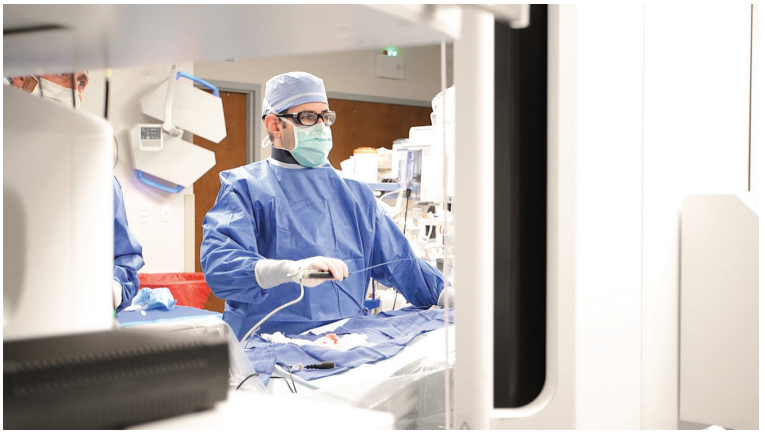
A typical day may include 3 PFA ablations, or a mix of 2 PFAs and several device implants. On other days, we may perform 4 device implants or 3 concomitant procedures.
How do you ensure timely case starts and patient turnover?
We use general anesthesia, and case scheduling is coordinated with the operating room schedule, which promotes timely starts for ablations and device procedures.
How does your laboratory schedule team members for call?
EP laboratory personnel do not take after- hours call.
How are vendor visits managed?
Vendor representatives are present when their products are used. For Watchman procedures, vendor presence is mandatory.
What are the best features of your EP laboratory’s layout or design?
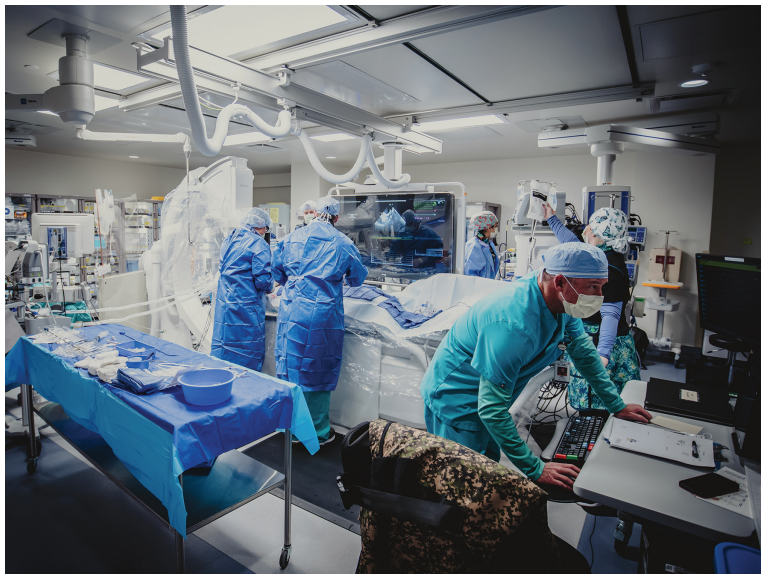
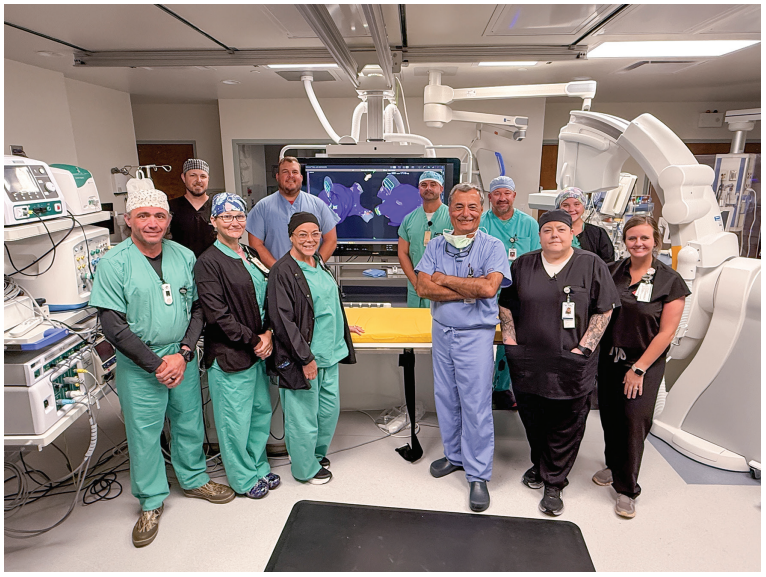
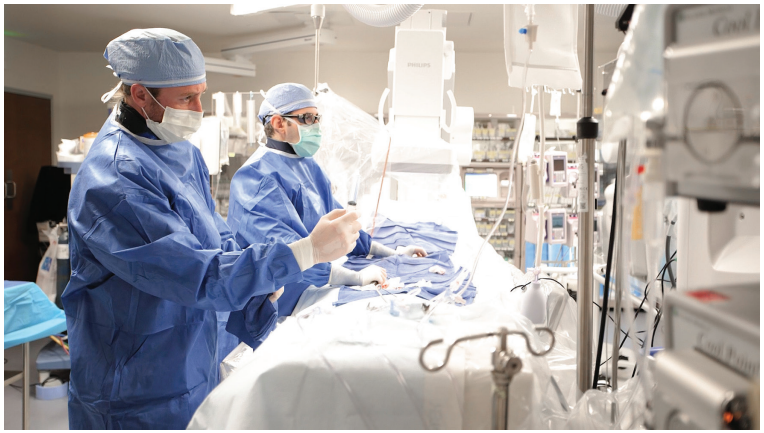
The Philips fluoroscopy system provides low radiation exposure for patients and staff. The lab features large, ceiling-mounted monitors with minimal cabling, reducing clutter and equipment damage. The space is modern, clean, and equipped with the latest mapping, PFA, and cryo systems.
Discuss the role of mid-level practitioners in your laboratory.
Two nurse practitioners assist with consultations, admissions, procedure preparation, and patient discharge.
Does your lab use a third party for reprocessing or catheter recycling?
We do not use third-party reprocessing or recycled catheters.
Tell us about your primary approach for LAA occlusion.
Our primary approach is Watchman implantation when criteria are met and shared decision-making is documented.
Does your program have a dedicated AF clinic?
We do not currently have a dedicated AF clinic but are moving in that direction.
Discuss your approach to treatment of AF in patients with heart failure.
Patients are initially treated with antiarrhythmic medications such as dofetilide or amiodarone. If medical therapy fails or side effects develop, we proceed with PFA.
Discuss your program’s treatment and management of patients with postural orthostatic tachycardia syndrome or Long COVID.
Management includes patient education, head-up tilt testing, increased fluid and salt intake, compression stockings, and beta-blocker therapy.
How does your EP laboratory address radiation safety?
All staff use lead aprons and leaded eyewear. Radiation exposure is tracked with wearable dosimeters monitored by the radiology department’s radiation safety officer.
How does your lab reduce fluoroscopy use?
We rely heavily on the Abbott mapping system for catheter navigation during ablation, significantly reducing fluoroscopy time. Fluoroscopy duration and dose are recorded in the electronic log and procedural documentation.
What dominant trends do you see in EP?
The integration of artificial intelligence into EP procedures represents a major emerging trend.
How do you use digital health and wearable technologies?
Wearable devices such as smartwatches and KardiaMobile (AliveCor) have increased patient awareness of arrhythmias, leading to earlier diagnosis and treatment, particularly for AF.
Is your EP lab involved in clinical research?
Currently, we are not involved in active research studies at SGMC.
What is historic about your program?
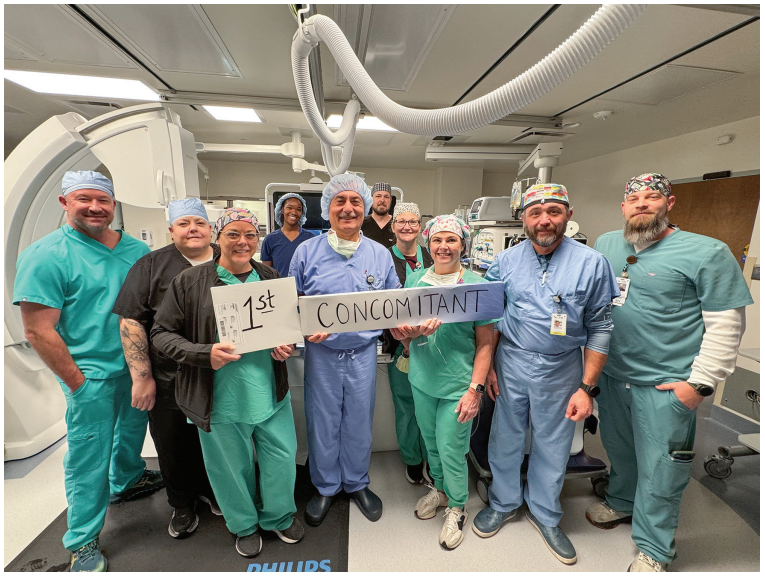
Although we have not had a single defining “first,” we strive to remain current with emerging trends. Concomitant procedures were approved by the Centers for Medicare & Medicaid Services in late 2024, and I performed the first such procedure at SGMC in January 2025.
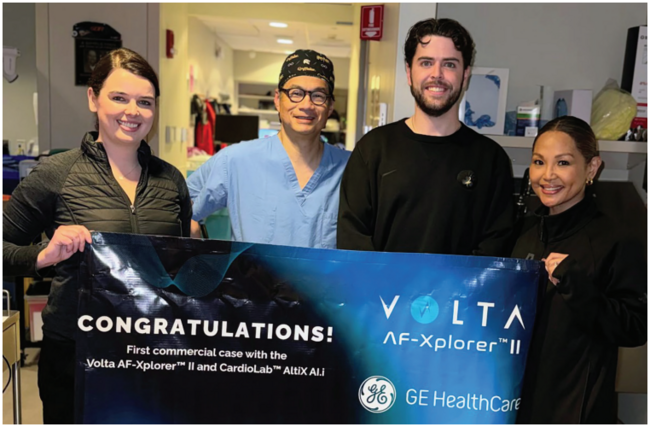
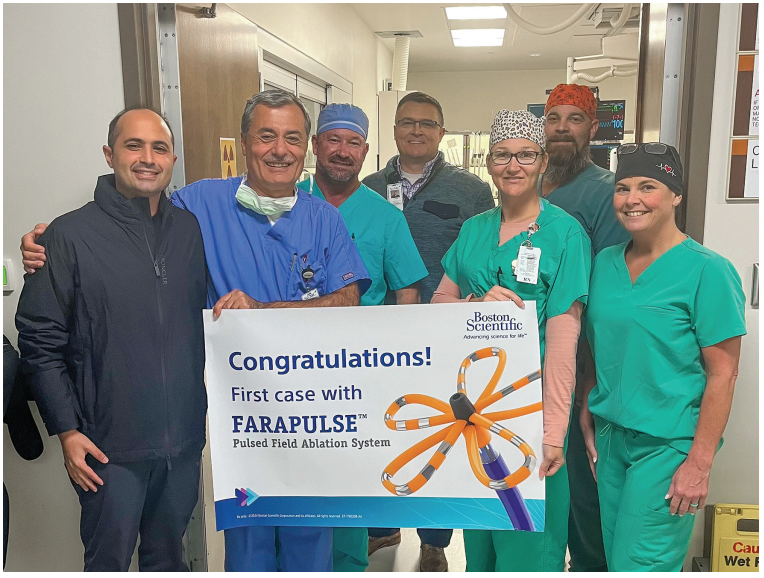
We also recently completed 200 Farapulse PFA procedures for patients with AF. SGMC Health was the first in the region to complete this procedure in October 2024.
Describe your city or general regional area. How is it unique?
Valdosta is a city of approximately 65,000 residents in South Georgia, located along I-75 and approximately 20 minutes from the Georgia–Florida border. The area includes Moody Air Force Base and Valdosta State University, which enrolls approximately 12,000 students.
What challenges has your hospital faced?
Initial challenges included outdated facilities and equipment. Strong administrative support and successful Certificate of Need approval allowed us to build a modern, state-of-the-art EP laboratory.
What is special about your EP laboratory and staff?
Our EP laboratory is ultra-modern. Our staff are hardworking, dedicated, and committed to delivering high-quality patient care. Our physicians are experienced, and we maintain strong collaborative relationships with colleagues at Emory University and the Mayo Clinic in Jacksonville, Florida.
Reference
- Shanker AJ, Jones SO, Blankenship JC, et al. HRS/ACC scientific statement: Guiding principles on same-day discharge for intracardiac catheter ablation procedures. Heart Rhythm. 2025;22(6):e1-e12. doi:10.1016/j.hrthm.2025.02.029
For more information, please visit:
https://www.facebook.com/SGMCHealth/
https://www.instagram.com/sgmchealth/#
https://www.linkedin.com/company/sgmchealth/
https://www.youtube.com/c/SGMCHealth
Related Content