Renal Denervation in Practice: A Conversation With Tai Kobayashi, MD
© 2025 HMP Global. All Rights Reserved.
Any views and opinions expressed are those of the author(s) and/or participants and do not necessarily reflect the views, policy, or position of Cath Lab Digest or HMP Global, their employees, and affiliates.
Tai J. Kobayashi, MD
Assistant Professor of Clinical Medicine (Cardiovascular Medicine); Co-Director of the Coronary Chronic Total Occlusion Team, Co-Director of the Penn Denervation Center, Hospital of the University of Pennsylvania; Director of Interventional Cardiovascular Services, Michael J Crescenz Veterans Affairs Hospital, Philadelphia, Pennsylvania
This article was sponsored by Medtronic.
Dr. Kobayashi’s Renal Denervation Program
Can you describe the renal denervation program at the Hospital of the University of Pennsylvania?
Our renal denervation (RDN) program began as a research initiative back in 2010, and since then, it has grown into one of the longest-standing and most experienced centers in the country. At that time, RDN was still in its infancy, and we were one of a handful of programs exploring the early iterations of the technology. Over the past fifteen years, we have transitioned from research trials into clinical practice, while maintaining the same multidisciplinary foundation. Although I am an interventional cardiologist, the program is co-led by a nephrologist who specializes in hypertension. That partnership is critical. It ensures that every patient who is referred undergoes a comprehensive hypertension workup, including evaluation for secondary causes, optimization of pharmacologic therapy, and structured follow-up.
We have built our program as a shared model between cardiology and nephrology. The nephrology team handles the initial evaluation and long-term follow-up, while the interventional cardiology team performs the procedures. That collaboration ensures patient safety and clinical rigor. We also rely heavily on internal coordination with our hypertension clinic, pharmacy, and electronic health record infrastructure to support workflow. As RDN has evolved, that structure has allowed us to move seamlessly from research protocols into routine care.
What has your experience been with the Symplicity Spyral™ renal denervation system (radiofrequency RDN)?
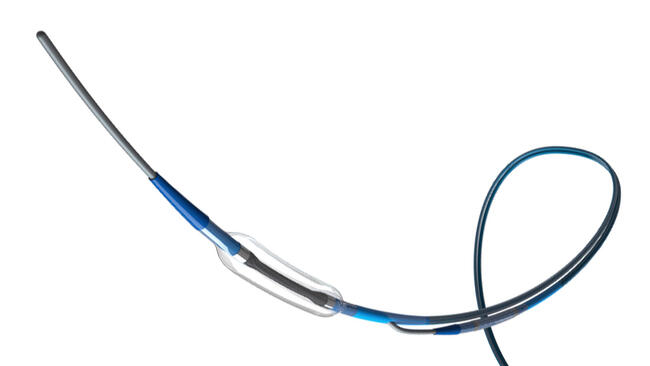
I have been using the Symplicity Spyral system from Medtronic for close to a decade, first through participation in the SPYRAL HTN-OFF MED and ON MED studies, and now in commercial use. Today, we are using the multielectrode Spyral catheter, which delivers circumferential ablations and interfaces with a generator that has undergone several refinements. Energy delivery is consistent, and the procedural workflow is highly predictable.1
From a technical standpoint, the procedure is not difficult for experienced interventionalists. The catheters are familiar in design, the imaging is similar to what we use for coronary work, and the tactile feedback is intuitive. The main learning curve lies in understanding renal artery anatomy and developing a systematic strategy for treating all relevant branches. Radiofrequency RDN targets both main and distal branches, typically within the 3-8 mm diameter range, to achieve complete denervation.2,3 Approximately 30% of patients have accessory renal arteries, and those must also be treated to ensure comprehensive ablation.2,3
Renal Denervation: In Practice
Why is it important to be able to offer RDN to your patients?
Given that hypertension remains the leading risk factor worldwide for cardiovascular mortality,4 we need every available option to manage it effectively. The data show that even modest blood pressure reductions have an outsized impact on outcomes.5 RDN is not a cure for hypertension. It is one tool among many in a comprehensive strategy to control blood pressure. A 5 to 10 mmHg reduction in systolic pressure correlates with a 10-20% reduction in cardiovascular mortality.5 RDN adds a durable option for patients who either remain uncontrolled despite optimal medical therapy or cannot tolerate medications due to side effects or cost.6
Importantly, RDN also helps us reframe how we think about hypertension care. It encourages proactive detection, systematic evaluation, and structured follow-up. We know adherence to antihypertensive medications is a persistent challenge. Studies suggest that up to half of patients discontinue therapy within one year.7 RDN offers adjunctive therapy for some of these patients, helping us improve long-term control rates and reduce risk.3,5,8
Where does RDN fit within the treatment pathway?
RDN is positioned as an adjunct for patients who remain hypertensive despite one or more medications and lifestyle modifications. That is where the evidence is strongest, particularly from the SPYRAL HTN-ON MED and OFF MED trials.3,8 However, there are also patients who are medication-intolerant or nonadherent for a variety of reasons, such as side effects, polypharmacy, or cost. For them, RDN can be life-changing. It doesn’t eliminate hypertension, but it provides a safe, effective mechanism to achieve clinically meaningful and sustained reductions when no other options exist.3,8
How are you preparing your program as you look ahead?
We expect a substantial increase in the number of patients with access to this therapy now that reimbursement barriers are being lifted. Direct-to-consumer education and industry outreach are raising awareness quickly. Data suggest that nearly one-third of patients prefer an interventional option over intensifying medications.9 That demand will soon reach clinical programs. Hospitals should be preparing now by building capacity, staffing hypertension clinics, and developing clear referral workflows.
At Penn, we have made several changes. We established a centralized phone line managed by our nephrology team for all patient and provider inquiries. We also built Epic order sets that automate the secondary hypertension workup: labs, imaging, and specialist referrals are bundled into a single order. By the time patients arrive at clinic, their workup is largely complete, which allows for efficient consultation and shared decision-making. We also developed standardized “dot phrases” in Epic that describe RDN, set expectations, and help referring providers counsel patients. Those tools have made an enormous difference in throughput and consistency.
Automation is critical. It removes variability, shortens turnaround time, and allows our team to focus on patient education and procedural preparation. In a large academic system like ours, small workflow improvements add up to major efficiency gains.
What advice would you offer clinicians or institutions looking to start a new RDN program?
The first step is collaboration. Build your program around a partnership between cardiology and hypertension specialists, whether nephrologists or internists with expertise in hypertension. That collaboration ensures that patients are properly evaluated and that you are following evidence-based protocols. The AHA’s Comprehensive Hypertension Center criteria provides an excellent blueprint for infrastructure.10 You need mechanisms to identify, screen, and treat secondary hypertension, including findings of renal artery stenosis, fibromuscular dysplasia, and hyperaldosteronism. Many new practitioners underestimate how often these show up once they start screening.
Be ready to educate both colleagues and patients. Clear communication about expectations, risks, and outcomes is essential. Finally, document everything. With coverage expanding, compliance and traceability will become increasingly important.
Expanding Patient Access: RDN Reimbursement Milestones
The Centers for Medicare and Medicaid (CMS) National Coverage Determination (NCD) for RDN was finalized in October 2025. How will it affect practice and access?
The finalized NCD represents a transformative milestone for the field.11 It not only legitimizes RDN as a reimbursable therapy but also provides a structured framework that programs can build upon for long-term sustainability. For the first time, there is consistent national coverage across Medicare, encompassing fee-for-service, Medicare Advantage, and dual-eligible populations. From a practical standpoint, this removes a barrier that limited adoption and gives hospitals confidence to invest in building RDN programs.
The FDA’s labeling for renal denervation was intentionally broad, but the CMS NCD narrowed eligibility to mirror the patient populations studied in randomized trials, providing clearer guidance for coverage and clinical use. The NCD outlines clear patient eligibility criteria: office blood pressure ≥140/90 mmHg despite adequate medical therapy and documented exclusion of secondary hypertension.
The NCD criteria prioritize patient safety and will evolve as more data emerge. One of the most discussed aspects is the ≥140/90 mmHg threshold, which is more conservative than the American Heart Association’s (AHA) diagnostic definition of hypertension (≥130/80 mmHg); however, it does align with the AHA’s guidance for renal denervation.10 Some clinicians have expressed concern that this cutoff excludes a segment of younger or lower-risk patients who could still benefit from early intervention. There are also population-specific considerations: for older adults covered by CMS, isolated systolic hypertension is more prevalent. Many of these patients have systolic pressures well above 140 mmHg but diastolic pressures below 90 mmHg, meaning they meet the spirit but not the letter of the NCD criteria.
Another practical element is the NCD requirement that patients have at least three documented blood pressure evaluations over six months, with at least one being an in-person visit. The intention is to ensure adequate follow-up and confirm persistent hypertension before proceeding, but in rural or underserved areas this requirement may be challenging. In these scenarios, hybrid care models that blend telehealth with in-person assessments will be critical to maintain compliance while keeping patient access equitable.
The NCD also introduces institutional responsibilities that will shape how hospitals structure their programs. Centers performing RDN must have documented pathways for screening secondary causes of hypertension and demonstrate collaboration with physicians experienced in hypertension management. It is a crucial development that encourages the creation of comprehensive hypertension programs rather than standalone procedural services. Institutions will need to develop standardized workflows that integrate nephrology, cardiology, and primary care.
From my perspective, the NCD provides a strong foundation for both clinical adoption and payer consistency. It gives hospitals a blueprint for building programs responsibly while protecting patients through structured evaluation and follow-up.
In the long term, the NCD will likely accelerate private-payer coverage decisions. It validates more than a decade of research and provides the economic mechanism to bring that science into everyday practice. Overall, the NCD is not just a coverage policy; it is a roadmap for the next phase of growth in renal denervation.
Are private payers beginning to provide coverage?
We are starting to see momentum among private insurers. Several regional Blue Cross Blue Shield affiliates have announced positive coverage decisions. Horizon Blue Cross Blue Shield of New Jersey, for example, now covers RDN for patients with systolic blood pressure ≥130 mmHg, aligning with American Heart Association (AHA) hypertension definitions rather than CMS’s higher cutoff.10 That is a significant development, because it extends eligibility to a larger segment of patients. Other payers are reviewing their policies, and we anticipate more approvals in 2026 as familiarity grows and CPT coding matures.
What about physician reimbursement?
Currently, RDN is billed under Category III CPT codes (0338T, 0339T), which lack defined Relative Value Units (RVUs). That complicates productivity credit for operators. To address this, Penn created a “ghost RVU” arrangement, where each RDN procedure is credited using the renal artery stent code as a proxy for procedural effort. It is not a perfect solution, but it ensures recognition of physician work until Category I CPT codes are established. Many other centers have adopted similar models.
For institutions planning to start programs, it is important to address compensation logistics early. Without internal mechanisms, sustaining operator engagement and resource allocation will be difficult in the short term.
How do you see the future of RDN now that coverage has expanded?
We are entering a new era. With CMS coverage finalized and private payers beginning to follow, RDN is poised to move from niche to mainstream. The therapy’s safety profile is well established,3,8 and now we have the infrastructure and financial support to offer it broadly. As real-world data accumulate through ongoing registries such as the Global SYMPLICITY Registry, we hope to refine patient selection and better understand long-term cardiovascular outcomes.
The expansion of coverage also signals that institutions can invest confidently in building programs. As procedural volume grows, economies of scale will improve, making RDN more sustainable. I expect that within a few years, every major academic center and many community hospitals will have RDN capability integrated into their hypertension programs.
Any final takeaways?
The NCD is a milestone, but it is also a beginning. The biggest barriers to RDN, including the uncertainty around coverage, coding, and operator readiness, have finally been lifted. RDN is now positioned as a practical, evidence-based option for patients who remain uncontrolled on medication. As clinicians, our responsibility is to implement it thoughtfully, ensuring patients are properly evaluated, procedures are performed safely, and outcomes are tracked.
We are entering a phase where the conversation moves from if RDN works to how best to deliver it broadly and efficiently. Ultimately, the goal is straightforward: to improve patient outcomes by expanding the range of tools we can use to manage hypertension, the world’s most pervasive cardiovascular risk factor.
References
1. Coates P, Tunev S, Trudel J, Hettrick DA. Time, temperature, power, and impedance considerations for radiofrequency catheter renal denervation. Cardiovasc Revasc Med. September 2022;42:171-177.
2. Gulas E, Wysiadecki G, Szymański J, et al. Morphological and clinical aspects of the occurrence of accessory (multiple) renal arteries. Arch Med Sci. 2018 Mar; 14(2): 442-453. doi:10.5114/aoms.2015.55203
3. Kandzari DE, Mahfoud F, Townsend RR, et al. Long-term safety and efficacy of renal denervation: 24-month results from the SPYRAL HTN-ON MED trial. Circ Cardiovasc Interv. 2025 Jul; 18(7): e015194. doi:10.1161/CIRCINTERVENTIONS.125.015194
4. Hypertension. World Heart Federation. 2025. Accessed November 12, 2025. https://world-heart-federation.org/what-we-do/hypertension.
5. Ettehad D, Emdin CA, Kiran A, et al. Blood pressure lowering for prevention of cardiovascular disease and death: a systematic review and meta-analysis. Lancet. 2016 Mar 5; 387(10022): 957-967. doi:10.1016/S0140-6736(15)01225-8
6. Mahfound F, Schlaich M, Schmieder RE, et al. Long-term outcomes in ESC guideline-recommended patients for RDN from Global SYMPLICITY Registry DEFINE. EuroPCR 2025.
7. Berra E, Azizi M, Capron A, et al. A. Evaluation of Adherence Should Become an Integral Part of Assessment of Patients With Apparently Treatment-Resistant Hypertension. Hypertension. 2016 Aug;68(2):297-306.
8. Böhm M, Kario K, Kandzari DE, et al; SPYRAL HTN-OFF MED Pivotal Investigators. Efficacy of catheter-based renal denervation in the absence of antihypertensive medications (SPYRAL HTN-OFF MED Pivotal): a multicentre, randomised, sham-controlled trial. Lancet. 2020 May 2; 395(10234): 1444-1451. doi:10.1016/S0140-6736(20)30554-7.
9. Lin CY, Lin SI, Liao FC, et al. Patient preference for catheter-based hypertension therapy and subgroup analysis: a pilot study based on Taiwan consensus on renal denervation. Acta Cardiol Sin. 2024 Jul; 40(4): 383-387. doi:10.6515/ACS.202407_40(4).20240129F
10. Jones DW, Ferdinand KC, Taler SJ, et al; Peer Review Committee Members. 2025 AHA/ACC/AANP/AAPA/ABC/ACCP/ACPM/AGS/AMA/ASPC/NMA/PCNA/SGIM guideline for the prevention, detection, evaluation, and management of high blood pressure in adults: a report of the American College of Cardiology/American Heart Association Joint Committee on Clinical Practice Guidelines. J Am Coll Cardiol. 2025 Aug 14: S0735-1097(25)06480-0. doi:10.1016/j.jacc.2025.05.007
11. CMS.gov. Medicare Coverage Database (MCD). National Coverage Analysis. Decision Memo. Renal Denervation for Uncontrolled Hypertension. October 28, 2025. Accessed November 12, 2025. https://www.cms.gov/medicare-coverage-database/view/ncacal-decision-memo.aspx
12. Medtronic Symplicity Spyral multi-electrode renal denervation catheter Instructions for use.