Yelling in the Cath Lab: Is It Ever a Good Idea?
© 2026 HMP Global. All Rights Reserved.
Any views and opinions expressed are those of the author(s) and/or participants and do not necessarily reflect the views, policy, or position of Cath Lab Digest or HMP Global, their employees, and affiliates.
Morton Kern with contributions from Sam Butman, Scottsdale, Arizona; Kirk Garratt, Newark, Delaware; Neal Kleiman, Houston, Texas; Jeffrey Marshall, Atlanta, Georgia; Steve Ramee, New Orleans, Louisiana; Ken Rosenfield, Boston, Massachusetts; Arnold Seto, Long Beach, California.
Disclosures: Dr. Morton Kern reports he is a consultant for Abiomed, Abbott Vascular, Philips, ACIST Medical, and Opsens Inc.
Dr. Kern can be contacted at mortonkern2007@gmail.com
On X @MortonKern
Click here for a PDF of this article, courtesy of Cath Lab Digest.
 Dr. Arnold Seto and I had an animated discussion stemming from a cath lab event at an outside institution. In short, during a high-risk procedure, the primary operator yelled in a voice he stated was loud enough to overcome all noise, conversation, and inattention, to get something done. He said his yelling was justified to save the patient’s life. He was reported to Human Resources (HR) and admonished. We don’t know more specifics than that.
I said there is never a time for the operator to yell, get panicked or be rude, but rather be a leader like the ‘right stuff’* guys and work the problem.
Arnold said I was not accounting for an over-sensitized lab staff who may have interpreted an excited utterance as a personal affront to them and the staff. Many of us may have said things to staff that have been misinterpreted as insulting when our intent was humor.
Colleagues, where do you stand on this?
 Sam Butman, Scottsdale, Arizona: Mort, first — and probably foremost — I like that you described your exchange with Arnold as “animated.” He may well have perceived it as yelling, though. Perhaps even worse, maybe a bit of sarcasm slipped in on your part. I mention sarcasm because, in all my years in the cath lab, I never yelled — NEVER. However, I was often sarcastic, and that is frequently remembered as YELLING by fellows and staff alike.
Do I think we’re living in a time of over-sensitization? Definitely. The days of happy mediums, exceptions, and giving each other the benefit of the doubt seem long gone. And no — I was not yelling with the capital letters; I was simply emphasizing. But if you felt I was being sarcastic or loud, I apologize. Please don’t report me (sorry, I had to end with a bit of old-fashioned sarcasm one more time).
 Ken Rosenfield, Boston, Massachusetts: Hi Mort, this is such a great question. First, for the operator involved, I’m 100% certain that he or she, like all of us, mostly had the best interest of the patient in mind.
That said, as is often the case, it’s all in the delivery and the way one conducts oneself. Under pressure, with the patient in extremis, it can often be challenging to control one’s emotions, especially if it’s very loud in the room and people aren’t hearing what the leader is trying to say. I’m sure I can be accused of being overly bullish or loud under such circumstances in the past. And maybe I have remorse about having acted that way.
A couple of points: First, it’s important to be sensitive to everyone in the room, and to try to conduct oneself in a professional way. Secondly, we all frequently encounter a [high-stress] situation and it’s very loud, with several conversations ongoing. When this has happened, I have first asked for everybody in the room to either pause their conversations or lower the volume, to which everybody does respond, and then I tell them what is necessary to coordinate the resuscitation. Thirdly, it’s always good to have a team meeting immediately after the event, to rehash and talk about what was done and what could have been done better, giving everybody an opportunity to vent. That’s especially true if the outcome is not so great.
 Kirk Garratt, Newark, Delaware: I agree with Kenny but would add that rules to maintain clear communication in the lab might have prevented the situation. The yelling was described as necessary “to overcome all noise, conversation, and inattention” going on. Early in my tenure at ChristianaCare, I implemented an extremely unpopular rule: no music in the lab during cases. Radios were in every lab, and my observation was that, despite all the arguments about improving the work environment, the music was often loud enough to interfere with clear communication (see TCTMD, “Music in the Cath Lab”, August 2021).
Drs. Drew Doorey and Zoltan Turi authored a few papers on the importance of disciplined communication habits including elimination of jargon, limiting unnecessary people in the control area, and use of closed-loop communication for all orders. In an extended trial, Drew showed that as these things improved, our complications rates went down. Many (likely most) labs have a lax culture about this that feels cool and the staff love but doesn’t serve our patients very well. We’re professionals who always put patients first — we need to be sure patient safety is the top consideration in the lab.
 Neal Kleiman, Houston, Texas: This is a specific question that can never be answered, unless there is a recording system. We have one in our ORs, and it is coming to the cath lab, for better or for worse.
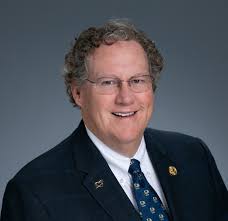 Jeffrey Marshall, Atlanta, Georgia: Yelling for yelling’s sake is never acceptable, especially if it has what my kids call “the mean Dad tone of voice”. But during codes or life-threatening moments in the cath lab, you must sometimes (2-3 times a year) increase the volume of your voice to quell the chatter and get EVERYONE’S attention. I would say it is more the tone than the volume. If you truly raise your voice in a commanding but non-threatening tone, and only when needed, this [method] is a useful technique to get the team focused. It’s like the quarterback raising their voice in a hostile environment at your rival’s stadium, calling the snap count.
On the other hand, someone who always yells and demeans cath lab staff (not the scenario that is described) should be admonished and sanctioned. Threatening cath lab staff can NEVER be accepted; and let’s be honest we’ve all met cath docs or surgeons who mistake demeaning the House staff and cath/scrub staff for the “Socratic method”. The time for this attitude and “teaching method” is past, and should have never been tolerated and be long-gone in today’s cath lab. As always, the devil is in the details and talented HR professionals can get to the “intent” of the yelling by confidentially interviewing all involved.
Importantly, it is the job of the director of the cath lab to create a culture of mutual respect in physician-led teams within the cath lab. Leading by example is always the best policy. If young cath docs see senior attendings berate staff, then that will become the culture de jour. Fortunately, the opposite is also true. So, where cath lab directors teach and show respect in their cath labs, there is an open culture of respect, and in those cath labs, you only need to raise your voice 2-3 times a year!
 Steve Ramee, New Orleans, Louisiana: Mort and Dr. Seto are both correct. The cath lab is a stressful environment. I find that humor is usually welcomed but sometimes misinterpreted. Yelling is never welcomed and usually misinterpreted. Both can lead to the physician being reported to administration or HR.
In my opinion, the best way to deal with unexpected stressful situations (vessel rupture, air embolism, cardiac arrest) is to take advantage of the first few moments after you recognize the event to calmly let the team know that a major complication has occurred and that you need all hands on deck to save the patient’s life. That way, before chaos ensues, the other cath lab professionals know that their help is needed and valued. They will focus them to do their best because they know you are doing your best, and that without a team effort, the outcome will be bad.
 Arnold Seto, Long Beach, California: All of the respondents above rightfully describe the undeniable importance of setting the right tone of professional leadership in the cath lab. Dr. Kern and Dr. Marshall specifically mention that a talented HR professional can discern the “intent” of the yelling. However, in the modern, risk-averse corporate culture, the training of HR and other professionals primarily emphasizes the “impact” over the “intent” of any comment (see https://www.healthline.com/health/intent-vs-impact#which-is-more-important), which happens to be protective of the organization against potential litigation. Unfortunately, such an approach risks shutting down any open or frank discussions. Certainly, any humor in the modern workplace can be misinterpreted, as one can never tell what sensitivities might be subsequently revealed or even weaponized for personal or political ends.
Rudeness in the Cath Lab
Rudeness in the cath lab, common in any high-stress environment with high-performing individuals, negatively impacts team performance, patient safety (via less info sharing), and morale. To temper bad behaviors stemming from administrative hierarchy, large workloads, and culture, strategies aimed to increase emotional intelligence, clear communication via protocols, and strong leadership will create a respectful environment and prevent issues like high turnover.1 Increased employee turnover is ineffective and inefficient. When staff leave due to a toxic or disrespectful work environment, facilities face costly delays, lagging recruitment, and training and onboarding expenses. High turnover also disrupts team cohesion and weakens continuity of care, further straining optimal clinical care delivery.
Dissatisfied nurses and staff produce dissatisfied patients. Patients often pick up on the atmosphere around them. A tense or disrespectful work environment can erode confidence in the care team, leading to lower satisfaction scores and a decline in perceived quality of care.
There are legal and reputational ramifications of bad behavior in the cath lab. Workplace incivility can escalate into more serious issues like harassment or violence. These incidents not only jeopardize staff safety but can also result in legal action, regulatory scrutiny, and long-lasting damage to an organization’s public image.
Kern’s Bottom Line
To me, yelling in the cath lab is never acceptable. It means one has lost control or never had it. If you must yell, you’ve lost the game already. However, as noted above, forceful (not necessarily loud) clear communication is often needed, particularly for cardiac arrest or other critical situations.
The attending physician of the procedure is responsible for all aspects of care until she/he passes this responsibility to a colleague while continuing to work on the technical aspect of the case. The staff remain attentive and receive the orders. Per our routine, they repeat back the order just before executing, and then announce its completion (best practice, see “closed loop communications”). In addition, extraneous conversations stop. All team members should be “in the game” and focused on what their jobs are and how best to carry them out. There is no room for chitchat, or other distractions from the operations and orders.
Finally, the leader always sets the tone and hence the level of anxiety in the room. The leader should act the way the members of the Navy’s Blue Angel pilots work, with cool, calm, collected heads and voices to match.3 No yelling (Figure).
References
1. The Cost of Rudeness in Healthcare and How to Mitigate It. CareCulture Health Partners, April 18, 2019. Accessed January 21, 2026. https://www.careculture.com/news/the-cost-of-rudeness-in-healthcare-and-how-to-mitigate-it
2. Flin R. Rudeness at work. BMJ. 2010 May 19; 340: c2480. doi:10.1136/bmj.c2480
3. Kern MJ. How should a “Code Blue” be managed in the cath lab? Cath Lab Digest. 2014 Feb; 22(2):6-8. Accessed January 12, 2023. https://www.hmpgloballearningnetwork.com/site/cathlab/articles/how-should-code-blue-be-managed-cath-lab
Find More:
Renal Denervation Topic Center
Cardiovascular Ambulatory Surgery Centers (ASCs) Topic Center
Grand Rounds With Morton Kern, MD
Peripheral Artery Disease Topic Center