Cultivating Excellence: A Multi-Year Retrospective Analysis of Programmatic Advancement in a High-Volume Cath Lab Using a CCL/EP Procedure Manual
© 2026 HMP Global. All Rights Reserved.
Any views and opinions expressed are those of the author(s) and/or participants and do not necessarily reflect the views, policy, or position of Cath Lab Digest or HMP Global, their employees, and affiliates.
Sarah Davis-Arnold, MSN, RN, RCIS, EBP-C, NPD-C1; Jessica Bower, MSN, RN, CCRN, RCIS, CNOR, NEA-BC2
1Director of Nursing, Pre/Post Surgery OP, CommonSpirit; 2Senior Director of Perioperative & Cardiovascular Services, CommonSpirit, Santa Maria, California
The authors can be contacted via Sarah Davis-Arnold, MSN, RN, RCIS, EBP-C, NPD-C, at sdavisarnold@gmail.com
Click here for a PDF of this article, courtesy of Cath Lab Digest.
Abstract
This manuscript presents a five-year retrospective analysis (2021-2025) of a Cardiac Catheterization Laboratory (CCL) and Electrophysiology (EP) program at Marian Regional Medical Center (MRMC), following the development and use of the Cardiac Catheterization Services Department (CCSD) Invasive Procedures Manual. The program's growth is characterized by a strategic expansion of clinical services, the achievement of multiple accreditations, designation as a CommonSpirit Center of Excellence, and a noteworthy increase in procedural volumes. At the same time, the program maintained remarkably low staff turnover rates (CV Services to <1% within 12-18 months of initial development), along with qualitative feedback from staff highlighting notable improvements in work experience quality, training opportunities, and clinical confidence. This discussion demonstrates the synergistic relationship between strong program development and a highly engaged, empowered workforce, providing a model for sustained excellence in complex interventional cardiology settings.
Introduction
The rapid pace of innovation in interventional cardiology and electrophysiology specialties requires continuous program development, rigorous adherence to quality standards, and dedicated investment in human resources.1-3 This quality improvement initiative examines the comprehensive growth of a CCL and EP program, demonstrated by its evolving procedural program, from its initial state in 2021 to its highly advanced setup in 2025. The program's focus on both clinical and operational excellence, along with explicit attention to staff well-being and professional growth, offers a unique perspective on the dynamics of high-performing healthcare delivery. This analysis aims to show how structured growth strategies and the right departmental tools, such as the Cardiac Catheterization Services Department (CCSD) Invasive Procedures Manual, can simultaneously improve clinical capabilities and cultivate a highly engaged, skilled, and satisfied workforce. The CCSD Invasive Procedures Manual referenced in this analysis was not an externally published or vendor-developed document, but rather a living, internally created manual developed by local program leadership specifically for the Marian Regional Medical Center CCL/EP program. The manual was intentionally designed and developed to reflect the program’s unique clinical scope, staffing model, governance structure, and strategic growth priorities, and evolved iteratively alongside the program over the five-year period examined.
About Marian Regional Medical Center
Marian Regional Medical Center in Santa Maria, California, demonstrates how a hospital serving as a "mothership" in a geographically distinct, agriculturally driven region needs a "homegrown" talent approach. Located outside major urban areas, Marian Regional Medical Center faces difficulties in attracting outside healthcare professionals. Therefore, developing talent from the local community through strong partnerships with regional educational institutions, offering scholarships and clinical rotations, and creating internal career pathways becomes essential. This strategy ensures a stable, community-focused workforce that understands local needs, lowers recruitment costs, and delivers comprehensive care within its regional hub. It also offers a model that other hospitals facing geographic challenges can follow by investing strategically in their local human resources. The procedure manual, as a tool, supports this talent development through a standardized and informative approach.
Methodology
This retrospective analysis involved systematically reviewing data related to staff engagement, retention, and programmatic elements using the CCSD Invasive Procedures Manual development milestones from 2021 (v1.0) through 2025 (v.2025). Key programmatic advancements, such as accreditations, new service lines, volume changes, and staff metrics (turnover, contract labor), were extracted and mapped chronologically. The manual's content inherently reflects the program's governance, structure, standards of care, and commitment to "Continuous Learning" and "Professionalism & Collaboration," providing a foundation for assessing staff development and work environment priorities. Staff insights from 2025 regarding improved work-life balance, training, and confidence were included from the summarized data, representing recurring feedback themes from program personnel. Additionally, reflections from the leaders who developed the procedure manual offered insights into how far the program has progressed and matured.
Overview of Program Evolution (2021-2025)
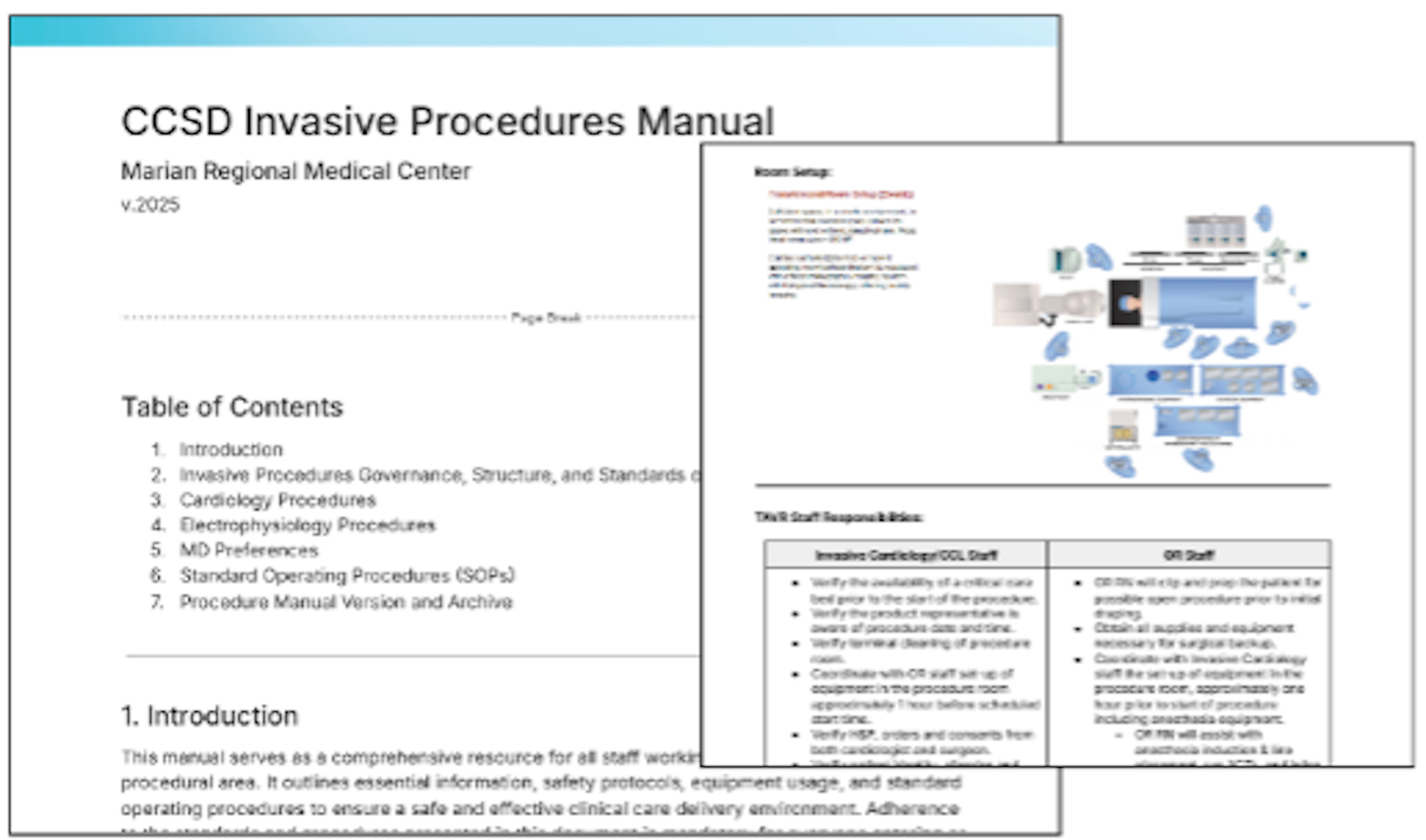
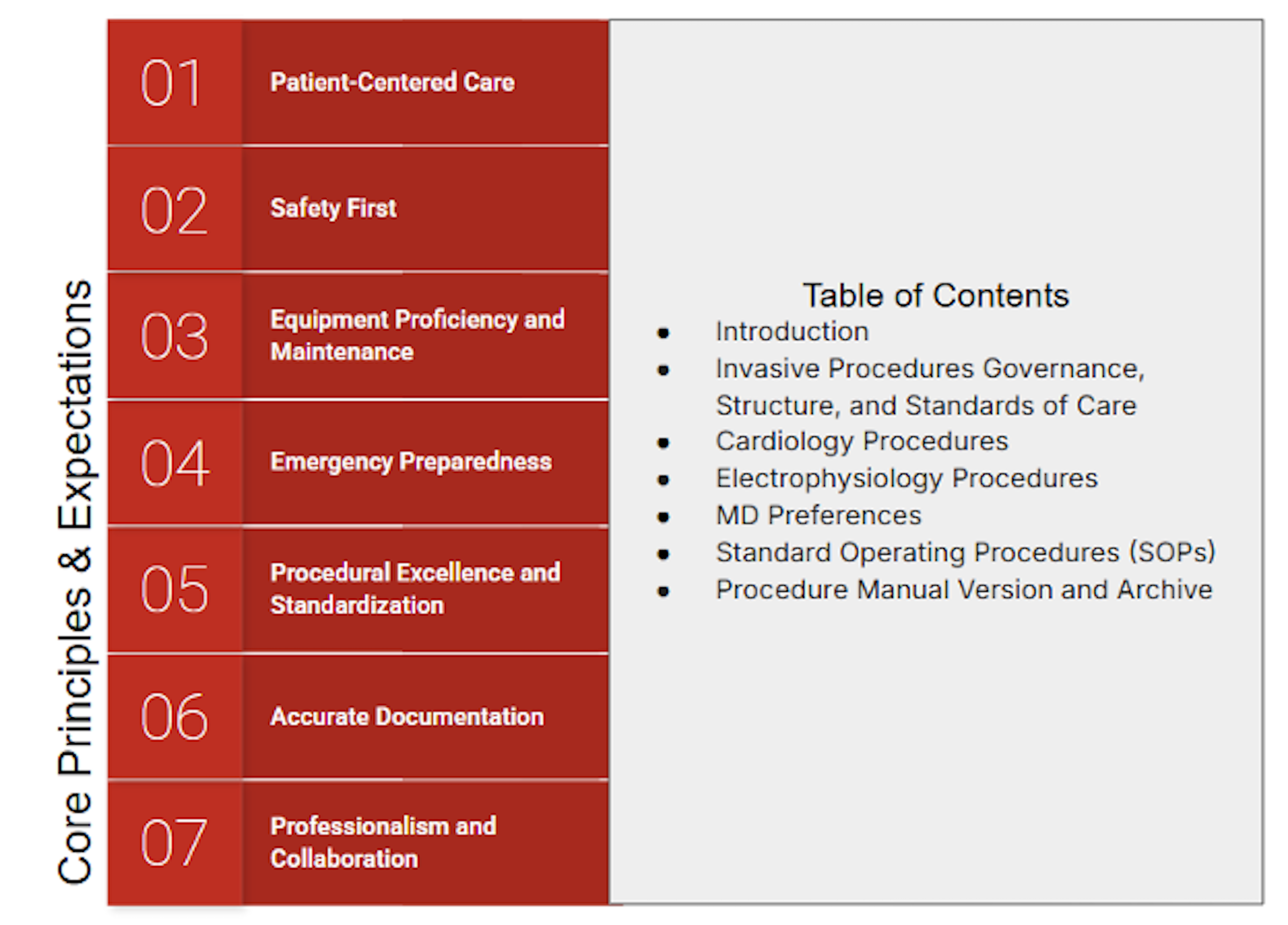
The CCL and EP program at Marian Regional Medical Center exhibited a consistent pattern of strategic growth, specialization, and quality improvement over five years. This program development appears to be supported by the CCSD Invasive Procedures Manual, which outlines key milestones and progress achieved in the past five years. The procedure manual helped communicate the leadership's strategic vision and mission, staff roles and responsibilities, as well as established clear standards of care, excellence, and teamwork within the procedural environment (Figure 1). The manual also functioned as a valuable tool for staff development.
Program Evolution and Milestones
The Marian Regional Medical Center CCL/EP program evolved from the initial development of the CCSD Invasive Procedure Manual in 2021 to become a comprehensive center of excellence by 2025. After achieving American College of Cardiology (ACC) EP Accreditation and being named a CommonSpirit Center of Excellence for left atrial appendage occlusion (LAAO), the program built a solid foundation in complex arrhythmia management. In the following years, it experienced significant strategic growth, including decentralizing radiology and cardiology departments to gain more operational independence, maintaining a strong focus on training through continuous training and efficiency center (TEC) site designation, and considerably increasing both CCL and interventional radiology procedural volumes (44% and 38%, respectively, by 2023).
By 2025, the program diversified its offerings, launching a transcatheter aortic valve replacement (TAVR) program and earning multiple ACC accreditations for the Cath Lab. At the same time, it expanded and integrated advanced vascular and hybrid trauma procedures, demonstrating a comprehensive approach to cardiovascular care. Notably, during this period, the program maintained exceptional workforce stability, with staff turnover rates consistently below 2%, and reaching an impressive 0.58% in the Cath Lab by 2025, while carefully managing contract labor. This progression highlights successful strategic growth, strong quality assurance, and a highly engaged workforce, leading to national recognition for clinical excellence and leadership in advanced therapies.
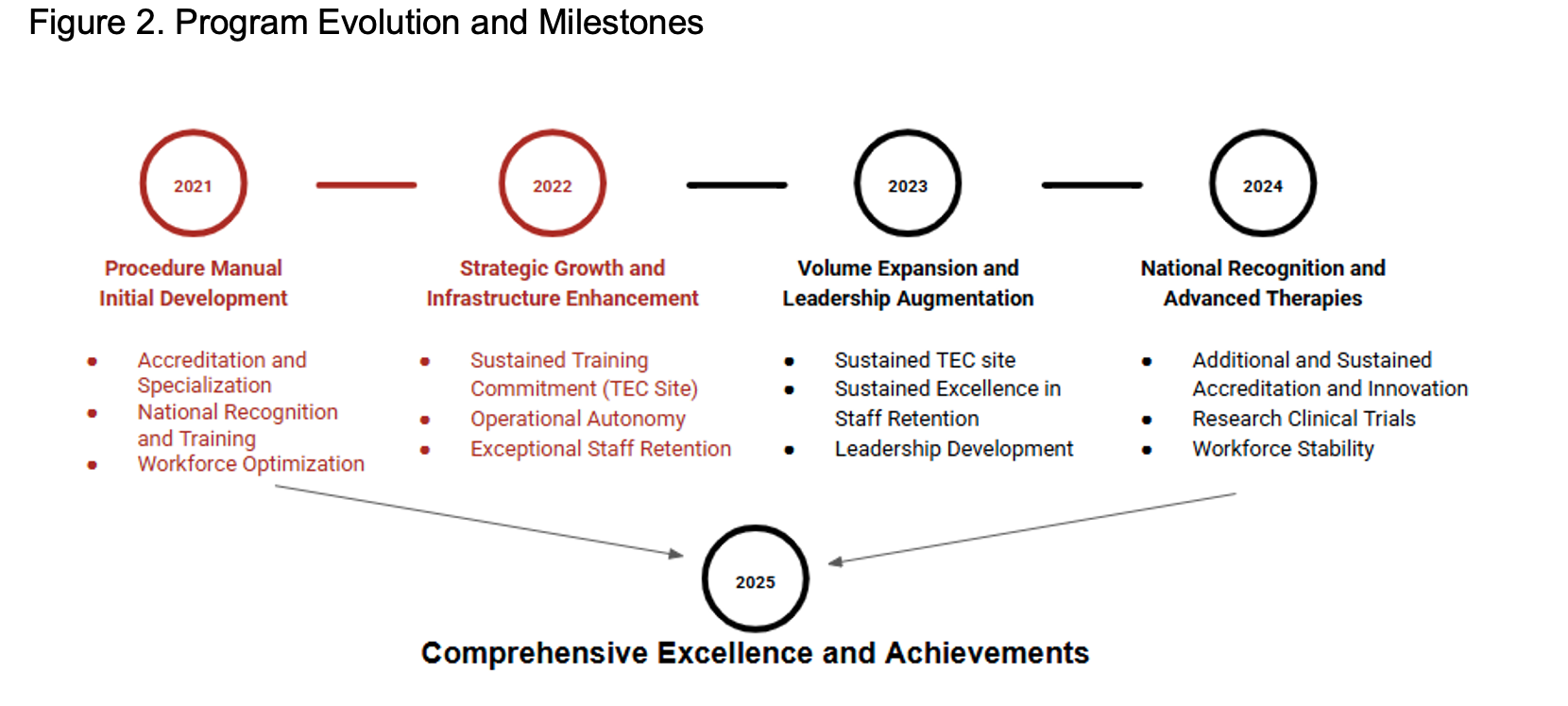
Initial Development (V.2021 - Creation v1.0 - May 2021)
The first version of the manual reflects the program's strength and strategic focus.
- Accreditation and Specialization: The program earned its first American College of Cardiology (ACC) EP Accreditation and was named a CommonSpirit Center of Excellence for LAAO with the milestone of 500 Watchman (Boston Scientific) implants in 2025. This experience laid a strong foundation in managing complex arrhythmias and performing structural heart interventions.
- National Recognition and Training: Marian Regional Medical Center established itself as a leader in clinical trials and as an EP Training and Efficiency Center (TEC site), demonstrating an early commitment to research and education.
- Workforce Optimization: A notable reduction in contract labor: nine to three full-time equivalent (FTE) positions, demonstrated early success in stabilizing the core staff.
Strategic Growth and Infrastructure Enhancement (v.2022 - June 2022)
The following year marked a development in program infrastructure.
- Sustained Training Commitment: The program maintained its TEC site designation.
- Operational Autonomy: A key development was the decentralization of Radiology and Cardiology combined departments due to program growth and financial expansion, allowing them to operate as standalone service lines. This indicates increased operational independence and targeted resource allocation.
- Exceptional Staff Retention: Importantly, for staff turnover, <2% was reported, with contract labor remaining at 2-3 FTE positions, demonstrating a highly stable workforce.
Volume Expansion and Leadership Augmentation (v.2023 - July 2023)
This period was characterized by notable rises in clinical activity and a growth in leadership capacity.
- Sustained Training Excellence: Continued TEC site designation.
- Procedural Volume Surge: The program saw a significant 44% increase in CCL volume and a 38% increase in interventional radiology volume, indicating growing regional demand and capacity.
- Sustained Staff Retention: Cath Lab staff turnover further decreased to an exceptional 0.875%, reinforcing a positive work environment. Contract labor remained stable at 2-3 FTE positions.
- Leadership Development: Progress in leadership included expansion to Perioperative Services and recruitment of an assistant nurse management for CV Services, illustrating strengthened multidisciplinary collaboration and managerial support.
National Recognition and Advanced Therapies (v.2024 - August 2024)
The program gained wider recognition and implemented more complex new interventions.
- Accreditation and Innovation: EP accreditation was renewed, and a TAVR program was launched with the 100th TAVR implanted in 2025, marking a significant expansion into transcatheter aortic valve replacement.
- Research Leadership: The program grew to become a trailblazer in clinical trials.
- Continued Training and Quality: Maintained TEC site status and was rated among the top 10% in the nation for quality cardiac care by US News & World Report, a notable external validation of quality.
- Workforce Stability: CCL staff turnover was low at 1.94%, with contract labor stable at 2-3 FTE positions.
Comprehensive Excellence and Achievements (v.2025 - August 2025)
The latest version of the manual emphasizes a quality-driven program focused on sustainable development and integrated care.
- Expanded Centers of Excellence: Named a CommonSpirit Center of Excellence for Atrial Fibrillation, building on its previous LAAO designation.
- Multiple Accreditations: Earned ACC Cath Lab Accreditation, demonstrating a strong quality framework across its various services.
- Service Line Integration and Milestones: Noted growth of the vascular service line and marked key procedural volume milestones, including the 100th TAVR implant and 500th Watchman implant.
- Trauma Service expansion to include hybrid procedures shows interdisciplinary collaboration.
- Continued Excellence and Retention: Sustained TEC site status and achieved an impressively low CCL staff turnover rate of 0.58%, further strengthening its reputation as an employer of choice. Contract staffing levels remained steady at 2-3 FTE positions.
Connecting Programmatic Success Using the Procedure Manual With Staff Empowerment
The development of the Marian Regional Medical Center CCL and EP program by using the CCSD Invasive Procedure Manual for staff resources, closely aligns with staff's verbal feedback on improved work experience quality, training, and confidence in practice.
The program's quality of work experience is demonstrated by consistently low staff turnover rates, which ranged from below 2% in 2022 to an impressive 0.58% in 2025. These figures greatly exceed national averages for healthcare personnel turnover,4 indicating high job satisfaction and a positive work environment. Additionally, the continued use of a stable, small team of contract workers (2-3 staff members for annual leave and peak vacation requests) highlights a successful approach to internal staffing and minimizing reliance on temporary staff, thereby fostering team cohesion and stability.
A foundational commitment to staff education is demonstrated by the program's ongoing designation as an EP Training and Efficiency Center (TEC site) across all review periods (v1.0 - v.2025) and by its internal training and education initiatives. The incorporation of complex new procedures, including LAAO, TAVR, and hybrid trauma procedures, directly informs the Annual Education and Training Core Curriculum for CCL Staff Standard Operating Procedures (SOPs), outlined in the manual's governance section (v.2025). A proactive approach to skill development aligns with staff reports of improved training opportunities, fostering a culture of continuous learning and advanced competency. Clear support for this is found in the manual's emphasis on "Continuous Learning: Maintain and enhance professional competence through ongoing education, training, and participation in quality improvement initiatives."
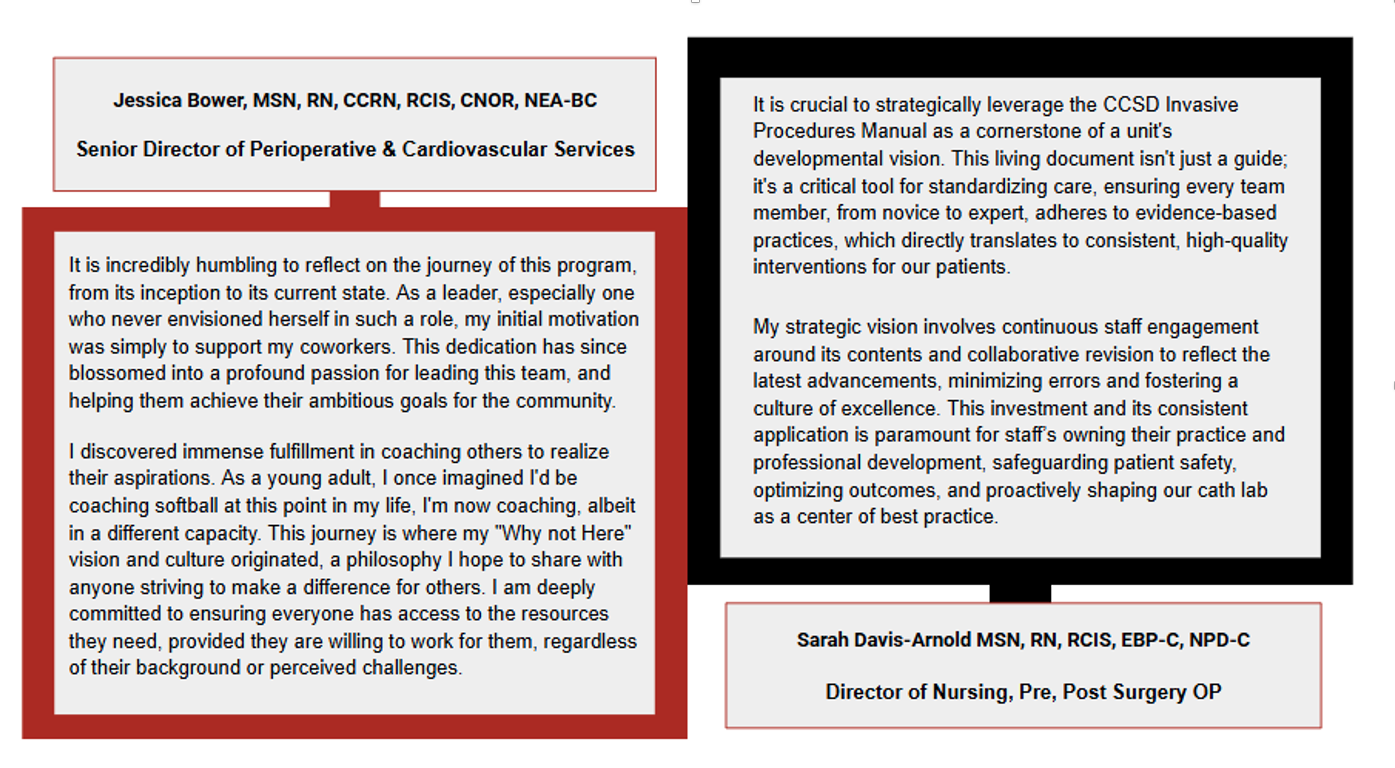
Confidence in practice is strengthened through positive external validation, including the accumulation of accreditations (EP, Cath Lab), the CommonSpirit Center of Excellence, and national recognition for quality, such as being ranked among the top 10% in the nation for quality cardiac care by US News & World Report in 2024. Staff working within such a highly accredited and acknowledged environment, along with comprehensive training and exposure to a wide range of advanced procedures, would likely experience a significant boost in professional confidence. The manual's focus on "Procedural Excellence & Standardization" and "Equipment Proficiency & Maintenance" further guarantees that staff are well-prepared and supported in their roles. The rise in staff confidence directly results from working in an environment that emphasizes safety, quality, and ongoing professional development.5 Figure 3 shares leadership reflections.
Discussion
The successful progress of Marian Regional Medical Center’s cardiovascular program illustrates a strong model using something as straightforward as a procedure manual to record core standards and quality values in a complex and evolving specialty. An evaluation of the program’s progress highlights a critical aspect in which strategic clinical progress and robust staff development are closely interconnected. The consistent growth in procedural volumes across both CCL and EP, along with the achievement of highly specialized accreditations, emphasizes a commitment to expanding access to advanced cardiac care. However, this growth did not compromise staff well-being; instead, it seems to have galvanized it.
The very low staff turnover rates, especially the 0.58% reached most recently in 2025, are an outstanding achievement in an era of widespread healthcare workforce instability. The significant investment in training, providing a stimulating environment with complex cases, and a recognized commitment to quality have fostered a highly loyal and dedicated team. The decentralized service structure and leadership development also point to an empowered operational model using standardized tools, where staff are likely to feel valued and have opportunities for professional growth. The CCSD Invasive Procedures Manual itself serves as an example of the program's dedication to highly standardized, safe, and quality-focused care, which naturally builds staff competence and confidence in their roles.
Conclusion
The five-year evolution of the CCL/EP program at Marian Regional Medical Center stands as an example of how strategic, sustained, and quality-focused development can simultaneously nurture a highly empowered and satisfied workforce. The program's core accreditations with EP and CCL, and now pursuit of TAVR accreditation, along with significant volume growth and national recognition, are supported by notably low staff turnover and enhancements in work experience quality, training, and clinical confidence.
This retrospective analysis strongly advocates for a holistic approach to program management in interventional cardiology, showing that investing in both advanced clinical capabilities and the professional growth and well-being of staff results in better outcomes for both patients and healthcare providers. The clear link between such comprehensive program excellence and staff empowerment provides important insights for healthcare leaders aiming to build resilient, high-performing interventional cardiology teams.
References
-
Lima Rocha P, Duarte Oliveira M, Matos Baptista F, Patrício LM. Efficiency in the cath lab: Pursuing value-based improvements following a sociotechnical approach. Rev Port Cardiol. 2022 Aug; 41(8): 665-676. English, Portuguese. doi: 10.1016/j.repc.2021.11.010
-
Pitta S, Bagai J. Defining Quality in the Cath Lab. Society for Cardiovascular Angiography and Interventions Quality Improvement Toolkit. Accessed January 31, 2026. https://scai.org/sites/default/files/2021-02/Quality%20Improvement%20Toolkit%20Complete.pdf
-
Henien S, Aronow HD, Abbott JD. Quality management in the cardiac catheterization laboratory. J Thorac Dis. 2020 Apr; 12(4): 1695-1705. doi: 10.21037/jtd.2019.12.81
-
Twenter P. Healthcare employee turnover, by role. Becker's Hospital Review | Healthcare News & Analysis. April 25, 2025. Accessed January 31, 2026. https://www.beckershospitalreview.com/workforce/healthcare-employee-turnover-by-role/
-
Zhenjing G, Chupradit S, Ku KY, Nassani AA, Haffar M. Impact of employees' workplace environment on employees' performance: a multi-mediation model. Front Public Health. 2022 May 13;10:890400. doi: 10.3389/fpubh.2022.890400
Find More:
Renal Denervation Topic Center
Cardiovascular Ambulatory Surgery Centers (ASCs) Topic Center
Grand Rounds With Morton Kern, MD