Cath Lab Spotlight
Tucson Heart Hospital
August 2006
Room three is also the peripherals room. It has digital subtraction technology and is equipped for electrophysiology procedures (EP)/ablations. Room four is the main electrophysiology lab, which uses the EP-WorkMate® Electrophysiology Workstation (EP MedSystems, Inc., Mt. Arlington, NJ) for standard studies as well as the Carto system (Biosense Webster, Inc., a Johnson & Johnson company, Diamond Bar, CA) for three-dimensional mapping. All of our rooms can be configured for device implantation. The Day Patient Area, which handles most of our pre- and post-angiography volume, has eleven rooms.
Our lab staff consists of 9 RNs, 4 CVTs (including two respiratory therapists) and 5 RTs. We are fortunate enough to have most of our RNs cross-trained to scrub procedures with our CVTs and radiology technologists. Many of our staff are cross-trained for peripherals and EP, which gives us a considerable amount of depth to meet our staffing needs. The Day Patient Staff is made up of 5 RNs and 2 PCTs (patient care technicians). In addition, we have our manager, 2 schedulers, and 2 registration clerks.
What type of procedures are performed at your facility?
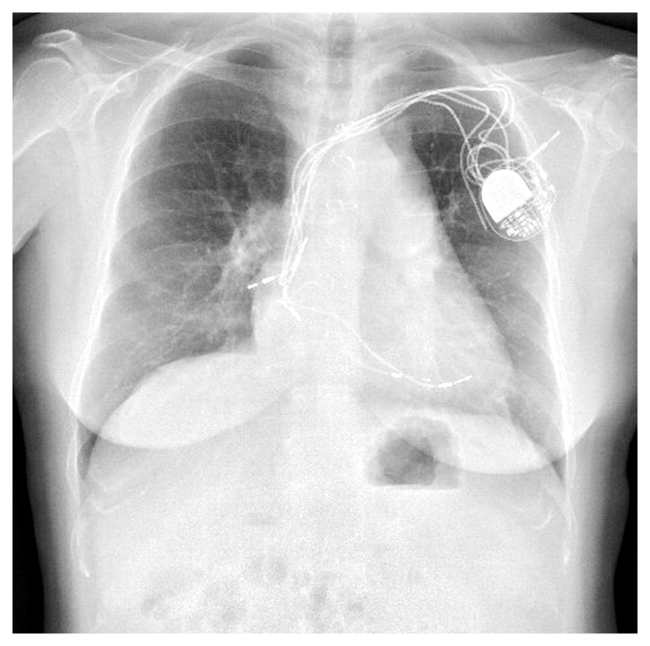
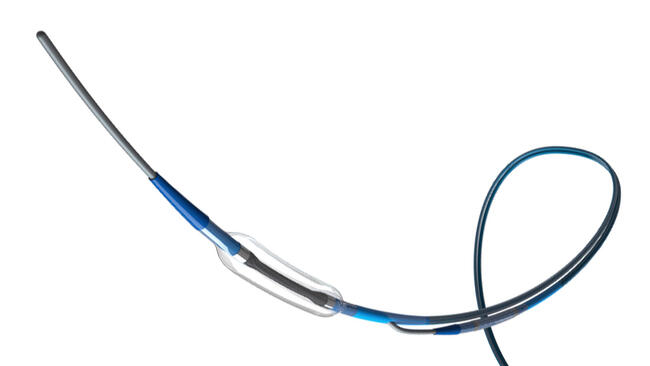
Our total volume for 2005 was 3,569 cases, averaging about 14 cases per day. In addition to diagnostic cardiac caths, we are able to perform a wide range of coronary and peripheral interventions. Our PCIs range from simple balloon angioplasty and drug-eluting stent implantation (on 839 patients last year) to AngioJet® (Possis Medical, Inc., Minneapolis, MN) and atherectomy In urgent/acute cases, we perform intra-aortic balloon pump (IABP) and temporary pacemaker placement. Our electrophysiologists performed standard and 3-D mapping and ablations, as well as implantation of various rhythm control devices (from loop-recorders and single-chamber pacemakers to bi-ventricular cardiac defibrillators), on 915 patients during 2005. We have also performed a handful of special percutaneous procedures such as valvuloplasty and atrial septal defect (ASD) repair, and hope to perform more defect repairs in this manner, beginning this year.
In our peripheral suite, both vascular surgeons and cardiologists with special training in peripheral vascular procedures perform peripheral interventions, including renal and iliac stents, embolizations, atherectomies, thrombolysis, and inferior vena cava (IVC) filter placements. We have recently begun carotid stent implantation as well. We averaged about 17 peripheral cases per month in 2005. At our current pace, we have experienced a 15 % increase in case volume and are expected to exceed 4,000 cases for 2006, which will increase our average to more than 15 cases per day.
What type of procedures are performed at your facility?
Our total volume for 2005 was 3,569 cases, averaging about 14 cases per day. In addition to diagnostic cardiac caths, we are able to perform a wide range of coronary and peripheral interventions. Our PCIs range from simple balloon angioplasty and drug-eluting stent implantation (on 839 patients last year) to AngioJet® (Possis Medical, Inc., Minneapolis, MN) and atherectomy. In urgent/acute cases, we perform intra-aortic balloon pump (IABP) and temporary pacemaker placement. Our electrophysiologists performed standard and 3-D mapping and ablations, as well as implantation of various rhythm control devices (from loop-recorders and single-chamber pacemakers to bi-ventricular cardiac defibrillators), on 915 patients during 2005. We have also performed a handful of special percutaneous procedures such as valvuloplasty and atrial septal defect (ASD) repair, and hope to perform more defect repairs in this manner, beginning this year.
In our peripheral suite, both vascular surgeons and cardiologists with special training in peripheral vascular procedures perform peripheral interventions, including renal and iliac stents, embolizations, atherectomies, thrombolysis, and inferior vena cava (IVC) filter placements. We have recently begun carotid stent implantation as well. We averaged about 17 peripheral cases per month in 2005. At our current pace, we have experienced a 15 % increase in case volume and are expected to exceed 4,000 cases for 2006, which will increase our average to more than 15 cases per day.
Do you average any overtime per pay period?
Being located in Southern Arizona means our population fluctuates many people are drawn to the warm beauty of our desert climate in the winter months and we have a large influx of retirees during the cooler time of year. As our volume increases, so does our need for overtime. We have been able to mange our staffing needs through several methods, including flexible scheduling, various shifts, and a 24-hour call team.
Do interventional radiologists and cardiologists perform procedures in the same area?
Since we are a cardiovascular specialty hospital, the need for an interventional radiologist to perform image-guided procedures is rare, but if necessary they can and are performed in our lab. Other than these few exceptions, cardiologists and vascular specialists perform all of our procedures.
Did your facility need to make any changes to the imaging equipment to accommodate peripheral procedures?
The Philips imaging system used in room three, our peripherals room, is capable of performing both cardiac and peripheral studies by simply switching the mode on the unit. Based on the demands of our schedule, this allows us to turn over the room from one type of procedure to the next with minimal time and effort.
Does your cath lab perform primary angioplasty with surgical back-up?
In most cases, coronary and peripheral interventions are not performed with dedicated surgical back-up; however, the Heart Hospital has three OR suites available for cardiovascular procedures and a call team available 24 hours a day.
What procedures do you perform on an outpatient basis?
The majority of our elective caths and EP studies are done on an outpatient basis. If, however, a patient requires intervention, they are kept overnight at the hospital. We have a unique program, called the HERO (Heart Emergency Response & Observation) program, which allows any patient, regardless of their insurance provider, 23-hour observation and full work-up for any possible cardiac complaint. Should these patients require PCI or surgery they become inpatients here at the hospital.
What percentage of your patients are female?
Forty percent of our patients last year were female. Our hospital has a Community Outreach Program that offers numerous screenings and services in the hopes of increasing awareness for women, the elderly, the underserved and other high-risk populations.
What percentage of your diagnostic cath patients go on to have an interventional procedure?
Of our 2,391 non-electrophysiology/device procedures, which included peripherals, 38% underwent percutaneous coronary intervention in 2005. We also performed 110 peripheral interventions, putting our total at about 42% going to intervention.
Who manages your cath lab?
Our manager is Stuart Scherger, RN. Stuart started out his medical career working as a respiratory therapist for 10 years and worked his way through nursing school to become an RN. He worked as an ICU nurse before coming to the cath lab in 2000. He has been the cath lab director for the last 4 years. Daily operations, such as employee work and call scheduling, case assignments, et cetera, are handled by our Clinical Leads, Brandon Van Kirk, RCIS, and Rochelle Thompson, RN (or a designated acting lead in either of their absences). Sandra Plock, RN, and Barbara Williams, RN, make up our scheduling committee.
Does your lab have cross-training? Who scrubs, who circulates, and who monitors?
Although only RNs are allowed to circulate, our lab offers every employee the opportunity to learn to record and scrub. We have many members of our team from different clinical backgrounds trained to scrub caths, device implantations, and EP studies. However, radiology technologists are the only ones allowed to record and operate the imaging equipment on peripheral cases.
Does an RT (radiologic technologist) have to be present in the room for all fluoroscopic procedures in your cath lab?
No. The scrubber and physician are able to operate the table and position the II, but only a RT or physician may operate the fluoro pedal. But, as noted, a RT must be present to operate the fluoroscopy equipment in a peripheral case.
Does your lab have a clinical ladder?
Not at this time. All employees are encouraged to learn as much as they can about each postion in the lab. Team members are then able to rotate responsibilities from one case to the next, within each member’s abilities and scope of practice, to promote a fair and even workload.
What are some of the new equipment, devices, and products introduced at your lab lately?
We are able to boast one of only two electrophysiology facilities in southern Arizona. We have two suites, each with the EP-WorkMate and one with the CARTO 3-D mapping system. As The Heart Hospital, we are able to be on the cutting edge of cardiovascular procedures, including intra-cardiac defect repair, and both carotid and aortic stenting. We are able to try new equipment and techniques and are one of the most advanced labs in the area in terms of interventional procedures.
What other modalities do you use to verify stenosis?
In addition to angiography, we are trained to use intravascular ultrasound (IVUS) to assess lesions. We also have fractional flow reserve technology [WaveWire (Volcano Therapeutics, Inc., Rancho Cordova, CA)] to determine decrease in vascular flow distal to a lesion.
How is coding and coding education handled in your lab?
Generally speaking, the recorder enters charges through the Witt system (Witt Biomedical, Melbourne, FL) and these charges are signed and verified by both the recorder and the scrubber at the completion of each case. The unit secretary handles the specific charging once the reports are turned in and the hospital handles coding. Our department manager is well-versed in coding and procedures, and is able to communicate with the staff members on each case to address omissions and/or errors. Problem areas are addressed at our monthly department meetings where our cath lab manager, Stuart Scherger, RN, has an opportunity to educate the staff about any changes.
How does your lab handle hemostasis?
All patients without specific contraindications are screened for closure of femoral arterial sticks with either Angio-Seal (St. Jude Medical, Minnetonka, MN) or Starclose (Abbott Vascular Devices, Redwood City, CA) based on physician preference. If we are unable to use a closure device, we either use manual pressure in the lab or at the patient’s post-procedure destination, when safe for the patient.
Does your lab have a hematoma management policy?
Hematoma management is handled on a case-by-case basis, but usually through manual or mechanical pressure. In terms of hematoma tracking, we use a custom menu in our Witt system to identify areas of improvements or trends (such as device failures on anticoagulants, etc.). Data collected on hemostasis is reported to the Process Improvement Committee on a regular basis.
How is inventory managed at your cath lab?
Peter Wieser, RT R, RCIS, manages inventory by ordering supplies through the hospital materials management department. Our manager is in charge of evaluating and approving all new equipment purchases.
Has your cath lab recently expanded in size and patient volume, or will it be doing so in the near future?
The physical layout of the lab has not changed, although we are experiencing a steady growth trend in patient volume, with a 25% increase from 2003“2004. We are currently on track to see at least a 15% increase from 2004-2005. In addition to an increased volume, we are steadily increasing the number of different procedures and interventions we are able to perform in order to better serve our community. Our hospital slogan is Tucson Heart Hospital the Heart Hospital and our goal is to make the Tucson Heart Hospital the leader in cardiovascular care in southern Arizona. The more alternatives for treatment we are able to offer our patients, the busier we are, and the closer we come to accomplishing our goal.
Is your lab involved in clinical research?
No. However, several physicians who perform procedures in our lab participate in clinical research studies at this and other institutions around the city.
What measures has your cath lab implemented in order to cut or contain costs?
We regularly negotiate contracts with and try to consolidate our vendors for supplies in an effort to keep costs and services competitive.
What type of quality control/quality assurance measures are practiced in your cath lab?
In addition to our participation in the JCAHO’s recommended acute myocardial infarction (AMI) Core Measures, our lab monitors in-lab and post-procedure complications. This includes access site management, in-lab events like tamponade or arrhythmias, and adverse outcomes. This information is regularly reported to the Process Improvement Committee.
How does your cath lab compete for patients? Has your institution formed an alliance with others in the area?
We have several advantages that help keep us one of the busiest labs in the area. Tucson Heart Hospital’s HERO program, mentioned earlier, is designed to help patients get the care and attention they deserve for cardiovascular complaints. By allowing more patients the opportunity to have heart attack symptoms quickly and thoroughly evaluated, we are able to serve a larger number of patients. In addition to the HERO program, we have developed the CV Stat program. CV Stat works in partnership with outlying and rural area hospitals in the United States and even parts of Mexico. This program facilitates transfer from other centers to Tucson Heart Hospital in order to provide acute patients with the higher level of cardiac care they require.
Perhaps our best asset is our hospital and specifically, our cath lab itself. Physicians are willing to bring more patients to us because of our reputation for efficiency and high quality care, as well as our willingness to accommodate them and their patients to the best of our ability. Every member of the staff here at Tucson Heart has a direct role in keeping our beds full because of their continued effort to perform to the best of their ability.
How are new employees trained at your facility? What licensure is required for all professionals who work in your lab?
At the time of hire, each new hospital employee must attend hospital orientation and complete the required competencies, which are renewed annually. Once in the department, the individual’s training plan is based on their level of experience and previous training. All staff are required to hold either RT, RN or RCIS certification/ licensure. We use a single-preceptor model for most cath lab training, but all members of the lab are more than willing to help out by training in whatever way they can. Each person brings their own experience to help make the system a little bit better. To train scrubbers to assist with procedures, we use a new and unique multifunction training model that was created here in our lab, the Simulated Angiography Learning Aid, called SmALA, that allows us to perform all of the tactile and hands-on aspects of an entire angiogram procedure from the initial arterial stick to closure. We have shown great improvement in the efficiency of training new scrubbers and recorders with the use of this equipment because it allows repeated performance of the necessary fine-motor skills, under realistic conditions and without risking the safety of patients. We have been able to teach previously untrained personnel to assist the physician in performing cardiac catheterizations. It has reduced our lab’s training time (from lab orientation to standing at the table on a live case with supervision only) from an average of six weeks to less than one week. Obviously this represents a huge cost savings to the hospital in many ways. In addition, there is a health benefit through reduced radiation exposure time for both the trainer and the trainee. And of course it is of great educational benefit to the whole department. Thus far, SmALA has been used to demonstrate the set up and performance of cardiac catheterization/ventriculography and PCI, power-injected aortography and various other forms of angiography, IABP placement, Angio-Seal, and even sheath suturing. We will be exploring other procedures which can be taught using this unit, but it appears that nearly any procedure done in the lab can be replicated, saving us from the syndrome of learning a technique once during an in-service and not having a chance to practice it, or becoming rusty from infrequently performed procedures.
What type of continuing education opportunities are provided to staff?
Our lab’s education coordinator, Rochelle Thompson, RN, arranges in-services provided by vendors on a variety of topics ranging from equipment to medications and hemostasis. She tries to schedule these on a monthly basis so that all members are given ample opportunity to obtain the necessary continuing education credits. In addition, the hospital education department provides regular lunch & learn educational sessions to keep staff abreast of the latest developments in cardiovascular care. Department manager Stuart Scherger, RN, encourages us to work closely with our hospital and vendors to obtain educational grants to attend off-site conferences and classes.
How do you handle vendor visits to your lab?
All vendors are required to schedule appointments with the lab manager.
How is staff competency evaluated?
The hospital holds an Annual Competency Fair over a period of several days that allows all employees to complete the required online evaluations and rotate through various stations for the purpose of skills demonstration. Within our own department, we often use a peer-review format to assist one another in the improvement of our job performances both as individuals and as a whole.
Does your lab utilize any alternative therapies (such as guided imagery)?
No, although the staff works to promote a comfortable environment for the patients during the procedure to reduce anxiety and discomfort, which in turn helps to make the procedure more tolerable with less medication.
How does your lab handle call time for staff members?
There is an assigned call team 24 hours per day, every day of the year. Each team has three people, and must consist of at least one RT and one RN. Our daily staffing needs are accommodated by a variety of shifts and schedules. Some people work 12-hour shifts, others 10 and some 8. The lab is open weekdays from 6 am to 6 pm, and early morning/late day staffing is adjusted as needed, based on the day’s schedule.
What trends do you see emerging in the practice of invasive cardiology?
As the accuracy and use of non-invasive angiographic techniques (such as computed tomography and magnetic resonance imaging) increases, the number of clean caths will likely decrease and a higher percentage of our cases will require intervention. As in all areas of medicine, the smaller, minimally-invasive technologies will come to the forefront of cardiovascular interventions, likely decreasing the number of surgeries and increasing the number and depth of procedures performed percutaneously in the cath lab. We are already seeing this become a reality nationally. In addition, the field of electrophysiology is growing by leaps and bounds, and promises to change the way we handle previously medically-managed diseases, like atrial fibrillation and congestive heart failure, in the future.
Has your lab undergone JCAHO inspection in the last three years?
Our last visit from JCAHO was 2004 and we were told we did a great job.
Where is your cath lab located in relation to the OR, ER, and radiology department?
Our hospital is unique in that it was designed by a committee of physicians and nurses whose goal was to make it as staff- and patient-friendly as possible. The bottom floor of the hospital is made up of the ER, OR, and the cath lab, which is located directly in-between the two departments. The ancillary departments, such as radiology, lab, respiratory and pharmacy, are all centrally located upstairs, in the middle of the patient-care units.
Is there a problem or challenge your lab has faced?
Our biggest challenges have arisen from the need to accommodate a large volume of patients and the tremendous number of different skills required of all of our employees. This also has become our biggest strength. With all of the different procedures we perform, each member of our lab must be proficient in numerous devices, techniques, and physician preferences, as well as the ability to handle all of the different complications that could possibly come with each. Our manager has made a strong effort to forge a team made up of some of the most skilled employees the hospital has to offer. It can be a high-stress environment and often times a sink or swim mentality, but we are all able to pull together and count on one another when it really matters. To counteract the stress, we have formed an unofficial social committee for all of us to get together outside of the lab with gatherings like rafting trips, picnics, and concerts, which help to increase morale and make us a better team overall.
What’s special about your city or general regional area in comparison to the rest of the U.S.? How does it affect your cath lab culture?
Tucson is located about 100 miles south of Phoenix, the capital of Arizona, and nestled in four different mountain ranges, surrounded by Coronado National Forest. The city and surrounding area has a population of 940,000 and is expected to pass the one-million mark by 2009. We were recently voted one of the Top Ten Cities for Doing Business by Inc. magazine and Prevention magazine named us in their top ten cities suited for fitness and walking. We were also named the #1 Spa and Resort Destination by Zagat Survey and one of the Top Ten Places to Live by MSN. Although we have a large number of retirees (12% of the population is over 65) drawn to the area by our extremely mild winters and nearly 300 days per year of sunshine, the median age of the city is only 32.1 years. In terms of cardiovascular healthcare, we have the benefit of an existing large client base in a higher risk category while still being a young city where we can make a difference. There are many people in this area who are fitness-oriented, and sadly, many more who are not. There are both a large number of affluent areas and a large underserved population, and we are surrounded by several Native American reservations. There is a need for services across the entire healthcare continuum that keeps the hospital environment in this city constantly competitive.
The Society of Invasive Cardiovascular Professionals (SICP) has added two questions to our spotlight:
1. Do you require your clinical staff members to take the registry exam for Registered Cardiovascular Invasive Specialist (RCIS)? Do staff receive an incentive bonus or raise upon passing the exam? All non-licensed personnel are required to complete the RCIS certification. Our registered nurses, radiological technologists, and respiratory therapists are not required to hold the RCIS credential, but it is encouraged. 2. Are your clinical and/or managerial team members involved with any professional organizations that support the invasive cardiology service line, such as the SICP, ACVP, or regional organizations? Members of our clinical management team are RCIS-certified; however, none are members on the professional level. Our team leader, Stuart Scherger, is an active participant in an informal, city-wide cath lab management group, made up of department managers from Tucson and the surrounding hospitals. Together they discuss the ever-changing cath lab environment, share their collective experience and trade ideas. This information is often passed along to the staff to help solve dilemmas and in some cases, even anticipate common problems in the lab before they start. Anyone who wishes to contact us is encouraged to do so and may call the department’s main number - (520) 696-2671. Author Michael Arnold can be contacted at michael.arnold@tucsonhearthospital.comNULL
Subscriber
Cath Lab Digest Newsletter