Spotlight
The Xience V™/Promus Everolimus-Eluting Stent: Deliverability makes it “easier for the patient and the operator”
October 2008
Cath Lab Digest talks with Gregg W. Stone, MD, Director of Cardiovascular Research and Education, Center for Interventional Vascular Therapy, New York-Presbyterian Hospital/Columbia University Medical Center; Professor of Medicine, Columbia University College of Physicians and Surgeons; Chairman of the Cardiovascular Research Foundation, New York, New York
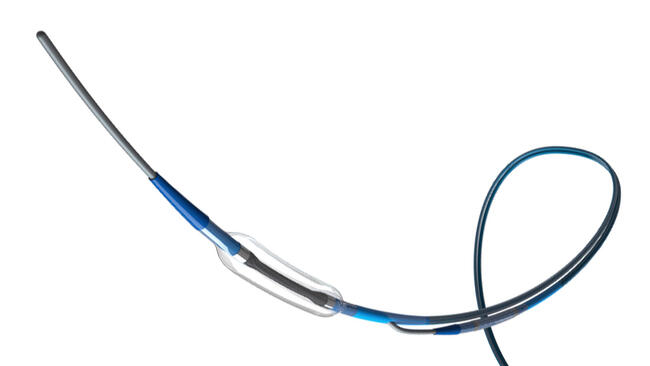
Dr. Stone was the principal investigator in the SPIRIT III and SPIRIT IV trials, which looked at Abbott Vascular’s Xience V stent. (Xience V is also distributed as the Promus stent by Boston Scientific Corporation.) What have you learned about deliverability with the Xience V/Promus stent? The Xience V stent truly is a low-profile, flexible device which is able to be delivered into most segments of the coronary tree. None of the clinical trials which we have done in relatively non-complex patients were designed to assess deliverability between different drug-eluting stents. However our experience at Columbia has been very favorable, in that Xience V/Promus is at least as deliverable, if not even more deliverable, than the (bare-metal) Multi-Link Vision stent. We have also experienced and heard from many physicians that they have found Xience V to be markedly more deliverable in complex anatomy than first generation drug-eluting stents. In your personal practice, how often are you using the Xience V/Promus stent? Currently, in our personal practice at New York-Presbyterian Hospital, it’s the dominant coronary stent — by far the most frequent stent in use. We are a tertiary referral center, and are known for treating very complex patients with multivessel coronary disease, left main disease, chronic total occlusions and cases that are turned down or failed at other institutions. Xience V has made management of these patients much simpler. What have been the advantages of second-generation stents like the Xience V/Promus stent over the first generation, i.e. Cypher and Taxus? Studies have shown that patients treated with the Xience V/Promus stent line, with either simple or moderately complex de novo native coronary lesions, have significantly greater freedom from major adverse cardiac events. This second-generation stent accomplishes this firstly by allowing the procedure to be done more safely, with a lower rate of peri-procedural myocardial infarction, and then subsequently by reducing angiographic and clinical restenosis. Therefore, patients have less recurring ischemia, less repeat admissions to the hospital, and a reduced need for repeat angioplasty or bypass surgery, compared to the first generation paclitaxel-eluting stent that was studied in the SPIRIT II and III trials. We do not yet have the data to see how this translates in more complex, off-label patients, but we suspect the magnitude of the effect will be similar or greater. In addition, in even more complex patients, the superior deliverability of the Xience V/Promus stent makes cases possible that might not otherwise be attempted. More complex patients such as…? Complex, tortuous, diffuse disease, calcific disease, distal lesions — all patients where deliverability is at a premium. That being said, somewhere between 80 and 90 percent of all cases can be done with any of the currently FDA approved drug-eluting stents, in terms of deliverability. In many of those cases, Xience V/Promus will make the case easier, although the other stents can still be used. But the case should always be as easy as possible, right? That translates into less radiation exposure and contrast use, and stress for the patient and operator. Moreover, in our laboratory there are a significant number of cases, probably 10% or more, in which Xience V/Promus and the Endeavor stent, because it is also superior in terms of deliverability) will complete the case whereas other stents could not (or would have great difficulty). Is there any perceived advantage with a highly deliverable stent in terms of potential injury to the vessel wall? Theoretically, in complex lesions a highly deliverable stent is less likely to damage the vessel wall in delivering the stent, is less likely to strip off the polymer and drug coating from the drug-eluting stent itself, and less likely to damage the endothelium. But all this is theoretical. Obviously, stents that deliver more easily also mean a significant savings in procedural time, which translates to less radiation dose, less contrast use dose, less requirements to change guide catheters, guidewires, less likely to require anchor balloons or other techniques. It makes it easier for the patient and the operator. Any advice for those out there who have not yet tried the Xience V/Promus stent? Every operator should make up their own mind on what drugs and devices are best for their patients through a combination of using evidence-based medicine, personal experience, as well as talking to and taking the wisdom of thought leaders who have a great deal of experience into account. Dr. Stone can be contacted at gstone@crf.orgNULL
Subscriber
Cath Lab Digest Newsletter