Professionals Out In Front
The Ten-Minute Interview with… Mary Lee Oliver, MSRS, RT(R)(CV)
July 2008
Program Director of Cardiovascular Technology, Houston Community College, Coleman College of Health Science, Houston, Texas
I am a native Nebraskan, where I spent my childhood, but moved to Texas with my stepfather, stationed at Ellington in the Air Force, where I graduated high school. I loved science and had the option of choosing a hospital-based RN or a radiologic technologist program. I went for the exciting technical, mastered the basics and spent most of my time in the angio room (special procedures, since not many cardiac catheterization labs existed in the 1970’s). As the years passed, I passed the radiologic technologist CV test and obtained a full-time teaching degree. Both led to my current position as the Program Director of Cardiovascular Technology at Houston Community College, Coleman College of Health Science, in the Texas Medical Center.
Why did you choose to work in the invasive cardiology field?
In the cardiac catheterization lab (CV lab), things need to be precise and I enjoyed being the best I could be and learning new procedures. I truly enjoyed taking care of the patients and doing a good job for them.
I graduated in the 1970s, and everything was fast film changers, straight needle sticks and non-disposable. I especially loved seeing the vessels relating to the carotids and soon was hooked. My first job, after graduating, was as a diagnostic, special procedures and cath lab technologist! I had students rotate in the cath lab from a nearby college and started my lifelong career of teaching, one-to-one with each student. I enjoyed showing the students how to do things properly and safely, with quality care to the patients. I substituted for the college and also was adjunct over the years.
Can you describe your role in the cardiovascular (CV) lab?
My role at the beginning of my career was to be a strong team member, learning everything and being there to support team members with whatever necessary. I scrubbed on every type of procedure, including the first PTCA when it started in the 1980s in our lab, performed patient care, performed all radiologic technologist duties such as manual techniques, loading films and developing films. We did many special procedures requiring a precise inventory. I managed inventory for over 20 years when I was in the cath lab and have always taught staff and students as needed. My most recent position was as a strong team member for a new code STEMI program in a local community hospital, so I have had recent “hands on” and call! Every different experience has prepared me to use all of my skills and knowledge to teach cardiovascular technology.
What is the biggest challenge you see regarding your role?
The biggest challenge is for me to teach and motivate my current and future cardiovascular technologist (CVT) students. I want them to become the best professionals that they can, get their RCIS and then get their LMRT (limited medical radiology technologist licensures) with the state of Texas. There is a general “uneducated” population of CVTs in this area, and I think that our CVT program will help encourage educated and credentialed CVTs. We have had two deaths in the community where I live in the past few years from unregistered, trained-on-the-job CVTs, so I would really like to help in protecting the community with this program. Also, many ARRT(CV) and RCIS technologists do not like working with unregistered and unlicensed CVTS in the cath lab. I am trying to bridge the gap so we can all be cardiovascular professionals together.
What motivates you to continue working in the CV lab?
Now that I am in a classroom lecture/lab, I am motivated to teach as effectively as I can to each student. It is crucial to have all of the equipment with which to train for “hand on” during our lab time, as well as to teach them how important their role is in the cath lab as a strong advocate for the patient and to help the physicians and team members. My goal is to have many well-prepared registered and licensed CVTs to fill the need in CV labs. As readers are aware, the CARE Bill is in Congress and will probably pass. It will make credentialed staff even more important for Medicare and Medicaid payments. Many of the local hospitals are not going to be hiring unregistered CVTs in the future in this licensed state.
Can you share a particularly unusual case you have been involved with?
With all the years I have been in the lab, there are several that come to mind, but a particularly memorable case occurred when I was working in a diagnostic lab. The Swan-Ganz catheter got sucked forward into the pulmonary artery, rupturing it. I was training a registered radiologic technologist to work in the cath lab and she pushed the power off button instead of the code button. This was a dramatic case with blood shooting everywhere and no vitals, with power off. The surgical team (not open heart) came down to assist with moving the patient and fortunately, the surgeons were able to save this patient. It was a very stressful situation (and no, the technologist did not return, it scared her too much). This is a good example of how procedures in the cath lab can proceed calmly and then suddenly go crazy. Education is very important — that, and steady nerves.
When work gets stressful and you experience low moments (as we all do), what do you do to help keep your morale high?
First, I am very thankful for what I have been blessed with by just living in this country. I also try to get outside around nature and it inspires me to write poetry. I like to enjoy the beautiful scenery and capture it on film to match my thoughts. I take walks in the woods around Lake Livingston. I also enjoy my cats when I get home in the afternoon; I have one that likes to play fetch! Regular exercise every morning when I wake up also keeps me unstressed.
Are you involved with the SICP or other cardiovascular societies?
I have been involved with Bay Area Imaging Society (BAMIS) for over 20 years. Any imaging professional or sales representative can be a member, and we have topics that cover cardiology and occasionally, special procedures. Two years ago, I served as the BAMIS president, updating student scholarships as well as the webpage (www.bamis.org). I currently am chairperson of the board for BAMIS, and I am also a current member of the SICP. I am also a current member of the Texas Society of Radiologic Technologists (TSRT) and American Society of Radiologic Technologists (ASRT). In the near future, I plan on joining the educator’s society, the Association of Collegiate Educators in Radiologic Technology (ACERT).
Are there meetings, websites or texts that you would recommend to other CV labs?
Besides J. Wesley Todd’s Cardiovascular Review Books and Review CDs, I also recommend a book that helped me this past semester, Invasive Cardiology: A Manual for Cath Lab Personnel, edited by Sandy Watson and Kenneth A. Gorski. I also recommend doing research online about different cardiovascular technologies and products, because in preparing for classes I have found many good resources online. Of course, I always recommend reading Cath Lab Digest and all of the professional magazines.
I recently attended the Concepts in Contemporary Cardiovascular Medicine (April 7-10, Houston) with 11 of my CVT students and it was very well done and informative.
Do you remember participating in your first invasive procedure?
I do remember panning in my first heart cath. The cardiologist yelled at me for moving too fast. I was a nervous wreck and wanted to do a great job, but unfortunately, I think the cardiologist got seasick. Another memory is of scrubbing on my first PTCA. The 0.14” high-torque floppy wire took on a mind of its own and bounced away, and I did not want the cardiologist to know that I wasted something. One more memory involves a carotid arteriogram. It involved a straight stick to the carotid and a fast film changer where I had to pull the patient over to get the images. I was in training and the technologist who was training me left the room. I was terrified that I would set the x-ray machine wrong or do something else incorrectly.
Eventually, I became very skilled at all of the aspects of the special procedures and cath lab. I never got to monitor until the digital age, when the x-ray duties became much simpler. It was fun to learn and monitor cases. That was one of my last goals to reach in the cath lab before I started teaching.
If you could send a message back to yourself at the beginning of your CV lab career, what advice would you give?
I would say, “Mary, you should have continued your education 10 years earlier and you should have served your professional community much sooner!”
The hours and call involved working in a busy interventional lab and raising two sons meant a difficult balancing act, so I waited to continue my education. The field did not have all the online programs that are available now. I’m sure I would have completed my education sooner if that had been an option for me.
I would also tell myself, “Don’t let negative people get you down. Hold your head up, have a plan, and move on with your dreams.”
Where do you hope to be in your career when it is time to retire?
I plan on eventually becoming Chairman of the Cardiovascular Program at Houston Community College and passing on a very strong, accredited program with students that will become assets to the Houston community. Our program will be very structured and progressive in teaching students new technologies as they are developed. I would also like to have some very strong cardiovascular professionals (who have the “love of teaching” bug) teaching alongside me in order to help our program grow.
Has anyone in particular been helpful to you in your growth as a cardiovascular professional?
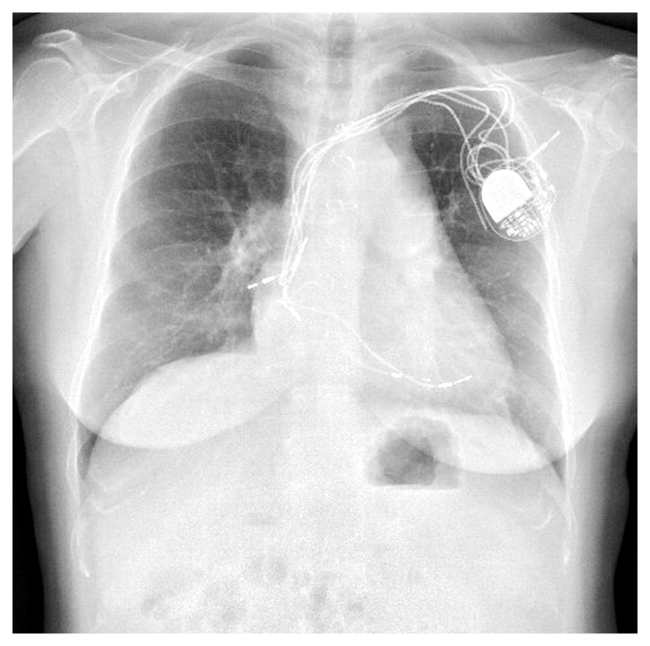
I can’t identify just one particular physician or nurse, because there have been several who have had an impact on my career. I have been very fortunate to have worked with many physicians in the last 32 years who were very good teachers. I learned from the best. I have worked in four different cath labs, and each and every one led to greater knowledge and pride in being a cardiovascular technologist. I have many past coworkers I consider as lifelong friends, and I value what they have taught me. There are many who have become preceptors at clinical sites for my students and I thank all of them for their support. I do remember getting my permanent pacemaker training from a general surgeon, Dr. Ralph Culotta, who was very patient in training me. There have been many special procedure and cath lab interventional procedures where the physician trusted me enough to assist them and I learned hands on. I am very thankful for all of these experiences. It builds confidence in your scrubbing abilities when you keep on learning more new procedures.
Where do you think the invasive cardiology field is headed in the future?
Interventional cases will be further streamlined and improved upon, and take much less time. There will be many new advances in gene therapy and heart surgery techniques that will help people live longer, healthier lives. As all of the baby boomers retire, there will be a shortage of cardiovascular technologists and educators in the health sciences. Many baby boomers will work part time to help fill this need because employers will make it very flexible and financially attractive.
Mary Lee Oliver can be contacted at mary.oliver@hccs.edu
NULL
Subscriber
Cath Lab Digest Newsletter