Letter from the Editor
The Ten-Minute Interview with: Debbie Rockoff, RN, RCIS, FSICP
April 2007
Why did you choose to work in the invasive cardiology field?
My background is in critical care nursing and I loved working on the heart in the SICU. I wanted to learn more and challenge myself, so I applied to work in the cath lab.
Can you describe your role in the cardiovascular (CV) lab?
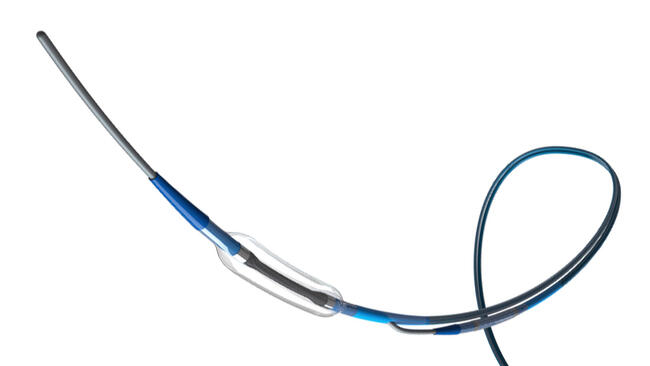
I work as a director, nurse, and function as an in-house educator for the hospital and my department. I am the past Education Chairperson for the SICP Gulf Coast Chapter. I have set up various programs, including placing intra-aortic balloon (IAB) catheters at the bedside in critical care units and in-services for nursing care following carotid stenting. I implemented a preceptor program for technical skills and theory for percutaneous coronary intervention (PCI), and I am also an advanced cardiac life support (ACLS) instructor.
What is the biggest challenge you see regarding your role in the CV lab?
The biggest challenge is implementing a cardiovascular program from the ground up for a startup hospital. It entails staff hiring and scheduling, physician and vendor relations, product purchasing, and policies and procedures for the cath lab and holding area. Of all the tasks, the most difficult is trying to anticipate the level of growth in patient volume as the hospital moves forward.
What motivates you to continue working in the CV lab?
The cardiology field is changing very rapidly, developing new techniques, theory and products. It is an environment that keeps changing and presents new challenges. It has allowed me to go from staff nurse in the cath lab to director.
What is the most bizarre case you have ever been involved with?
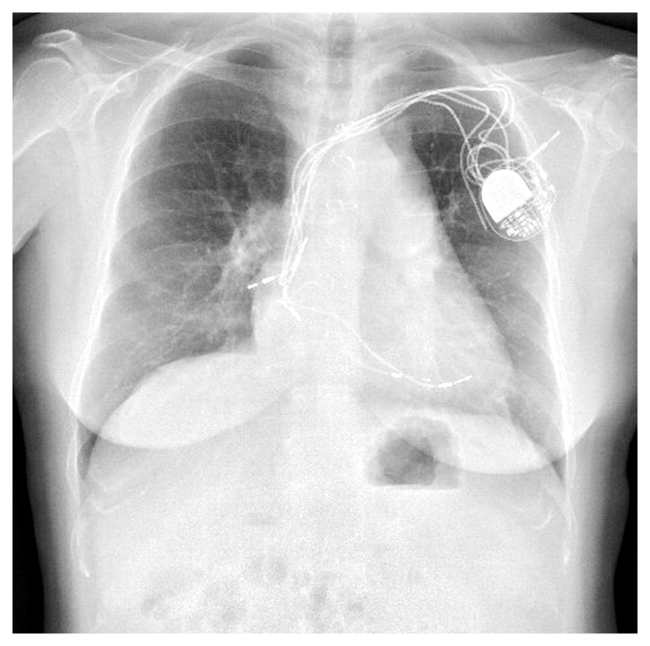
In the past, at a previous hospital, we were doing a routine diagnostic heart cath on a patient with a permanent pacemaker. When the pigtail catheter entered the left ventricle (LV), it appeared to loop around the ventricular pacemaker lead. We stood in disbelief. The pacemaker lead was in the LV instead of the right ventricle.
When work gets stressful and you experience low moments (as we all do), what do you do to help keep your morale high?
First I look at the clock to see how much time is left for the shift and gauge the time left against my stress tolerance. Then I take a deep breath and keep going. When the day is done, I go home and open a bottle of wine.
Are you involved with the SICP or other cardiovascular societies?
I am the past Education Chairperson for the Gulf Coast chapter of the SICP. I have been appointed the Conference and Convention Chair for the national SICP. Also, I am a member of the American Heart Association (AHA) instructor network (more information about becoming an AHA instructor can be found by calling 1-888-CPR-LINE).
Do you remember participating in your first invasive procedure?
Yes, I was so nervous and afraid of losing wire placement. The cardiologist was very experienced and an excellent teacher. The case was successful and I felt on top of the world! I overcame my fear and wanted to do it again and again.
If you could send a message back to yourself at the beginning of your career, what advice would you give?
I would tell myself to be a sponge and absorb all the knowledge and expertise I could from the people with whom I work. Also, not to be too hard on myself, and to have patience, because with experience and time, expertise can be obtained. Finally, I would remind myself to always be a patient advocate.
Where do you hope to be in your career when it is time to retire?
I don't think my husband will let me retire! Actually, I have attained my goal, the position of cath lab director. From here it is a matter of making the program grow.
Has anyone in particular been helpful to you in your growth as a cardiovascular professional?
Lynne Jones, RN, RCIS, FSICP and the president of the SICP. She encouraged me to become a cath lab director and to become involved in our society. Also, to be recognized by obtaining my RCIS and fellowship status. By sharing my knowledge and expertise with others, I can honestly say that I am having the time of my life.
Where do you think the invasive cardiology field is headed in the future?
In the short run, we will see improvements to existing technologies such as new medications, improved stents, etc. In the long run, it could be engineered organisms that target plaque and the use of nanotechnology. It seems like science fiction now, but there is ongoing research in these areas.
NULL
Subscriber
Cath Lab Digest Newsletter