Drug-eluting stents (DES) have defined a new era in the successful treatment of coronary artery disease. However, like any therapy, DES results are not always what are predicted or expected. This article outlines strategies for optimizing stent deployment to better achieve the full benefits of DES therapy.
To a large degree, DES have fulfilled their promise of reduced target lesion revascularization (TLR) and restenosis rates. However, stent placement alone does not guarantee the best outcome. Unless the stent is optimally deployed with full lesion coverage, full expansion and good apposition to the vessel wall, there remains a risk of complications such as subacute thrombosis (SAT), as well as increased TLR and restenosis rates. Such complications can compromise the benefits of the intervention and add to the cost of treatment.
Complex lesions (e.g., those that are calcific or fibrotic, occur in small vessels or bifurcations or involve diffuse or ostial disease) challenge optimal stent deployment. This is especially pertinent because the efficacy of DES has prompted practitioners and patients alike to favor stenting over surgery in an increasing number of cases involving complex disease. In fact, nearly 50% of cardiac lesions being treated today are classified as complex (Figure 1).1 Since optimal stent deployment is critical to DES outcomes, and complex lesions pose a significant obstacle to deployment, practitioners need a strategy for overcoming these challenges.
The results of clinical trials and the experience of noted practitioners outline an effective strategy for achieving optimal stent deployment through a combination of vessel assessment, preparation of the lesion and confirmation of accurate post-stent placement as necessary. With this strategy, practitioners assess the lesion with intravascular ultrasound (IVUS) and pre-treat or predilate the vessel to prepare complex lesions for optimal stent placement and stent expansion. Depending on the type of lesion and other factors, the practitioner may reassess the vessel after stent deployment and post-dilate to ensure full stent expansion and apposition.
Lesion Preparation and Pre-dilatation
Consistent imaging of the lesion and a lesion preparation strategy are particularly effective for achieving optimal stent results. This strategy involves:
Obtaining an accurate and detailed understanding of the lesion using IVUS;
Pre-treating or pre-dilating the lesion (based on the assessment) with the appropriate tool prior to stent placement;
Reassessing stent placement with IVUS to confirm full expansion and apposition.
Know the Enemy
There are many parallels between optimizing stent deployment and successfully waging a military battle. On the military battlefield, engagements are won or lost depending on strategies, tactics and technology. The most important element is knowledge of the enemy. Unless a General knows the nature and conditions of the enemy he faces, he cannot effectively deploy or apply his resources for defeating that enemy. Without this knowledge and understanding, he is fighting blindly. He may get lucky but then again, he might just as easily be defeated by factors that he is either unclear about or unaware of.
The same reasoning applies in the battle to deploy and optimize cardiovascular stents. The more the practitioner and the staff know about a lesion, the better prepared they are to use the available tools, techniques and technology to address and overcome obstacles and achieve optimal stent deployment. Proper assessment with IVUS is key to knowing the potentially intricate nature of a lesion, which includes vessel diameter, lesion length, anatomical considerations and morphological lesion composition. With knowledge comes the power to determine the best treatment tools and techniques with which to attack the disease.
Assessing with IVUS
Angiography provides the practitioner with insight into the nature of a lesion. However, angiography alone may not always provide the most complete assessment because the angle of view determines what the practitioner sees. The result is a one-dimensional picture that may not accurately portray vessel diameter or lesion length (Figure 2). Also, angiography visualizes the lumen but not the plaque burden, the nature of which can pose significant challenges to optimum stent deployment. Without detailed knowledge of this kind, the practitioner incurs limits in his or her ability to plan the most effective attack on the lesion.
Conversely, IVUS produces a 360-degree cross-sectional view of an artery. IVUS technology is capable of providing a greater degree of insight into vessel characteristics and the nature of the lesion. This pre-procedural understanding can influence treatment decisions that in turn can impact outcomes, especially in cases involving complex lesions. By understanding the true vessel size and plaque composition, the practitioner can make more informed choices about lesion preparation and precise stent sizing (Figure 3).
Anatomical assessment with IVUS provides accurate measurements of both vessel size and lesion length. This helps the practitioner choose an appropriate-sized stent. By more precisely determining the stent size, the practitioner can avoid the cost of multiple stents and potential complications within the gaps. IVUS visualization helps to minimize geographic miss by stenting normal-to-normal and covering all of the disease.
Morphological assessment with IVUS provides an in-depth understanding of the underlying plaque morphology and lesion composition, and aids the practitioner in accurately determining whether pre-stenting therapy is warranted and, if so, the best approach to use. For example, IVUS has a higher degree of sensitivity than angiography for detecting calcium. Higher rates of calcium detection have been reported with the use of IVUS as compared to angiography.2 IVUS analysis can also yield a better understanding of whether a lesion is soft or fibrotic, which may also impact pre-stenting therapeutic choices.
Direct Stenting Versus Pre-dilatation
Several recently published articles address the issue of direct stenting versus a pre-dilatation strategy. Two of the most publicized trials, E-SIRIUS (European Sirolimus-Eluting Stent in De Novo Native Coronary Lesions Trial) and DIRECT (Direct Stenting Using the Sirolimus-Eluting Bx VELOCITY Stent), were nonrandomized and had other serious limitations (Figure 4).3 One of the only randomized trials, the Mehilli stenting study,4 examined whether direct stenting leads to less restenosis than conventional stenting with pre-dilatation. It concluded that the two approaches were comparable in terms of outcomes. For this study, 910 patients were selected and randomly assigned to either a pre-dilatation (n = 454) or a direct stenting (n = 456) strategy in their procedures.
The study also concluded that direct stenting is not associated with any reduction of thrombotic or restenotic complications, nor was it associated with any reduction in procedure time or fluoroscopy time. Of the procedures performed in the direct stenting arm, in 21.7% of the cases, the stent failed to cross the lesion and the vessel had to be pre-dilated. These complications were likely caused by the large number (72%) of complex lesions treated in the study.
To say direct stenting saves time or money is a myth. In the long run, it is more efficient for the practitioner to assess and pre-treat the lesion rather than direct stent it and find him or herself in trouble. There are many disadvantages to direct stenting. One example is when the practitioner misjudges the lesion length and ends up needing additional stents to fully cover the lesion, resulting in overlapping metal, which has been associated with greater complication rates.
Pre-dilatation: The First Line of Attack
Data presented by Dr. Jeffrey Popma at the Transcatheter Cardiovascular Therapeutics 2000 conference highlight the correlation between procedural success and optimal stent implantation in simple and complex lesions.5 The message is that as lesion complexity increases, procedural success and optimal implantation decrease (Figure 5).5
These data also highlight the potential for facilitating optimal stent implantation in complex lesions by preparing the lesion for stenting. Lesion preparation facilitates full stent expansion and apposition to the vessel wall. Theoretically, this helps to avert thrombosis and SAT by enabling better stent expansion and apposition necessary for uniform DES drug absorption. In fact, pre-dilatation was a requirement in the two major pivotal trials for DES: SIRIUS (Sirolimus-Eluting Balloon Expandable Stent in Treatment of Patients With De Novo Native Coronary Artery Lesions) and TAXUS IV.6,7
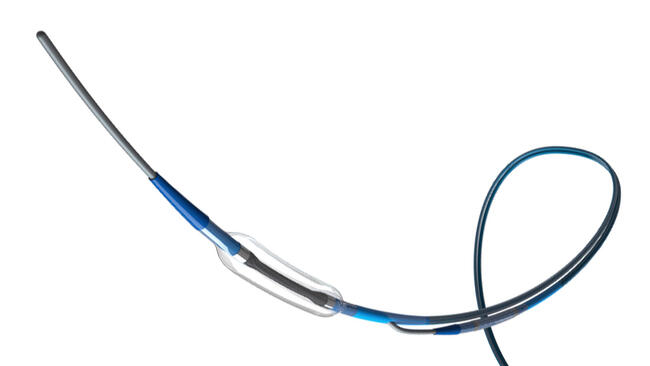
One option that the practitioner can utilize to prepare the lesion is to predilate the lesion with a semi-compliant balloon catheter. Pre-dilatation aids access to the lesion, prepares the vessel for stent placement and can help determine the attributes of the lesion as an aid in stent selection. Semi-compliant balloon catheters provide the ultimate in performance in terms of trackability, profiles and crossability.
While some practitioners may argue that pre-dilatation causes more vessel trauma than direct stenting, the opposite appears to be true. Pre-dilatation with the correct size and type of balloon will cause less trauma to the vessel than direct stenting. Pre-dilatation also accomplishes the following:
Increases the rate of successful stent delivery by creating a pathway for the delivery system;
May prevent damage to the drug coating during delivery;
Can help to estimate lesion length and diameter using the balloon markers;
Aids full stent apposition by modifying the lesion before the practitioner places the stent.
Other Ammunition for Lesion Preparation
Other plaque modification modalities, such as the Cutting Balloon Device (Boston Scientific, Natick, Mass.) and rotational atherectomy, are effective for altering the plaque and improving the chances for successful stenting outcomes, particularly in complex lesions.
Rather than expanding the vessel in the way a standard balloon catheter does, the Cutting Balloon combines micro longitudinal incisions with low-pressure dilatation to score and separate plaque. This changes the compliance of the lesion, and weakened areas can then be dilated at lower pressures (Figure 6).
In addition, the Cutting Balloon avoids slippage. In the WINNER Registry,3 a real-world clinical experience with the Cutting Balloon Device in 869 lesions, the device did not slip at all during use. This registry used the Cutting Balloon as a preference to treat small vessels.8
It is common to encounter significantly calcified lesions that resist dilatation altogether. In certain cases of diffuse calcified disease, the rotational atherectomy system provides a solution. Data from the SPORT Trial4 (Stent Implantation Post Rotational Atherectomy Trial) showed that when alteration is enhanced with rotational atherectomy, stent expansion is optimized, and procedural success and acute diameter gain are improved.9
Once the situation has been assessed with IVUS or angiography, the following basic guidelines determine which pre-dilatation tool should be used (Figure 7).
A semi-compliant balloon catheter should be utilized if:
Deliverability is critical (significant tortuosity, tight stenosis);
Soft plaque is present;
Sizing flexibility is needed.
The Cutting Balloon Device is indicated when:
Moderate calcium is present;
Small vessels, bifurcations or ostial disease are being treated.
Rotational atherectomy is appropriate when:
Diffuse calcium is present.
Post-stent Assessment
In addition to its usefulness in assessing the lesion prior to its preparation and accurately sizing the stent, IVUS imaging has an impact following stent placement as well. In a recently published article, Cheneau and colleagues advocated assessing stent expansion with IVUS to ensure adequate stent deployment, since underexpansion is common when stents are deployed at conventional pressures.10,11
Stent expansion is difficult to confirm on angiography. However, IVUS can accurately show post-stent placement as noted in Figure 8.
A reasonable approach outlined in several studies involving the use of IVUS to analyze post-stent placement includes the following:
Confirming that the stent struts are well apposed to the vessel wall so that the struts are not surrounded by lumen;
Assuring that the stent is well expanded;
Assessing the proximal and distal edges of the stent for edge dissections.
Completing the Complex Lesion Strategy
Because DES must be optimally deployed with full lesion coverage and apposition to the vessel wall to reduce the risk of complications, a complete strategy for imaging assessment, lesion preparation and confirmation of stent apposition and expansion is important. However, once a malapposed or underexpanded stent is revealed, a complete complex lesion strategy is rounded out with the use of a noncompliant post-dilatation balloon to ensure that the stent is seated correctly against the vessel wall.
Post-dilatation
Early-generation balloon-expandable stents were delivered with compliant balloons and required post-dilatation with noncompliant balloons at higher pressure to optimize stent deployment. Today, stent delivery systems use semi-compliant balloons to deploy stents at higher pressures. This, plus the advent of DES and much lower rates of target vessel revascularization (TVR), has renewed the controversy about the need for balloon post-dilatation to optimize outcomes.
However, current evidence and anecdotal experience favor adjunctive balloon post-dilatation in the majority of patients undergoing stent implantation. Post-dilatation helps optimize stent deployment and may lead to better outcomes with less TVR and less stent thrombosis.
Bigger Is Better
With bare metal stents, it is well recognized that larger post-procedural stent dimensions are associated with lower rates of restenosis, TVR and stent thrombosis. The same is true for DES. According to several studies,12-16 the strongest predictors of restenosis, TVR and stent thrombosis with DES are:
Lesion length;
Reference lumen diameter or area;
Plaque burden (volume plaque/ volume vessel);
Final stent dimension, measured either as minimal stent area (MSA) or minimal stent diameter (MSD) by IVUS (Figure 9).
The Shortcomings of Current Stent Delivery Systems
Several studies have shown that current delivery systems achieve optimal stent deployment in only a minority of patients. For instance, Takano et al.17 found that the MSD following deployment of bare metal stents was about 20% less than the nominal stent diameter. Additionally, the POSTIT Trial (Post-dilatation Clinical Comparative Study)18 found that stent deployment was suboptimal in 71% of cases without adjunctive post-dilatation, and that the MSD measured by IVUS was 20% less than the nominal stent diameter (Figure 10). With balloon post-dilatation using noncompliant balloons (and occasionally with larger-sized balloons) at higher pressures (> 12 atm), MSA increased from 6.6 mm2 to 7.3 mm2, and the frequency of optimal stent deployment doubled. Similarly, Johansson et al.19 evaluated a strategy of routine post-dilatation with larger (0.25 mm larger than the stent delivery balloon), noncompliant balloons at 16 atm, and evaluated their results using IVUS. With this approach, optimum stent deployment was achieved in 67% of patients.
Substantial evidence indicates that suboptimal or incomplete stent expansion may not only be associated with increased restenosis and TVR, but may also predispose the patient to stent thrombosis. With high-pressure deployment and antiplatelet therapy using thienopyridines, stent thrombosis is infrequent, but occurs in 0.9-1.9% of patients. Procedural predictors of stent thrombosis include stent length, use of multiple stents, persistent dissection, persistent slow flow and final stent dimension (measured by angiography or IVUS).
Blame It on the Stent Delivery Balloon
Suboptimal stent deployment may occur with current stent delivery systems for several possible reasons:
Stent delivery balloon could be undersized for the target vessel;
Deployment pressure may not be adequate to deploy the stent optimally;
Semi-compliant balloon material used on stent delivery systems may not be adequate to achieve full stent expansion in arterial segments with heavy plaque burden and increased resistance.
The POSTIT Trial18 examined these possibilities. In this trial, stent delivery balloons were not undersized for the target vessel. For each category of stent balloon size (3.0 mm versus 3.5 mm versus 4.0 mm), the stent balloon size was greater than the average reference vessel lumen diameter as measured by IVUS (2.9 mm versus 3.3 mm versus 3.8 mm). Despite proper balloon sizing, optimum stent expansion was achieved in only 14% of patients with deployment pressures of 14 atm.
Stent delivery system balloons are designed to maximize deliverability and securement, while post-dilatation balloons are designed to maximize dilatation force for optimal stent expansion. The dilatation force that a delivery balloon exerts against a lesion or against a stent depends on the balloon material, deployment, pressure, size of the balloon (larger balloons exert greater force), and the severity of the lesion. With these facts in mind, it appears that the major reason for suboptimal stent deployment is related to the more-compliant balloons used with current stent delivery systems.
Modern workhorse and stent delivery system balloons use a semi-compliant material. Like a party balloon, the greater the pressure exerted inside the compliant balloon, the more significant the balloon’s growth. As pressure increases, the balloon grows in the areas of least resistance. As a result, the balloon stretches around the lesion, rather than concentrating the force at the lesion, which creates a dog-boning effect. Thus, with compliant balloons, higher pressure alone does not equal greater dilatation force (Figure 11).
The POSTIT Trial18 provided evidence of this. In addition, Hehrlein et al.20 found that stent delivery balloon diameters measured by quantitative coronary angiography during stent deployment were approximately 14% less than stent delivery balloon diameters measured in vitro outside the body at similar deployment pressures.
In contrast to compliant balloons, noncompliant balloons have little change in volume with incremental changes in inflation pressure. Noncompliant balloons deliver more focal force to the lesion.
The Solution: Post-dilatation Using Noncompliant Balloons
Incomplete stent expansion and apposition can lead to increased restenosis, TVR and SAT rates. Additionally, stent delivery balloons frequently fail to fully expand and appose the stent. These two facts highlight the need for post-dilatation, especially in complex lesions or lesions with a large plaque burden, which may predispose the lesions to suboptimal stent deployment.
Several studies have evaluated adjunctive balloon post-dilatation (with IVUS, as necessary) for optimizing stent deployment and reducing TLR, SAT and restenosis rates:
The CRUISE (Can Routine Ultrasound Influence Stent Expansion) study21 randomized 497 patients undergoing stent implantation to IVUS-guided stent implantation versus standard stent implantation. The IVUS-guided group had a larger MSA and less TVR. This study also found a 44% TLR reduction with IVUS-guided post-dilatation.
Takebayashi et al.22 found that nonuniform stent expansion with DES led to more frequent restenosis.
Hwang et al.23 found that complete stent apposition facilitates uniform drug delivery, a key to DES efficacy (Figure 12).
Roberts et al.24 found that post-dilatation with noncompliant balloons of the same size and inflated to the same pressure as current semi-compliant stent deployment balloons resulted in a significant improvement in MSA.
The POSTIT Trial18 showed that post-dilatation using noncompliant balloons doubles the frequency of optimum stent deployment, with significant increases in MSA and MSD (Figure 12).
These studies suggest that the noncompliant nature of post-dilatation balloons contributes significantly to stent expansion. Unlike softer stent delivery system balloons, noncompliant balloons are more robust and have characteristics similar to those of a football. Like a football, as a noncompliant balloon is inflated, low and focal growth occurs as pressure increases, providing more dilatation force at lower pressures (Figure 11).
Such considerations have led to the use of noncompliant balloons for achieving optimal stent expansion and apposition. In many instances, noncompliant balloons are often slightly oversized, and usually shorter than the stent delivery balloon for post-dilatation. Post-dilatation with a shorter, more noncompliant balloon provides more complete stent expansion, with less vessel trauma outside of the stent, potentially reducing the risk of complications (Figure 13).
Post-dilatation in Practice
Not every lesion requires post-dilatation with a noncompliant balloon. With DES, for example, simple de novo lesions can be post-dilated with a stent delivery balloon. Larger vessels (3.5 mm and larger) also are not as important because their larger minimal stent areas are less likely to result in TVR. However, in the presence of more complex lesions (such as bifurcations or resistant lesions those that are calcified or have a heavy plaque burden), ostial disease or in-stent restenosis, it is almost always necessary to post-dilate with a noncompliant balloon. Other situations that pose increased risk for TVR and stent thrombosis small vessels, long lesions, multiple overlapping stents and diabetic patients may necessitate post-dilatation. (Remember, unlike a compliant balloon, a noncompliant balloon delivers more dilatation force at lower pressures and reduces unwanted vessel expansion.) Complete stent expansion and apposition are key to preventing restenosis, TLR and SAT rates, the latter of which can be especially catastrophic to the patient. The practitioner should be especially vigilant about post-dilating with multiple stents, which carry an increased risk of SAT. One author (B.R.B.) post-dilates approximately 75% of patients.
As investigations have shown, the stent delivery balloon will often result in a minimal in-stent diameter that is approximately 20% less than nominal balloon diameter.18 Thus, if the practitioner is delivering a 3.0 mm stent, the minimal in-stent diameter will be approximately 2.4 mm on average.
Complex or resistant lesions are candidates for post-dilatation. In this case, it is appropriate to choose a stent that approximates the size of the distal reference lumen, inflate to a pressure that sizes the balloon and stent to the distal reference lumen even if this pressure is only 10-12 atm. This will minimize the risk of tearing the artery at the distal edge of the stent. The next step will be to post-dilate with a noncompliant balloon that is shorter and usually one-quarter size larger than the stent delivery balloon, and inflate to a pressure of 14-18 atm, if appropriate. These pressure ranges will usually fully expand the stent without causing tears at the distal edge.
The same approach can be utilized with smaller vessels. The smallest DES are 2.5 mm in diameter, but these stents can be used to treat vessels as small as 2.25 mm. Stenting those small vessels at 14-16 atm creates a high risk of edge tears. Thus, during implantation, the use of lower pressures (up to 10 atm) may avoid edge tears. The stent will not be fully expanded, so post-dilatation with a shorter, noncompliant balloon to avoid the distal edge of the stent may be necessary. Sizing the balloon to a full 2.5 mm and inflating to 14-18 atm ensures that the stent is fully expanded without risking an edge tear.
Tapering vessels are also candidates for post-dilatation. For instance, with a vessel distal reference size of 2.5 mm and a proximal reference size of 3.0 mm, the use of a 3.0 mm stent may risk tearing the artery at the distal edge of the stent. Consequently, a 2.5 mm stent should be implanted. However, the proximal aspect of the stent is not fully apposed because the proximal reference lumen is 3.0 mm. It will then be appropriate to post-dilate with a 3.0 mm or 3.25 mm post-dilatation balloon. This expands the stent from the proximal edge to near the distal edge while avoiding a possible tear.
While the balloon material differs between a post-dilatation and pre-dilatation balloon, it is not difficult to deliver a post-dilatation balloon. In situations where the anatomy is extremely tortuous or when the stent is placed on a bend, a buddy wire may assist delivering the post-dilatation balloon to the site. However, these are rare occasions.
Conclusions
Coronary stents, including DES, must be optimally deployed with full lesion coverage and complete expansion of the stent and complete apposition to the vessel wall to optimize results. Less than full expansion and apposition significantly increases the risk of complications such as SAT, TLR and restenosis, thus compromising the benefits of the intervention. With DES, incomplete expansion and apposition can also impede drug delivery to the vessel wall.
To optimally deploy a coronary stent, the practitioner must think like a general facing an enemy force. The more he or she knows about a lesion, the better prepared he or she will be to use available tools, techniques and technology to attack and defeat the lesion by optimally deploying the stent. A viable strategy for improved stenting outcomes includes lesion preparation prior to stenting and ensuring good expansion and apposition post-stenting.
The practitioner has a number of tools and techniques available to help understand the lesion and plan an effective strategy to treat it. These include:
1. IVUS for assessment of the lesion pre-stenting and verification of apposition and expansion post-stenting;
2. Pre-dilatation balloon catheters, the Cutting Balloon Device and rotational atherectomy for lesion preparation to optimize stent deployment; and
3. Noncompliant post-dilatation balloon catheters for ensuring good stent expansion and complete apposition.
This strategy helps reduce the risk of complications, especially with complex lesions, which present a challenge to optimal stent deployment (Figure 14).
Continuing Education Information
Target Audience: This activity is intended for nurses and technologists.
Completion Time: The estimated time to complete this activity is one hour.
Objectives: Upon completion of this educational activity, participants should be able to:
utilize good stenting practices (pre- and post-stent implantation), which include intravascular ultrasound assessment, pre-dilatation with a percutaneous transluminal coronary angioplasty (PTCA) balloon catheter, or rotational atherectomy and post-dilatation with a PTCA balloon catheter.
describe the relationship between optimum stent deployment and outcomes following stent implantation.
optimize stent deployment along with stent apposition and expansion.
explain why suboptimal stent deployment is common with current stent delivery systems and how post-dilatation with noncompliant balloons improves the frequency of optimum stent deployment.
Disclosure Policy: All faculty participating in Continuing Education programs sponsored by the North American Center for Continuing Medical Education are expected to disclose to the meeting audience any real or apparent conflict(s) of interest related to the content of their presentation. It is not assumed that these financial interests or affiliations will have an adverse impact on faculty presentations; they are simply noted here to fully inform participants.
Dr. Lui has disclosed that he is a scientific advisor to Boston Scientific and St. Jude Medical. He is a member of the speakers’ bureau for Boston Scientific, Sankyo Pharma and Pfizer.
Dr. Brodie has disclosed that he has no significant financial relationship with any organization that could be perceived as a real or apparent conflict of interest in the context of the subject of his presentations.
Participation
Participation: Read the supplement, take, submit and pass the post-test by October 30, 2006.
Release Date: October 1, 2005
Expiration Date: October 30, 2006
Commercial Support Disclosure: This activity is supported by an educational grant from Boston Scientific.
Accreditation Statements:
Nurses: ANCC: The North American Center for Continuing Medical Education (NACCME) is an approved provider of continuing nursing education by the Pennsylvania State Nurses Association, an accredited approver by the American Nurses Credentialing Center’s Commission on Accreditation. This continuing nursing education activity was approved for 1 contact hour (Provider # 110-3-E-04).
Provider approved by the California Board of Registered Nursing, Provider # 13255,
for 1 contact hour.
Technologists: ASRT-approved for 1 category A credit. Provider # PAZ0145015.
Sponsor: North American Center for Continuing Medical Education (NACCME).
How to Obtain Education Credits: Participants must score at least 70 percent on the questions and successfully complete the entire evaluation form (found on page 14 of this issue), make a copy of the entire evaluation form, and send it to the address listed below. Certificates will be mailed to those who successfully complete the learning assignment by October 30, 2006.
Fax or Mail the Completed Form to:
Trish Levy, Director, Medical Education
North American Center for Continuing Medical Education (NACCME)
83 General Warren Boulevard, Suite 100
Malvern, PA 19355
Fax: (610) 560-0502
1. Lasala JM for the ARRIVE 1 Trial. A consecutive enrolling drug-eluting stent registry. 6-month results. (Presented at PCR 2005).
2. Mintz GS, Popma JJ, Pichard AD, et al. Patterns of calcification in coronary artery disease. A statistical analysis of intravascular ultrasound and coronary angiography in 1,155 lesions. Circulation 1995;91:1959-1965.
3. Moses JW, Leon MB, Popma JJ, et al. Direct stenting using the sirolimus-eluting Bx Velocity Stent: Procedural, clinical and angiographic outcomes compared to a predilatation strategy. TCT 2004 Presentations.
4. Mehilli J, Kastrati A, Dirschinger J, et al. Intracoronary stenting and angiographic results: Restenosis after direct stenting versus stenting with predilation in patients with symptomatic coronary artery disease (ISAR-DIRECT Trial). Catheter Cardiovasc Interv 2004;61:190-195.
5. Popma JJ. 2002 TCTMD expert presentations. www.tctmd.com.
6. Stone GW, et al. N Engl J Med 2004;350:221-230.
7. Moses JW, Leon MB, Popma JJ, et al. Sirolimus-eluting stents versus standard stents in patients with stenoses in a native coronary artery. N Engl J Med 2003;349:1315-1323.
8. Taniuchi, et al. The WINNER Registry: Utilization of Cutting Balloon Device in “real world settings. Catheter Cardiovasc Interv 2004;62:C-36.
9. Buchbinder M, et al. for the SPORT Clinical Trial Investigators. Abstract presentations at TCT 2001 and ACT 2001.
10. Cheneau E, Leborgne L, Mintz G, et al. Predictors of subacute stent thrombosis: Results of a systematic intravascular ultrasound study. Circulation 2003;108:43-47.
11. Cheneau E, Satler LF, Escolar E, et al. Underexpansion of sirolimus-eluting stents: Incidence and relationship to delivery pressure. Catheter Cardiovasc Interv 2005;65:222-226.
12. Iakovou I, Schmidt T, Bonizzoni E, et al. Incidence, predictors, and outcome of thrombosis after successful implantation of drug-eluting stents. JAMA 2005;293:2126-2130.
13. Fuji K, Carlier SG, Mintz GS, et al. Stent underexpansion and residual reference segment stenosis are related to stent thrombosis after sirolimus-eluting stent implantation: An intravascular ultrasound study. J Am Coll Cardiol 2005;45:995-998.
14. Lemos PA, Hoye A, Goedhart D, et al. Clinical, angiographic and procedural predictors of angiographic restenosis after sirolimus-eluting stent implantation in complex patients: An evaluation from the rapamycin-eluting stent evaluated at Rotterdam Cardiology Hospital (RESEARCH) study. Circulation 2004;109:1366-1370.
15. Sonoda S, Morino Y, Ako J, et al. Impact of final stent dimensions on long-term results following sirolimus-eluting stent implantation: Serial intravascular ultrasound analysis from the SIRIUS trial. J Am Coll Cardiol 2004;43:1959-1963.
16. Stone GW, Ellis SG, Cox DA, et al. One-year clinical results with the slow-release, polymer-based, paclitaxel-eluting TAXUS stent: The TAXUS-IV trial. Circulation 2004;109:1942-1947.
17. Takano Y, Higgins JR, Tobis JM, et al. New stent delivery systems do not provide optimal stent expansion. J Am Coll Cardiol 2001;37(Suppl A):48A.
18. Brodie BR, Cooper C, Jones M, et al. Is adjunctive balloon post-dilatation necessary after coronary stent deployment? Final results from the POSTIT trial. Catheter Cardiovasc Interv 2003;59:184-192.
19. Johansson B, Allared M, Borgencrantz B, et al. Standardized angiographically guided over-dilatation of stents using high pressure technique optimize results without increasing risks. J Invasive Cardiol 2002;14:227-229.
20. Hehrlein C, DeVries JJ, Wood TA, et al. Overestimation of stent delivery balloon diameters by manufacturers’ compliance tables: A quantitative coronary analysis of Duet and NIR stent implantation. Catheter Cardiovasc Interv 2001;53:474-478.
21. Fitzgerald PJ, Oshima A, Hayase M, et al. Final results of the Can Routine Ultrasound Influence Stent Expansion (CRUISE) study. Circulation 2000;102:523-530.
22. Takebayashi H, Mintz GS, Carlier SG, et al. Nonuniform strut distribution correlates with more neointimal hyperplasia after sirolimus-eluting stent implantation. Circulation 2004;110:3430-3434.
23. Hwang CW, Wu D, Edelman ER. Physiological transport forces govern drug distribution for stent-based delivery. Circulation 2001;104:600-605.
24. Roberts DK, Hassan HM, Kitamura K, et al. The impact of non-compliant balloon materials on balloon delivered coronary stent expansion. Circulation 2000;102(Suppl 2):II547.