Taking the Holistic View: Invasive, non-invasive and “in-between”
April 2009
While controversies rage about the relative merits of angioplasty, stents, bypass surgery and other forms of mechanical revascularization, it is our view that interventional cardiologists should take a more holistic view of the complex process of coronary artery disease, and broaden our horizons regarding therapies we could and should be providing.
Coronary artery disease represents a spectrum of diseases that vary from single to multi-vessel disease, which is associated with multiple clinical situations and conditions. There are many variables that must be taken into consideration prior to risk-stratifying a patient for surgery and considerable debate in the cardiology community as to how to best manage patients to minimize the risk of peri-operative heart attacks.
Management of cardiovascular disease and medical therapy has evolved by leaps and bounds over decades. Data from multiple trials indicate that treatment, including the use of angioplasty, stenting, bypass surgery, aggressive medical therapy and risk factor reduction, needs to be individualized for each patient depending on coronary anatomy, ischemic burden as assessed with a stress test, left ventricular function and the overall clinical milieu, especially the presence or absence of diabetes and other co-morbidities and the impact of symptoms on the quality of life.
The long-term effect of angioplasty on reducing the risk of a heart attack in otherwise healthy patients is being questioned. It is important to remember that patients can be asymptomatic and still have aggressive coronary artery disease, which leads to a higher morbidity and mortality. There is general agreement that stents are beneficial in high-risk patients, such as the ones who present with heart attacks and heart failure. In the low-risk patient population, stent therapy is directed at relief of symptoms.
Another challenge facing cardiac programs across the nation is heart recovery. Prognosis depends on the overall pump function of the heart. The poorer the heart function, the poorer the prognosis. With the evolution of interventional cardiology over the decades, however, we are able to perform procedures in the cardiac catheterization laboratory which were unheard of only a few months ago. The following case report with a new interventional device illustrates this evolution.
I recently inserted the Abiomed Impella 2.5 (Danvers, MA), an FDA-approved heart recovery device, on a 78-year-old man with severe problems that under other circumstances would call for high-risk coronary artery bypass graft (CABG) surgery. He presented to Pinnacle Health System with shortness of breath and a long cardiac history of congestive heart failure and previous aortic valve replacement during CABG surgery. By using Impella, a minimally invasive circulatory support device, which allowed the heart muscle to rest and recover by taking over half the pumping action, the patient’s blood pressure was able to remain normal and restore circulation.
The medical history for this patient included aortic stenosis. He underwent aortic valve replacement and right coronary artery saphenous vein grafting in 1996. In December 2005, he presented again with congestive heart failure and was found to have severe aortic valvular prosthetic dysfunction with severe aortic insufficiency. His pulmonary artery (PA) systolic pressures were elevated to 70/31; however his systolic function appeared to be normal.
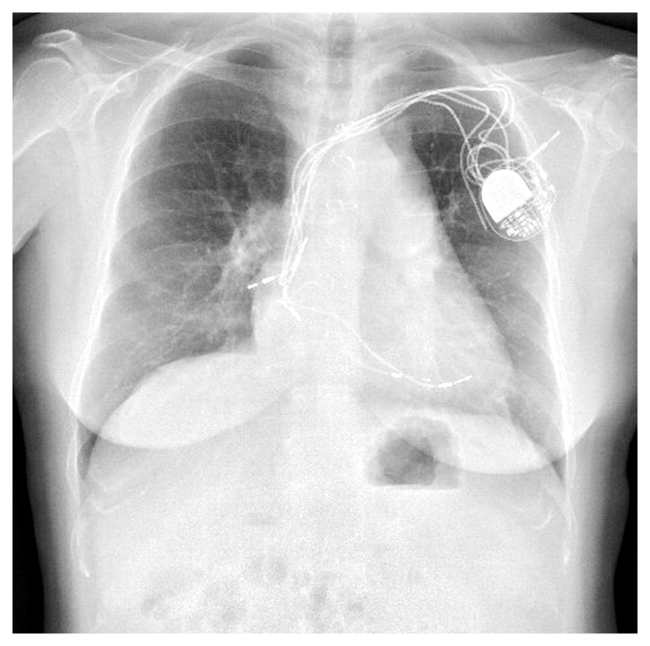
The patient had a very difficult recovery from his re-operative aortic valve replacement. He subsequently required a biventricular pacemaker implant for bradyarrhythmia and left carotid endarterectomy for treatment of extracranial cerebrovascular disease. The patient’s hemodynamic profile upon arrival at Pinnacle showed an ejection fraction (EF) of 10%, a right atrial (RA) mean pressure of 5 mmHg, a pulmonary capillary wedge pressure (PCWP) of 15 mmHg, and a PA pressure of 38/14 mmHg. His aortic pressure was 115/46 mmHg. The patient’s coronary angiogram showed an unprotected subtotal left main stenosis, as well as a critical 90% stenosis of his saphenous vein graft to the right posterior descending artery.
The patient was enrolled in the Impella 2.5 PROTECT II high-risk percutaneous coronary intervention (PCI) study. He was randomized to the Impella 2.5 circulatory support device. The aortic valve prosthesis was only two years old and was clear of calcification. It was felt that this did not represent an absolute exclusion to the study.
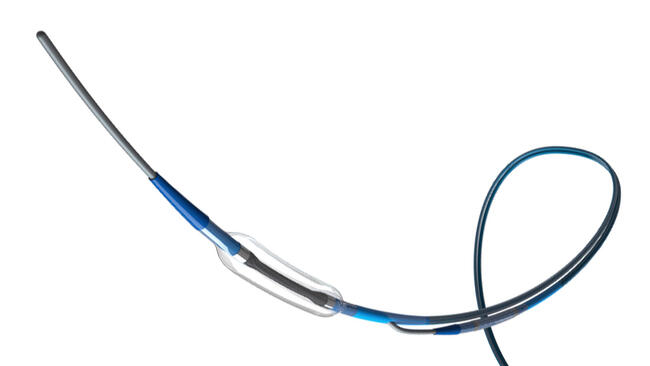
The Impella 2.5 is a percutaneously placed transaortic circulatory support device which provides up to 2.5 L/minute of flow from the left ventricle directly into the ascending aorta. The 12 Fr device is mounted on a 9 Fr catheter and is connected to the Impella mobile console.
A 6 Fr sheath was placed in the right common femoral artery and an 8 Fr sheath was placed in the femoral vein. Right heart catheterization was performed using a 7 Fr Swan-Ganz balloon catheter. A 13 Fr sheath was then placed into the right femoral artery and the patient was anticoagulated with 100 u/kilogram of heparin.
Once the activated clotting time (ACT) was >250 seconds, the Impella 2.5 circulatory support device was advanced across the aortic valve prosthesis and placed into the left ventricle without difficulty. The patient was placed on cardiac support at 2.5L/min. The percutaneous revascularization of the saphenous vein graft to the posterior descending artery was performed along with revascularization of the left anterior descending, the left circumflex and left main coronary arteries. At the completion of the procedure, the patient was weaned from the Impella circulatory support device, which was explanted successfully. The 13 Fr sheath was removed and manual compression was applied to the groin. At the bedside, a 2-D echocardiogram was performed and revealed no aortic insufficiency post device explant.
The patient underwent successful revascularization of his saphenous graft using a 4mm bare-metal stent, as well as revascularization of his left main, left anterior descending and left circumflex coronary arteries using bare-metal stents. The entire procedure was performed under the support of the Impella 2.5 system. Maintenance of systemic blood pressure during balloon inflation and stent deployment kept the patient free from hemodynamic compromise.
The patient’s postoperative course was essentially benign. He was completely asymptomatic at the time of his discharge. Subsequent 2-D echocardiogram showed no change in the prosthesis and specifically, no aortic insufficiency. This clinical case demonstrated the feasibility of using the Impella 2.5 in the presence of an aortic bioprosthesis. It is important to note that the presence of mechanical prosthetic aortic valve remains an absolute contraindication to the use of Impella. Since it was only two years old and clear of any calcifications or excrescences, the presence of the bioprosthesis was not considered to be an exclusion to Impella 2.5 use under the criteria set forth in the PROTECT II study. Clinicians using Impella 2.5 outside of the study in general commercial use need to evaluate the suitability of crossing a bioprosthesis on a case-by-case basis.
The patient has since done very well and remains clinically asymptomatic. Also, the patient’s ejection fraction has returned to normal.
We, along with many other centers in the country, are increasingly performing these procedures and are providing a huge benefit to our communities. Most acute patients who do not have chronic heart failure should be considered for heart recovery procedures, which will provide a safe, cost-effective way to improve patients’ quality of life.
I’ve been involved in the use of this new device in my institution and have educated other institutions around the country on the benefits of heart recovery. I see a place for Impella between invasive and noninvasive treatments, giving us a new option for patients who may just need some time for their “broken” hearts to heal.
I have shared just one example of how treatment is evolving. There are many others. Ultimately, we must use all available and appropriate therapies in conjunction with one another for maximal benefit to the patient. All this cannot be done alone. We need to combine our efforts in fighting the number-one killer on the planet and not be afraid to use everything we have in our arsenal. Taking a holistic view of all possible approaches will advance medicine and help our patients.
Dr. Maini can be contacted at Brij.Maini@moffittheart.com
NULL
Subscriber
Cath Lab Digest Newsletter